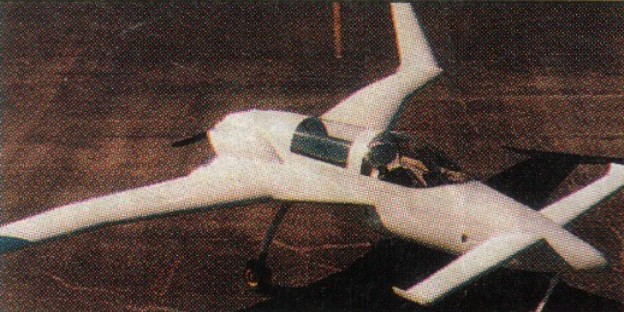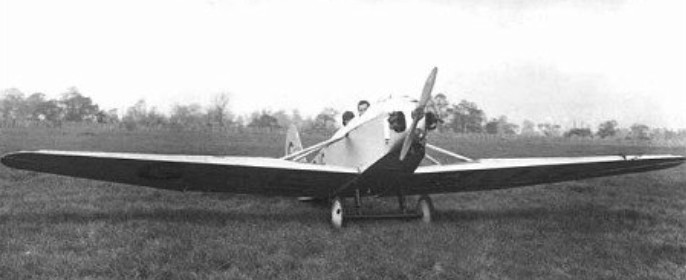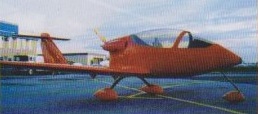
Partenair Mystere S-44 / Mystere S-45

S44 Mystere

Designed by Saleem Saleh, the Mystere S-45 is basically the same as the S44 except for the Lycoming 160 hp O-320 engine and a larger tail boom. Construction is carbn fibre and fibreglass.

In 1991 the prototype was completing the test hours, and one kit had already been sold.

S44 Mystere
Engine: Rotax 912, 80 hp
Wing span: 8.60 m
Wing area: 8.20 sq.m
MAUW: 544 kg
Empty weight: 317 kg
Fuel capacity: 95 lt
Max speed: 250 kph
Cruise speed: 210 kph
Minimum speed: 72 kph
Climb rate: 5 m/s
Seats: 2 tandem
Fuel consumption: 15 lt/hr
Price (1998): Can$69,000
Kit price (1998): Can$49,000

S45 Mystere

S45 Mystere Mark II
Parso Solo Sport / Cardoza-Parso PC-1

In 1933 Harry Parso built the Parso Solo Sport single-place, high wing monoplane. Registered N12729, it was originally powered by a 60hp Velie engine, this was later changed to a 65hp Lambert.

One other appears as the Cardoza-Parso PC-1 N10414 c/n 1, which might be Mr Cardoza’s home-made version.

Wingspan: 27’0″
Length: 17’11”
Max speed: 120 mph
Cruise: 100 mph
Stall: 50 mph
Seats: 1

Parseval Aeroboat / Das Aeroplan

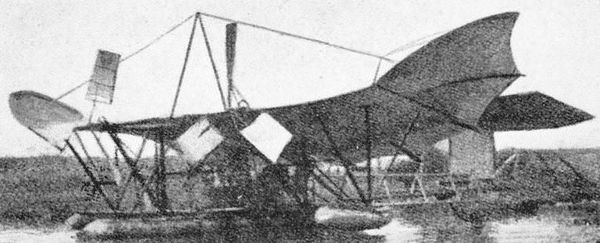
Major August von Parseval’s Aeroboat of 1909 – “Das Aeroplan”, was taken to Plau, in Mecklenburg, where it was to be tested along the shore of the lake in 1910.

The first test of August von Parseval’s seaplane was on April 6, 1910 with pilot Oberingenieur Blochmann, but the plane would not leave the water. On April 14 the machine capsized in a storm and sank. The pilot was saved and the machine salvaged and modified. The biggest changes were straight wings (original wing tips were in V-shape), extra water planes and a triangular fuselage, instead of rectangular. Since the machine couldn’t start from water a Wright-like construction was built, with a trolley on rails. On October 7, 1910 a successful first attempt was made with the starting device. The machine flew at 3 meters for a length of 100-800 meters. A second flight on October 15, 1910 was very successful as the machine flew 3-4 kilometers. The landing on the water was not smooth, so Blochmann was lightly injured. Parseval realized that the machine could never start from the water and ended development.

The machine has a span of 14 metres, while it is 7 metres long and is fitted with a motor of 114-h.p.