Predappio sa, a division of the Caproni Group, produced two trainers in the late 1930s, the Ca.602 two-seat biplane and a single-seat aerobatic version, the Ca.603, both powered by Alfa-Romeo in-line engines.
Monoplane
Preceptor STOL King
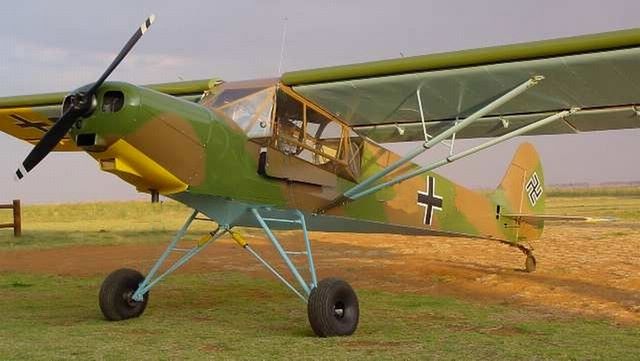
The LSA STOL King is of conventional tube and fabric design, approximately the size of a Cub, with a full glass enclosure and a tall stance for very rough field operation. Slow flights of 16 mph can be achieved and stall speeds of 15 mph let you land in some of the most remote areas of the world.
The construction material are 4130 steel tube & fabric and wing sub-kits come with ailerons, flaps, all hardware, brackets, fittings, fuel tanks, ribs, skins, spars and lift struts. No fabric.
Fuselage sub-kits come with stabilizers, elevators, rudder, landing gear, seat cusions, control systems, all glass, blank instrument panel, wheels and brakes, tailwheel, stringer formers, shock struts, brackets, fittings, firewall and all hardware and necessary accessories. No fabric or instruments.
Firewall forward package comes with engine, exhaust stacks, intake manifolds, carb heat, engine mount, prop, carburetor and hardware Engine prices will vary depending on model, horsepower and electrical option.
In 2009 the complete kit cost US$25,000 less engine, instruments, fabric, prop.
Engine: 75 hp
Horsepower: 75 – 150 hp
Propeller: 72 x 43
Overall length: 23 ft – 8 in
Height: 7 ft – 3 in
Wingspan: 31 ft – 6 in
Wing area: 158 square feet
Wing loading: 7.6 lb/sq.ft
Empty weight: 600 lbs
Gross weight: 1200 lbs
Useful weight: 600 lbs
Fuel capacity: 20 + US gallons
Cabin width: 32.50 inches
Ultimate “g” loading: +6.0 – 3.0
Best speed: 100 mph
Cruise speed: 90 mph
Stall Speed @ Gross w/Full Flaps: 15 mph
Service ceiling: 12,000
Takeoff distance: 50 ft
Landing distance: 50 ft
Rate of Climb (gross): 1200 fpm
Maximun range: up to 700 miles
Landing gear: FG (Tailwheel)
Seats: 2
Engine: 120 hp
Horsepower: 75 – 150 hp
Propeller: 72 x 43
Overall length: 23 ft – 8 in
Height: 7 ft – 3 in
Wingspan: 31 ft – 6 in
Wing area: 158 square feet
Wing loading: 7.6 lb/sq.ft
Empty weight: 600 lbs
Gross weight: 1200 lbs
Useful weight: 600 lbs
Fuel capacity: 20 + US gallons
Cabin width: 32.50 inches
Ultimate “g” loading: +6.0 – 3.0
Best speed: 130 mph
Cruise speed: 100 mph
Stall Speed @ Gross w/Full Flaps: 15 mph
Service ceiling: 12,000
Takeoff distance: 50 ft
Landing distance: 50 ft
Rate of Climb (gross): 1200 fpm
Maximun range: up to 700 miles
Landing gear: FG (Tailwheel)
Seats: 2
Engine: VW 50 hp
HP range: 75-130
Length: 24 ft
Wing span: 31.5 ft
Wing area: 158 sq.ft
Empty weight: 600 lb
Gross weight: 1200 lb
Fuel capacity: 20USG
Cruise: 100 mph
Stall: 15 mph
Range: 520 sm
Rate of climb: 1200 fpm
Takeoff dist: 50 ft
Landing dist: 50 ft
Cockpit width: 33 in
Seats: 2 tandem
Landing gear: tailwheel
Pratt-Read PR-G1 / LNE-1
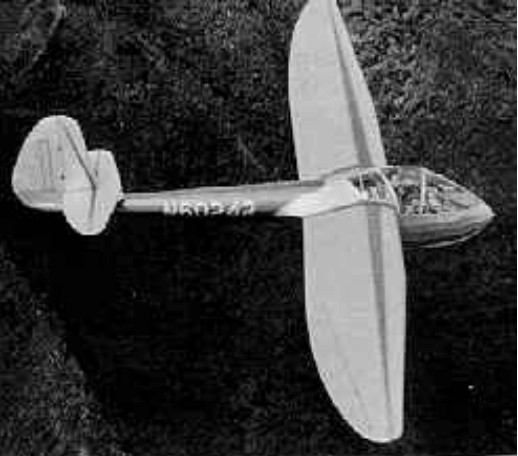
The Pratt-Read had two distinctions for a World War II training glider; the side-by-side seating and that it was the only training glider designed for the U.S. Navy. After release by the Navy, the LNE-1’s were acquired by the Army Air Corps which used some for a thunderstorm research project. Pratt-Read was a piano manufacturer and the G1 its only glider project. It has Schempp-Hirth type airbrakes. It won the multi-place world record for Absolute Altitude 13,489 m. / 44,255 ft. flown by Larry Edgar and H. Klieforth in 1952. One belongs to the National Soaring Museum.
Designed by M. Gluhareff, P. Leonard, J. Buxton, R. Stanley, H. Struck and R.W. Griswold, the PR-G1 has wood/ fabric wings and tail wood aft fuselage, steel-tube/ fabric forward fuselage.
This particualar airplane, N60242, crahsed about 1962 in Waimanalo, Oahu, from a low-altitude spin. Spin came from a low-altitude turn chasing a thermal in the landing approach! The pilot suffered back injuries but the ship was destroyed. Elevator and instrunments were recovered intact but everything is still in the gulch where it crashed. Pilot was a very light person and nose ballast may have been removed during a prior overhaul, as the aircraft was used to set a 71-hr aloft soaring record and all possible weight was removed to allow for supplies to be carried.
Ted Ralston
Wing span: 16.6m / 54.5 ft
Wing area: 21.37sq.m / 230sq.ft
Empty Weight: 349kg / 770 lb
Payload: 172kg / 380 lb
Gross Weight: 521kg / 1150 lb
Wing Load: 24.38kg/sq.m / 5lb/sq.ft
Aspect ratio: 12.9
Airfoil: GS-4, GSM, GS-1
L/DMax: 26 84 kph / 45 kt / 52 mph
MinSink: 0.91 m/s / 3.0 fps / 1.78 kt
Seats: 2
No. Built: 75
Practavia Sprite
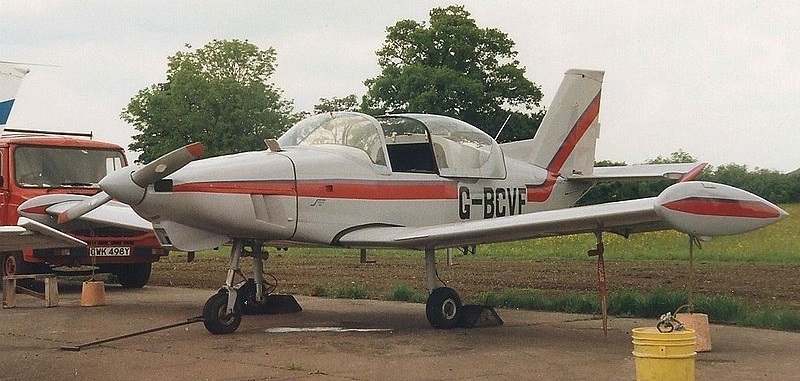
The prototype Sprite, named the Pilot Sprite, was designed by a team at Loughborough University as a British two-seat homebuilt training or touring monoplane for amateur construction. The design had been begun as a magazine-sponsored project by Peter Garrison, who worked for Pilot at the time; when the project did not move forward rapidly enough to suit him, he returned to the United States, where he modified his design into what would become his first Melmoth.
An all-metal side-by-side low-wing cantilever monoplanes with tricycle landing gear. The Sprite was powered by a Rolls-Royce Continental O-240-A piston engine.
It was the winning entry in a competition sponsored by Pilot magazine in 1968.
Plans for amateur building were marketed by Practavia Ltd as the Practavia Sprite.
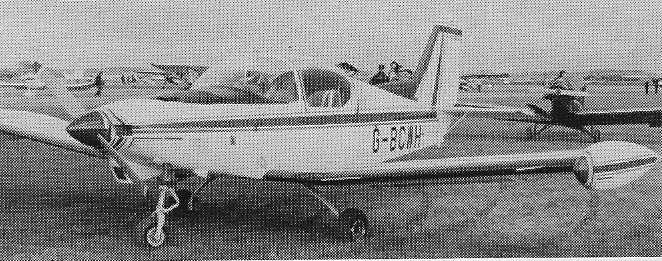
First flying in 1971, eight are known to have been built.
Engine: 1 × Rolls-Royce Continental O-240-A, 130 hp (97 kW)
Wingspan: 24 ft 0 in (7.32 m)
Length: 20 ft 0 in (6.09 m)
Height: 8 ft 3 in (2.51 m)
Empty weight: 850 lb (386 kg)
Gross weight: 1,400 lb (635 kg)
Cruise speed: 128 mph (205 km/h, 111 kn)
Crew: 1 (pilot)
Capacity: 1 (passenger)
Powell Acey Deucy
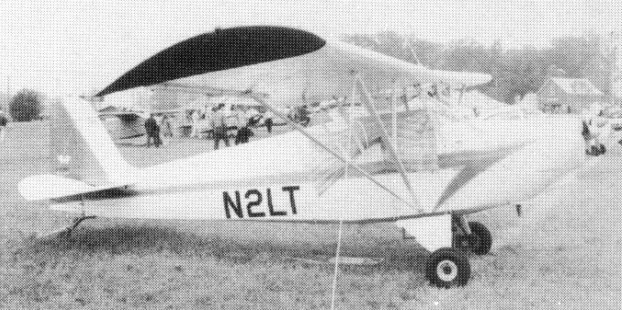
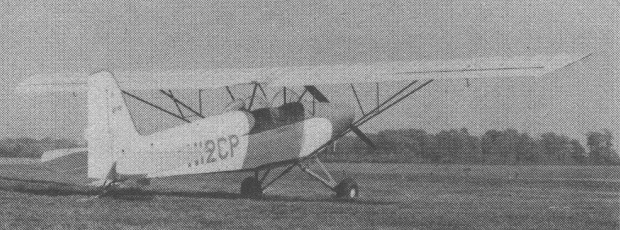
This parasol-type, tandem-seat monoplane was designed by John Powell, formerly a commander in the U.S. Navy. It is powered by a Continental A-65 and features a combination of wood, fabric and tubular steel construction.
Engine: Continental A.65
Gross Wt. 1275 lb
Empty Wt. 750 lb
Fuel capacity 14 USG
Wingspan 32’6”
Length 20’9”
Wing area: 155 sq. ft
Top speed 104 mph
Cruise 87 mph
Stall 27 mph
Climb rate 650-700 fpm
Takeoff run 250 ft
Landing roll 250 ft
Povokhovschikov 1 monoplane
The 1911 Povokhovschikov 1 monoplane was designed and built by A. A. Povokhovschikov in Russia.
Span: 26’3″
Length: 24’7″
Weight loaded: 628 lb
Speed: 50 mph
Pour le Merite Ultralights Blue Max Sabre 1K-KR
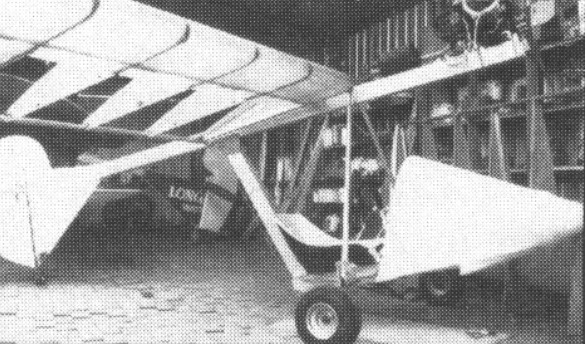
The Sabre is a high wing strut braced tail dragger. Structure utilises two aluminum tubes for spars and fibreglass ribs and leading edges. Fitted with large tires and steel spring suspension, the Sabre is designed for the farm and rough field work. A large pilot protection pod is fitted.
Engine: Konig 4-cyl – Rotax option
Prop: 129 cm variable
Wingspan: 8.23m
Length: 4.5m
Weight: 115 kg
Fuel capacity: 22 ltr
Econ cruise speed: 43 kt
Stall: 26 kts
Construction time: Ready to fly.
Poulain-Orange 1909-1910 monoplane
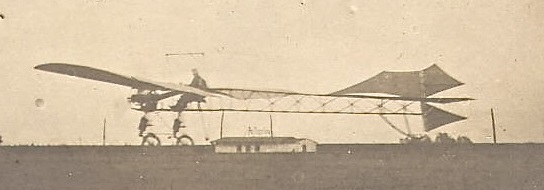
Gabriel Poulain moved to Berlin in 1909 and started building airplanes. The first design was an Antoinette-inspired machine. He qualified for German licence No. 14 on it in July 1910 at Johannisthal. He later teamed up with Charles Boutard and built a second monoplane with a more powerful 100 hp Argus, before moving back to France in 1911.
Poulain-Orange No.3
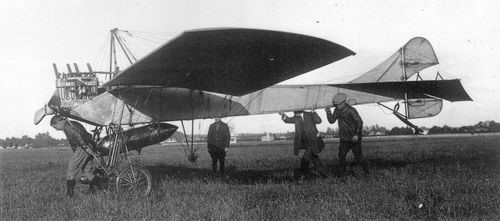
Gabriel Poulain, a famous bicycle-racer who held at least one speed record on the track, built this monoplane, his third design, in 1912.
Poulain-Orange No 2 monoplane

The 1911 Poulain-Orange No 2 monoplane was designed and built by Gabriel Poulain.

