Daher TBM 900 / 910 / 940 / 960

TBM 900

Launched in 2014, the TBM 900 brought 26 refinements aimed at improving both speed and efficiency. According to Daher, key enhancements included a redesigned engine cowling, a new five-blade composite propeller, and aerodynamic tweaks to the fuselage and winglets. These changes resulted in reduced drag and improved climb rates, allowing the TBM 900 to outperform its predecessor while consuming less fuel.

There were also subtle exterior changes introduced to reduce drag. These included a re-contoured tail cone and engine nacelle, and the addition of inner main landing gear doors. Additionally, cabin improvements made the aircraft quieter and more comfortable.

TBM 900

There are five versions of the TBM 900 series aircraft.

Introduced in 2017, the TBM 910 was designed to build upon the aerodynamic and structural improvements of the TBM 900 while focusing primarily on avionics advancements. The TBM 910 featured the Garmin G1000 NXi avionics suite, offering faster processing speeds, improved resolution, and enhanced connectivity options.

TBM 910

The aircraft’s performance remained largely similar to the TBM 900, but the new avionics provided pilots with a more intuitive and user-friendly experience. Features include improved touchscreen controls, ADS-B capabilities, and enhanced synthetic vision.

TBM 910

Introduced in 2019, the TBM 940 introduced an automatic throttle system, which helped pilots manage power settings more efficiently. This variant also featured autoland technology, as well as automatic deicing.

Additional refinements included improved cabin comforts, upgraded climate control, and enhanced noise reduction.

Introduced in 2022, the TBM 960 featured a digital e-throttle and Pratt & Whitney PT6E-66XT engine. The TBM 960 also includes an autoland system.

TBM 960

Additionally, this variant boasts a dual-channel full authority digital engine control (FADEC) feature – Daher calls this EPECS, which stands for Engine and Propeller Electronic Control System. The TBM 960 is the first aircraft in the TBM line to feature this. The TMB 960 also has an MTOW that is 221 lb (100 kg) greater, totaling 7,615 lb (3,454 kg).
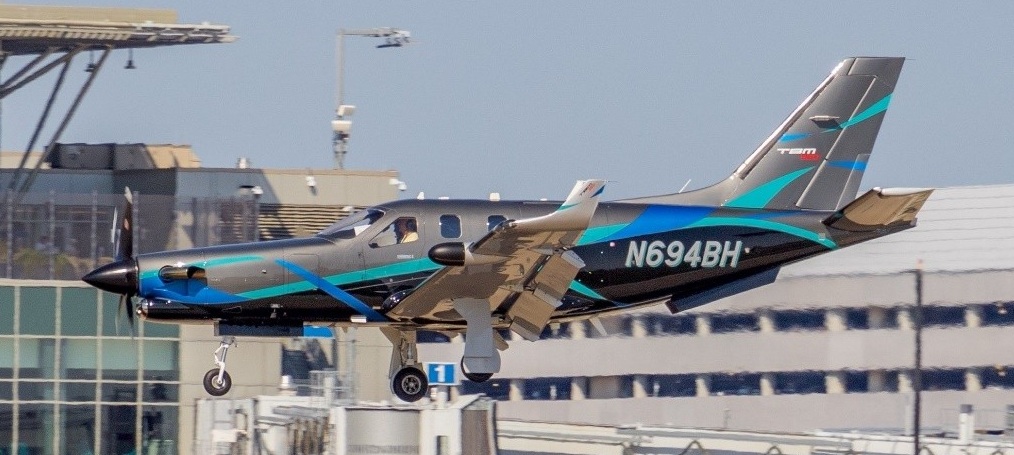
TBM 960

The TBM 960 replaced the 940, and was sold alongside the baseline TBM 910 model.

1,155 TBM series aircraft have been produced, as of July 2023. From its inception with the TBM 700 to the TBM 960.

TBM 900
Engine: Pratt & Whitney Canada PT6A-66D
Maximum cruise speed: 330 knots (380 mph, 611 km/h)
Range: 1,730 nautical miles (1,991 mi, 3,204 km)
Maximum takeoff weight (MTOW): 7,394 lbs (3,354 kg)
Service ceiling: 31,000 ft (9,449 m)
Fuel capacity: 292 US gal (1,105 L)
Seating capacity: 6
TBM 910
Engine: Pratt & Whitney Canada PT6A-66D
Maximum cruise speed: 330 knots (380 mph, 611 km/h)
Range: 1,730 nautical miles (1,991 mi, 3,204 km)
Maximum takeoff weight (MTOW): 7,430 lbs (3,370 kg)
Service ceiling: 31,000 ft (9,449 m)
Fuel capacity: 292 US gal (1,105 L)
Seating capacity: 6
TBM 940
Engine: Pratt & Whitney Canada PT6A-66D
Maximum cruise speed: 330 knots (380 mph, 611 km/h)
Range: 1,730 nautical miles (1,991 mi, 3,204 km)
Maximum takeoff weight (MTOW): 7,430 lbs (3,370 kg)
Service ceiling: 31,000 ft (9,449 m)
Fuel capacity: 292 US gal (1,105 L)
Seating capacity: 6
TBM 960
Engine: Pratt & Whitney Canada PT6E-66XT
Maximum cruise speed: 330 knots (380 mph, 611 km/h)
Range: 1,730 nautical miles (1,991 mi, 3,204 km)
Maximum takeoff weight (MTOW): 7,615 lbs (3,454 kg)
Service ceiling: 31,000 ft (9,449 m)
Fuel capacity: 292 US gal (1,105 L)
Seating capacity: 6
Cirrus Designs SR-S

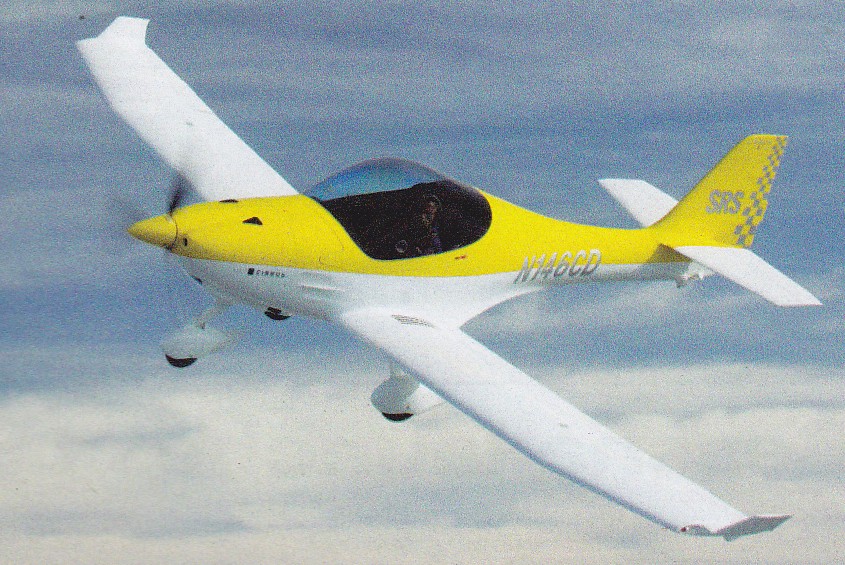
The Cirrus SRS (SR Sport) is the German B&F Fk 14 Polaris all-composites two-seat ultralight modified for US LSA regulations. First flowing in 1999, it was selected by Cirrus after a four-year evaluation of various designs. Powered by a 100 hp / 75 kW Rotax 912S, Cirrus will have to slow the aircraft down to meet the LSA’s 120 kt / 222 kph maximum cruise speed rules.

Neiva N-59 Regente

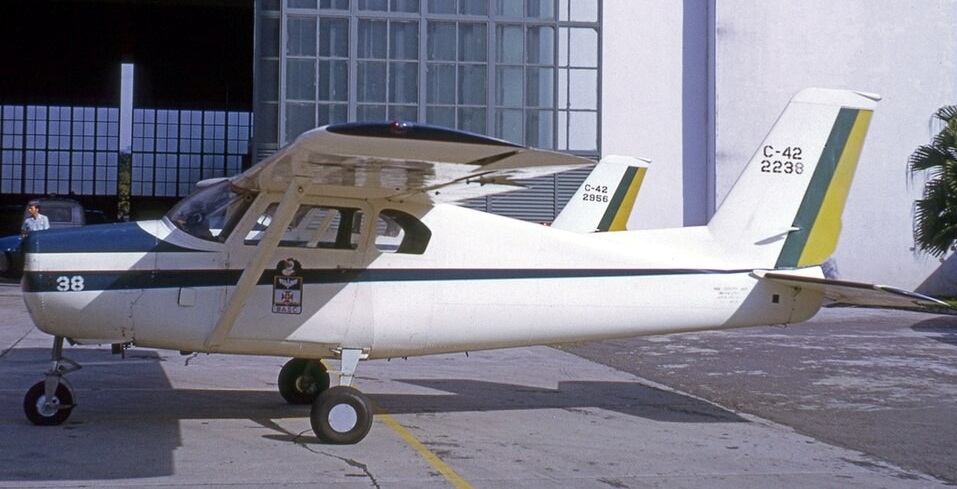
Neiva N-591 Regente C-42 2238 FAB

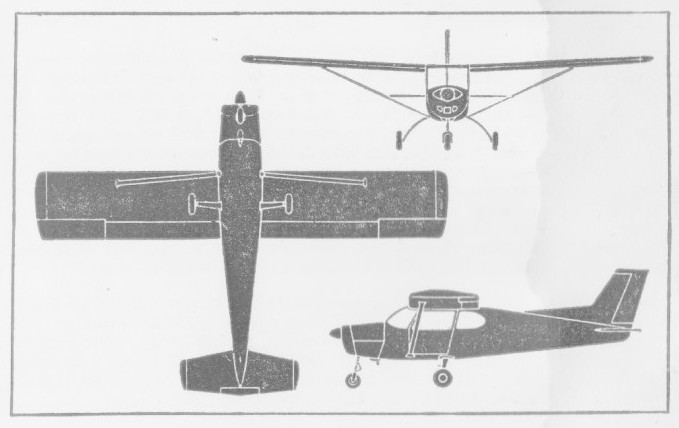
Neiva Regente is a Brazilian propeller-driven four-seat light utility aircraft manufactured by Indústria Aeronáutica Neiva.

The design was started in 1959 for a four-seat cabin monoplane aircraft with a high wing and fixed undercarriage. The prototype, designated the Neiva Regente 360C, was first flown on 7 September 1961 with a 145 hp (108 kW) Continental O-300 piston engine, and received its certificate of airworthiness on 19 November 1963.

Neiva Regente Article

The type was ordered into production by the Brazilian Air Force with a more powerful 180 hp (134 kW) Lycoming O-360-A1D engine. Eighty aircraft were built originally designated the U-42 (later changed to C-42) for the utility role. Twenty for the Brazilian Army’s Air Observation Squadron. First delivery occurred late in 1963. Neiva developed a three-seat air observation post version for the Air Force, designated the Regente 420L. Its tailcone was lowered in order to improve visibility, and it used a more powerful Continental IO-360D 210 hp engine. The aircraft was first flown in January 1967 as the YL-42. Forty were built for the Brazilian Air Force as the L-42. It had provision to carry light bombs or rockets on underwing hardpoints.

Two commercial versions were to be manufactured by Neiva, one being powered by a 180 hp Lycoming O-360-A1A and the other by a 145 hp Continental O-300-A.

Neiva also developed a four-seat civil version designated the Lanceiro. The prototype (Registered PP-ZAH) first flew in 1970, followed by production aircraft in 1973. The company’s subsequent involvement with Embraer resulted in the Lanceiro’s program termination.

Variants

Regente 360C – utility version (80 built)
U-42 – military designation of the Regente 360C
C-42 – military designation changed from U-42

Regente 420L – air observation post version (40 built)
L-42 – military designation of the Regente 420L. Originally designated L-8 and L-20.

Lanciero – civil version (2 built)

C-42
Powerplant: 1 × Lycoming O-360-A1D air-cooled flat-four engine, 130 kW (180 hp)
Propeller: 2-bladed Hartzell HC-C2YK-1A/A7666 constant-speed propeller
Length: 7.04 m (23 ft 1 in)
Wingspan: 9.13 m (29 ft 11 in)
Height: 2.93 m (9 ft 7 in)
Wing area: 13.45 sq.m (144.8 sq ft)
Aspect ratio: 6:1
Airfoil: NACA 4410
Empty weight: 640 kg (1,411 lb)
Max takeoff weight: 1,040 kg (2,293 lb)
Fuel capacity: 172 L (45 US gal; 38 imp gal)
Maximum speed: 220 km/h (140 mph, 120 kn) at sea level
Cruise speed: 212 km/h (132 mph, 114 kn) (max cruise)
Stall speed: 90 km/h (56 mph, 49 kn) (flaps down)
Range: 928 km (577 mi, 501 nmi) at 1,500 m (4,900 ft) (econ. cruise)
Service ceiling: 3,600 m (11,800 ft)
Rate of climb: 3.5 m/s (690 ft/min)
Takeoff run to 15 m (50 ft): 350 m (1,150 ft)
Landing run from 15 m (50 ft): 460 m (1,510 ft)
Crew: 1
Capacity: 3 passengers

Engine: 145 hp Continental O-300-A
Length: 7.04 m (23 ft 1 in)
Wingspan: 9.13 m (29 ft 11 in)
Height: 2.93 m (9 ft 7 in)
Wing area: 13.45 sq.m (144.8 sq ft)
Empty weight: 1190 lb
Max speed: 152 mph
Cruise 75%: 141 mph at 6560 ft
ROC: 866 fpm
Service ceiling: 15,420 ft
Range: 755 mi

Skyfly Technologies Axe

Aviation history was made by Banbury based Skyfly Technologies in 2025, when its Axe aircraft travel from Turweston Aerodrome in Northamptonshire to Bicester Airfield in Oxfordshire, and back again. Europe’s first airfield-to-airfield flight of a fully electric vertical take-off and landing (eVTOL) aircraft.
Skyfly’s chief technical officer and test pilot, Dr William Brooks, piloted the prototype craft for the test flight.
The outbound journey took 12 minutes and the return took eight minutes and Mr Brooks said the aircraft “performed very well”.
He added: “It has a gentle feel in turbulence, giving the impression of more span because of the motor masses at the tips.
“The comfort, outstanding view and lack of noise make for enjoyable flying.”
The aircraft can take off and land both vertically and conventionally and received the necessary UK Civil Aviation Authority clearance for flying in 2024.
The Axe features eight electric motors – two on each wingtip enclosed in a single nacelle – powered by high-capacity lithium batteries housed within the fuselage. These batteries are swappable and removable for convenient charging.
The prototype has now been readied for a trip to the United States at the end of July, where it will appear at EAA AirVenture in Oshkosh – an event for experimental aircrafts.

Specifications:

Aircraft type: eVTOL passenger aircraft (and has a hybrid-electric VTOL option)
Piloting: 1 pilot
Capacity: 1 pilot and 1 passenger (or 2 passengers when the aircraft becomes autonomous)
Cruise speed: 161 km/h (100 mph)
Range (batteries): 161 km (100 miles)
Range (with generator, a range extender): 322 km (200 miles)
Flight time: Unknown
Empty Weight: 182 kg (401 lb)
Maximum payload: 172 kg (379 lb)
Maximum takeoff weight: 600 kg (1,323 lb)
Propellers: 4 propellers
Electric motors: 8 electric motors
Power source: Batteries or batteries with a generator to produce electricity
Fuselage: Carbon fiber composite
Window: Canopy over cockpit
Wings: Canard wings (2 wings)
Tail: 1 rudder
Landing gear: Fixed tricycle wheeled landing

CubCrafters XCub

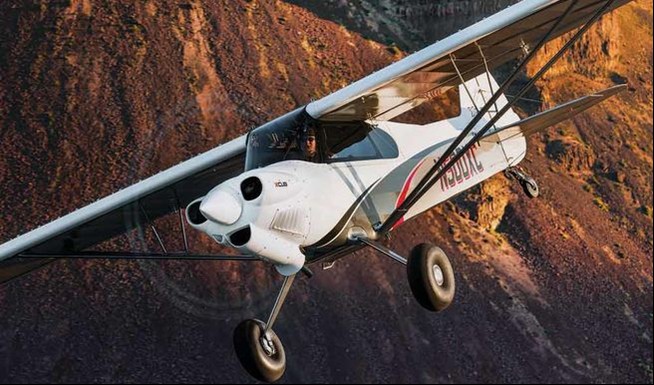
Developed in secret over a six-year period, the CubCrafters XCub emerged on the scene June 2017 as a fully certified product ready for delivery to buyer’s who sought the ideal backcountry machine.
Though it’s a clone of the Piper Super Cub introduced to the market decades ago, the XCub is a thoroughly modern aircraft, featuring Lycoming’s 180 hp O-360 engine spinning a composite Hartzel Trailblazer constant speed prop, a combination that allows the the XCub to cruise at 145 mph at 75 percent power and offer up a useful load of 1,084 pounds while almost levitating like a helicopter on the extremely short takeoff run.

Bristol X.2

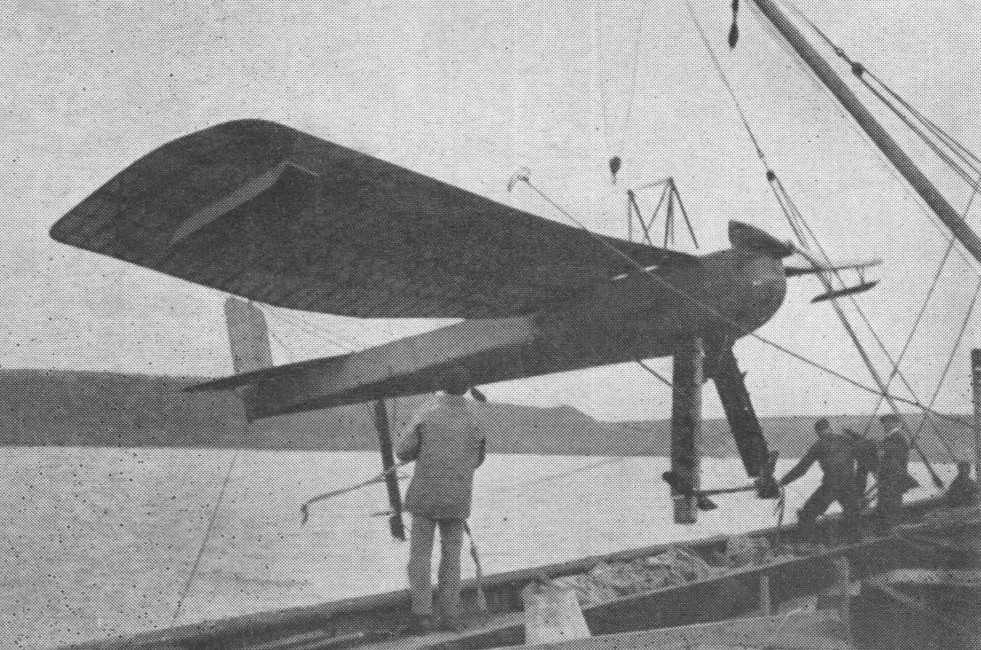
The Bristol X.2 project of 1912 featured a hydroped undercarriage designed by Sir Dennistoun Burney. This consisted of three legs carrying a series of hydrofoils and a water propeller.

At rest, the X.2 floated on its boat-shaped hull. For take-off its engine first drove the water propellor. As it gathered speed, the hydroped undercarriage was supposed to raise te hull clear of the water, until the pilot could switch to the flying propeller and take-off.

When towed behind a destroyer, the X.2 became airborne like a kite, before crashing.