Saab GlobalEye Airborne Early Warning and Control (AEW&C)
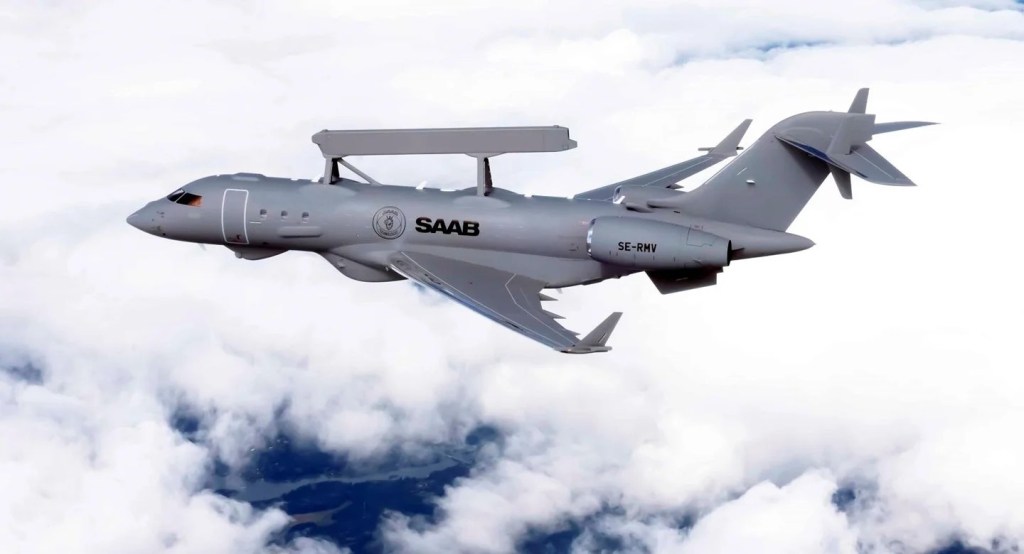
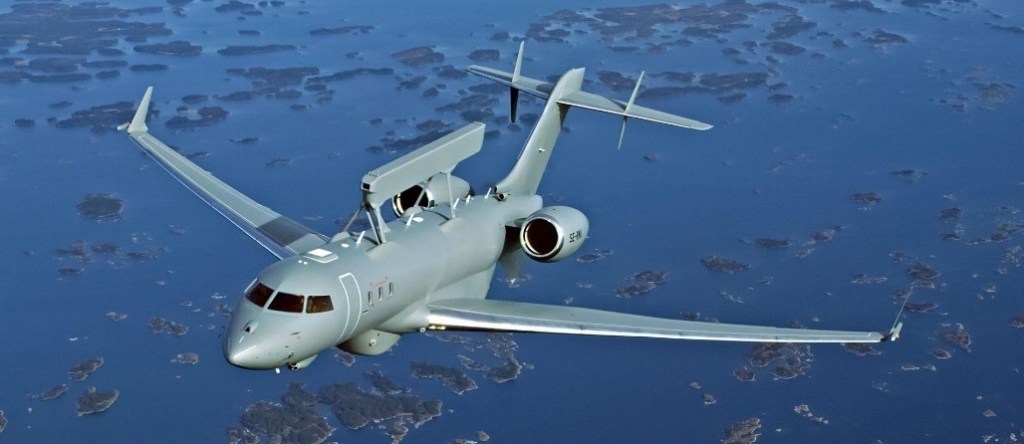
The Saab GlobalEye Airborne Early Warning and Control (AEW&C) aircraft uses the Bombardier Global 6000/6500 platform.
Saab GlobalEye Airborne Early Warning and Control (AEW&C) aircraft
The Erieye radar system, installed on the GlobalEye aircraft, is capable of tracking airborne targets at a range of 650 km and ground targets at 425 km. Saab notes that the radar, thanks to its AESA (Active Electronically Scanned Array) technology, is sensitive enough to track drones at distances ranging from 100 km to 600 km.
GlobalEye Airborne Early Warning and Control (AEW&C) aircraft.
The Erieye radar system, developed by the Swedish company Saab Electronic Defence Systems, provides a 300-degree coverage, detecting airborne and maritime targets. The system is used by the air forces of countries such as Sweden, Brazil, Pakistan, Thailand, Greece, Mexico, the United Arab Emirates, and Saudi Arabia. The installation platform varies depending on the customer’s needs.
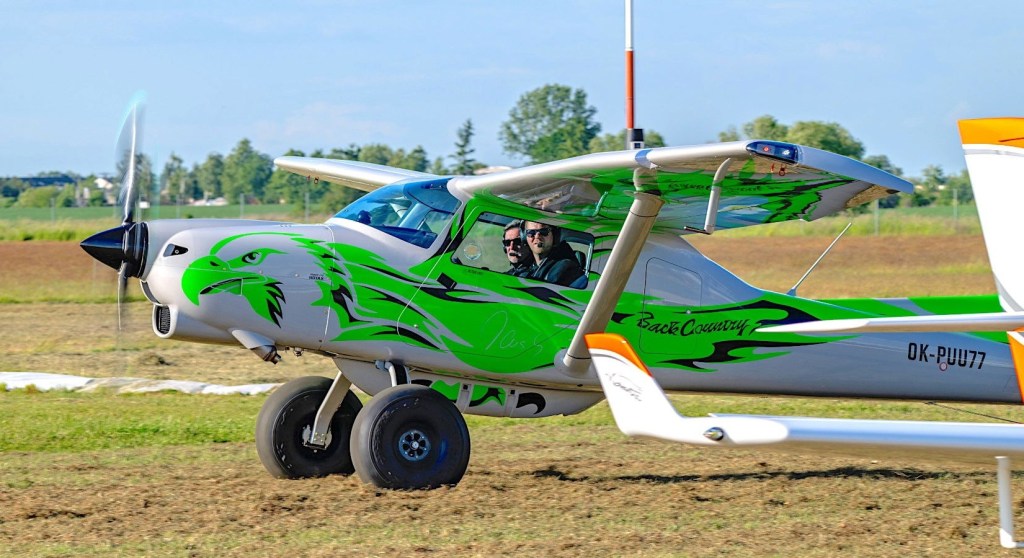
TL Sport Aircraft announced the latest addition to its fleet in July 2025, designed in the format of its predecessors like the TL-3000 Sirius, the Sirius BackCountry provides STOL (short takeoff and landing) performance.
Czech Republic-based TL Sport stated that the aircraft was engineered and designed specifically for the North American market. The BackCountry maintains a 156-mph cruise speed, while posting sub-200 foot landing capability and the ability to take off in less than 100 feet. The aircraft features an airframe constructed from a lightweight Carbon Kevlar composite mix along and supported by 26-inch Alaska Bush tires.
TL Sport made note that the Sirius BackCountry has creature comforts and sophisticated electronics, with heated leather seating and Garmin avionics, configurable for both VFR and IFR conditions.
Development of the aircraft was originally announced at the 2024 AirVenture.
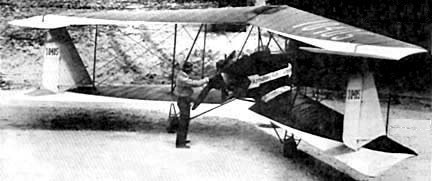
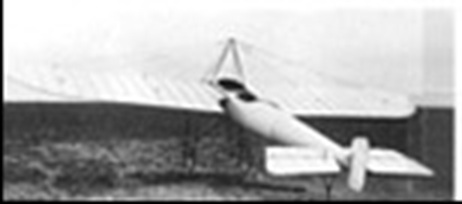
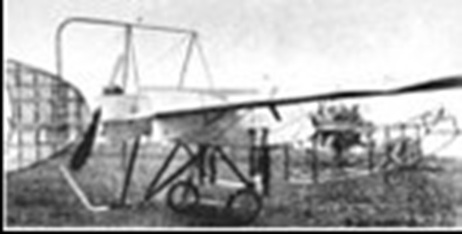
The 1930 Safety Airplane B-2 was an open cockpit single place tailless experimental based on early Burgess-Dunne concept, designed by J W Davis (ex-Burgess Co).
Said to have first been backed by Glenn Curtiss, had a 30° swept wing with all its movable controls at the wingtips.
Two were built, NX899Y and N10405, the latter made 34 flights before both disappeared into history.
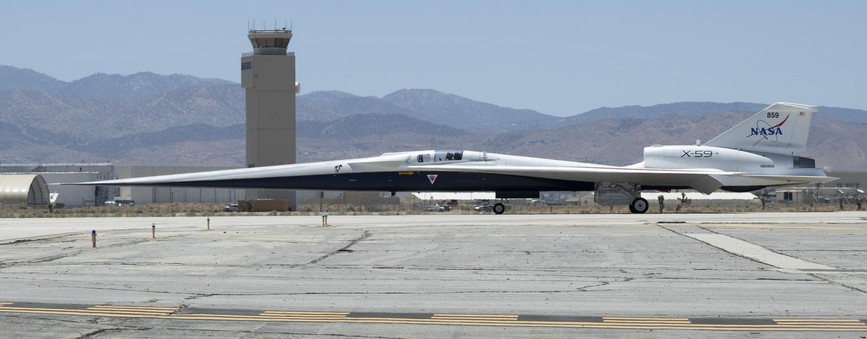
NASA’s X-59 quiet supersonic research aircraft has officially begun taxi tests, marking the first time this one-of-a-kind experimental aircraft has moved under its own power. NASA’s experimental X-59 jet is designed to fly faster than sound but also dampen the sonic “boom.”
Despite schedule delays in the early 2020s, the X-59 was delivered to NASA for flight testing in January 2025. Ground tests, including low-speed taxiing, began in mid-July, with a maiden flight expected later that year.
On July 18, 2025, NASA’s experimental X-59 supersonic research aircraft basked in golden light on the ramp at Lockheed Martin’s Skunk Works facility before being put through a series of ground tests.
The X-59 Palmdale 12 Sept 2025
The X-59 Quesst (Quiet SuperSonic Technology) is an experimental aircraft developed by Lockheed Martin’s Skunk Works for NASA, designed to achieve supersonic speeds with dramatically reduced noise, transforming the traditional sonic “boom” into a softer “thump.”
NASA test pilot Nils Larson and the X-59 team, made up of NASA and contractor Lockheed Martin personnel, completed the aircraft’s first low-speed taxi test at U.S. Air Force Plant 42 in Palmdale, California, on July 10, 2025.
Nils Larson is set to serve as pilot for first flight, with X-59’s crew chiefs – Matt Arnold from X-59 contractor Lockheed Martin and Juan Salazar from NASA.
The X-59’s life support system is designed to deliver oxygen at the aircraft’s cruising altitude of 55,000 feet. Larson will also wear a g-suit, similar to what fighter pilots wear.
The X-59 features an ejection seat and canopy adapted from a U.S. Air Force T-38 trainer, which comes equipped with essentials like a first aid kit, radio, and water.
The taxiing represents the X-59’s last series of ground tests before first flight. Over the coming weeks, the aircraft will gradually increase its speed, leading up to a high-speed taxi test that will take the aircraft just short of the point where it would take off.
During the low-speed tests, engineers and flight crews monitored how the X-59 handled as it moved across the runway, working to validate critical systems like steering and braking. These checks help ensure the aircraft’s stability and control across a range of conditions, giving pilots and engineers confidence that all systems are functioning as expected.
The X-59 is the centerpiece of NASA’s Quesst mission, which aims to demonstrate quiet supersonic flight by reducing the loud sonic boom to a quieter “thump.” Data gathered from the X-59 will be shared with U.S. and international regulators to inform the establishment of new, data-driven acceptable noise thresholds related to supersonic commercial flight over land.
Lockheed Martin Skunk Works in partnership with NASA, successfully completed the first flight of the X-59. The X-59 took off from Skunk Works’ facility at U.S. Air Force Plant 42 in Palmdale, California, before landing near NASA’s Armstrong Flight Research Center in Edwards, California. The X-59 performed exactly as planned, verifying initial flying qualities and air data performance on the way to a safe landing at its new home.
First flight
Skunk Works will continue to lead the aircraft’s initial flight test campaign, working closely with NASA to expand the X-59’s flight envelope over the coming months. Part of this test journey will include the X-59’s first supersonic flights, where the aircraft will achieve the optimal speed and altitude for a quiet boom. This will enable NASA to operate the X-59 to measure its sound signature and conduct community acceptance testing.
For more than a decade, Lockheed Martin Skunk Works and NASA have collaborated. Lockheed Martin Skunk Works is leading the design, build and flight test of the X-59 quiet supersonic technology (QueSST) X-plane. The technology demonstrator will be flown over populated areas to provide U.S. and international regulators with statistically valid data required to help approve new rules that could allow quiet commercial supersonic flight over land.
Designed to meet a Yugoslav Air Force requirement for a twin-engined crew trainer / transport, the prototype Type 214-D flew in 1951, powered by two 480 hp Ranger SVG-770 engines. A change to 600 hp Pratt and Whitney R-1340-AN-1 radials was made for production aircraft, which entered service in 1957.
As a transport the 214-D can carry a crew of two and eight passengers. In its primary role as a crew trainer, it is able to provide simultaneous instruction for pilots, navigators, bomb-aimers and radio operators.
Construction is of all-wood, except for the tail control surfaces, which are metal with fabric covering. Provision is made for carrying practise bombs and rockets under the wings.
Engines: 2 x 600 hp Pratt and Whitney R-1340-AN-1 Wing span: 53 ft 1.5 in Length: 35 ft 9 in Gross weight: 11,080 lb Max speed: 226 mph Range: 670 miles



 All Aero