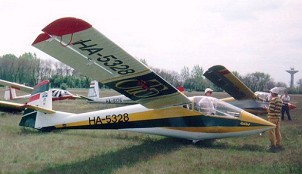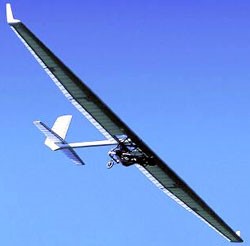
Ruppert Composite Archaeopteryx

Designed by Roger Ruppert, the 1998 Archaeopteryx was conceived as a conventional glider configuration for foot launch. Primary targets were set to minimize the mass, allowing slowest possible flight speeds and providing good manoeuvrability based on a friendly stall behaviour as well as outstanding high-speed flight performances with full fairing on the cockpit. The concept permits a safe foot launch also in nil wind conditions. Excellent climb rates and an efficient riding out of extremely weak and slim thermals (microlift) are possible.
No. Built: 1

Wing span: 13.6 m / 44.6 ft
Wing area: 12.8 sq.m / 138 sq.ft
Gross Weight: 160 kg / 353 lb
Aspect ratio: 12.07
L/D Max: 24
MinSink: 0.44 m/s | 87 fpm
Hang glider weight: 40 kg
Minimum pilot weight: 70 kg
Maximum pilot weight: 110 kg
Minimum speed: 29 km/h
Maximum speed: 140 km/h
Packed length: 6 m
Seats: 1
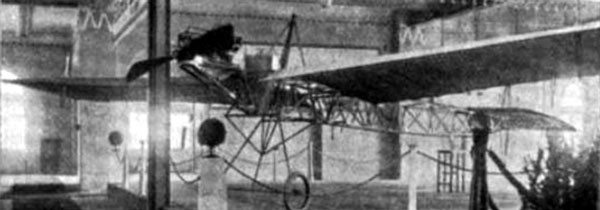
Rupel Flying Machine

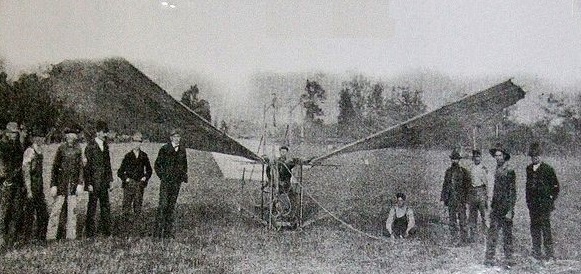
Albert Rupel in his Flying Machine

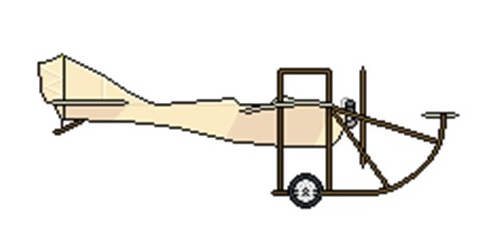
This machine was tested in October 1904, pulled by an automobile, but when the car reached a moderate speed the plane lifted, but a gust of wind tipped a wing so that the wheels on the opposite side were crushed. As a substitute, ordinary boards like skis were used, but then the car stalled without getting the plane off the ground, so horses had to be used. A team of draft horses pulled the rope and caused the plane to soar as high as the tree tops. Its builder Albert Rupel of Indianapolis, Indiana died of lockjaw less than a year later after stepping on a nail, before he could test it with a proper engine.

Ruixiang / Liaoning Ruixiang RX1E

RX1E

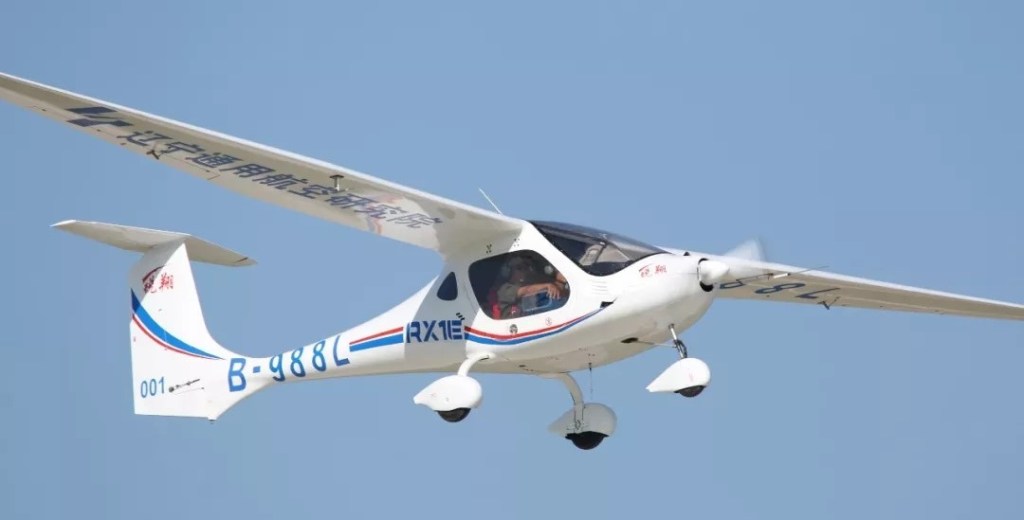
The RX1E aircraft is China’s first two-seater general aircraft developed by Liaoning Ruixiang General Aircraft Manufacture Co. Ltc. The aircraft used pure lithium batteries and permanent magnet motor to drive the propeller.

The whole machine structure made of composite material. The side-by-side two-seater aircraft belonged to the category of light sport aircraft, and debuted at the 2012 Zhuhai airshow. The cabin opens on both sides to facilitate boarding passengers.

The RX1E aircraft is equipped with mechanical flight instruments and electronic digital display power meters.

On November 1, 2017, at Fakucaihu Airport in Shenyang, the first flight of the Ruixiang Extended Range Electric Aircraft (RX1E-A) was successful. On October 19, 2018, RX1E-A aircraft has obtained the Model Design Certificate (TC) issued by China Civil Aviation Administration.

RX1E-A

RX1E
Engine: A37K154, 30KW
Propeller: LGAA
Wingspan: 14.5m
Wing area: 12 sq.m
Length: 6.61 m
Maximum take-off weight: 500 kg
Maximum load: 162 kg
Maximum speed: 150 kph
Cruising speed: 120 kph
Ceiling: 3000 m
Endurance: 1 hr
Load factor: +4g/-2g
Seats: 2

RX1E-A
MTOW: 600 m
Maximum Landing Weight: 600 kg
Payload: 160 kg
Max Level Speed: 160km/h
Stall Speed: 82km/h
Cruising Speed: 110km/h
Load factor: +4g/-2g
Service Ceiling: 3000 m
Endurance: 90 min
Range: 180 km
Takeoff run: 330 m
Landing Run: 380 m

Rudlicki R-I

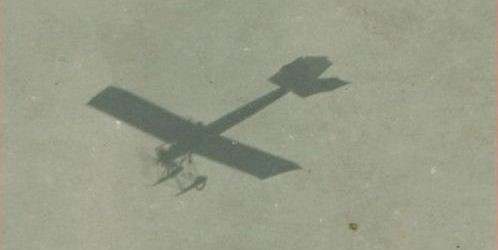
Shortly before the outbreak of the Great War, student Jerzy Rudlicki (who later become known aircraft designer), after building several successful gliders 1912-1913 designed an aircraft named R-I. Its construction commenced with support of the Aero Club of Odessa (where Rudlicki resided at that time), which supplied Anzani engine. When the war erupted the plane was nearing completion and was therefore requisitioned by the Russian military which finalized the construction and made several (3 or 4) flights on it (before the plane crashed due to engine failure).

Span: 29’6″
Length: 29’6″
Weight: 320 lbs

Rubik R-27 Kópé (Scamp) / MME / Miizseripari MCivek Esztergom R-27 Kópé

This single-seater training sailplane first flew in prototype form on 7 October 1961 and is closely related to the R-26 Gobe, having basically the same fuselage, and 80% of the components of the two types are interchangeable. The wings are the same as the R-26’s but of reduced area and lower aspect ratio (9.35), and the fuselage is very much the same metal monocoque structure, partly fabric-covered. The tail unit reverts to the cantilever ‘butterfly’-type of the R-25 Standard, again of fabric-covered metal construction with a trim tab in each elevator. Landing gear consists of a non-retractable monowheel with torsion rubber spring and a brake, and the pilot is seated under a removable blown plastic canopy.

Span: 39 ft 4.5 in
Length: 23 ft 0 in
Wing area: 165.8 sqft
Aspect ratio: 9.35
Empty weight: 344 lb
Max weight: 595 lb
Max speed: 124 mph (in smooth air)
Max aero-tow speed: 62 mph
Min sinking speed: 3.28 ft/sec at 43.5 mph
Best glide ratio: 20:1 at 46.5 mph

Rubik R-26 Góbé / MME / Miizseripari MCivek Esztergom R-26 Góbé

The R-26 Gobe metal and fabric two-seater sailplane was developed from the R-23 Gebics and R-24 Bibic and has a conventional fabric-covered cantilever metal tail unit with the tailplane mounted part of the way up the fin, and lower aspect ratio (10.88) constant chord wings.

The first of two R-26 Gobe prototypes made its maiden flight on 6 May 1961 and an initial production batch of 50 was put in hand. The cantilever high wings are single-spar all-metal structures with a leading edge torsion box and fabric-covered from the 35% chord line aft; the slotted metal ailerons are also fabric-covered and DPS air brakes are fitted. The metal monocoque fuselage is partly fabric-covered and the landing gear consists of a non-retractable monowheel with a torsion rubber spring and a brake. The two pilots are seated in tandem under a sideways-opening blown plastic canopy.

  • R-26P1 – 1st prototype, v-tail
  • R-26P2 – 2nd prototype, conventional tail
  • R-26SU – Góbé 82, renewed production version, 78 built 1982/’82 at Szombathely
  • R-26M Motor Góbé – motorized Góbé (pusher engine above wing)
  • R-26S – serial production version, 115 built 1963/’65 at Esztergom

Wing span: 14 m / 45 ft 11 in
Wing area: 18 sq.m / 193.75 sq.ft
Length: 29 ft 5 in
Empty Weight: 240kg / 529lb
Payload: 200kg / 441lb
Gross Weight: 440kg / 970lb
Wing Load: 24.4kg/sq.m / 5lb/sq.ft
Aspect ratio: 10.88
L/DMax: 23.7 @ 81 kmh / 44 kt / 50 mph
Airfoil: Go 549 modified
Max speed: 106 mph (in smooth air)
Max aero-tow speed: 68.5 mph
MinSink:0.97 m/s / 3.18 fps @44kts/81kmh/50mph
No. of Seats: 2
Structure: aluminum, fabric cover on wings.