S.B.P.C.C. DS1 Papillon

Lebanon 1947

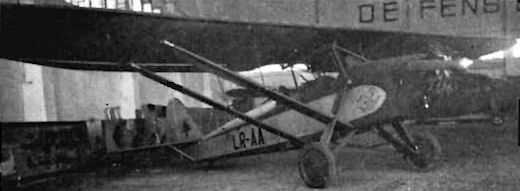
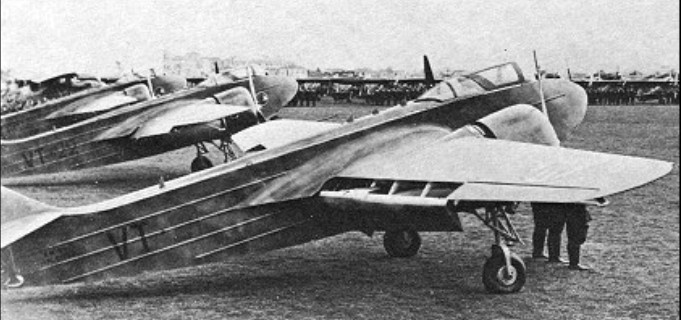
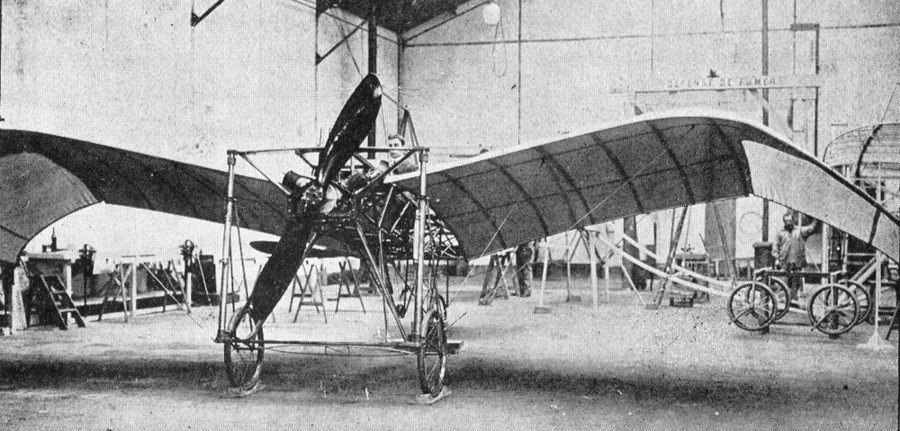
Air France personnel stationed in Damascus during the 1930s, mechanic at the Air France overhaul workshop in Damascus, and four of his work mates designed and built an amateur aircraft. Because of his five “fathers”, it was named S.B.P.C.C. DS1 “Papillon” (Moth).

The aircraft is a high-wing monoplane equipped with a 40 hp Salmson 9 Ad engine from a Klemm. The fuselage is made of molybdenum steel tubes, welded and crossed by piano strings with floor forming box. The front part is made of 0.6 mm duralumin and the rear part is clothed.

The wing is carried by a cabin in profiled and welded steel tubes and by nets in duralumin tubes profiled and covered. The wing is made of wood, consisting of a monospar forming a box with scythe spar to support the fins. The empennage is also made of wood. All the cover is in canvas.

The undercarriage is made of duralumin tubes triangulated by recoil legs. Bungee cords provide cushioning.

The tanks are made of sheet metal of welded aluminum and the controls in steel cables with torsion bar mounted on ball bearings. The aircraft is two-seater in tandem under an open cockpit.

Begun in September 1934, the aircraft flew on November 1, 1935 in Syria. It may never have been officially registered although there has been a pic sporting the S-YRIE registration.

After WW2 it may have gone to Lebanon as the DS-1 Papillon with 1947 registration LR-AAP. It was damaged in the same year.

Engine: 40hp Salmson
Wingspan: 10,00 m
Length: 6,50 m
Height: 2.05 m
Wing area: 14 sq.m
Weight: 320 kg
Max speed: 140 kph at SL
Stall: 45 kph

Sayers SCW / CWS

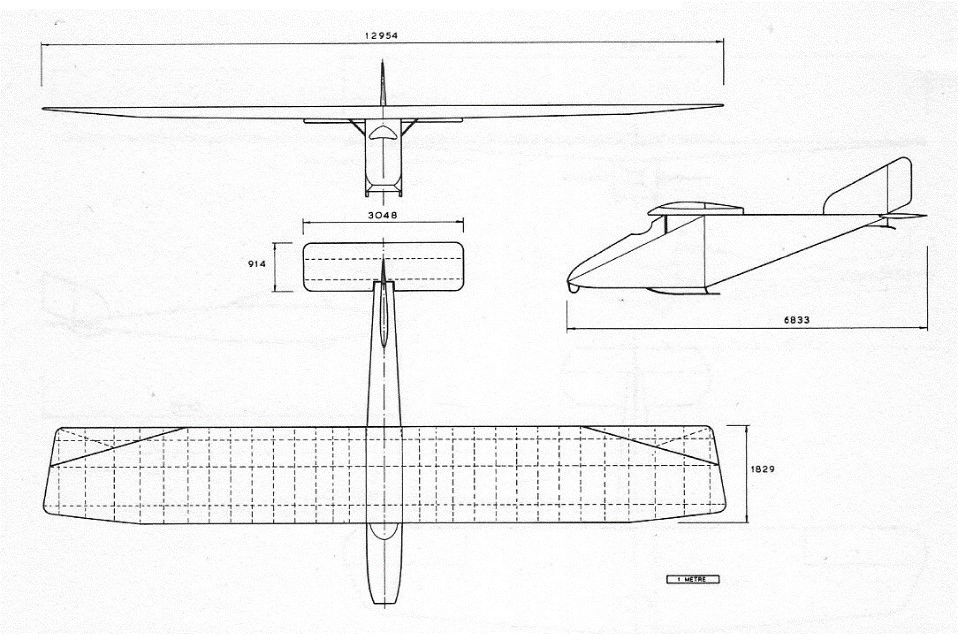
The Sayers SCW, also known as the Sayers CWS, was a single seat glider designed by Capt. W.H Sayers and built by The Central Aircraft Co, Kilburn, London, N.W.6, F.T. Courtney and Sqn Ldr M.E,A. Wright. The design was influenced by the Hannover Vampyr glider, the winner of the 1922 Wasserkuppe.

Of wooden construction, it was reported that the glider had been designed in 19 hours and built in 19 days.

The undercarriage was twin mainwheels of fixed centre, with nose bumpers, plus a tail skid. The cantilever wing had no airbrakes or flaps.

Only one was built, for the 1922 Itford competitions as No.17. After the competitions it carried out further test flying at Itford, in December, but was wrecked when a tent was blown down on top of the glider.

Wingspan: 12.95 m / 42 ft 6 in
Length: 6.83 m / 22 ft 5 in
Wing area: 21.83 m / 235 sq.ft
Aspect ratio: 7.7
Wing section: T.62 modified (an airscrew section)
Empty weight: 81.64 kg / 180 lb
AUW: 163.3 kg / 360 lb
Wing loading: 7.37 kg/sq.m / 1.53 lb/sq.ft

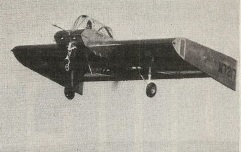
Sawyer Skyjacker II

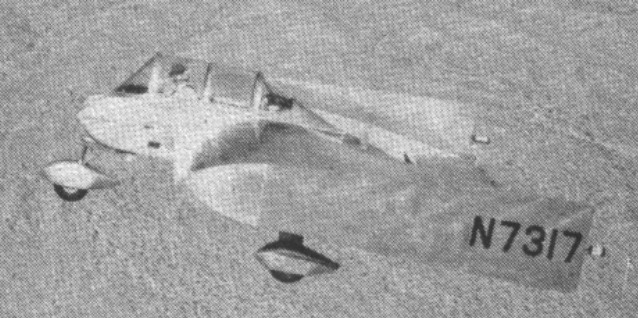
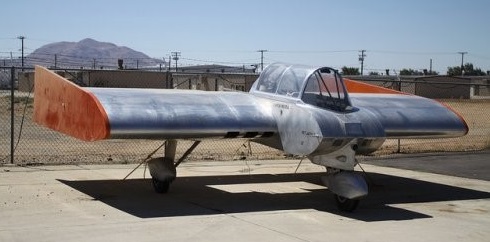
Sawyer’s objective for constructing this vehicle, N7317, was to prove the stability, controllability and capability of such a radical, low-aspect-ratio aircraft. The size for this type of aircraft is unlimited due to the nature of its lifting body design. The Skyjacker is cheap to build because there are no compound curves, highly stressed areas or complex control systems. The design will not stall or spin and has no rudders.

Sawyer Skyjacker II N7317

First flying on 3 July 1975, the Skyjacker was not marketed as a sporting aircraft, but is, a two-seat experimental research vehicle of all-metal construction.

Gallery

Engine Lycoming IO-360-A1B6D, 200-hp
Wingspan 18 ft
Length 17 ft 6 in
Gross Wt. 2250 lbs
Empty Wt. 1650 lb
Fuel capacity 50 USG
Top speed 130 mph
Cruise 105 mph
Stall 45 mph
Climb rate 400 fpm
Takeoff run 1200 ft
Landing roll 1000 ft
Range 525 sm
Seats: 2

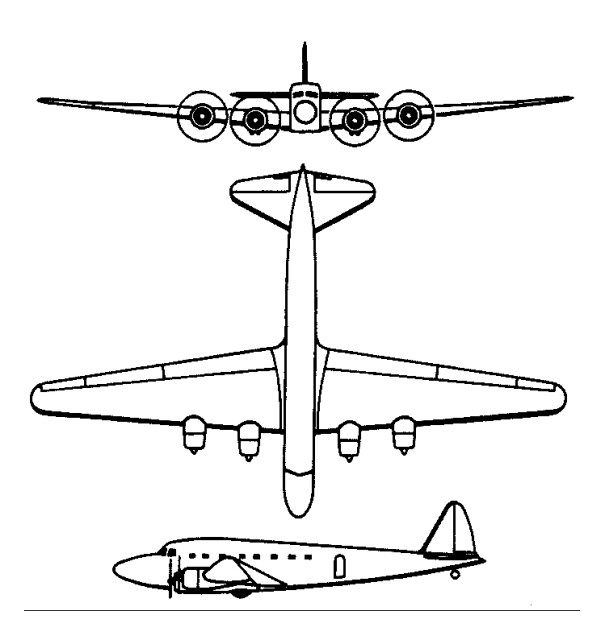
Savoia-Marchetti SM.95

The first prototype flew on May 8, 1943. 23 built.

Milan-Forlanini Airport 1948

Gallery

S.M.95
Engines: 4 x Alfa Romeo 128 RC.18, 641kW
Max take-off weight: 21600 kg / 47620 lb
Loaded weight: 12800 kg / 28219 lb
Wingspan: 34.28 m / 112 ft 6 in
Length: 24.77 m / 81 ft 3 in
Height: 5.7 m / 19 ft 8 in
Wing area: 128.3 sq.m / 1381.01 sq ft
Max. speed: 400 km/h / 249 mph
Ceiling: 6500 m / 21350 ft
Range: 2000 km / 1243 miles
Crew: 4-5
Passengers: 44

Savoia-Marchetti S.M.95

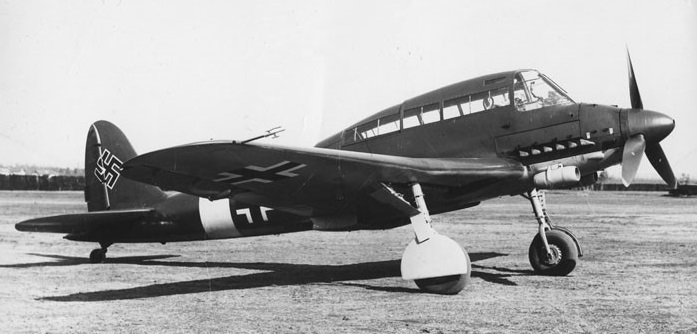
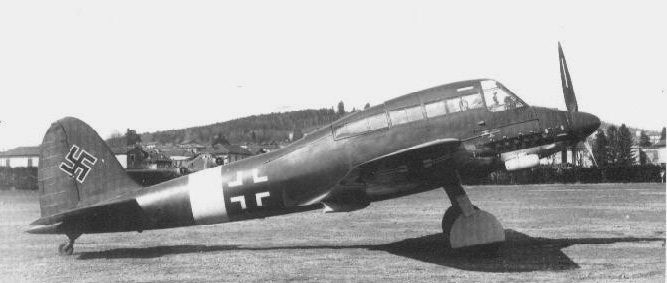
Savoia-Marchetti SM.93

The SM-93 was an all-wood single-engined low-wing monoplane with retractable undercarriage. The fuselage had a monocoque structure, with a single fin and low-set tailplane. The crew of two were accommodated under a long greenhouse-style canopy, with the pilot lying in a prone position above the rear of the engine, a Daimler-Benz DB 605A liquid-cooled V12 engine, while the gunner/radio-operator sat facing rearwards on a conventional seat. The two-spar wings were in three parts with the inner wings sharply tapered to the join, outboard of the landing gear attachments, and the outer wings moderately tapered to the rounded wingtips. The prone position for the pilot was intended to enable the pilot to resist the onset of g-induced loss of consciousness, but the position was uncomfortable for normal flight and severely limited the rearwards view of the pilot.

The SM.93 made its maiden flight on 31 January 1944, and up to 29 March 1944 the SM-93 had made 16 test-flights with speeds up to 900 kilometres per hour (560 mph) achieved in a dive, demonstrating the low drag and clean aerodynamics.

Flight testing was carried out under the aegis of the Luftwaffe and despite the good performance, the prone position was found to be unsatisfactory, being uncomfortable and restricting rearward vision. The programme was halted by the German control Commission that was running weapons production in the Repubblica Sociale Italiana – RSI after the 1943 armistice.

SM.93
Powerplant: 1 × Daimler-Benz DB 605A, 1,100 kW (1,475 hp)
Wingspan: 13.900 m (45 ft 7+1⁄4 in)
Wing area: 31.09 m2 (334.7 sq ft)
Length: 11.017 m (36 ft 1+3⁄4 in)
Height: 3.797 m (12 ft 5+1⁄2 in)
Empty weight: 3,544 kg (7,814 lb)
Gross weight: 5,500 kg (12,125 lb)
Maximum speed at 4,500 m (14,764 ft): 580 km/h (360 mph, 310 kn)
Maximum speed at 7,000 m (22,966 ft) with bombload: 542 km/h (337 mph)
Maximum speed at 7,000 m (22,966 ft) clean: 580 km/h (360 mph)
Cruise speed: 505 km/h (314 mph, 273 kn)
Never exceed speed: 950 km/h (590 mph, 510 kn)
Range: 1,600 km (994 mi, 864 nmi)
Service ceiling: 10,000 m (32,800 ft)
Time to 4,000 m (13,123 ft): 5 min 10 sec
Wing loading: 176.9 kg/m2 (36.2 lb/sq ft)
Power/mass: 0.2 kW/kg (0.122 hp/lb)
Crew: 2
Guns:
1 × 20 mm MG 151/20 cannon (150 rounds) firing through the propeller hub
2 × 12.7 mm (.50 in) Breda-SAFAT machine guns (with 350 rpg) in the wings
1 × 12.7 mm (.50 in) Breda-SAFAT machine gun on a flexible mounting in the rear cockpit
Bombs: Total 1,451.5 kg (3,200 lb)
816.5 kg (1,800 lb)1800 lb. below the fuselage
317.5 kg (700 lb)1400 lb. under each wing
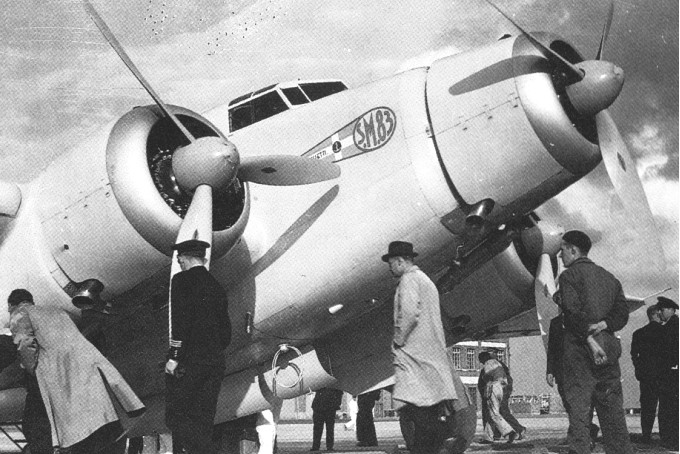
Savoia-Marchetti SM.85 / SM.86

Single-seat twin-engined dive bomber and ground-attack monoplane. Power was provided by two 373kW Piaggio P.VII RC.35 engines. A small number served with the Regia Aeronautica.

S.M.85
Loaded weight: 2950 kg / 6504 lb
Empty weight: 4190 kg / 9237 lb
Wingspan: 14 m / 46 ft 11 in
Length: 10.4 m / 34 ft 1 in
Height: 3.3 m / 11 ft 10 in
Wing area: 25.8 sq.m / 277.71 sq ft
Max. speed: 368 km/h / 229 mph
Ceiling: 6500 m / 21350 ft
Range: 827 km / 514 miles
Armament: 1 x 12.7mm or 1 x 7.7mm machine-gun, 1 x 800kg bomb

Savoia-Marchetti SM.84

When it was realized that the S.79 could no longer measure up to foreign medium bombers, SIAI Marchetti designed a version initially called the SM.79bis and then SM.84. With respect to the S.79, the 1940 SM.84 featured a different and more rational internal fuselage design and had twin fins to improve the gunner’s field of fire to the rear. The aircraft suffered from various difficulties and never equalled the performance of its predecessor.

SM.84
Engine: 3 x 746kW Piaggio P.XI piston radials
Max take-off weight: 13288 kg / 29295 lb
Wingspan: 21.13 m / 69 ft 4 in
Length: 17.93 m / 58 ft 10 in
Height: 4.59 m / 15 ft 1 in
Wing area: 61 sq.m / 656.60 sq ft
Max. speed: 432 km/h / 268 mph at 11,500 ft
Ceiling: 7900 m / 25900 ft
Range: 1830 km / 1137 miles at 225 mph
Armament: 4 x 12.7m machine-guns, 1600kg of bombs
Crew: 4/5