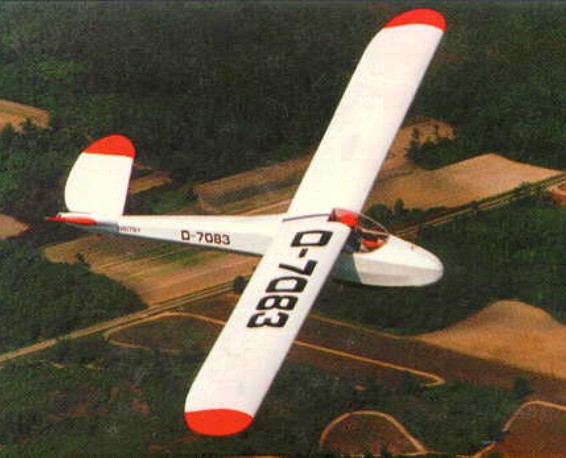
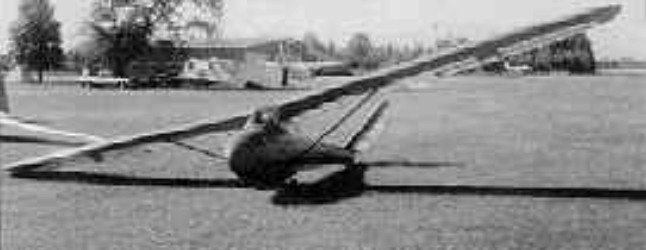
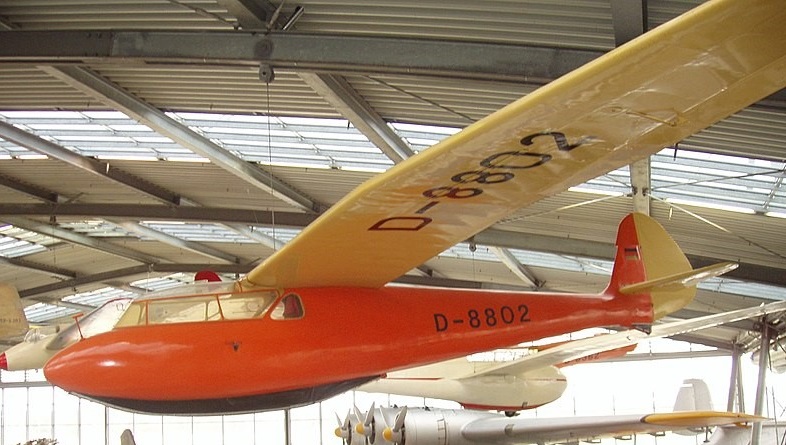
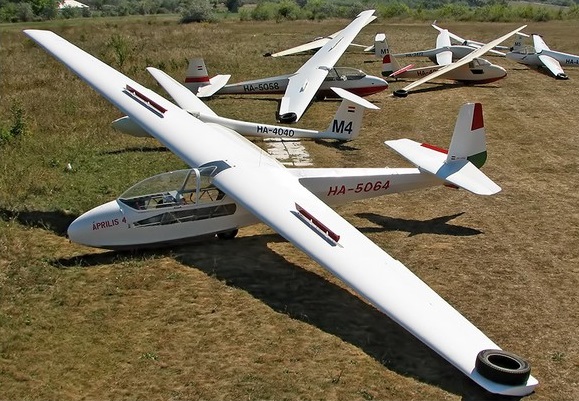
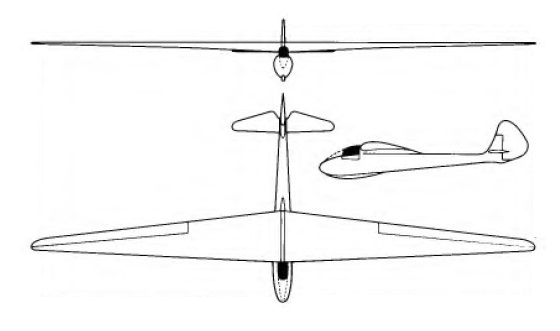
The Rudolf Kaiser designed Ka-3, which first flew in 1956, was a development of the earlier Ka-1 with a steel fuselage instead of wood. The wood and fabric wing, steel tube and fabric fuselage Ka-3 has top surface spoilers for approach control and main skid, but no wheel.
Schleicher also offered the Ka-3 in kit form.
Wing span: 10 m / 32.8 ft Wing area: 9.9 sq.m / 106.6 sq.ft Empty Weight: 95 kg / 210 lb Payload: 100 kg / 220 lb Gross Weight: 195 kg / 430 lb Wing Load: 19.7 kg/sq.m / 4.03 lb/sq.ft L/DMax: 18 75 kph / 40 kt / 47 mph MinSink: 0.95 m/s / 3.12 fps / 1.85 kt No. of Seats: 1 Aspect ratio: 10.1 Airfoil: Go 549
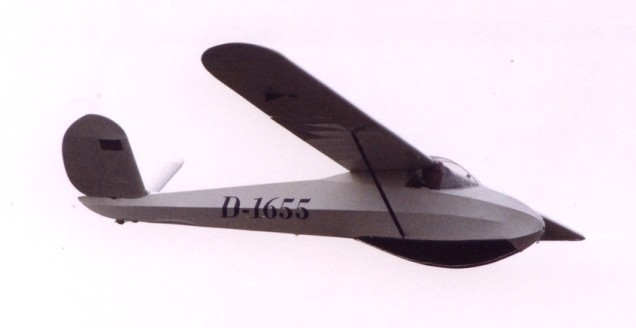
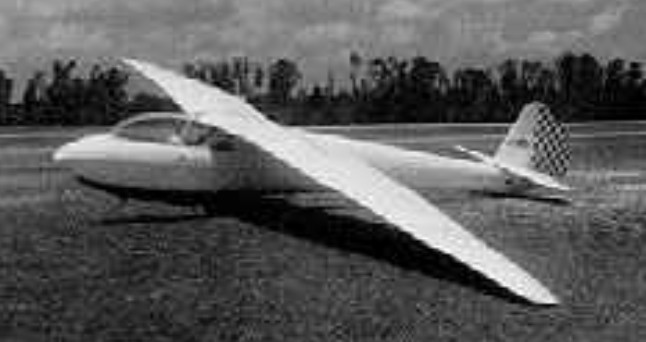
The 1955 Ka-2 was designed as a two-place advanced trainer. The later Ka-2B had the wingspan inceased to 16 m. Approach control is effected by top and bottom surface Schempp-Hirth type airbrake.
Ka-2 Wing span: 15 m / 49.2 ft Wing area: 16.8 sq.m / 180.8 sq.ft Aspect ratio: 13.4 Airfoil: Go 533 Empty Weight: 254 kg / 560 lb Payload: 208 kg / 454 lb Gross Weight: 460 kg / 1014 lb Wing Load: 27.38 kg/sq.m / 5.61 lb/sq.ft L/DMax: 24 87 kph / 47 kt / 54 mph MinSink: 0.96 m/s / 3.15 fps / 1.87 kt Seats: 2
KA2b Rhonschwalbe Wingspan: 52.493 ft / 16.0 m Wing area: 17.5 sq.m / 188.4 sq.ft Aspect ratio: 14.63 Airfoil: Go 533 Length: 26.739 ft / 8.15 m Empty Weight: 278 kg / 613 lb Gross Weight: 480 kg / 1058 lb Payload: 202 kg / 445 lb Wing Load: 27.43 kg/sq.m / 5.62 lb/sq.ft Max. speed: 92 kt / 170 km/h Crew: 2
Designed by Rudolf Kaiser, the prototype Ka-1, which first flew in 1952, was constructed in Kaiser’s attic. The model was later produced by Schleicher. The Ka-1 has top surface spoilers for approach control. No landing wheel is fitted, takeoff normally being made with the glider sitting on its mainskid.
Wing span: 10 m / 32.8 ft Wing area: 9.9 sq.m / 106.6 sq.ft Empty Weight: 95 kg / 209 lb Payload: 100 kg / 221 lb Gross Weight: 195 kg / 430 lb L/DMax: 18 75 kph / 40 kt / 47 mph MinSink: 0.95 m/s / 3.12 fps / 1.85 kt Wing Load: 19.7 kg/sq.m / 4.04 lb/sq.ft Aspect ratio: 10.1 Airfoil: Go 549 mod. Seats: 1
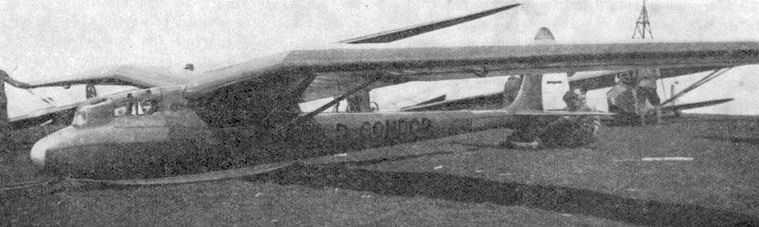
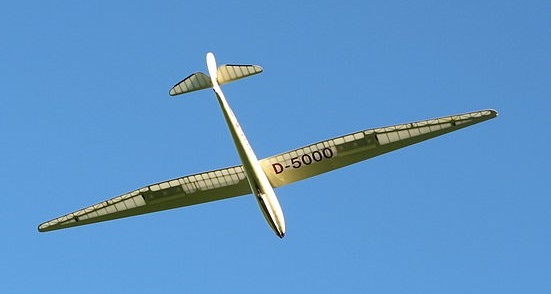
The Condor was designed by Heini Dittmar with the advice and help of Atexander Lippisch and Dipl-lng Fritz Kramer; the Condor owed something to an earlier sailplane, the 19m (62ft 3.5in) span Fafnir. Dittmar built the prototype Condor in a workshop at Wasserkuppe in his spare time and it made its debut in the 1932 Rhon gliding contest, which it won; its very clean lines aroused considerable interest, and it went into series production.
Introduced in its original form in 1932, the single-seat Condor 1, the high-set gull wings were braced with V-struts and had strengthened leading edges. The Condor series was built from wood, with the wooden-framed wing covered in doped aircraft fabric. The landing gear was originally a dolly for take-off, with the aircraft landing on a fixed skid, although at least one was modified to use a fixed monowheel. The wings have balanced DFS-style dive brakes for glidepath control. The horizontal stabilizer is of an all-flying tail design.
Designed by Heini Dittmar at the end of 1931 as a performance glider using the Fafnir hull drawings and was built by him for 2000 working hours using materials from the RRG aeronautics department. The flight was performed by his brother Edgar just before the Rhön competition in 1932, where Heini Dittmar and Condor won the junior class in the practice competition.
Condor I
The Condor 2 and the IIA, developed in 1935, replaced strut bracing with a cantilever wing with a new wing section of reduced thickness/chord ratio on the outer parts of the wings, living an improved glide angle and lower rate of sink at higher speeds. This version set a new world distance record of 303 miles in 1935 and was a well-known type at prewar gliding contests. The Condor itself was of conventional wood and fabric construction, with very long span ailerons and a landing skid under the fuselage; no monowheel was fitted.
In February 1934 a Condor was taken to South America and, flown by Heini Dittmar, set a new world altitude record of 14,272ft for sailplanes, breaking the previous record by nearly 6,000ft. In 1935 one was flown to a new world distance record of 504 km (313 mi).
The Condor 3, which appeared in 1938 and was built by Schleicher, had a longer, slimmer fuselage and strengthened cantilever wings which now incorporated DFS air brakes.
After the war Heini Dittmar formed his own company, Mowe-Flugzeugbau Heini Dittmar, and there developed a tandem two-seater version, the Condor 4, which first flew in 1953 and was very similar to the Mk 3 apart from the second seat. The two-seat Condor IV was put into series production by Schleicher. The Condor IV has a 18.0 m (59.1 ft) span wing that employs a Goettingen 532 airfoil at the wing root, changing to a NACA 0012 section at the wing tip.
Condor IVs were flown in the 1952 World Gliding Championships held in Madrid, Spain. During that contest Ernst-Günther Haase set a new world record in the multi-place category for speed over a 100 km (62 mi) triangle of 80.9 km/h (50 mph).
Condor IV
Hans Luenger imported one Condor IV-2 to the United States in 1952. After the wooden fuselage was damaged, he and Merritt Zimmerman built a new design replacement from welded steel tube and covered it with doped fabric. The new fuselage included a fixed wheel for landing gear. This aircraft was removed from the US Federal Aviation Administration registry in 2007.
The Condor, also referred to as the Dittmar Condor, single and two-seat gliders were produced in small quantities before the Second World War, produced again between 1952 and 1955 by Alexander Schleicher GmbH & Co and also by Ferdinand Schmetz.
Some sources state that there were a total of 18 Condors constructed, while one other says that the total number is unknown, but includes at least 18 Condor IVs built under licence in Argentina.
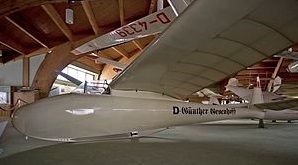
Condor IV in the Deutsches Museum Flugwerft Schleissheim
Peter Reidel’s Condor La Falda was modified to have a strut-mounted power-egg, containing a Kroeber M4 driving a pusher propeller, attached to the centre-section. The intention was for the power-egg to be carried to the glider by the retrieve crew, fitted to the glider and the pilot to fly the glider back to home base without the need to de-rig and transport by trailer. In practice it was found to be impractical due to the complexity of the mounting, as well as time and effort required to mount the power-egg.
A small series was created by licensees Ferdinand Schmetz in Herzogenrath (five Condor IV / 2 with DFS brake tabs) and Alexander Schleicher (seven Condor IV / 3 with Schempp – Hirth brake tabs that extend up and down). Schleicher successfully received type certification from the Test Center for Aviation Equipment (PfL). Replicas were made in Argentina as Condor IV / 4.
However, some copies of the Condor IV were also used as test vehicles for new development; For example, flaps were attached to an example and tested by Hanna Reitsch. This copy is owned by Luftsportverein Wipperfürth. A Condor IV is located at the airport in Osnabrück Aviation Association in Achmer. More Condor IVs are on display at Schleissheim’s Airport and the German Glider Museum at Wasserkuppe. A Condor IV also flies in Anklam, it comes from an Argentine production (license Schleicher).
Condor I Initial strut-braced, single-seat version introduced in 1932. Span: 17.26 m Wing area: 16.20 m² Wing extension: 18.4 Length: 7.65 m Empty weight: 310 kg Wing load: 19.12 kg / m Glide ratio: 26 Crew: 1
Condor IA
Condor II Germany, 1932 Wingspan: 56.562 ft / 17.24 m Wing profile: Gö 532 Wing area: 16.20 m² Wing extension: 18.4 Length: 25.525 ft / 7.78 m Empty weight: 330 kg Wing load: 19.75 kg / m² Min descent: 0.65 m / s Glide ratio: 26 Crew: 1
Condor IIB Improved cantilever wing Seats: 1
Condor 3 Span: 56 ft 6.25 in / 17.24 m Length: 24 ft 11.25 in / 7.6 m Wing area: 174.4 sq.ft / 16.2 sq.m Aspect ratio: 15.0 Wing section: Gottingen 532 Wing extension: 15 Empty weight: 507 lb / 230 kg Max weight: 717 lb / 325 kg Water ballast: None Max wing loading: 20.06 kg/sq.m / 4.11 lb/sq.ft Max speed: 112 mph / 97 kt / 180 km/h Stalling speed: 27 kt / 50 km/h Min sinking speed: 2 ft/sec / 0.6 m/sec Best glide ratio: 28:1 Crew: 1
Condor IV Wing span: 18 m / 59.2 ft Wing area: 21.2 sq.m / 230 sq.ft Aspect ratio: 15.2 Airfoil: Go 532, NACA 0012 Empty Weight: 358 kg / 789 lb Payload: 202 kg / 445 lb Gross Weight: 560 kg / 1234 lb Wing Load: 26.4 kg/sq.m / 5.37 lb/sq.ft L/DMax: 31 80 kph / 43 kt / 50 mph MinSink: 0.70 m/s / 2.3 fps / 1.36 kt Seats: 2
Condor IV-2 Wingspan: 18.0 m (59 ft 1 in) Wing area: 21.2 m2 (228 sq ft) Aspect ratio: 15.2:1 Airfoil: Root: Goettingen 532, tip: NACA 0012 Empty weight: 440 kg (970 lb) Gross weight: 590 kg (1,300 lb) Maximum glide ratio: 30:1 at 80 km/h (50 mph) Rate of sink: 0.70 m/s (138 ft/min) at 69 km/h (43 mph) Wing loading: 28 kg/m2 (5.7 lb/sq ft) Crew: one Capacity: one passenger
Condor IV-3 Wingspan: 18.0 m Wing profile: Gö 532 (inside) / NACA 0012 (outside) Wing area: 21.2 m² Wing extension: 15.3 Length: 8.44 m Empty weight: 358 kg MTOW: 520 kg Wing load: 24.5 kg / m² Maximum speed: 60 km / h Min descent: 0.7 m / s Glide ratio: 31 at 80 km / h Crew: 2
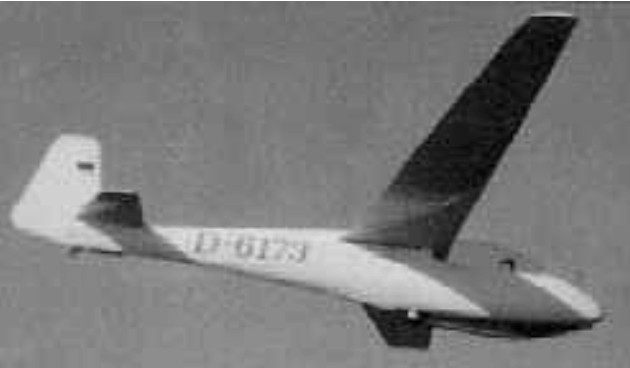
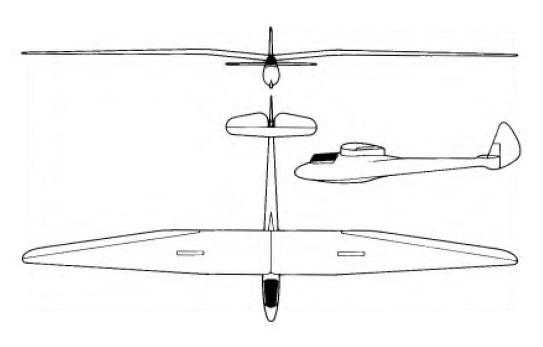
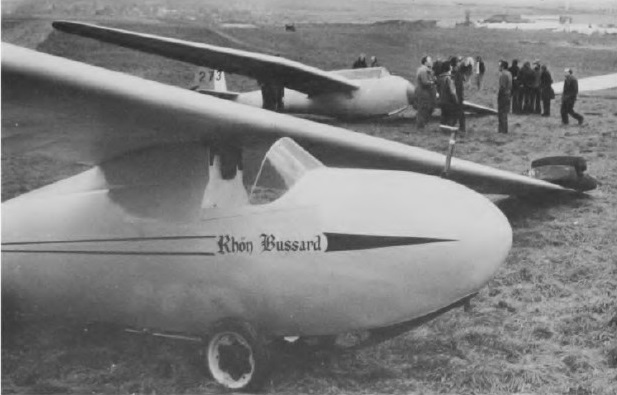
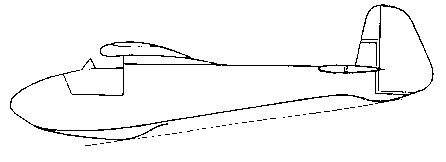
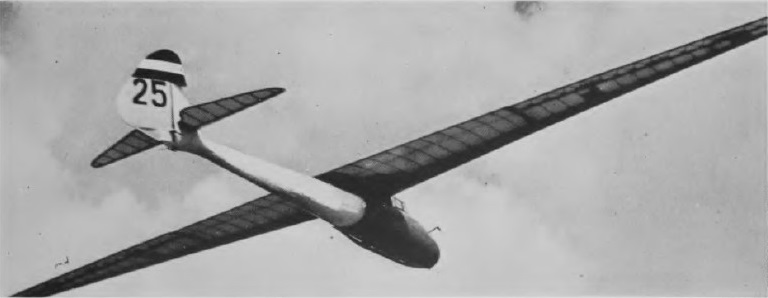
The Rhonbussard, designed by Hans Jacobs as a high performance type capable of cross-country flights of 200 or 300km (124 to 186 miles), first flew in 1933, coming in performance between the Grunau Baby and the high performance ships of the time.
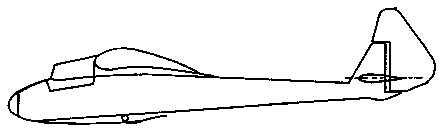
Of conventional wood and fabric construction the Rhonbussard has cantilever two-piece high-set wings with a single spar and a leading edge torsion box and, as on the Rhonadler, the wings are secured to the fuselage by two conical bolts, so enabling rigging to be done quickly and easily. It lacks any spoilers, airbrakes or flaps for approach control. The long-span ailerons are operated by push-rods.
The pilot sits in an open cockpit under the wing leading edge, with a widescreen for protection, and the short oval section fuselage has a main skid for landing plus a tailskid, take-offs being made on a jettisonable double wheel. The tailplane is mounted on top of the fuselage forward of the rudder. One feature, which led to some notoriety, was the requirement for the wings to be joined together at the roots before being presented to the fuselage for attachment.
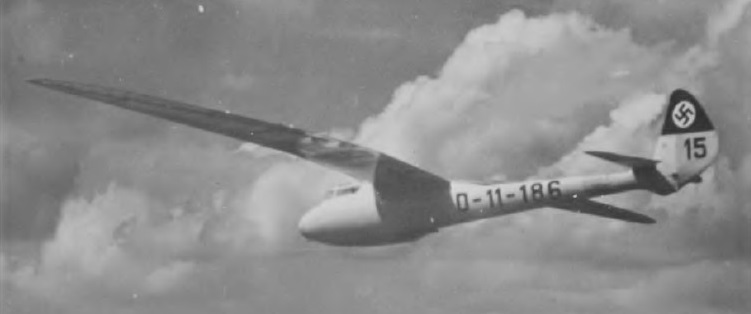
About 1931 the glider manufacturer Alexander Schleicher went to Hans Jacobs, then at the RRG (Rhön-Rossitten Gesellschaft) on the Wasserkuppe, for glider design that, like the RRG Fafnir designed by Alexander Lippisch, was capable making long cross country by travelling quickly between thermals but could be put into series production making it cheaper to build. Jacobs responded with the Rhönadler (in English, Rhön eagle), ready for the 1932 Rhön competition. The following year both Jacobs and Lippisch had to transfer to the state owned DFS (Deutsche Forschungsanstalt Für Segelflug) at Darmstadt, where Jacobs continued to refine the Rhönbussard, hence the DFS Rhönadler name.
The Rhönadler was a wood framed aircraft with plywood and fabric covering. In plan its high wing wings were straight tapered with a torsion resting D-box form by ply skin ahead of the single spar. Aft of the spar the wings were fabric covered. The Rhönadler wing root used a version of the thick Göttingen 652 section, modified by a reduction of its high camber; further outboard this turned into the progressively lower camber Göttingen 535 and Clark Y airfoils. Dihedral was constant, to avoid the constructional complication of the Fafnir’s gull wing. The ailerons were very long, occupying more than half the span. Though neither the prototype nor later production aircraft came with spoilers or airbrakes such devices, opening above the wing, were often retro-fitted.
The Rhönadler’s fuselage was quite slender and entirely ply covered, including the fin, the balancing part of the rudder and a small tail bumper. On the original version, even the cockpit canopy was a ply structure, with small, unglazed apertures for vision. This was progressively modified with increasing glazing into the 1935 variant’s multi-framed conventional canopy. To avoid the wing root aerodynamic interference that the Fafnir’s gull wing was intended to avoid, the Rhönadler’s wing was mounted just above the fuselage on a low, narrow neck or pedestal which placed the leading edge level with the top of the canopy. The high aspect ratio, all-moving horizontal tail was of similar construction to the wing, with most of the taper on the trailing edge where there was a deep cut-out at the root. The tailplane was low set on the prototype but raised just above the dorsal fuselage line on production aircraft. The broad chord, balanced rudder was also fabric covered. Landings were made on a sprung skid under the forward fuselage.
The Rhonadler (or Rhon Eagle) first flew in 1932; at this time the techniques of long distance soaring flight were beginning to be explored in earnest by sailplane pilots, and distance covered rather than time spent airborne was what pilots were aiming to achieve. At the 1932 Rhön the Rhönadler, flown by Peter Riedel, did not win but impressed enough to go into series production as the Rhönadler 32, with the prototype’s wing span slightly shortened, its vertical tail leading edge smoothed by a shorter rudder balance and its tailplane raised. This sold well, though production numbers are uncertain. The 1935 version’s alterations included a fully enclosed transparent canopy. Schleicher built sixty-five of them, making it the top selling German high performance glider; several were exported. A measure of the popularity of the Rhönadler is the number at the 1935 Rhön competition, twenty-three out of sixty contestants.
Production was undertaken by Schleicher at Poppenhausen. Sixty-five Rhönadler 35 were built. In the 1980s a new Rhönadler was built from original plans and flown. It is now in the Wasserkuppe museum.
Variants:
Rhönadler Prototype. Competed in the 1932 Rhön event. 18 m (59 ft 1 in) span. Ply fairing over cockpit with small oval openings for vision.
Rhönadler 32 First production version, with raised tailplane and simplified fin and rudder. Span reduced by 542 mm (21.3 in). Transparencies at the front of the cockpit.
Rhönadler 35 Second production version with full cockpit transparencies.
Seeadler Flying boat version with hull, markedly gulled wings and underwing stabilizing floats.
Specifications:
DFS Rhonadler Length: 23.622 ft / 7.2 m Wingspan: 57.087 ft / 17.4 m Crew: 1
Schleicher Rhönadler Span: 57 ft 1 in / 17.4 m Length: 23 ft 7.5 in / 7.2 m Wing area: 193.8 sq ft / 18.0 sq.m Aspect ratio: 16.8 Wing section: Gottingen 652 Empty weight: 375 lb / 170 kg Max weight: 551 lb / 250 kg Water ballast: None Max wing loading: 13.89 kg/sq.m / 2.84 lb/sq.ft Max speed: 80.5 mph / 70 kt / 130 km/h Stalling speed: 27 kt / 50 km/h Min sinking speed: 2.5 ft/sec / 0.75 m/sec Best glide ratio: 20:1
Rhönadler 35 Length: 7.20 m (23 ft 7 in) Wingspan: 17.40 m (57 ft 1 in) Wing area: 18.0 sqm (194 sq ft) Aspect ratio: 16.8 Airfoil: Root: modified Göttingen 652; mid-span: Göttingen 535; tip: Clark Y Empty weight: 170 kg (375 lb) Gross weight: 250 kg (551 lb) Maximum speed: 130 km/h (81 mph; 70 kn) Stall speed: 50 km/h (31 mph; 27 kn) Maximum glide ratio: 20:1 Rate of sink: 0.75 m/s (148 ft/min) minimum Wing loading: 13.6 kg/sqm (2.8 lb/sq ft) Crew: One
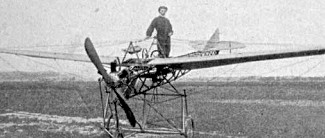
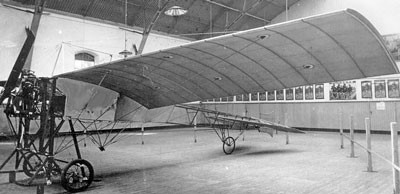
Robert Schlageter of Luzer, Switzerland, was born in 1887. He quit his technical studies in Burgdorf to devote himself to aviation. After first tests with gliders, he began to build, with the help of two friends, his first monoplane, with a triangular-section fuselage and an Anzani engine, in 1909. Then he built in four months, for a company in Mainz, another monoplane of the same type. His planes flew only in good wind conditions, but he won a prize at a fair in Chemnitz in 1911. He had to quit aviation for economic reasons, was forced to sell his planes and spare parts.
The Emile de Schepper and Hubert Hagens “Helpman I” monoplane was exhibited in the bicycle school of Fongers in Groningen (Netherlands) in May 1911. It had an open fuselage aft of the pilot seat and triangular-section fuselage and was powered by a 5-cylinder Anzani, rated at 50 hp. The monoplane was designed and built by Emile de Schepper and Hubert Hagens. Hagens was the mechanician of the famous Belgian flyer Jan Olieslagers and Emile de Schepper was the son of the Belgian E. J. de Schepper, who was a wealthy billiard manufacturer in Helpman (a separate village then, now a part of the town Groningen), hence the name “Helpman I”.
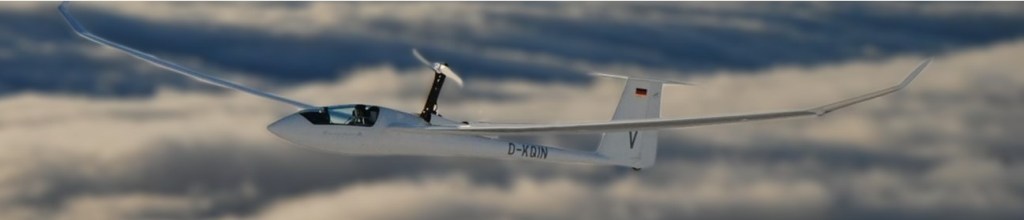
The Open Class Quintur 23 m wingspan is a very thin, high aspect ratio wing, with a maximum of 250 liters of water ballast, allowing for a potential wing loading between 39 and 58 kg/m².
Lange Aviation and Professor Loek Boermans were involved in the conception and design of the wings, with nine exact interacting wing airfoils that provide laminar flow over 95% of the lower and 75% of the upper wing surfaces and are based on a super-elliptical wing geometry. The concept of the outer wing panel with winglets were from Professor Mark Maughmer.
Structural design, ballasting and the patented, extremely light control design were provided by Lange Aviation.
A self-launch optimized fuselage has been designed for the Quintus, providing not only aerodynamic improvements but also details such as bug wiper “garages”. A forward-opening canopy makes getting in and out comfortable. Cockpit blends in either visual carbon or carbon-kevlar hybrid fibre, Alcantara lining, and engraved flap position indicator.
The Quintur M engine start-up is straightforward and automatic. To engage the engine, the pilot only needs to switch on the ignition and press the start button once the engine has been fully extracted. The engine’s start setup is always optimized by a microprocessor to match the current environment.
After switching off the ignition on the Ilec engine control unit, the control unit automatically stops and fixes propeller in the correct upright position and the engine gets retracted.
A rudder-integrated tail wheel supports precise steering for taxiing.
Wing span: 23m / 75.46 ft Wing area: 14.7 m² / 158.23 ft² Aspect ratio: 36 Fuselage length: 7.82 m / 25.66 ft Empty weight: 500 kg / 1102 lb Max. all-up weight: 850 kg / 1874 lb Wing loading: 38.8 – 57.8 kg/m² / 7.95 – 11.84 lb/ft² Max. permitted speed: 270 km/h / 146 kts / 168 mph


 All Aero