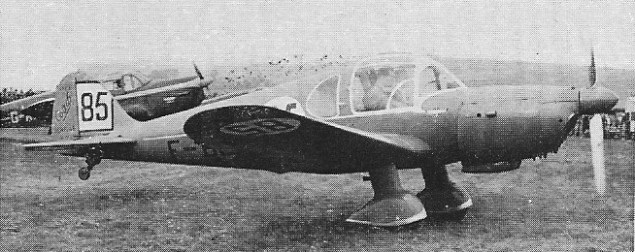
SFCA Peyret Lignel 46 Coach

The Lignel 46 Coach, produced by the Societe Francaise de Constructions Aeronautiques, is a four-seat cabin monoplane powered by a 180 hp Mathis 8G-20 engine. Built only in prototype form, the Coach has taken first place in a number of European rallies. It employs a composite bonded material known as Brodeau-Lignel in its construction, and dual controls are provided.

The sides of the canopy hinge forward for access and can be jettisoned in an emergency.

Engine: 180 hp Mathis 8G-20
Span: 34 ft 5 in
Wing area: 161.459 sq.ft
Length: 26 ft 2.75 in
Height: 8 ft 6.25 in
Empty weight: 1852 lb
Loaded weight: 2943 lb
Max speed: 168 mph
Cruise: 152 mph
Range: 620 mi
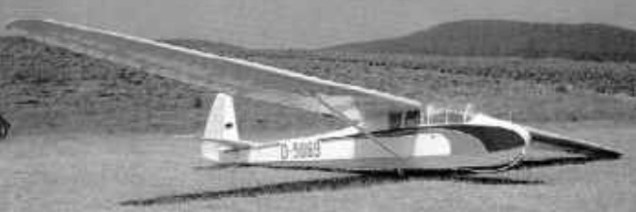
Schmutzhart SCH-1

Berthold Schmutzhart’s SCH-1 homebuilt was designed to be small enough to be built in his Washingtion D.C. townhouse. The fuselage was made by bending the outside skin into a wooden jig and riveting the bulkheads and stringers to it from the inside, working through the open top which was then covered. The main wing spar center section was milled from a solid I-beam of 6061 T6 aluminum. The outer spars are of bent flat stock and angled extrusions. Ribs ahead of the spar were bandsawed from dense Styrofoam : aft of the spar they are of sheet aluminum hammered over formblocks. The T-tail was originally all moving, but later modified to have a conventional stabilizer. Approach control is by means of flaps, the setting of which are 0, +4, +45 and +70 degrees.

Wing span: 13.41 m / 44 ft
Wing area: 9.29 sq.m / 100 sq.ft
Aspect ratio: 18
Airfoil: Nickel 17%
Empty Weight: 180 kg / 398 lb
Payload: 80 kg / 175 lb
Gross Weight: 160 kg / 573 lb
Wing Load: 27.98 kg/sq.m / 5.73 lb/sq.ft
L/DMax: 30 80 kph / 43 kt / 50 m
MinSink: 0.56 m/s / 1.85 fps / 1.10 kt
Seats: 1
No. Built: 1

Schmitt Monoplane / Biplane

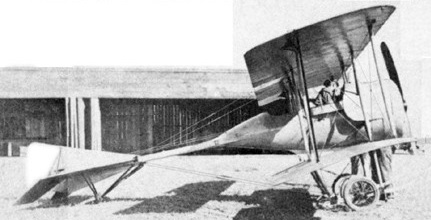
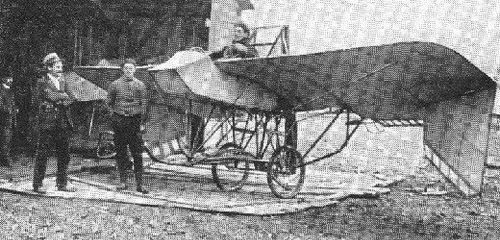
Designed by Etienne Dormoy and brought from France to the USA by Maximilian Schmid, this fully monocoque fuselage design was first of its kind in USA. Built for competitions, it won the $1,000 NY Times Race on 4 July 1914 at Governor’s Island NY (piloted by Harold Kantner), as well as several more subsequent races.

It was then converted into a biplane with a 100hp LeRhône for military trials at North Island, San Diego. It and three other entrants were rejected for not meeting certain requirements specified by the Army.

Monoplane
Engine: 50hp LeRhône
Speed: 70 mph
Seats: 1

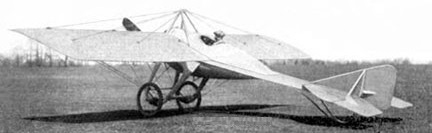
Schmaltz Eindecker

Ernst Schmalz, born 1879 in Nidau, Switzerland, in 1908 built with the help of Failloubaz, a pusher monoplane, powered by a 12 hp Anzani motor, with large ailerons he himself named “Stabiloklappen”. In flight tests at Thun he made jumps of up to a height of 6 meters. In 1909, Schmalz retired from flying. He sold his apparatus to a chauffeur, who collided with a tree top in flight tests on the Beundenfeld in Bern. Although the pilot remained intact, the aeroplane itself was a total loss.

Schleicher ASW-28

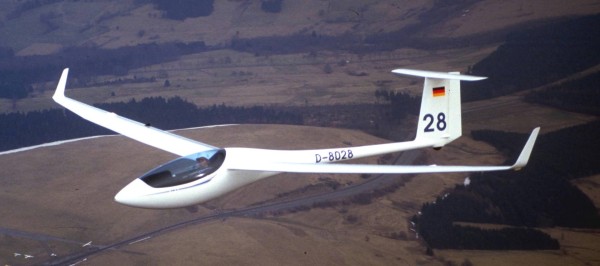
Designed by Gerhard Waibel and built in Poppenhausen, Germany, the Schleicher ASW 28 is a Standard Class glider with a laminar wing profile for “turbulent” conditions. By using carbonfibre and Aramid along with a new Polyethylene fibre, joining a high strength with low weight, Schleicher tries to achieve an empty weight of only 325 kg, and a wing loading of only 30 kg/sq.m. Four integrated tanks for a maximum water ballast of 180 liters keep the spectrum at a 50 kg/sq.m wing loading open.

The ASW 24 derived fuselage is designed to be fitted with a rescue system. The ASW 28 features a new profile from Professor Loek Boermans, which is supposed to give the new glider a top performance and excellent handling characteristics in turbulent air.

L/DMax: 45
MinSink: 0.55 m/s / 1.86 fps / 1.00 kt
Seats: 1
Wing span: 15 m / 49.2 ft
Wing area: 10.5 sq.m / 113 sq.ft
Empty Weight: 235 kg / 510 lb
Gross Weight: 525 kg / 1202 lb
Wing Load: 50 kg/sq.m / 10.24 lb/sq.ft
Aspect ratio: 21.43
Airfoil: Boermans DU 99-146MOD

Schleicher ASW 27

Designed by Gerhard Waibel, the 15 m racing class successor to the ASW-20 has been designed to maximize performance without regard to possible span extension or addition of an engine. Airbrakes are top surface triple element Schempp-Hirth type to compensate for the very thin wing section.

ASW-27
Wing span: 15m / 49.2ft
Wing area: 9sq.m / 96.88sq.ft
Empty Weight: 225kg / 496lb
Payload: 275kg / 606lb
Gross Weight: 500kg / 1102lb
L/DMax: 48 100 kph / 54 kt / 63 mph
MinSink: 0.52 m/s / 1.70 fps / 1.01 kt
Wing Load: 55.55kg/sq.m / 11.37lb/sq.ft
Water Ballast: 180kg / 396lb
Aspect ratio: 25
Airfoil: Boermans DU 89-134/14
Seats: 1

Schleicher ASH-26

Designed by Martin Heide as a dedicated 18 m sailplane rather than an extended-tip 15 m model, flapped self-launching ASH-26E claims better performance from being optimized for this span. The Midwest engine installation is distinctive from most previous mast mounted retractable engines in that the engine remains in the fuselage when the propeller is raised, permitting reduction of the sailplane’s noise footprint.

Engine: 38 kW/ 51 bhp Midwest AE50 AP
Wing span: 18 m / 59 ft
Wing area: 11.7 sq.m / 125.94 sq.ft
Aspect ratio: 27.69
Airfoil: Boermans DU 89-134/14
Empty Weight: 424 kg / 935 lb
Payload: 161 kg / 354 lb
Gross Weight: 585 kg / 1289 lb
Wing Load: 50 kg/sq.m / 10.24 lb/sq.ft
MinSink: 0.52 m/s / 1.70 fps / 1.01 kt
L/DMax: 50 96 kph / 52 kt / 60 mph
Seats: 1