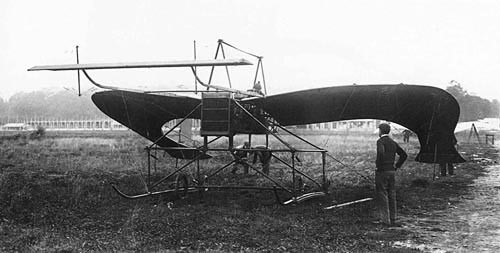
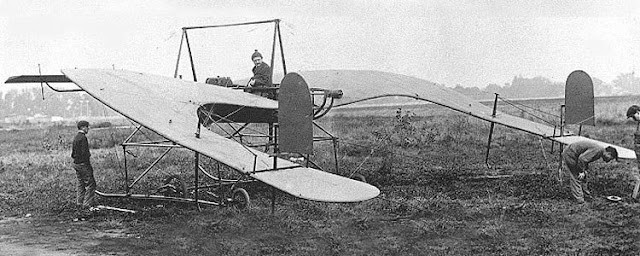
The Diapason (French for tuning-fork of which it resembled), was monoplane of 1910 in a form where the wing was swept back in a wide curve. The photo clearly shows a hefty radiator at the front of the small fuselage, from which may be concluded that one is looking at the 50 hp water-cooled Chenu-powered version. This engine was placed directly in front driving the pusher propeller at the back of the short central nacelle via a long shaft. In this version the entire nacelle is uncovered.
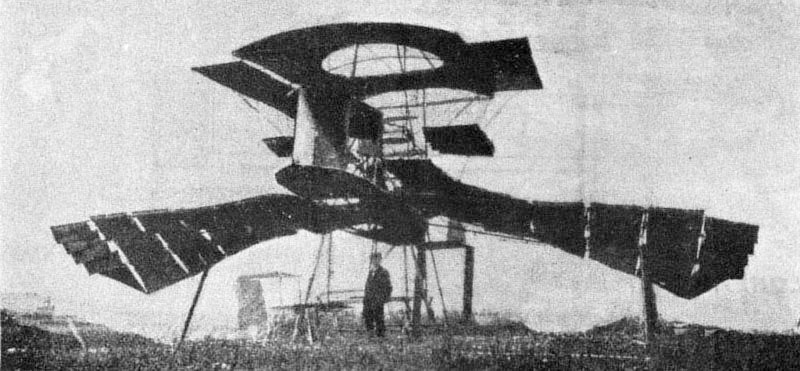
This big, strange ornithopter was designed by architect Bruno Scholz of Schulzendorf near Berlin after 12 years of studies of birds. It was “modelled after real birds” and the frame was made of bamboo sticks with multiple-slatted wings covered canvas. The apparatus measured from head to tail 17 meters, the wing span was 14 meters and the height 6 meters. The bird’s body held a cockpit for two passengers, two engines, each of 8 hp, and a centrifuge (fan?) which would help to lift it. It was built at great expense in 1909/10, but after it had been found to be complete failure it was reportedly smashed by hand by its builder.
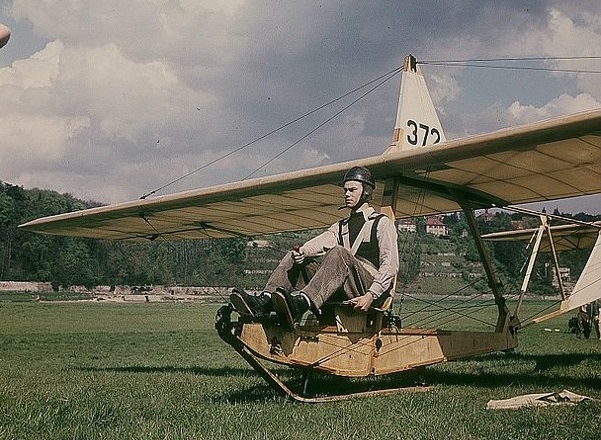
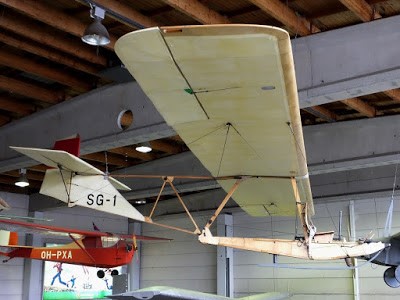
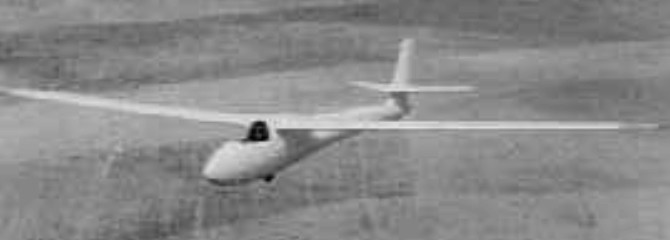
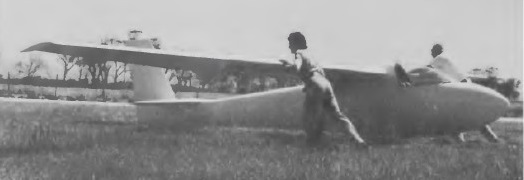
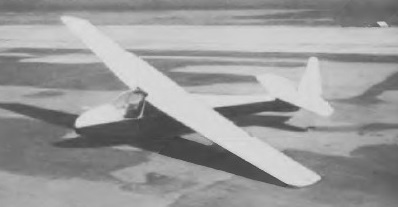
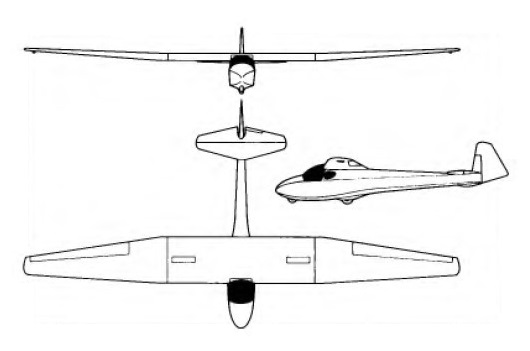
The Schneider DFS 108-14 SG-38 Schulgleiter (German for “school glider”) is a German high-wing, cable-braced, single-seat primary glider that was developed from the Stamer Lippisch Zögling, and designed by Schneider, Rehberg and Hofmann at Edmund Schneider’s factory at Grunau in 1938, hence the designation. It was produced by several builders, including Deutsche Forschungsanstalt für Segelflug (DFS).
The SG 38 was designed to be a training glider for basic flight training by the Nationalsozialistisches Fliegerkorps (NSFK). The usual launch method was by bungee cord from a sloped hill. Because training was conducted solely by solo flight the aircraft had to be very easy to fly and also easy to repair.
Schneider DFS108-14 / Schulgleiter SG-38
The high-wing design uses a kingpost and cable bracing. The primary structure of the glider is of wood, with the wings, tail surfaces and inverted “V” kingpost all finished in doped aircraft fabric covering. The pilot sits on a simple seat in the open air, without a windshield.
The basic configuration was similar to earlier gliders such as the Stamer Lippisch Zögling and the Grunau IX, but the SG 38 was an entirely new design. Improvements included enlarged tail surfaces for better stability, a separate skid mounted on shock-absorbing springs, and an updated seat for the pilot. Features were parallel rudder movement, provisions for trim weights fore and aft, and screw jack atop A- frame which facilitated assembly and disassembly. Large horizontal stabilizer and small elevator surface, with limited up-travel, made accidental stalls almost impossible.
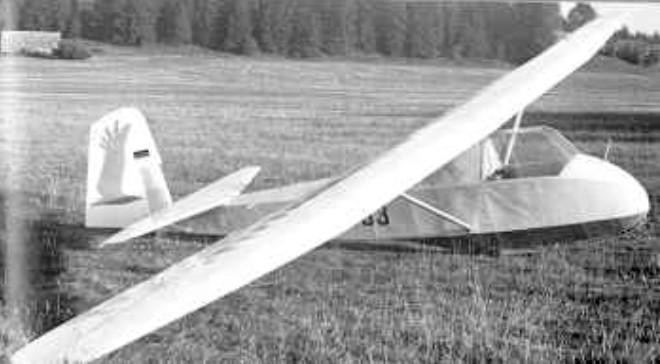
Schneider ESG-9 / Grunau 9
First flying in 1938, the SG-38 played a critical role in pilot training for the Luftwaffe in the Second World War, as a simple, but robust, trainer for the rapid increase in the number of pilots needed by Germany. It was commonly flown by bungee launch on the slopes of the Wasserkuppe.
Landings could be made, usually without damage, with stick all the way back during final glide. After student had learned to balance glider with ailerons while facing into wind, level ground “Rutsches”–short duration sling-shots with insufficient speed to become airborne–were made. Higher launch velocities followed to permit short flight; then student would advance to hillside launches and, finally, to winch tows and longer flights.
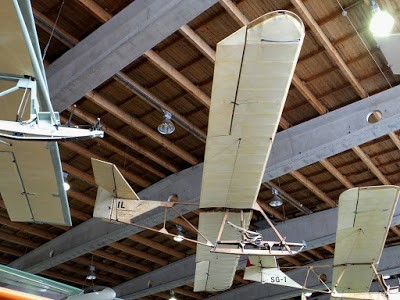
Schneider DFS108-14 / Schulgleiter SG-38 SG-1
From 1949 to 1951 Spain’s AISA produced 50 licence-built aircraft. The SG-38 was built in Japan as the Tachikawa Ki-24.
In the UK, Elliotts of Newbury built a copy of the SG.38 called the Elliotts Primary EoN; its version first flown in 1948 and used by the RAF as the Eton TX.1.
Schneider ESG-9 / Grunau 9 IL / G 36
Overall, about 10,000 were built.
SG 38 Wingspan: 10.41 m (34 ft 2 in) Wing area: 16 m2 (170 sq ft) Aspect ratio: 6.76 Length: 6.28 m (20 ft 7 in) Height: 2.43 m (8 ft 0 in) Empty weight: 100 kg (220 lb) Gross weight: 210 kg (463 lb) Maximum speed: 115 km/h (71 mph, 62 kn) Never exceed speed: 115 km/h (71 mph, 62 kn) Maximum glide ratio: 10:1 at 52 km/h Wing loading: 13.75 kg/m2 (2.82 lb/sq ft) Crew: One
There was a need for a single seat glider which would be suitable both for training and high performance cross-country flying, and to meet this need Wolf Hirth and Edmund Schneider designed and built the Grunau Baby, which made its first flight in 1932; it took its name from the town of Grunau just south of Berlin, now Jeżów Sudecki in Poland, where it was built.
It was designed by Edmund Schneider with the assistance of Wolf Hirth and Hugo Kromer as a smaller version of Schneider’s ESG 31 of the previous year, incorporating an elliptical wing design based on work done by Akaflieg Darmstadt. The first 14 inner ribs were of the Gotinngen 535 shape with the outer ribs gradually changing up to the last 22nd rib having a bi-convex and symmetrical shape with a slight reduction in the angle of incidence. The tips and leading edges of the wings up to the main spar were covered with plywood. The tail unit was built of plywood. The intention was to create an aircraft suitable both for training and for cross-country soaring. It was a high-wing braced monoplane with a fuselage of hexagonal cross-section and an open cockpit. This single-seater was of simple wood and fabric construction with a high strut-braced wing, a plywood fuselage of hexagonal cross-section and an open cockpit ahead of the wing leading edge.
Production began in 1933 and in its initial form the Baby’s span was 42 ft 2.5.
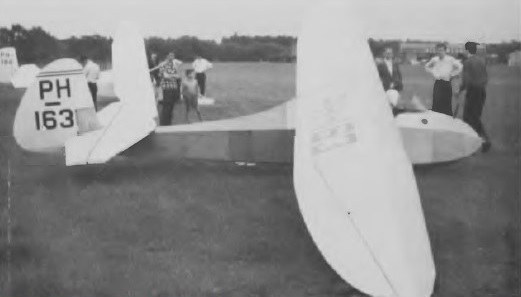
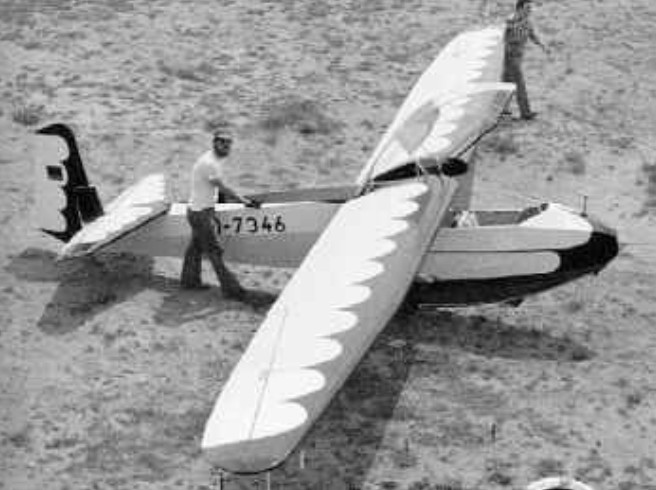
An extensive redesign was undertaken in 1932 following the fatal crash of an unrelated Schneider design, which resulted in the Baby II. This version and the definitive Baby IIb that followed were adopted as standard sailplane trainers for the German Air Sports Association (later the National Socialist Flyers Corps). In 1935 the Baby 2 was produced with the wing span increased to 44 ft 6.25 in. In the Baby 2A and 2B the retangular cross-section fuselage was strengthened with double layers of diagonal plywood; there was now a windscreen to protect the pilot, skid landing gear and airbrakes, although many have been modified by the addition of canopies. About 80 Mk 1s and around 700 Mk 2A and 2B variants were built by Grunau Riesengebirge, and the Baby was built under licence in a number of other European countries, production eventually totalling several thousand. The Baby IIB-2 was an intermediate performance single-seat glider circa 1960.
Grunau Baby 2.
Among the licensees were Slingsby, who built 15 at their Kirkbymoorside works from 1935 as the T 5 Baby 2, and some others were also built by amateur constructors from BGA-supplied plans. The Slingsby-built ones had no air brakes whereas Elliott’s version, known as the Type 8 Baby Eon, had spoilers in the wing upper surfaces. The Baby Eon was an improved version of the Baby 2B, and had an enclosed cockpit canopy; instead of the German built Baby’s single main landing skid, the Elliott version had a rubber-mounted ash main skid with a single main wheel of fixed centre, plus a tail skid. It was also available with an open cockpit as well as an enclosed ‘bubble’ canopy; an elevator trimmer and a belly hook for higher winch launching were offered as optional extras.
During 1941, 30 Grunau Baby gliders were built by Laminação Nacional de Metais, later Companhia Aeronáutica Paulista in Brazil, under the name “Alcatraz”.
Production of the Baby Eon version of the Baby 2 began in 1948 and 47 were built altogether, plus several more from Elliott factory-supplied kits. An improved variant of the Baby Eon, incorporating a new tailplane and mass-balanced elevators, first flew in 1956 while another improved postwar variant was the Grunau Baby 3, which had several modifications over the earlier Mk 2, including an enclosed cockpit. Upper wing spoilers were fitted, no flaps.
Series production was undertaken under license by Nord in France. The French built Grunau 2B was renamed Nord 1300, some alterations were made, which resulted in inferior performance. By November 1947, 250 Nord 1300 were built.
The Grunau Baby was made in Sweden by AB Flygplan circa 1945. When Edmund Schneider, the Baby’s co-creator and manufacturer, moved to Australia after the war and formed his own company there at the invitation of the Gliding Federation of Australia, he produced the improved version, the Grunau Baby 4.
In Finland in 1949 Mr Pentti Alanne and Mr Vilho Swahn fitted a Grunau Baby with a French Poinsard engine in the nose, and a landing gear similar to a Piper Cub’s.
It is estimated that around 5000 Grunau Babies or derivatives were made worldwide, including Germany, Great Britain, France, Sweden, Poland, Norway, Czechoslovakia, Romania, South Africa, Australia, China, Canada, Argentina, and the U.S..
In addition to training glider pilots, the Grunau Baby was used to train Luftwaffe pilots, who, in accordance with the Treaty of Versailles, could not fly powered aircraft. Many pilots of the Baby II achieved the ‘Silver C’ soaring badge, which required the pilot to be airborne for more than five hours, gain a minimum of 1000 m after takeoff and travelling 50 km.
AB Flygplan Baby II G2
The Vintage Sailplane Association has plans.
Grunau-Baby V
The Grunau Baby V was designed by Herbert Gomolzig, and Wuppertal.
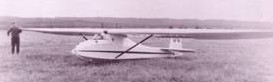
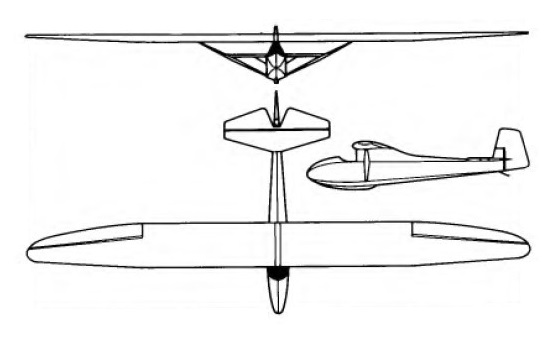
Grunau Baby Wing span: 13.56 m / 44.5 ft Wing area: 14.17 sq.m / 152.5 sq.ft Length: 19.291 ft / 5.88 m Height: 6.365 ft / 1.940 m Empty Weight: 159 kg / 350 lb Payload: 91 kg / 200 lb Gross Weight: 250 kg / 550 lb L/DMax: 17 61 kph / 33 kt / 38 mph MinSink: 0.79 m/s / 25 kt /29 mph Wing Load: 17.64 kg/sq.m / 3.6 lb/sq.ft Aspect ratio: 13 Airfoil: Go 535 Seats: 1
Baby IIB Type: Soaring plane Wingspan: 44 ft 6.25 in / 13.57 m Length: 19 ft 11.75 in / 6.09 m Aspect ratio: 12.8 Wing area: 152.849 sqft / 14.2 ssq.m Wing section: Gottingen 535 MTOW: 551.3 lb / 250 kg Weight empty: 352.8 lb / 160 kg Max. payload: 198.5 lb / 90 kg Max. speed: 86 kts / 160 km/h / 93 mph Landing speed: 27 kts / 50 km/h Stalling speed: 21.5 kt / 40 km/h Min sinking speed: 2.8 ft/sec / 0.85 m/sec at 34mph / 30 kt / 55 km/h Best glide ratio: 17:1 at 37.5mph / 32.5 kt / 60 km/h Wing load: 3.69 lb/sq.ft / 18 kg/sq.m Glide ratio: 17 Seats: 1
AB Flygplan Grunau Baby II B2 Type: Single seat sailplane Span: 13.6 m / 45 ft Length: 5.9 m / 20 ft
Grunau Baby V Wing span: 14 m Wing area: 15 sq.m Aspect ratio: 13.06 Airfoil: Go 535 Empty Weight: 202 kg Gross Weight: 420 kg Wing Load: 28 kg/sq.m L/DMax: 19 kph MinSink: 0.90 m/s 62 kph Seats: 2
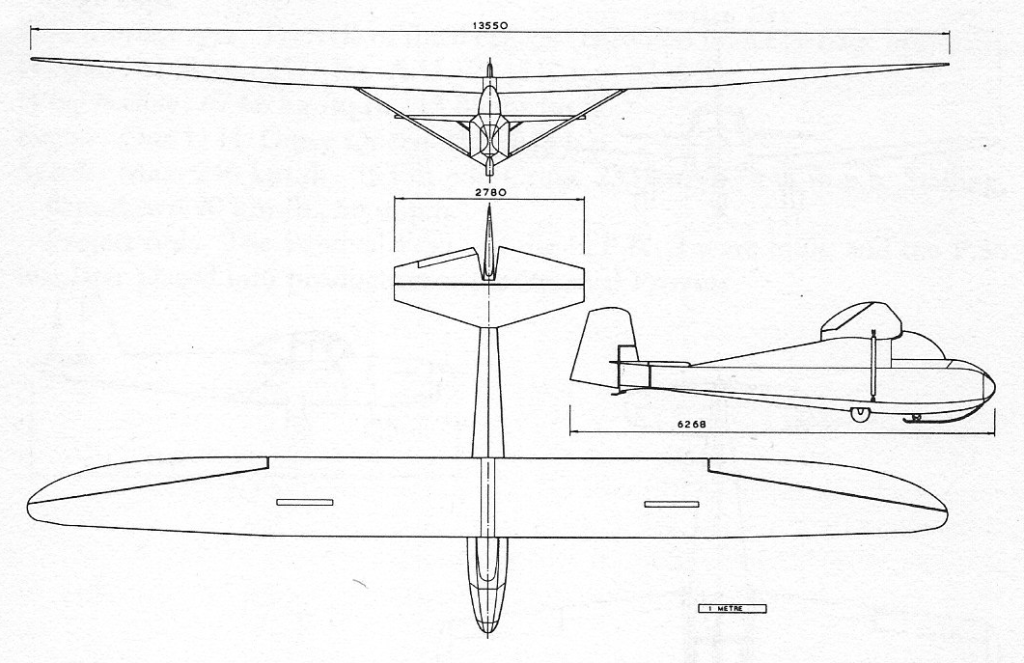
EoN Type 8 Baby Wingspan: 13.55 m / 44 ft 5 in Length: 6.27 m 20 ft 6.75 in Wing area: 14.21 sq.m / 153 sq.ft Aspect ratio: 13 Wing section: Gottingen 535 root, Symmetrical tip Empty weight: 154 kg / 340 lb AUW: 250 kg / 550 lb Undercarriage: Main skid, main wheel, tail skid
With the advent of the fibreglass designs onto the Australian scene during the mid 1960’s the Australian manufacturer; Edmund Schneider Ltd., began to look at a replacement for the very successful ES52 Kookaburra trainer. This resulted in the development of the ES63; a 17 metre span high performance two seater of advanced concept. A lack of capital combined with a difference of opinion with the GFA Design and Development Committee resulted in the project being shelved. In 1982 Harry Schneider revived the concept incorporating some design changes and improvements to bring the project up to date. This resulted in a prototype; the ES65 Platypus, being built and first flown on 2nd August 1984 with side by side seating.
Unfortunately the venture capital to finance the glider’s production has not been forthcoming. The prototype is of wood/glass construction. The prototype’s two piece wing is of 17 metre span, with a beech spar, birch ply skin covered by GFRP (the production wing was to be of GFRP construction). Seating is side by side arrangement in a most spacious cockpit. The two piece canopy with the aft section being rear hinged has ample visibility through large areas of perspex to the point of being able to see the rudder during flight. Rudder pedals and seats are adjustable allowing good accommodation for pilots of any size for long flights, with or without parachutes. The tail is mounted low on the fin with both rudder and elevator having horn balances smoothly blended into the design. There are three wheels on the centre line of the fuselage and, on entering the cockpit, the nose drops comfortably onto the forward wheel. This has made a reasonable balance about the main wheel possible, making the tail quite light to lift during on-ground manhandling.
The aircraft is fairly sensitive in pitch, picking up speed rapidly on lowering the nose. Thermalling requires a speed of around 50 knots, while exhibiting good stability in circling allowing for relaxed handling while thermalling. Rate of roll from 45 degrees bank to 45 degrees is 4.5 secs. The Platypus spins well, with a smooth slowish turn, not very steep from which recovery is precise and rapid with standard spin recovery procedures. The performance seems to be good for instructing cross-country flights over long distances. The side by side seating causes some initial confusion with horizon perception in turns, but the advantages are for the instructor in assessing the student, and the ability to communicate and demonstrate.
The ES 60B Super Arrow was developed from the Standard Class single-seater, the ES 60 Series 2 Boomerang, and the ES 59 Arrow; the Boomerang was designed in 1964 for competition flying, and the first of two prototypes made its first flight on 28 November 1964, followed by the second on 24 December that year. These were followed by six ES 60 Series 1s built in 1966, and 28 ES 60 Series 2s completed in 1967 and 1968, plus a few more built since then, this differing from the Series 1 in having the height of the plywood-covered fin reduced by 3in, and a lengthened sideways-opening Perspex cockpit canopy; later production Series 2s had the nose lengthened by 2.5 in, a larger monowheel and an adjustable seat back for the pilot. The Boomerang soon made its mark in contest flying, and for a time held all the Australian national speed records over 100km, 200km and 300km triangular closed circuits, at speeds of 54mph, 55mph and 59mph respectively.
The Boomerang was succeeded by the ES 60B Super Arrow, also designed for competition flying, which first flew in prototype form on 22 September 1969 and which was awarded a C of A on 31 October that year. It was the same as the ES 60 Series 2 Boomerang but had the conventional tail unit of the ES 59 Arrow with an unswept, fixed tailplane mounted at the base of, and forward of the fin instead of the Boomerang’s swept-back ‘all flying’ tailplane, the halves of which were mounted separately on the fin about one-third of the way up, being secured by automatic spring-loaded bayonet couplings. In both cases the tailplanes were cantilever wooden structures with plywood and fabric covering, that of the Boomerang having a trim tab that also acted as an anti-balance tab, the fin being ply-covered and the wooden rudder fabric covered. Apart from their tailplanes, the two types are of the same wooden construction, with a cantilever highset one-piece wing with a laminated beech spar at the 50% chord line, a moulded plastic leading edge and birch ply covering back to 60% chord; wing tip ‘bumpers’ are fitted. There are no flaps, but metal scissor-type air brakes with epoxy-bonded wooden flanges are fitted at 55% chord; the wooden ailerons are plywood-covered. The ply-covered semimonocoque fuselage has glassfibre fairings, and the non-retractable monowheel has an expanding shoe brake; unlike the ES 59 Arrow, there is no nose skid, but there is a spring steel tailskid. The pilot sits under a sideways-opening jettisonable Perspex canopy, and has adjustable rudder pedals and seat back; the customer specifies what instruments are fitted, and oxygen and radio can also be carried.
ES 60B Super Arrow Span: 49 ft .5 in / 15.0 m Length: 23 ft 2.5 in / 7.04 m Height: 5 ft 0 in / 1.52 m Wing area: 138 sq.ft / 12.87 sq.m Aspect ratio: 17.5 Wing section: Wortmann FX-61-184/60-126 Empty weight: 488 lb / 221.5 kg Max weight: 765 lb / 347 kg Water ballast: None Max wing loading: 26.96 kg/sq.m / 5.52 lb/sq ft Max speed: 140 mph / 121 kt / 225 km/h (in smooth air) Max aero-tow speed: 103 mph / 89 kt / 165 km/h Stalling speed: 32.5 kt / 60 km/h Min sinking speed: 2.3 ft/sec / 0.7 m/sec at 47 mph / 40 kt / 75 km/h Best glide ratio: 30.7:1 at 53 mph / 49 kt / 90 km/h
Edmund Schneider, who manufactured at Grunau in Silesia, Germany before World War II, moved to Australia after the war with his two sons and this single-seat general purpose club sailplane was commissioned by the Gliding Federation of Australia.
The prototype Arrow flew for the first time on 14 April 1962, and completed its airworthiness trials on 7 May that year.
The cantilever high-set plywood-covered wooden wing has ‘bumpers’ at the tips and a forward sweep of 3° at the spar; there are wooden scissor-type air brakes at the 45% chord line and flaps are not fitted, the wooden ailerons being ply-covered. A one piece wing designed by Edmund’s son Harry. The fuselage is plywood-covered semimonocoque and the tail unit a ply-covered cantilever wooden structure. There is a non-retractable monowheel with a band brake, and a foam rubber-sprung nose skid forward of it which has a steel shoe; there is also a spring steel tailskid. The pilot sits under a sideways-opening Perspex canopy, and is provided with cushions and a sunshade; extra instrumentation can be installed if required.
Small-scale production was put in hand, and 10 Arrows had been built by 1966, the latest production version being the ES 59 Series 2, which had a shorter swept fin and rudder than the initial production aircraft.
A two-piece 15 m wing version was contructed for the 1965 World Championships.
ES 59 Series 2 Span: 43 ft 5 in Length: 22 ft 2.5 in Height: 4 ft 7 in Wing area: 118.3 sqft Aspect ratio: 16.0 Empty weight: 375 lb Max weight: 616 lb Max speed: 148 mph Max aero-tow speed: 80 mph Min sinking speed: 2.7 ft/sec at 46 mph Best glide ratio: 28:1 at 51 mph
After the war Edmund Schneider, one of the pioneer prewar German sailplane designers and co-creator and manufacturer of the Grunau Baby trainer, was invited by the Gliding Federation of Australia to set up a sailplane factory in that country, and so he transferred his operations there, Edmund Schneider Pty Ltd being duly formed as a private venture at Parafield airport near Adelaide, South Australia. Its first design here was the Kangaroo two-seater, which first flew in 1953, and this was followed by an improved version of the Baby, the Grunau Baby 4, the Nymph and Kingfisher, and the ES 52 Kookaburra two-seater side-by-side trainer, which was used by most of the Australian gliding clubs and is semi-aerobatic. Of conventional wooden construction, the ES 52 Kookaburra first flew in prototype form on 20 June 1954, and four Mk Is, eleven Mk IIs and eight Mk IIIs were built. The ES 52B Kookabura IV, which first flew in 1959, featured an increased wing span of 48ft 9in, a nose wheel in place of the rubber-sprung wooden nose skid ahead of the monowheel, a brake for the monowheel and an enlarged cockpit.
By early 1966 a total of 23 Mk IVs had been built, and production ceased when Schneider decided to build the Schleicher Ka 7 two seater under licence. The Mk III’s cantilever high-set one-piece wing is a single-spar wooden structure with a D-section plywood leading edge and fabric covering; there are wooden scissor-type air brakes above and below each wing, and the sealed-gap ailerons are fabric-covered. The fuselage is a plywood-covered semi-monocoque made up of wooden frames and stringers, and there is a non-retractable unsprung monowheel, without a brake on the Mks I-III, these versions having the nose skid and the Mk IV a nose wheel; all Marks have a tailskid. The tail unit is a fabric-covered wooden structure, with a trim tab in the port elevator. The one-piece Perspex canopy hinges rearwards to open, and the two pilots sit in slightly staggered side-by-side seats; there is also a window on each side under the leading edge wing root to improve visibility. Extra instrumentation can be fitted if the customer so desires.
ES 52 Kookaburra Wing span: 11.7 m / 38 ft 4.5 in Length: 7.9 m / 25 ft 11 in Height: 1.38m / 4ft 6.5 in Wing area: 15.0 sq.m / 161.5 sq ft Wing section: Gottingen 549/M-12 Aspect ratio: 9.13 Empty weight: 220 kg / 485 lb Max weight: 393 kg / 866 lb Water ballast: None Max wing loading: 26.2 kg/sq.m / 5.36 lb/sq ft Max speed: 119 kt / 220 km/h Stalling speed: 36 kt / 67 km/h Min sinking speed: 1.05 m/sec / 3.4 ft/sec at 39 kt / 72 km/h Max rough air speed: 81.5 kt / 151 km/h Best glide ratio: 20 at 44 kt / 81 km/h
ES52 Mk.III Span: 38ft 5in Length: 25ft 11 in Height: 4ft 6.5 in Wing area: 161.5sqft Aspect ratio: 9.13 Empty weight: 484lb Max weight: 865lb Max speed: 136mph (in smooth air) Max aero-tow speed: 70mph Min sinking speed: 3.36ft/sec at 45mph Best glide ratio: 20:1 at 50 mph
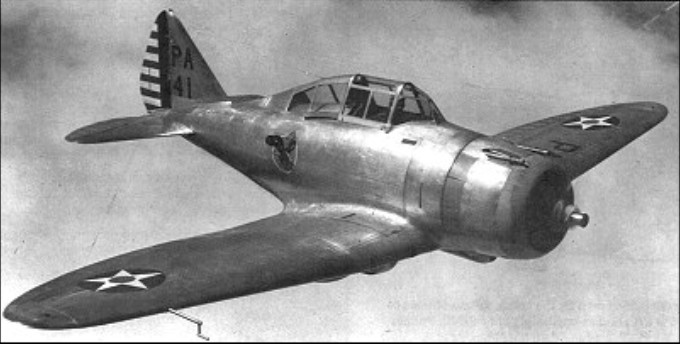
The type began as the company SEV-1XP, one of several machines flown as pursuit prototypes and racers in the 1930s by Major Alexander P. de Seversky, Jacqueline Cochran and others. The P-35 won out over the Curtiss Hawk Model 75 (later P-36) for a 16 June 1936 US Army contract for 77 airframes (36-354 to 430), powered by the 708kW Pratt & Whitney R-1830-9 Twin Wasp 14-cylinder radial engine. The first unit was rejected and modified as the AP-1 and the final airframe in this batch was diverted to become the sole Seversky XP-41.
Seversky P-35
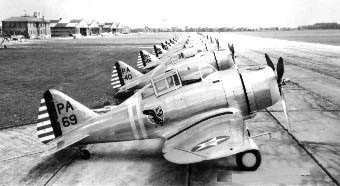
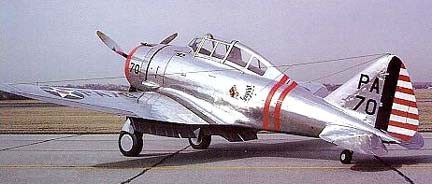
The Seversky P-35 was the first single-seat all-metal pursuit plane with retractable landing gear and enclosed cockpit to go into service with the US Army Air Corps. It was a major step forward, albeit one which was short-lived as war approached.
The P-35 marks the debut of Seversky (later Republic) of Farmingdale, Long Island, as a major builder of fighters and introduces the work of the firm’s chief designer, Alexander Kartveli. The first P-35 was delivered to Wright Field, Ohio, for tests, and the remaining 75 went initially to the 1st Pursuit Group at Selfridge Field, Michigan. There, the type was received with considerable enthusiasm which lingered even after six machines had been lost in accidents during 1938. Only by later, wartime standards would it become evident that the P-35 was unstable, underarmed, and lacking both armour protection for the pilot and self-sealing fuel tanks.
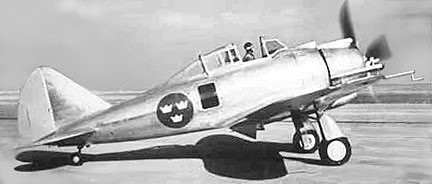
The company EP-106 export variant attracted Sweden’s attention and 120 machines were ordered with the Flygvapen designation J9. These were powered by the 783kW Pratt & Whitney R-1830-45 Twin Wasp radial. When President Roosevelt announced his 10 October 1940 embargo on fighter shipments to Scandinavia, only half had been delivered. Sixty were seized by the US Army as the P-35A (41-17434 to 17493).
Seversky EP-106 Swedish test
P-35A pursuit ships served with various USAAC units, but by late 1941 about 50 were with First Lieutenant Joseph H. Moore’s 20th Pursuit Squadron, 24th Pursuit Group, at Clark Field in the Philippines. Second Lieutenant Max Louk wrote to his parents in mid-1941 that the squadron was undergoing ‘a very strenuous programme’ of flying ‘up to eight hours a day’ in the P-35A. Incredibly, some P-35As arrived at Clark still painted in Swedish markings and still wore them during the 8 December 1941 Japanese assault, which was synchronised with the attack on Pearl Harbor.
Seversky P-35A
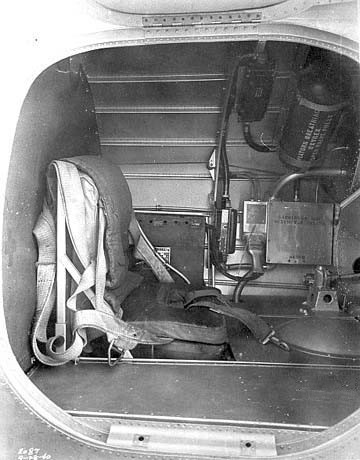
Seversky P-35A “Buddy” seat
The P-35 was flown by a few memorable pilots, including First Lieutenant ‘Buzz’ Wagner, commander of the 17th Pursuit Squadron, Nichols Field, Philippines, the first American ace of the war. But by December 1941 the type had become dated and inadequate. Pilots of the P-35 started with the disadvantage of an unforgiving mount. 1939 Technical Order No. 01-65 BA-1 had imposed mind-boggling limitations on the P-35, proscribing inverted flight, inverted spins, and outside loops, and similar caveats applied to the slightly more powerful P-35A. Group Captain Christopher Clarkson, the UK’s Royal Air Force test pilot on the US east coast in 1940, logged six hours on P-35 variants and utterly rejected the machine for the RAF. Americans in P-35As in the Philippines simply could not stay with or effectively fight the Mitsubishi and Nakajima fighters that swarmed down on them. Some died ignominiously: First Lieutenant Samuel W. Marrett, commander of the 34th Pursuit Squadron at Del Carmen Field, Philippines, was killed 10 December 1941 when an ammunition barge he was strafing exploded beneath him over Lingayen Gulf, Northern Luzon.
Swedish pilots guarding their nation’s neutrality faced a different problem. Hans Westerberg, flew the J9 (P-35A) and, in 1944, intercepted a crippled American B-24 Liberator struggling away from a target in Germany. “I could just keep speed with the bomber. I closed in to use hand signals to tell him that his crew could land and be interned in Sweden. All of his guns turned towards me and he was an instant away from opening fire before he understood. The problem was that from some angles my P-35A looked exactly like a Focke-Wulf Fw 190.”
P-35A Wingspan: 10.97 m / 36 ft 0 in Length: 8.18 m / 27 ft 10 in Height: 2.97 m / 10 ft 9 in Wing area: 20.44 sq.m / 220.01 sq ft Max take-off weight: 3050 kg / 6724 lb Empty weight: 2075 kg / 4575 lb Max. speed: 499 km/h / 310 mph Ceiling: 9570 m / 31400 ft Range: 1529 km / 950 miles Armament: 2 x 12.7mm + 2 x 7.62mm machine guns Bomb load: 160kg
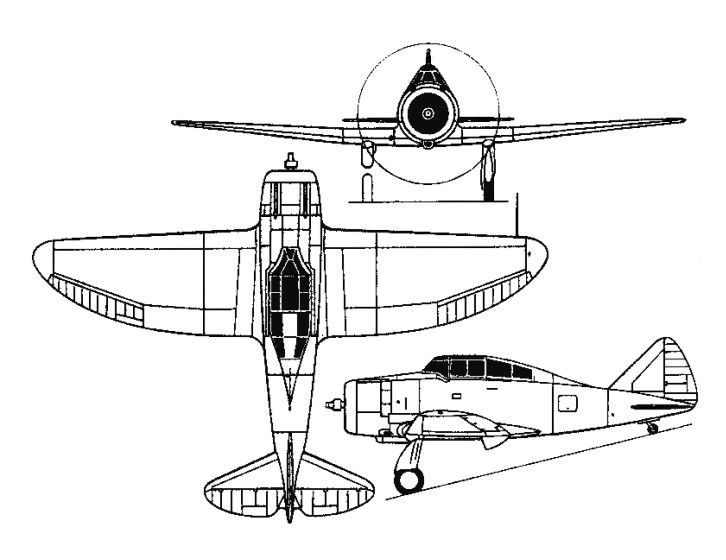
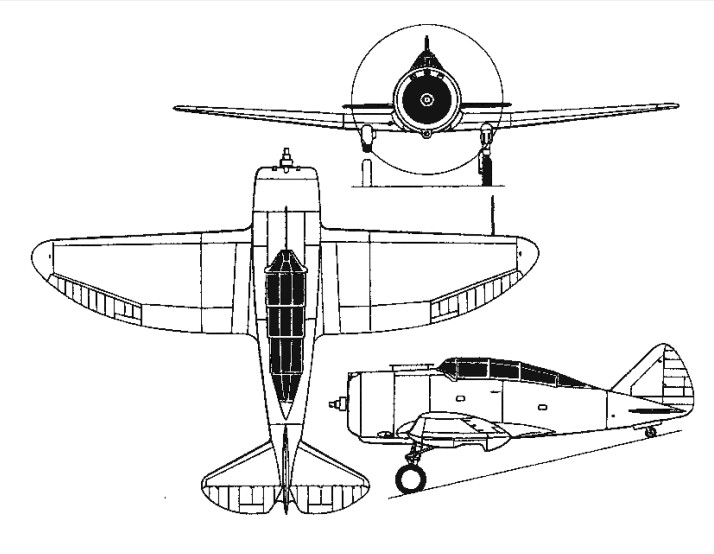
Evolved in parallel with the P-35, the 2PA was a two-seat fighter and fighter-bomber with a fundamentally similar airframe and offered with either a similar undercarriage to that of the single-seater as the 2PA-L (Land) or with an amphibious float undercarriage as the 2PA-A (Amphibian). Dubbed “Convoy Fighter” by the manufacturer, the 2PA was powered by a Wright R-1820-G2 or G3 Cyclone nine-cylinder radial engine, the former rated at 1,000hp for take-off and the latter at 875hp.
One 2PA in 1937 first flew on 8 July 1937 piloted by Frank Sinclair. Powered with an 875hp Wright R-1820-G3 Cyclone engine, it was registered NX/NR189M c/n 6 (1938 registration conflict with SEV-X-BT; possibly a transfer). Demonstrated in South America, it was reportedly abandoned in Brazil after engine failure.
Armament comprised two wing-mounted 7.62mm or 12.7mm Browning guns, one 7.62mm Browning on a flexible mount in the rear cockpit, plus two forward-firing fuselage-mounted 7.62mm or 12.7mm Browning guns. Provision was made for a bomb load of up to 227kg on internal wing racks.
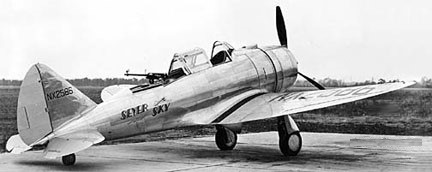
Two 2PA-BX, NX2586 c/n 146 and NX2587, were used as European demonstrators, which brought a substantial order from Sweden. First flown on 23 October 1938 piloted by Frank Sinclair, early in 1939, Major Seversky embarked upon a European sales tour in a 2PA-202 or 2PA-BX which was fitted with a 1,100hp Pratt & Whitney R-1830-S3C Twin Wasp. This aircraft was tested at the A&AEE Martlesham Heath, in March 1939, at the instigation of the Air Ministry.
Fifty-two 2PA-BXs were ordered by Sweden as dive-bombers (the Seversky company having meanwhile become the Republic Aviation Corporation), but only two of these were delivered to Sweden, the remainder being taken over by the USAAC as AT-12 Guardsman advanced trainers.
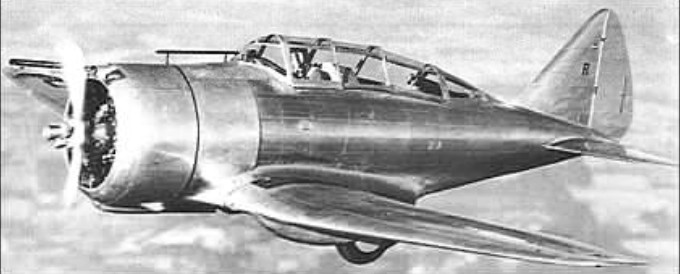
Seversky 2PA-BX NX2586
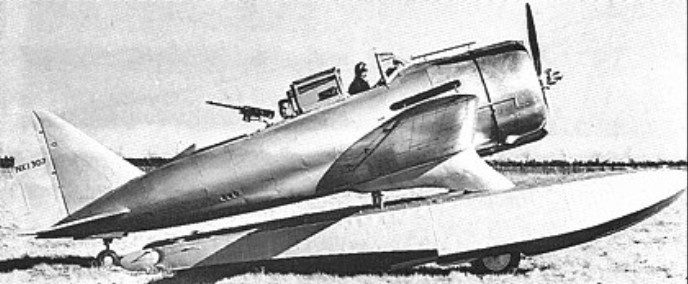
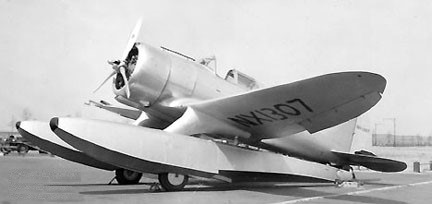
The one amphibian 2PA-A, NX1307, and one 2PA-L were procured by the Soviet Union in March 1938, together with a manufacturing licence, which, in the event, was not to be utilised. The 1937 2PA-L was built from SEV-X-BT components as a potential military export and first flown on 2 November 1937, by C H Miller. Refitted with 850hp R-1820-G2 engine, it was unregistered and ended up in the Spanish Civil War.
Seversky 2PA-A NX1307
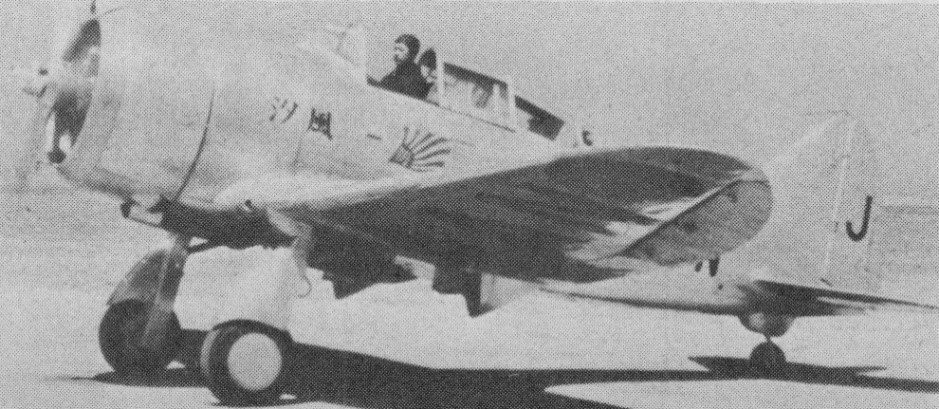
Twenty R-1820-G2-powered examples were ordered clandestinely by the Japanese Imperial Navy for use over China as long-range escort fighters. Designated 2PA-B3, these received an armament of two fuselage-mounted 7.62mm machine guns and a similar weapon in the rear cockpit. Assigned the Japanese designation A8V1, the 2PAs were found to possess unacceptable levels of manoeuvrability and climb rate for the escort fighter role and were therefore relegated to reconnaissance missions in Central China, two later being passed to the Asahi Shimbun newspaper group. The c/ns were 122 to 141. Found US regs were NX1321=J-BAAN c/n 126, NX1391 c/n 64-1, NX1388 c/n 64-2 and c/n 64-3, which flew to the West Coast for overseas shipment and left no tracks. The “64-” c/ns seen in some reports likely were Japanese registations.
Seversky 2PA-B3 Export to Japan
It was incorrectly thought the type was later produced in Japan as a Kawasaki or Mitsubishi Type 98 and given the allied code ‘Disk’ on that basis.
SEV-2PA Engine: 1,100hp Pratt & Whitney R-1830-S3C Twin Wasp Max take-off weight: 3474 kg / 7659 lb Empty weight: 2078 kg / 4581 lb Wingspan: 10.97 m / 36 ft 0 in Length: 8.20 m / 27 ft 11 in Height: 2.99 m / 10 ft 10 in Wing area: 20.44 sq.m / 220.01 sq ft Max. speed: 508 km/h / 316 mph Range: 3138 km / 1950 miles Seats: 2






 All Aero