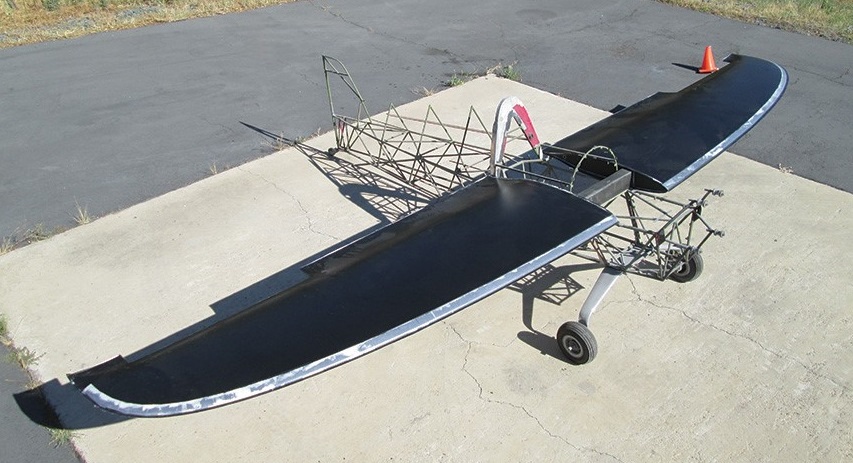
In 1929 Jacob P Sellmer built the Incubator. A home-built based on a Pietenpol, with a pivoting wing for minimum storage requirement, it was powered by a 28hp Lawrance engine.
Created for use by Sellmer’s son in his duties as a Fish & Game Dept warden, it was a single place, open cockpit, high-wing monoplane, registered N512K.
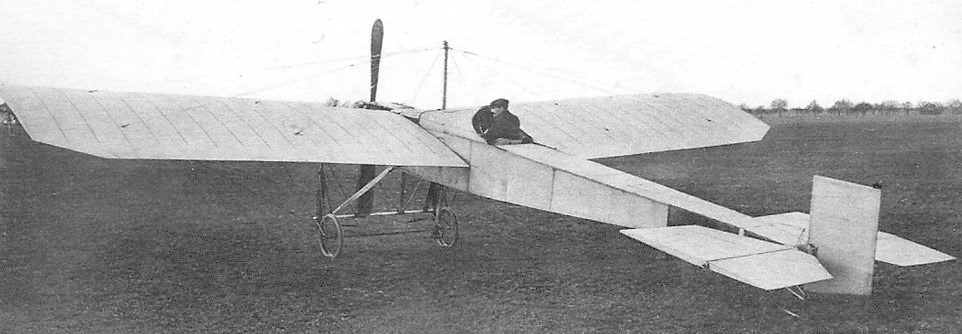
In 1909 the pilot Gaudard founded the Société d’Étude pour la Locomotion Aérienne (SELA) in France. G Badini, their designer, built two similar aircraft powered by 55 hp Aviatik engines, one appeared in 1910 at St Cyr, the other, a variant, in 1911. This machine was sponsored by “La Dentelle au Foyer”, a lace-workers’ magazine which later bought a Farman for the Army, christened “La Dentelle de Puy”; the city of Puy was famous for its lace industry.
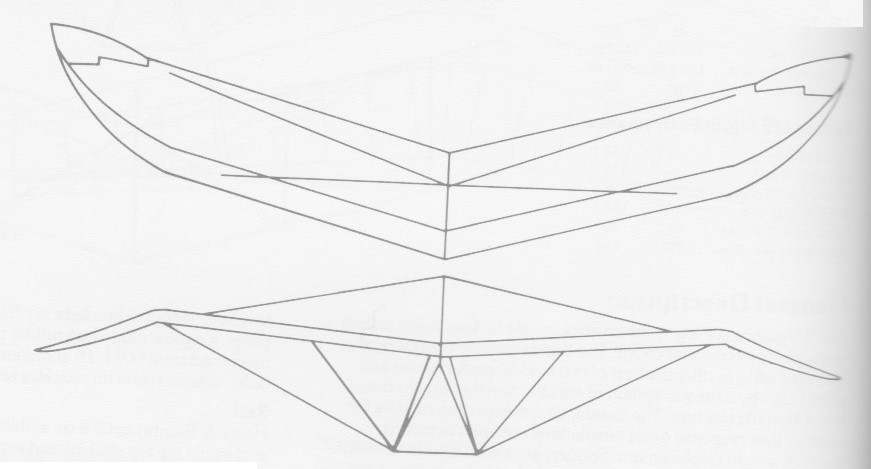
The 1975 Sunseed is a double surface, diffuser tip flying wing. It has outboard control surfaces. Canted tip wings provide self righting characteristic. It has a fibreglass leading edge with an aluminium trailing edge wedge. Draggons on the wing tips can be operated as glide path control devices to reduce glide angle from 12-1 to 5-1. The wing tip design provides induced drag and tip vortex reduction. The lower wing surface is ribless.
The airframe is made from 2024-T3 anodised aluminium. Rigging cable is 3/32in 7 x 7 stainless steel aircraft qualiy, vinyl coated. Hardware is all aircraft quality parts. The sail is 1.8oz stabilised dacron and is fitted with zippers and Velcro tapes. There was the option of seated or prone harnesses.
The Sunseed dissembles to a bundle 10 ft long and 1 ft in diameter.
The Sunseed has a stable stance even in steep turns with no tendency to dive or stall.
The run out distance before touchdown is about four times that of a Rogallo. It has a 13.7% airfoil and a load factor of 6G.
Wing span: 32.8 ft Wing area: 128.5 sq,ft Aspect ratio: 8.36 Wing sweep: 15˚ Weight: 50 lb Pilot weight: 125-180 lb Takeoff speed: 15 mph Stall speed: 16 mph Max speed: 40 mph Best glide ratio (L/D): 12-1 Best L/D speed: 25 mph Min sink: 275 fpm
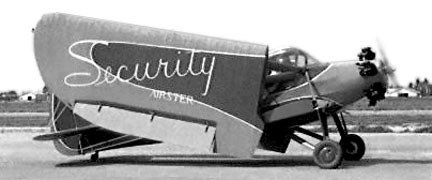
The S-1 Airster designed by Bert Kinner was a folding wing, side-by-side evolution of the Kinner Sportster. First flying on 1 May 1933 (piloted by Lee Brusse) they received ATC 521 and were priced at $1,985.
Two were built as S-1, NX217Y and NC13702, and 12 as S-1-A, NC13743, NC13746, NC13792 to 13794, NC14227 to 14232, and NC14293.
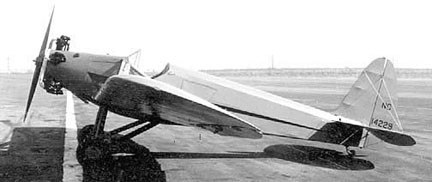
Security-National S-1-A NC14229
ATC 2-451 was received for gross weight change on prototype NX/NC217Y and NC13702.
About five 1937 S-1-B Airster were built with ATC 705, including NC15536 and NC18135, priced at $2,995. The prototype, NX/NC18967, was built as a class project at the Warren School of Aviation in Los Angeles
Société d’Etudes et de Construction d’Avions de Tourisme (SECAT) had been established in the late 1930s, and in 1938 had built the two-seat, high-wing S-4 Mouette, designed by Rémy Goucher, the development of which was interrupted by the hostilities of the Second World War.
Design work on light aircraft was resumed by SECAT in 1946, resulting in the SECAT S-5, the prototype of which was first flown in that year.
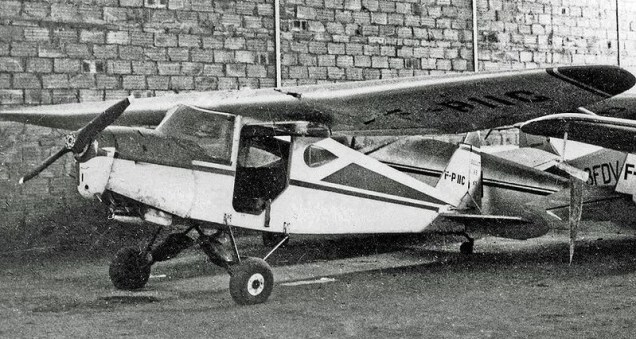
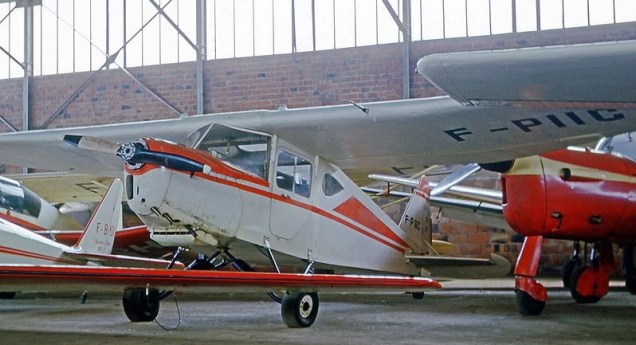
The S-5 was based on the design of the S-4, and was of all-wooden construction and had side-by-side seating for two persons. The cantilever, elliptical high-set wing comprised a wooden box-spar, chordwise ribs and a stressed plywood skin. The trailing edge carried ailerons and flaps. The fuselage was a wooden semi-monocoque and dual controls were fitted. The windscreen was split. A large access door was provided on each side of the fuselage, and all fuel was carried in a 250 l (55 imp gal; 66 US gal) tank installed in the wing.
The SECAT S-5 was a light, high-wing, two-seat touring monoplane aircraft, and only one example of the type was ever built, and it flew for a variety of private owners for several decades.
SECAT S-5 F-PIIC Toussus
After the prototype, no further examples of the type were completed. The sole example of the SECAT S-5, registered F-PIIC, was initially operated from Toussus-le-Noble Airport, near Paris. By 1964, it was owned by M. Rene Dupuis, and it was hangared at Arras Roclincourt Airport. The aircraft was still extant in 1967; however, it was struck off the French civil aircraft register during the 1970s.
Engine: 1 × Regnier 4D.2, 56 kW (75 hp) Wingspan: 8.99 m (29 ft 6 in) Length: 6.15 m (20 ft 2 in) Height: 2.11 m (6 ft 11 in) Empty weight: 350 kg (772 lb) Gross weight: 570 kg (1,257 lb) Fuel capacity: 250 l (55 imp gal; 66 US gal) Maximum speed: 196 km/h (122 mph, 106 kn) Cruise speed: 150 km/h (93 mph, 81 kn) Range: 800 km (497 mi, 432 nmi) Service ceiling: 3,600 m (11,810 ft) Rate of climb: 3.0 m/s (590 ft/min) Crew: 1 Capacity: 1 passenger or student pilot
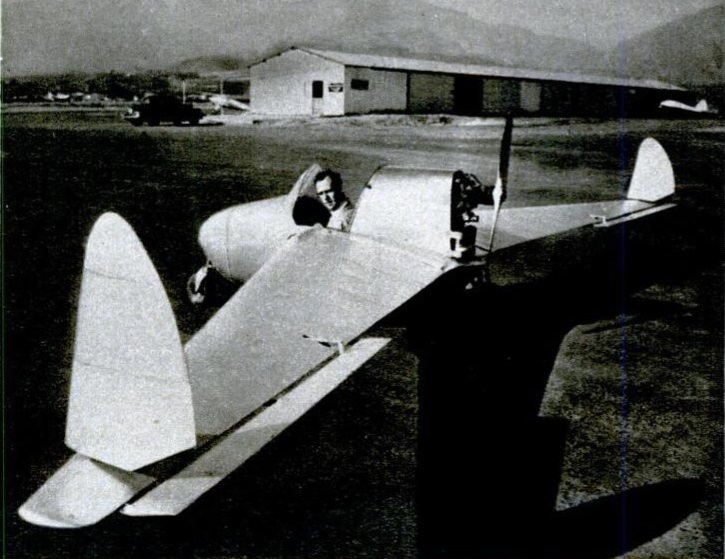
Designed and built by Robert M Sebring over a three-year period, the 1949 Wee Wing was a single-place pusher, the airframe was reportedly built for less than $100. The wing was of bonded plastic plywood. The wood construction aircraft was completed in 1949 and in its structure several composite material parts and components were used. The aircraft had so called wingtip tails and was fitted with one 12hp Richter two-stroke (drone) engine, the Richter company later being acquired by the Nelson Engine company.
Only limited testing of the aircraft took place and further development was soon halted.
Only a single example of the flying wing was built.
Engine: one 12hp Richter (Nelson) two-stroke Wingspan: 22 ft Height: 2.5 ft Empty weight: 150 lb Cruise: 65 mph Seats: 1


 All Aero