Seversky SEV-1XP / SEV-S-1

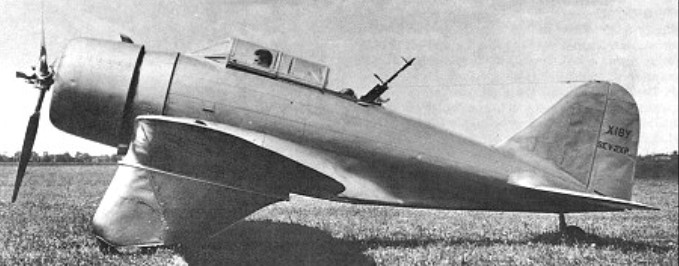
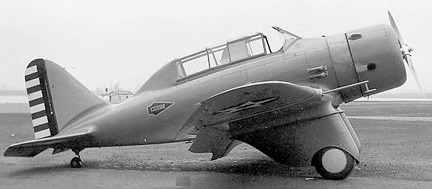
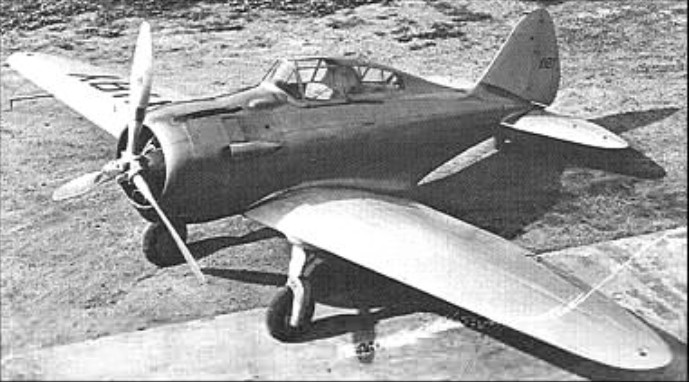
The SEV-2XP with an 800hp Wright XR-1670 engine, was damaged enroute to Wright Field and hurriedly converted into the single-place SEV-1XP with an 850hp Wright R-1820-G4 Cyclone engine

First flying as the NX18Y c/n 2 still, in August 1935 piloted by de Seversky, the SEV-1XP initially retained the R-1670 engine. By now featuring a semi-retractable undercarriage, the prototype was reengined with an ungeared nine-cylinder Wright R-1820 Cyclone. This engine failed to produce its rated power, however, the predicted 483km/h maximum speed proving unobtainable in consequence.

The USAAC Materiel Division’s decision to defer fighter choice pending further evaluation to be held in March 1936 enabled the SEV-1XP to be re-engined once more, this time with an 850hp 14-cylinder Pratt & Whitney R-1830-9 Twin Wasp. This was succeeded, in turn, by a geared R-1820-G5 offering 950hp for take-off, but the Twin Wasp was subsequently re-installed.

With this last engine and an armament of one 7.62mm and one 12.7mm gun, the SEV-1XP was selected on 16 June 1936, approval being given for production of 77 fighters against a contract confirmed early in 1937, with the designation P-35.

Repowered with a P&W R-1830B as the SEV-S1, and with a new tail and cowling, NX18Y raced at the 1935 Nationals, piloted by Frank Sinclair) to fourth place.

It was scrapped in 1937.

Sev-1XP
Engine: 850hp Wright R-1820-G4 Cyclone
Wingspan: 10.97 m / 36 ft 0 in
Length: 7.59 m / 25 ft 11 in
Height: 2.69 m / 9 ft 10 in
Wing area: 20.44 sq.m / 220.01 sq ft
Max take-off weight: 2274 kg / 5013 lb
Empty weight: 1681 kg / 3706 lb
Max. speed: 465 km/h / 289 mph
Range: 1918 km / 1192 miles
Seats: 1

Sev-1XP
Engine: P&W R-1830B

Seversky SEV-2XP

The SEV-2XP (the designation indicating 2-seat experimental Pursuit) designed by Alexander Kartveli was a derivative of the first product of the Seversky Aircraft Corporation, the commercial SEV-3 three-seat monoplane.

An all-metal semi-monocoque aircraft with a fixed spatted undercarriage, the SEV-2XP NX18Y c/n 2 was flown in May 1935 by pioted by de Seversky with the unsatisfactory Wright R-1670 14-cylinder radial offering 735hp for take-off. Provision was made for an armament of two synchronised machine guns, one of 7.62mm and the other of 12.7mm, and one 7.62mm gun on a flexible mount in the rear cockpit.

The USAAC Material Division initiated a contest for a new single-seat fighter. Maj Alexander P de Seversky, believing the SEV-2XP capable of out-performing any single-seat fighter, entered this aircraft as a contender. In the event, the SEV-2XP was damaged in an accident on 18 June while en route to the contest. It was then returned to the manufacturer and reworked as the single-seat SEV-1XP.

Engine: 800hp Wright XR-1670
Max take-off weight: 2404 kg / 5300 lb
Empty weight: 1633 kg / 3600 lb
Wingspan: 10.97 m / 36 ft 0 in
Length: 7.49 m / 25 ft 7 in
Height: 2.62 m / 9 ft 7 in
Wing area: 20.44 sq.m / 220.01 sq ft
Max. speed: 441 km/h / 274 mph
Range: 1529 km / 950 miles
Seats: 2

Seversky SEV-3 / BT-8

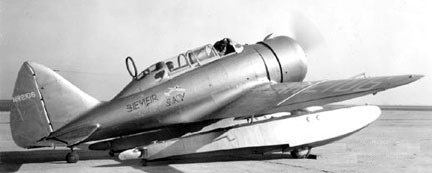
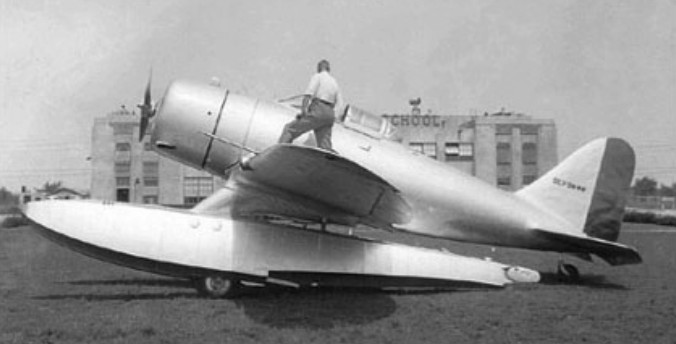
Built by EDO for refugee Russian WWI pilot Alexander de Seversky, the SEV 3 set several speed records in 1933. Seversky and fellow Russkies had formed an American corporation in 1931 but since they didn’t have a factory of their own at the time, the first airplane was built by EDO and given the SEV 3 classification, with the “3” standing for its three seat configuration. Seversky set amphibian speed records in the plane, powered by a 420 hp Wright Whirlwind, and then went after military business.

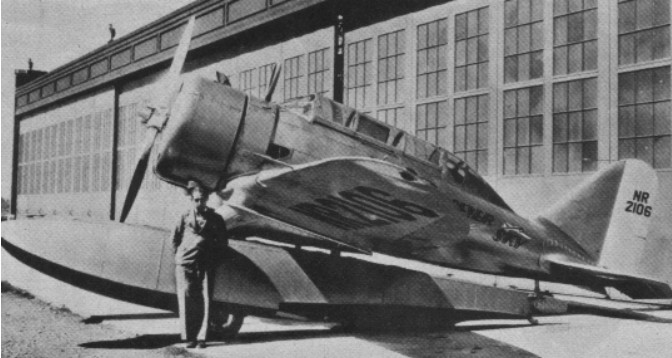
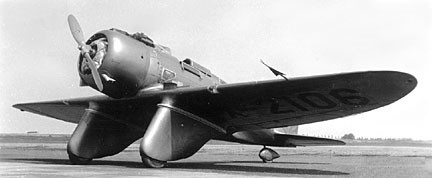
Designed by Michael Gregor and Alexander de Seversky, it was first flown in June 1933 as SEV-3, registered NX/NR2106 c/n 301, first with EDO wheeled floats for 1935 Thompson race, in which Lee Miles managed to place fifth at 196 mph.

The Army tested the Seversky but since it had no need for an amphibian at the time, the builder converted it into a landplane in 1934. Powered by a 350hp Wright R-975E with a faired landing gear it was re-designated SEV-3L

Seversky SEV-3L NX2106

This was the Army’s first monoplane training aircraft and its first all metal trainer built using modern construction techniques.

It became the SEV-3XAR to win the Air Corps’ 1935 BT-8 contract, then back to amphibious SEV-3M in 1935 with a 710hp Wright R-1820, to set a world speed record of 230.4 mph.

Seversky SEV-3XAR NR2106

The design, with wheels, became an Army BT-8 with 450hp P&W R-985. The basic aircraft evolved into the P 43, later, with a stretch of the fuselage and a 2,000 hp Pratt & Whitney R 2800 engine, it became the P 47 Thunderbolt.

Seversky SEV-3M-WW

Seversky went on to build other versions of the plane. Six of the 1934 SEV-3M-WW export version (NX15391, NX15689, NX15928 c/ns 37 to 39, plus three unlicensed).

“In Sever the Sky we find [NX15391, NX15689, NX15928]; US Register shows c/ns as 1, 2, and 3, but were actually c/ns 3, 4, and 5 aircraft by factory.’ This seems logical since [X2106] was c/n 1 and [X18Y] c/n 2. Then came [X189M] as c/n 6, 30 BT-8s as c/ns 7/36, and 3 SEV-3M-WWs for Columbia’s second order as c/ns 37/39.”

The 1937 SEV-DS NX1291 c/n 42 was built for the Shell Oil Co and piloted by James Doolittle.

The 1934 BT-8 Basic trainer was the AAC’s first monoplane trainer and was based on the SEV-3XAR, with faired landing gear. Thirty were built.

Seversky BT-8 at Wright Field

Gallery

SEV-3
Engine: 420hp Wright J-6
Undercarriage: floats

SEV-3L
Engine: 350hp Wright R-975E
Wingspan: 36’0″
Length: 24’4″
Max speed: 210 mph
Cruise: 185 mph
Undercarriage: wheels

SEV-3XAR

SEV-3M
Amphibious
Engine: 710hp Wright R-1820
Max speed: 230.4 mph

BT-8
450hp P&W R-985
Wingspan: 36’0″
Length: 24’4″
Useful load: 1033 lb
Speed: 175 mph
Undercarriage: wheels
Seats: 2

SEV-DS
Engine: 850hp Wright R-1820 Cyclone
Seats: 2
Undercarriage: retractable wheels

Seux 1907 Monoplane

second version

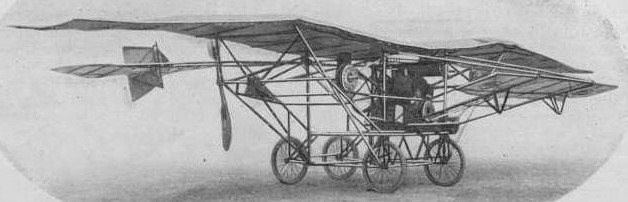
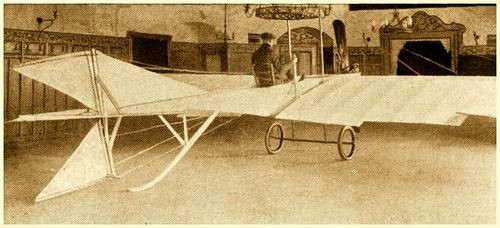
In the spring of 1907 Edmond Seux started development of a monoplane, which was tested on 15 May on a military parade ground. It first bounced on the uneven ground and one of the rear wheels broke. Later one of the two propellers hit the ground when the nose rose and damaged the wings. The plane was repaired and modified with bigger rear wheels and tested again in the end of May, but there are no reports of it flying and it was obviously abandoned. It was equipped with a 35 hp Anzani.

SETCA Milan

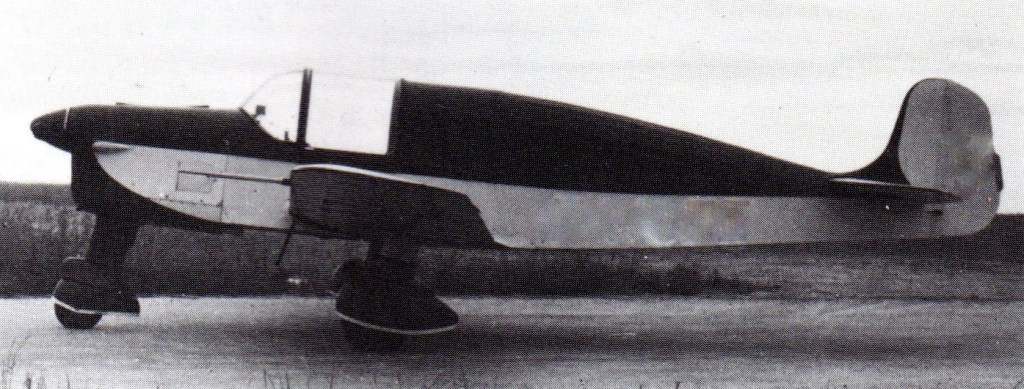
Designed and built by Laboureix and Lagrevol, the SETCA Milan was first flown in 1947, obtained its CNRA in August 1949, and in 1952 received a normal certificate de navigabilite.

A second prototype was built and flown. Of all-wood construction. The cabin seats two side-by-side, with dual controls.

The Milan was shelved since no buyers showed interest.

Engine: 90 hp Regnier 4-EO
Max speed: 122 mph
Cruise: 112 mph
Range: 434 mi
Empty weight: 1210 lb
Loaded weight: 1742 lb
Wingspan: 32 ft 9.5 in
Length: 24 ft 1.75 ln

Sequoia 300 / 302 Kodiak

Designed by David B Thurston, the Sequoia Aircraft Co 300 was a 2-4 place cabin, low-wing monoplane with retractable undercarriage. With composite and steel-tube fuselage, all metal wings and tail, it had aerobatic capability.

Kits and plans were available for home-builders, as well as the finished airplane.

The 302 Kodiak was powered by 235-300hp various turbocharged engines.

300
Engine: 235-300hp
Wingspan: 30’0″
Length: 25’0″
Useful load: 1000 lb
Cruise speed: 260 mph
Stall: 69 mph
Seats: 4

302 Kodiak
Engine: 235-300hp turbocharged
Wingspan: 30’0″
Length: 25’0″
Useful load: 1350 lb
Cruise speed: 255 mph
Stall: 72 mph
Seats: 4

Sequoia F.8 Falco / Laverda F.8 Falco / Aeromere F.8 Falco / Aviamilano F.8 Falco

Sequoia Falco F8L

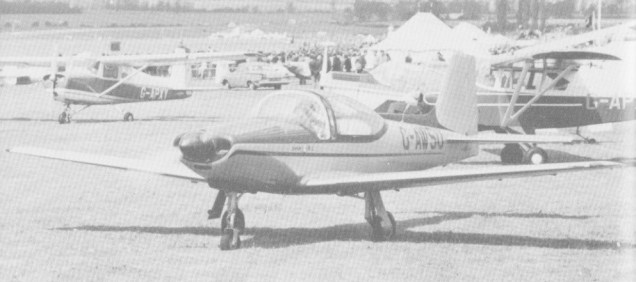
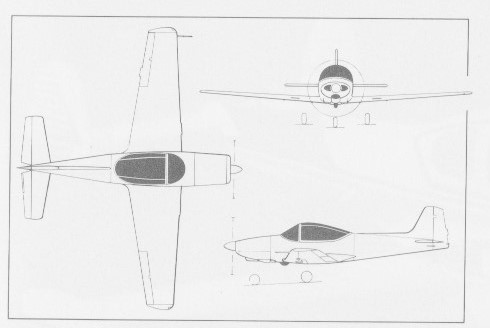
A two-place aircraft with an optional third seat for a child, the Falco of­fers an unbeatable combination of high-speed cross-country travel with complete aerobatic capability. Designed by an Italian, Stelio Frati in 1954, a Falco equipped with an optional Christen inverted fuel and oil system is capable of unlimited inverted flight and the full range of aerobatic maneuvers. Landing gear are fully retractable, activated by a simple mechanical system. Designer Frati has been responsible for such airplanes as the Waco Meteor/SF 260 and the F20 Pegaso.

Designed in 1955 and be­tween 1956 and 1968, 101 Falcos were built as production aircraft.

The initial F.8L Series 1 was produced by Aviamilano (20 built), along with 20 F.8.L series II development.

The F.8,L America was basically similar to the Series II but modified to CAR.Pt.3 requirements.

The F.8L Super Falco Series IV was generally similar to the The F.8,L America but with the 160 hp engine. 20 were built by Laverda.

Now earmarked for homebuilt construction in the United States through Sequoia Aircraft Corp., the Falco is made of wood, except for the firewall forward, the landing gear and the sliding canopy. Fuselage and wing skins are dacron. Power is supplied by either a 150- or 160-hp Lycoming behind a fixed-pitch or constant-speed prop. Gear and flaps are operated electrically.

Two examples of the Aviamilano F.8 Falco appeared in Britain during 1960.

Aviamilano F.8 Falco

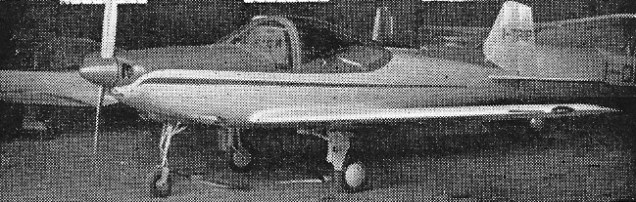
On 25 April 1965, the first, I-TRIP, of ten F.8 Super Falco under construction by Vietri first flew.

Vietri F.8 Super Falco I-TRIP

The Falco has been produced in kit form since 1974.

September 1982

Price 1982: $24,000 (Excludes engine and propeller). Units delivered to June 1981: 80.
Kit price 2008: US$108,440

F,8.L Super Falco

Gallery

F.8L Series 1
Engine: Lycoming O-290-D2B, 135 hp

F.8L Series II
Engine: Lycoming O-320-A, 150 hp

F.8,L America

F.8L Super Falco Series IV
Engine: Lycoming O-320-B3B, 160-hp
Wingspan: 26’3” / 8.00 m
Length: 21 ‘4” / 6.50 m
Wing area: 107.5 sq.ft
Empty Wt: 1212 lb / 550 kg
Gross Wt: 1808 lb / 820 kg
Fuel capacity 40 USG
Full fuel payload: 434 lb
Top speed: 212 mph
Cruise 75%: 190 mph / 165 kt
Max cruise 5000ft / 1525m: 156 kt / 180 mph / 290 kph
Stall clean: 75 mph / 65 kt
Stall landing config: 62 mph / 54 kt
ROC SL fixed pitch prop: 984 fpm / 300 m/min
Service ceiling: 19,700 ft / 6000 m
Takeoff dist: 570 ft
Takeoff run: (50’) 1150 ft
Landing dist: 750 ft
Landing roll: (50’) 1150 ft
Range: 870 sm / 755 nm / 1400 km
Cabin length: 4 ft 7 in / 1.40 m
Cabin width: 3 ft 5 in / 1.05 m
Cabin height: 3 ft 4 in / 1.02 m
Baggage capacity: 90 lb / 40 kg
Seats: 2

Engine: Lycoming IO-360
Wing span: 8 m
Wing area: 9.89 sq.m
MAUW: 853 kg
Empty weight: 550 kg
Fuel capacity: 151 lt
Max speed: 344 kph
Cruise speed: 319 kph
Minimum speed: 100 kph
Climb rate: 7.5 m/s
Seats: 2
Fuel consumption: 36 lt/hr
Plan price (1998): $400
Kit price (1998): $70,000

Sepecat Jaguar

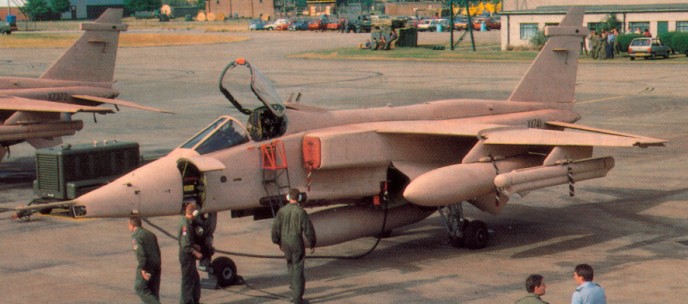
Jaguar GR.1

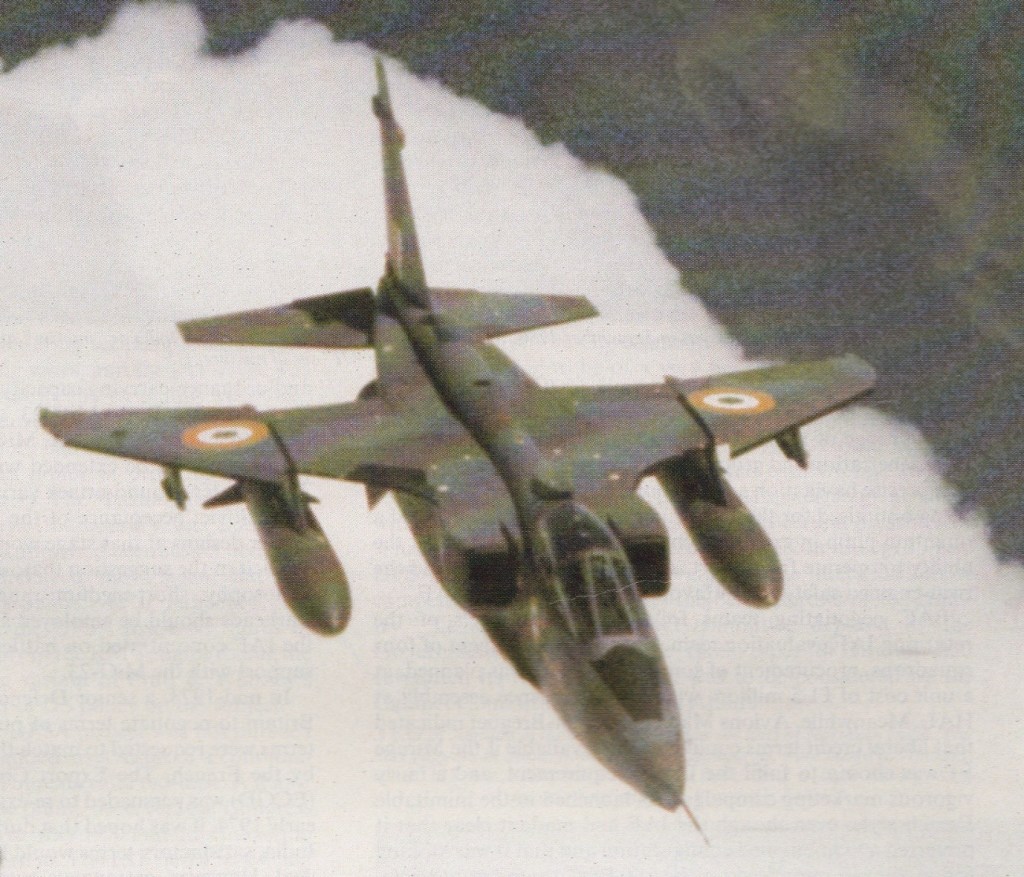
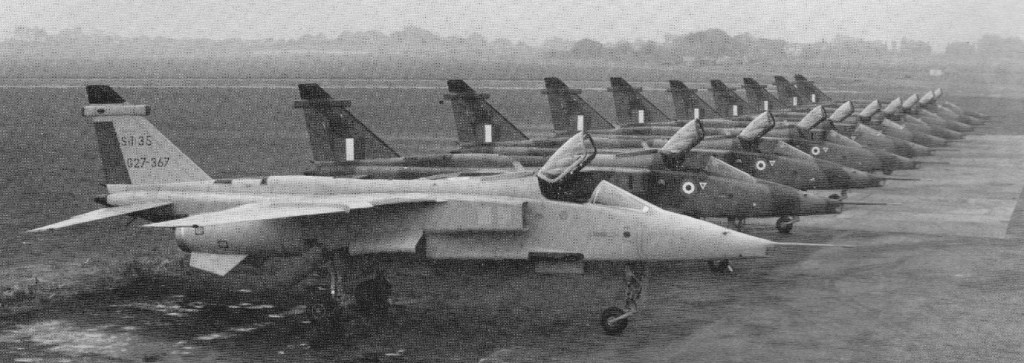
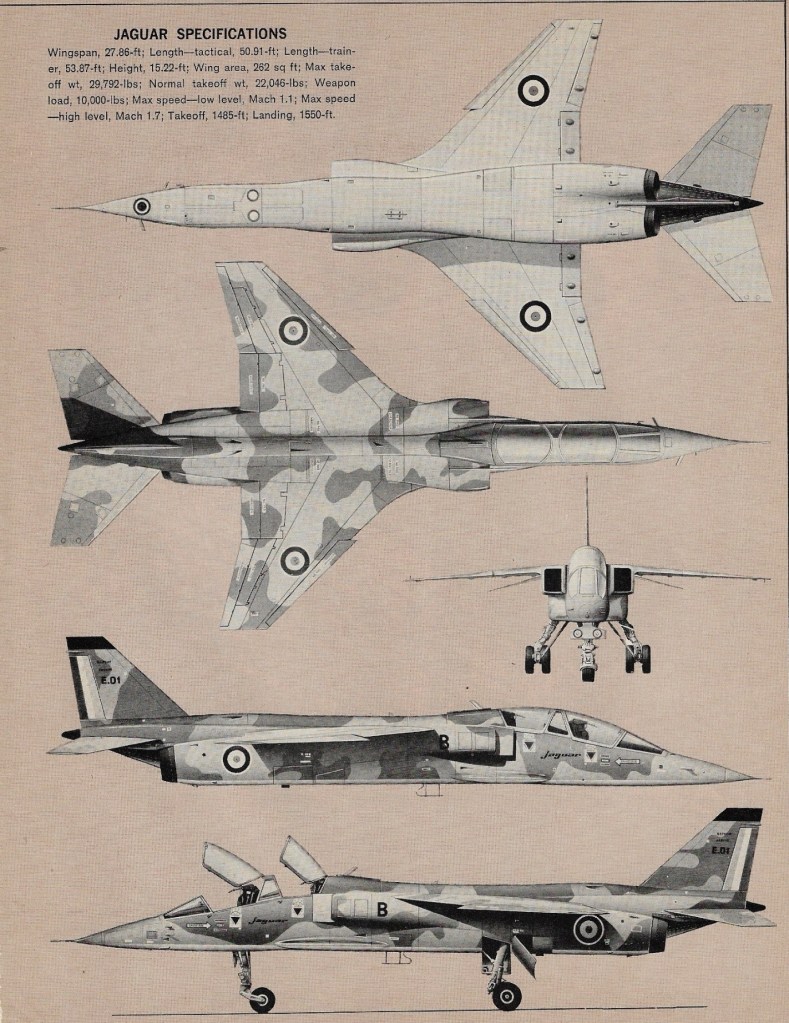
Bréguet 121 is the prototype, on which the SEPECAT (acronym for Société Européenne de Production de l’Avion d’Ecole de Combat et d’Appui Tactique) Jaguar is based. The Sepecat Jaguar, an Anglo-French joint venture by the British Aircraft Corporation and Breguet Aviation for a supersonic strike-attack and reconnaissance aircraft, plus a two-seat operational trainer, first flew on 12 October 1969.

SEPECAT Jaguar Article

Developed cooperatively by the United Kingdom and France, the Jaguar. The Jaguar is a light but capable strike aircraft, having two afterburning turbofan engines. It is used in the reconnaissance, advanced training, close air support, maritime attack as well as in the strike and interdiction role. Powered by two Rolls-Royce Turbomeca Adour turbofan engines of, according to engine mark, these aircraft have a maximum speed of Mach 1.5 at optimum altitude, and Mach 1.1 at sea level. A maximum external load of 10,000 lb (4,500 kg) of stores which can include nuclear and conventional weapons can be carried.

There followed a production of some 203 examples for the Royal Air Force, which included 38 two-seat variants, and 200 for the French Air Force. The Armee de l’Air’s first SEPECAT Jaguars became operational in January 1975. They had been modified to carry the French AN 52 tactical nuclear weapon.

Jaguar A is the original prototype and the French single-seat attack version. Jaguar E is the French tandem two-seat trainer variant with dual controls. Both were equipped with Adour Mk 101 engines of 7,305 lb thrust (with afterburning), although they were quickly replaced by the Adour Mk 102 of 8,600 lb thrust (with afterburning). The French Jaguars saw combat in Africa and the Balkans, before the last squadron (EC.01.007) retired its final examples from operational use on July 1, 2005.

Jaguar S designated GR.Mk1 (GR.1) by the Royal Air Force is the British equivalent of the Jaguar A with a laser in the nose. The Jaguar B is the RAF’s advanced trainer designated T.Mk2 (T.2) and has a more advanced full suite nav/attack system. Although originally delivered with the Adour Mk 102 engines, they were quickly retrofitted with the more powerful Rolls-Royce/Turbomeca Adour Mk 104 turbofans. GR.1A is an upgraded GR.1 aircraft with the nav/attack system from the T.2 and self defense systems, which were also added to the T.2A upgrade. Reconnainssance aircraft are equipped with a centre-line pod housing five cameras and an IR linescan.

Armament of the A and S versions consists of two 30 mm cannon, and, rockets and missiles. Jaguar A and S production aircraft entered service with the Armee de l’Air and the RAF respectively in 1973.

Entering RAF service with No 226 Operational Conversion Unit on 13 September 1973, and front-line service with No 54 Squadron since 29 March 1974, the Jaguar has at one stage equipped eight RAF front-line squadrons based in the UK and, the then, West Germany.

Only the Royal Air Force employed the type in the reconnaissance role, equipped with the Jaguar GR.Mk 1 carrying a large pod on the centreline stores station, containing cameras and infra-red linescan equipment. Reconnaissance cameras are located in a pair of rotating drums within the pod, swivelling to expose the camera ports during photography. Two side-mounted and one forward-looking camera are positioned in the forward drum whilst the second can contain a pair of oblique cameras for low-level work or a solitary vertical camera best suited for photography from medium altitudes. This combination offers quite comprehensive coverage, one particularly useful facility being a data conversion unit which automatically annotates the aircraft’s position on the film, details of this being obtained from the onboard navigation computer. IR-linescan film is similarly marked.The type is being continually upgraded into variants as the GR. 1A and lB. These upgrades, known as Jaguar ‘96 and ‘97, include the ability to carry the TIALD pod (thermal imaging and laser designator), new-generation reconnaissance equipment, an improved cockpit lay-out and an enhanced mission planning system and terrain reference navigation equipment.

The GR.3 and T.4 are the last RAF standards of RAF GR.1s and T.2s respectively. The upgrade program included new cockpit displays, helmet-mounted sights, the ability to carry the new Advanced Short Range Air-to-Air Missile (ASRAAM) and other system improvements to further extend the life of the aircraft into the 21st century. Finally, in the twilight of their career with the RAF, 60 GR.3/T.4 aircraft were fitted with the Adour Mk 106 engine, a rebuild and enhanced version of the Mk 104 offering better reliability, maintainability and slightly more thrust.

Despite the upgrades, it was decided the Jaguar would ultimately leave RAF service in 2007. The last RAF Jaguar squadron, 6 Sqn, was planned to disband in October 2007, retiring its aircraft. However the date was brought forward by some six months to 30 April 2007, a decision which had been announced only six days earlier by the UK MOD. Only one GR.3A and one T.4 aircraft remained active for trials with QinetiQ at Boscombe Down, Wiltshire, UK.

The Jaguar had somewhat limited export success, but the international variant was sold to the Ecuadorean Air Force (12), India, Nigeria, and the Royal Air Force Oman (24), as well as the Nigerian Air Force (18 these are currently (1999) stored and have not been operational for many years). The first of 10 SEPECAT Jaguar International fighters (the export version) was delivered to the Sultan of Oman’s air force in March 1977.
All export Jaguar Internationals are based on the RAF’s Jaguar B/S airframe.

In March 1969, the Indian Minister of Defence Production stated in Parliament that BAC had proposed collaboration in the manufacture of the Jaguar in India, but did not elaborate. Ten days earlier, the first strike Jaguar prototype (A-03) had flown. By the autumn of 1971, eight development Jaguars in France and Britain were going flight tests and armament trials.

Although the Jaguar flew well, the dry thrust of its Adour Mk 101s was considered inadequate. Also at this stage of development, the part-throttle reheat system for the engine was being developed to provide for smooth augmentation and making it possible to select any thrust from minimum dry to maximum reheat. Subsequently, BAC offered the Adour Mk 102 with the PTR system, the engine now developing a dry thrust of 5,165 lb / 2343 kgp, increasing to 7379 lb / 3347 kgp with reheat, a 50% increase over the Mk 101.

The 18 Jaguars from RAF reserve stocks were from various units, but largely ex-No 6 Sqn, and BAe Warton prepared the aircraft to the “interim” standard. The first two aircraft were two-seaters XX138(RAF)=B 3(BAe)=J1001I(IAF) and XX720(RAF)=B 8(BAe)=J1002(IAF), followed by the single-seaters including ex-No 6 Sqn RAF Nos XX738, XX729 and XX734. The “interim” Jaguars were painted in the standard RAF camouflage scheme but with IAF roundels and fin flashes. The first two were formally handed over at Warton on 19 July 1979.

The Indian Air Force received 40, where the type is known as the Shamsher (assault sword). An additional 45 were supplied and assembled in India and a further 46 followed, being produced in India by Hindustan Aeronautics. The first of 45 HAL-assembled Jaguars flew in March 1982, and production ended in 1998.
India was the biggest Jaguar operator today, with Jaguar IS strike , IT trainer and IM maritime strike aircraft. The latter have the Agave radar in a reprofiled nose and are armed with BAe Sea Eagle anti-ship missiles.
While the original manufacturing countries of the Jaguar, France and the United Kingdom, had retired the Jaguar from air force service, India was still producing new aircraft of the type for the Indian Air Force (IAF). HAL’s Bangalore production line assembled the last batch of 20 single-seat Jaguars complete with the DARIN (Display Attack Ranging Inertial Navigation) II upgrade, including HOTAS, MFD, and new INS/GPS nagivation system. At Aero India 2007, February 2007, it was revealed that five of the 20 new Jaguars were ready for delivery with another three in final assembly. The eight were scheduled for delivery to the IAF before March 31, 2007, with the remaining 12 aircraft to be delivered within a year.

Latest versions have uprated Adour Mk.811 engines and overwing air-to-air missiles, while optional equipment includes multipurpose radar, Sea Eagle, Harpoon, Exocet, or Kormoran anti-shipping missiles, and a system such as low-light TV for enhanced night oper¬ations.

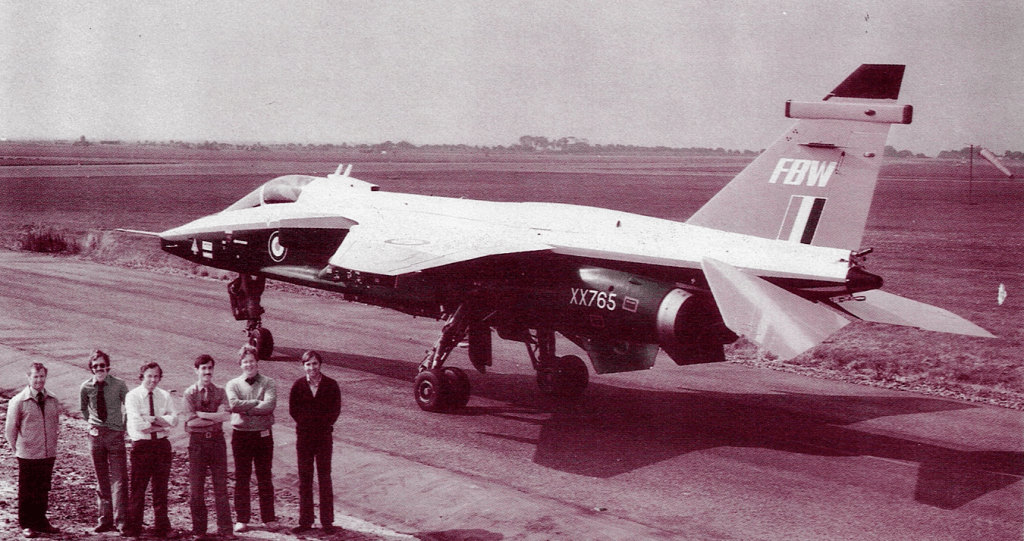
During the 1970s and early 1980s considerable research was undertaken into a host of aeronautical fields but this was generally performed with conversions of existing aircraft such as the SEPECAT Jaguar converted by British Aerospace for fly-by- wire control development.

Jaguar FBW

Gallery

Jaguar
Engine: 2 x R-R / Turbomeca Adour. Installed thrust (dry / reheat): 50 / 75 kN
Span: 8.7 m
Length: 15.5 m
Wing area: 24.2 sq.m
Empty wt: 7700 kg
MTOW: 15,430 kg
Warload: 4760 kg
Max speed: 1350 kph, M1.4
Initial ROC: 1.5 min to 9150 m
Ceiling: 14,000 m
T/O run: 880 m
Ldg run: 470 m
Combat radius lo-lo-lo: 535 km
Fuel internal: 4200 lt
Air refuel: Yes
Armament: 2 x 30 mm
Hard points: 5

Jaguar GR.Mk.1
Powerplant: two Rolls-Royce/ Turbomeca Adour Mk 104 turbofans, 3647-kg (8,040-1b) afterburning
Maximum speed at 10.975m (36,000 ft) 1700 km/h (1,055 mph) or Mach 1.6
Service ceiling 14,020m (46,000 ft)
Ferry range 4205 km (2,614 miles)
Weight empty about 7000 kg (15,432 lb)
Maximum take-off 15700 kg (34,612 lb)
Span 8.69 m (28 ft 6 in)
Length 15.52 m (50 ft 11 in)
Height 4.89 m (16 ft ½ in)
Wing area 24.18 sq.m (260.27 sq.ft)
Armament: two 30mm Aden Mk.4 cannons / 150 rounds per gun
External load: 4763 kg (10,500 lb)
Hardpoints: five + wingtips

Selvage 1909 monoplane

In 1909 Blaine Selvage built a single-place, open cockpit, mid-wing monoplane powered by a 40hp Selvage engine. Hardly more than an open framework with a wire-braced wing attached, reportedly built by a local mechanic, Alfred Peterson, but a 19 November 1909 newspaper photo shows it in flight. Friends who had gathered in the field watched as the 24 year-old man took his seat in front of the controls and revved his home-built engine to a roar. Then, according to a local newspaper, “the machine dragged itself over the rough ground for a distance and then evenly ascended.” It was the first airplane flight north of the Golden Gate, and one of the first anywhere on the West Coast.

The first flight took place November 16, 1909, outside of Eureka. Selvage flew three-quarters of a mile in a minute and a half, an average speed of 30MPH. He might have gone farther, had he more than a gallon of gasoline in his tank.

The most significant aspect of his flight was that he demonstrated control of the aircraft by flying in a circle almost back to his starting point; most first-time pilots barely managed to keep the thing wobbling along in a straight line.

While Martin and most other Americans were trying to copy the Wright Brother’s biplane, Selvage had built the sort of single wing plane that they were making in France. An aviation-enthusiast magazine of the time described it as a “combination of a Bleriot and Antoinette,” which probably meant that it looked much like the actual 1909 Bleriot shown in modern-day flight in the video here, except that his plane had a longer wingspan.

A few days after his premiere flight, the Press Democrat reprinted in full an account from the Eureka Herald. The PD had previously claimed that Selvage would be making his first flights from Santa Rosa, and the reprinted article included a preface that Selvage was “formerly a well known Santa Rosa boy.” Selvage and several brothers were rooming together here in recent years and working as laborers.

Selvage told a local paper that he had a lucrative offer in Southern California for exhibition flights, and might enter a $10,000 Los Angeles competition. Whether he did either is unknown, but about six months later, on June 5, 1910, he was back in Eureka to make arrangements for exhibition flights on the Fourth of July. He said he had been in Oakland, where he made “a number of flights” and was “studying aeronautics and experimenting in aviation.”

“The most successful flights which have taken place in Alameda County, Ca., have been made by Blaine Selvage in a monoplane, which he built himself,” an item in Aircraft magazine noted that September. “Three times on the same day he flew several miles and returned to the starting place without the slightest hitch.” The magazine also reported, “Selvage’s ambition is to be the first aviator to fly across San Francisco Bay.”

Perhaps Selvage felt humbled by honed skills and expensive, high-powered machines, but his career as a pioneer aviator was apparently over. The complete absence of any mention in the press after 1910 suggests that he called it quits. Or maybe his plane was repossessed; in August, 1910 he had accepted $500 from a backer that was apparently secured by the plane.

WILL MAKE AEROPLANE FLIGHT FROM SANTA ROSA

Blaine Selvage, a well known young mechanic of Eureka, has practically perfected a model of a new aeroplane of his own invention, with which he has already made several successful trial flights in private. Mr. Selvage is planning to bring his machine to Santa Rosa, where he will make his first public exhibition and trial flights.

The machine which Mr. Selvage has built consists of two plane surfaces, both 40 feet in length and six feet wide. These surfaces are connected with light but strong supports and rods of different materials, the machine built along practical lines.

A feature of the machine is an appliance whereby the man controlling the machine can make the aeroplane swing and rock from side to side and turn on an unsteady course, much as a bird in flight. This feature of the machine is now before the patent office at Washington and within a short time Mr. Selvage expects to receive his patents. The course of the aeroplane is determined by a horizontal rudder.

The motor which is now being built for the model machine is being built under the direction of Mr. Selvage. The engine is a four-cylinder motor and is capable of developing 30 horsepower. The feature of the motor is its small size and light weight which will make it adaptable for use by the aeroplane.

  • Press Democrat, August 12, 1909

SELVAGE TAKES HIS FIRST FLIGHT IN OWN AEROPLANE

A few days ago the Press Democrat mentioned the achievements of Blaine Selvage, formerly a well known Santa Rosa boy, with his self constructed aeroplane at Eureka. The Eureka Herald gives the following detailed, interesting account of his first flight, which will be read with interest by his many friends here:

In the air for a minute and a half, during which time almost a complete circle was traversed, was the feat performed at the Woods resort on the Arcata road yesterday afternoon at 5:30 o’clock. Mr. Selvage made a genuine test and his machine took to the air as nicely as a Wright machine ever tried to do . Mr. Selvage was in town this morning. Despite his modesty as to his achievement the young man was appreciably proud of his machine and exceedingly gratified at the success he enjoyed late yesterday afternoon.

Had the aeronaut had more gasoline in his machine he would have remained in the air longer. One cylinder of his four-cylindered motor began to miss. The aeronaut concluded that it would be well for him to land before any of the other cylinders refused to work. After landing and an examination of the motor made, it was found that the supply of gasoline had been practically exhausted. But one gallon of gasoline had been put in the tank and a part of this had been used in turning over the motor before a flight was attempted. More gasoline had been ordered sent out bit it did not arrive. Hence Mr. Selvage made his initial flight with a shortage of fuel.

The flight was made in a field to the south of the Woods hotel on the Arcata road. The field is no larger than is required for aeroplane maneuvers. Upon starting, the vertical rudder was put hard over. The machine dragged itself over the rough ground for a distance and then evenly ascended. When a height of 20 feet had been attained Mr. Selvage adjusted his planes [sic] to go no higher. He did not care to seek a high altitude upon the initial flight. The machine answered the levers nicely and gave evidence of having sufficient strength to withstand the strain that it must undergo. The motor behaved nicely until the gasoline was exhausted. With the vertical rudder kept hard over the machine circled about the field and would have returned to the place of beginning had there been plenty of gasoline and a landing not been made.

The Selvage machine is a monoplane. It is 40 feet from end to end of the plane, which extends on either side of the light frame work supporting the motor and affording a seat for the aeronaut. The machine was built in this city at the Pacific garage by Mr. Selvage, he making the motor himself.

Mr. Selvage says that he will not attempt to make another flight for afew days, probably not until the latter part of this week or the first of next week. He wishes to place stronger wheels beneath his machine. He is having wide hubbed wheels made especially for the machine. In landing a considerable strain is put upon the wheels. The landing of last evening came very near putting one of the wheels out of commission. Until this matter is attended to the young man will not attempt to make another flight.

The flight of yesterday afternoon was witnessed by a few invited friends of Mr. Selvage He wished to try out the aeroplane in the presence of a few before permitting the general pubic to know of the time of any intended flight.

  • Press Democrat, November 21, 1909

TO FLY AFTER STORM

Blaine Selvage, the young Eurekan who in an aeroplane of his own construction succeeded in flying three-quarters of a mile in a minute and a half last Tuesday night, stated last evening that immediately after the present storm is over he will make another flight out on the Arcata road near Woods’ resort.

Selvage is putting more substantial wheels under his flying machine and the next time he ascends heavenward it will be with the firm resolve to make a record breaking flight.

The inventor states he is confident he could fly over the top of Eureka, and but one thing discourages such an attempt, the possibility of his engine breaking while in mid air which would necessitate a descent to terra firma. House tops to not offer a descent to terra firma. House tops do not offer all that might be required for a place of alightment.

After several more flights in this county, Selvage will be ready to sally forth in search of new fields to conquer, it being his intention to go to Lon Angeles and try for the Harris Gray Otis prize, the millionaire newspaperman in the City of Angels is offering.

Selvage is confident he has infringed on none of the patents awarded to the Wright Brothers or any other aviator, and he has several applications for patent on his machine pending.

His 40 horse power engine of four cylinders made entirely by himself, Selvage declares to be the greatest factor in his success. A new system of lubrication has been used to advantage in the Selvage engine and even when it is geared to 1000 revolutions per hour the machinery does not become heated.

Other aviators have had considerable trouble with their engines, their machines becoming so heated while working at full speed in the air that long flights are impossible. Selvage thinks he has successfully bridged this gap.

Then again, the Selvage aeroplane is equipped with steering and balancing devices far superior to any yet used. Generally the amateur aviator has trouble on his first flight in keeping the machine right side up, but Selvage did not experience the slightest difficulty from that source in his first dash into the clouds.

The Selvage machine is of the monoplane type used considerably by French aviators, the Wrights are using a biplane.

  • The Humboldt Times, November 19, 1909 as reprinted in “Redwood Country” Eureka Times-Standard, November 21, 1969
IS ASKED TO FLY AGAIN

Blaine Selvage, the young machinist of this city who recently made a flight of three-quarters of a mile in a minute and a half in an aeroplane, monoplane type, of his own construction has already received tempting offers for exhibitions in other parts of the state.

There is soon to be a big jubilation in Ventura and Selvage has been offered $500 and all expenses to make flights in that county during the carnival. Selvage has about decided to accept the offer and he is planning to leave Humboldt county soon to keep the engagement.

After Ventura, he told The Times, he would then fly on to Los Angeles to accept the challenge for a $10,000 purse being offered by the publisher of The Los Angeles Times.

[..]

It has been suggested that Mr. Selvage be asked to make a number of flights in this city next Fourth of July or next fair week and something of that nature may be arranged. This winter he wants to go to Southern California where there are flying contests.

Selvage has demonstrated that he has mastered the air in a measure and he will no doubt have more engagements to make exhibition flights that he can attend to hereafter.

  • The Humboldt Times, November 23, 1909 as reprinted in “Redwood Country” Eureka Times-Standard, November 21, 1969