Built in 1938, the Shepard-Krum SC-1 Sportcraft was a two-place, open-cockpit, low wing monoplane, powered by a 65hp Velie M-5 engine and registered N19953.
Monoplane
Shenyang Sailplane and Lightplane Co Jeifang-9
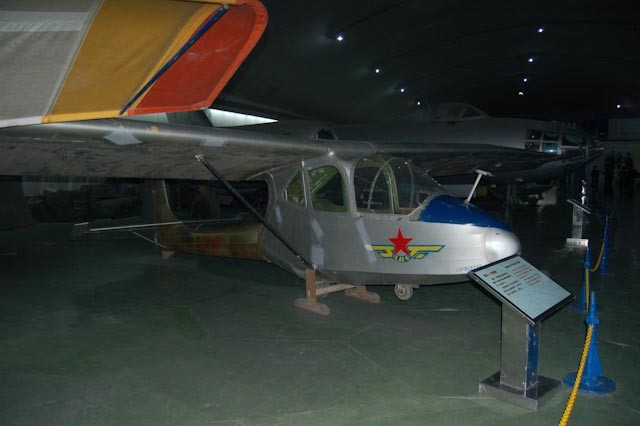
The Jeifang-9 two seat Glider was made by the Shenyang Glider Factory in 1977.
Shenyang Sailplane and Lightplane Co HY 650 / HU2
A three/four-seat braced-wing cabin lightplane (first flown 1996 in C and D versions).
Shenyang JJ1
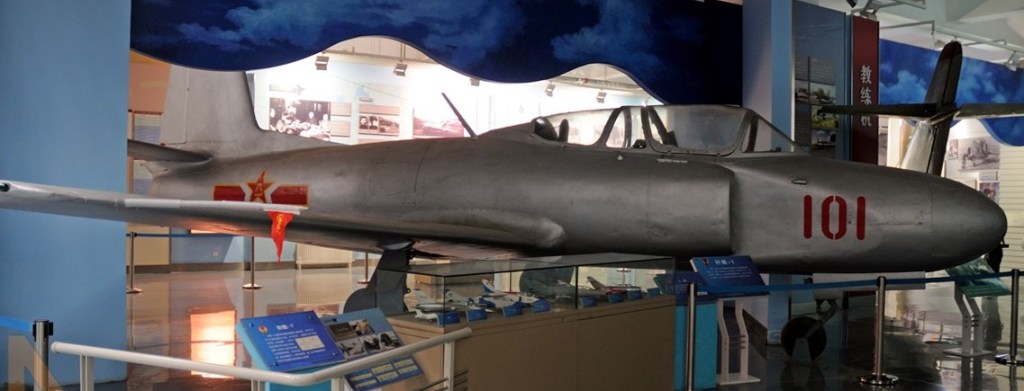
The Shenyang JJ1 jet trainer was the very first of its kind in China. It never made it past testing and only two ever flew.
Shenyang J-31

The second product of the J-XX program to be revealed to the public was the J-31. Revealed to the public in 2012, it clearly incorporates some stealth aspects, especially towards the front of the aircraft.
Testing began in October 2012, and in late 2014, the J-31 was displayed publicly at an airshow for the first time. The prototype mounts two Russian-designed RD-93 turbofans (the same engines as the MiG-29). The mockup shown at that same event seems to show that several changes to the design are in store. While the intended role of the J-31 within China is unclear, it does seem to be slated for export, with Pakistan reportedly planning to purchase up to 40 J-31s.
Shenyang J-16
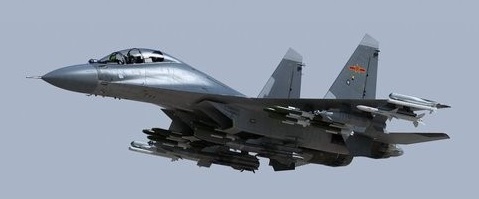
In 2000, China purchased an Su-30MKK from Russia, which formed the basis for development of two-seat J-11 variants. The Chinese developed the two-seat J-11BS into a dedicated strike fighter under the designation J-16.
Just as its predecessor, it extensively employs composites to lower airframe weight, while new materials and design elements were used to lower RCS. The J-16 first took flight in 2011 and was accepted into service two years later.
A small production of only 25 aircraft built. While still in production, priority seems to be placed on development and production of the fifth-generation J-20 and J-31 fighters.
Shenyang J-15

Soon after development of the J-11B began, Shenyang began to develop a navalized version of the aircraft to operate from the recently purchased carrier Varyag. In 2001, China purchased an unfinished Su-33 prototype from the Ukraine, allowing Shenyang to work with the design to develop a carrier aircraft. Meanwhile, the Chinese government made repeated attempts to acquire Su-33s directly from Russia. Negotiations fell apart in 2006 when the J-11B was revealed, and thus Shenyang was forced to develop a domestic solution. The resulting aircraft was almost identical in appearance to the Su-33, but is considerably lighter and more capable thanks to extensive use of composites and newer onboard systems.
The J-15 first flew in 2009, powered by the same AL-31F turbofans that powered the Su-33. Carrier trials began in late 2012, and as of late 2013 the J-15 has began operational testing.
Shenyang J-13
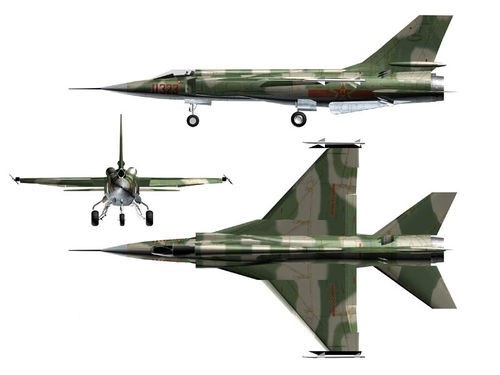
In the early 1970s, Shenyang began looking into the development of a new fighter to replace their J-6/MiG-19s. When, in 1974, the PLAAF proposed the development of a new lightweight fighter with a top speed of Mach 2, Shenyang began serious design work, testing several wing configurations. The design that emerged had side-mounted intakes and a double-delta wing. While as early as 1976 Shenyang had finalized the design and was looking into the avionics and materials to be used in the aircraft, it was still without an engine. Plans called for the Rolls-Royce Spey derived WS-9 engine to be used, but when the engine finally emerged in 1980, it proved unsuitable for a single-engined fighter. In the late 1970s, the Chinese had got their hands on an Egyptian MiG-23MS complete with its Tumansky R-29 turbojet, which was hastily copied. However, when the new engine proved to be underperforming, the project was once again delayed. Further issues came in 1981 when the success of the J-8 caused the funding for the J-13 to be cut. Throughout the 80’s the project soldiered on with low priority, with new requirements emerging that called for the design to be competitive with the newest fourth generation fighters. Finally, the project was abandoned in the early 1990s as Chengdu’s J-10 proved to be more promising.
Shenyang J-11
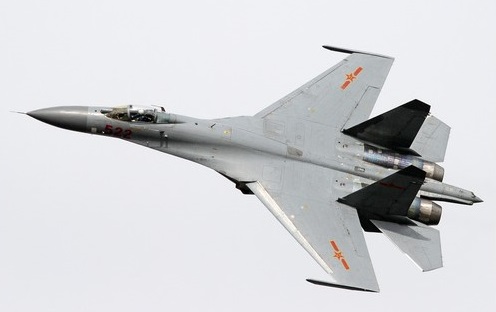
In 1995, China secured the rights for domestic production of the Su-27SK by Shenyang under the designation J-11. As originally conceived, the J-11 was to be merely a Chinese-built Su-27SK – complete with Russian engines and systems. While the J-11 took flight in 1998 and quickly entered service alongside Russian-production Su-27s, Shenyang went to work on the development of an indigenous improvement to the design. Designated the J-11B, the new aircraft used domestically-designed WS-10 engines, domestically-designed onboard systems, and extensively employed composites to lower the empty weight by 700kg. The J-11B added the capability to mount a variety of Chinese-designed ordnance, including anti-ship missiles.

The J-11B has had its share of controversy. Its legitimacy has been called into question, as concerns have been raised over unlicensed production of the Su-27 design. Production has stopped of the original J-11s, apparently shifting to J-11B production, but, as is common with the Chinese, the domestically designed WS-10 engine has had many teething issues. Shenyang has looked to Russia for alternatives – the AL-31 series engines used on SU-30MKIs were a top choice for an alternative powerplant. At least one squadron did operate WS-10-powered J-11Bs briefly, but the aircraft were quickly grounded after the engines proved to have impractically short lives (30 hours compared to 400 for Russian engines). In spite of the issues, however, the J-11B has gone on to form the basis for further Chinese Flanker variants.
Shenyang F-9
By 1975 preliminary reports had reached the West of a considerably modified version of the F 6, the MiG-19SF and PF built under licence in China. (Unlike the MiG 21, built in as small numbers as the Shenyang F 8, the earlier F 6 continued in production and proved useful by China and various export customers.)
The Shenyang complex of the Chinese aerospace industry has long been known for painstaking quality and attention to detail, but also for a lack of original design experience. It cannot have been easy to derive a largely new twin engined fighter from the F-6, differing in such respects as generally increased size, a large nose radar and lateral engine inlets.
First announced in the West by US Defense Secretary Rumsfeld in 1976, when it was described as the Fantan A fighter-bomber, the F 9 was originally powered by Tumansky RD 913 engines, each rated at 3250 kg (7164 1b) thrust with maximum afterburner.
 All Aero