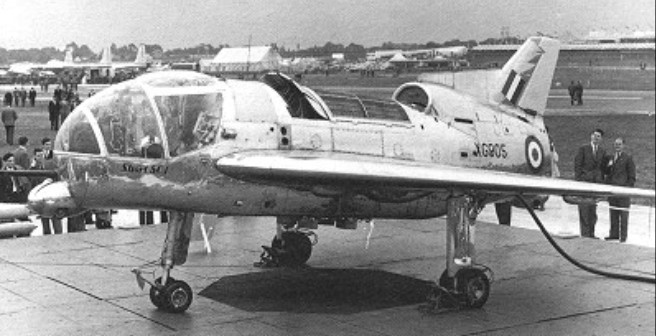
In 1953, the Ministry of Supply issued Specification ER.143 for a research aircraft which could take off vertically by jet lift, then accelerate forward into normal cruising flight.
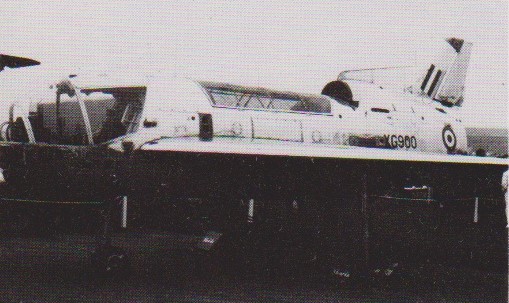
The SC. 1 was designed to study hover, transition and low-speed flight, and had a fixed landing gear. The Short SC. 1 was powered by four RB.108 lift engines vertically mounted on gimbals in the centre fuselage and one RB.108 cruise engine in the rear for forward flight. Bleeds from the four lift engines powered nose, tail and wing-tip reaction jets for control at low speeds.
The first conventional flight was made on 2 April 1957, first tethered vertical flight was on 26 May 1958, and first free vertical flight was on 25 October 1958. The first transition was on 6 April 1960.
The SC.1 appeared at the Farnborough air show in 1960 and Paris air show in 1961 (for the latter it flew the English Channel both ways).
After first flying May 1958, the second Short SC.1 VTOL research aircraft (XG905) crashed at Sydenham airfield, Belfast, on October 2nd, 1960, the pilot, John R. Green, being killed. Equipped with a new auto stabiliser system with which it had begun tests on August 2nd, the SC.1 was hovering at an altitude of 50 ft (15.2 m) when control was lost, the aircraft turning over on hitting the ground. It was rebuilt and the two aircraft continued to fly.
James M. Patton, Jr was a research pilot at NASA Langley, and a guest of the Royal Aircraft Establishment at Bedford in August & September, 1971. He conducted 10 flights in SC-1 XG905 to obtain data pertinent to NASA VTOL research.
One was on display at the Ulster Folk and Transport Museum.
Engines: 4 x 965kg Rolls-Royce RB.108 lift engines and 1 x RB.108 cruise engine Max take-off weight: 3650 kg / 8047 lb Wingspan: 7.16 m / 24 ft 6 in Length: 9.10 m / 30 ft 10 in Max. speed: 396 km/h / 246 mph Range: 240 km / 149 miles Crew: 1
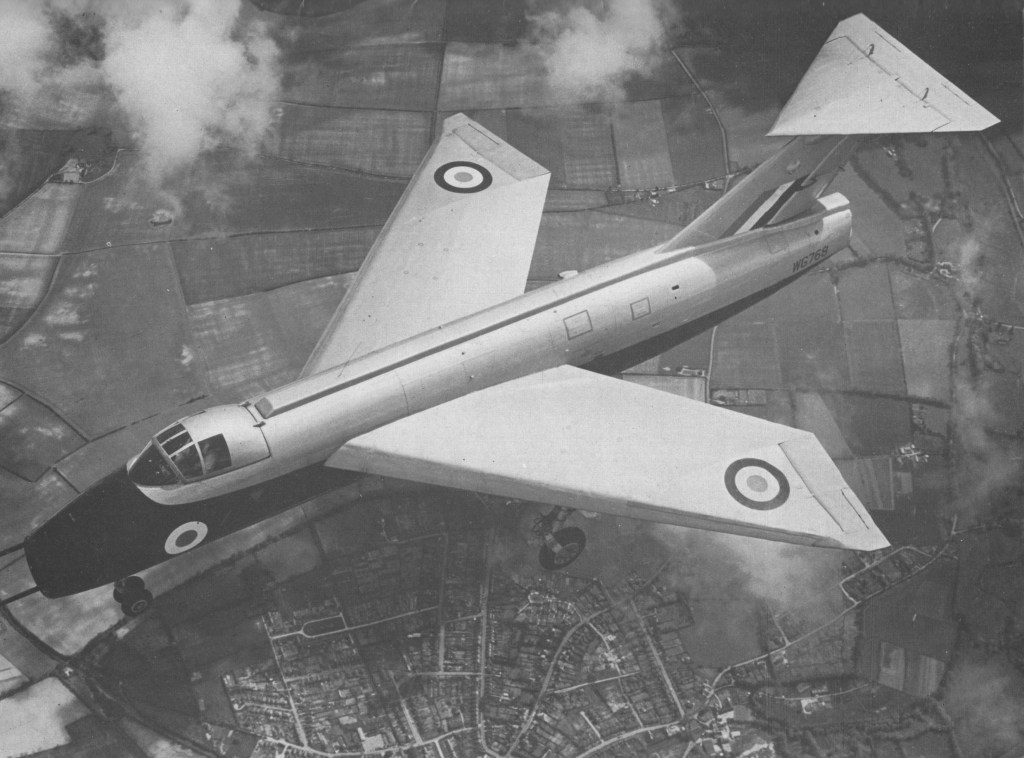
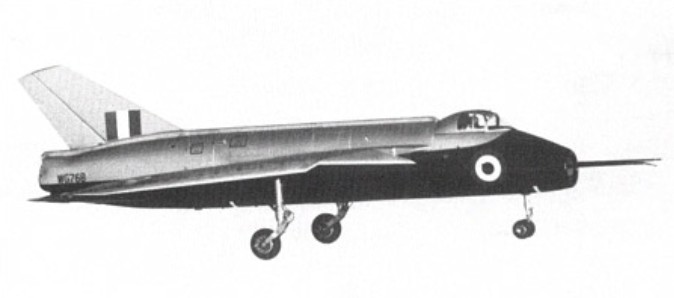
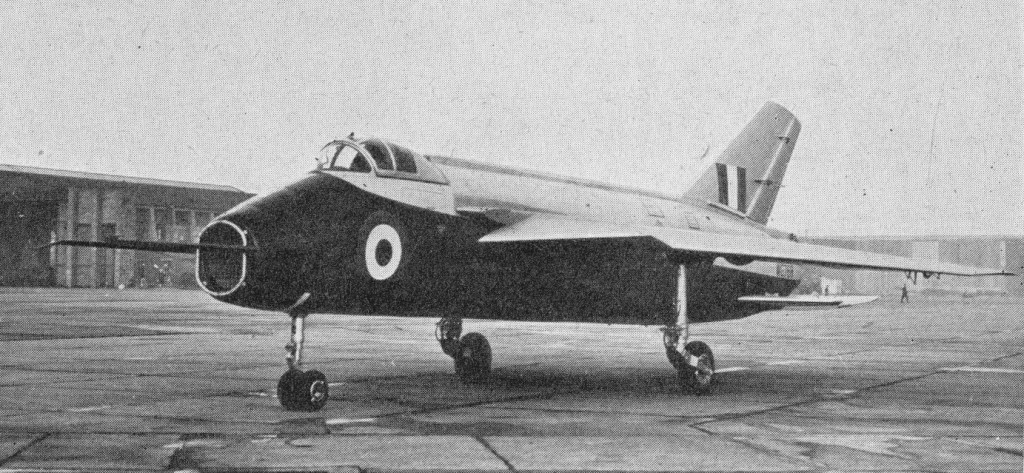
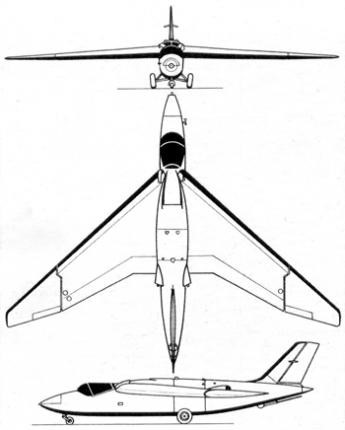
The S.B.5 was a test bed to examine flight characteristics using highly swept wings. The single example S.B.5 (WG768) first flew in December 1952 on the 3500lb (1588-kg) thrust of its Derwent turbojet, and piloted by Roland Beaumont. Though modelled aerodynamically on the Mach 2 English Electric P.l., was intended to investigate the low-speed handling qualities of swept wings. The aeroplane was fitted with wings whose sweep could be adjusted on the ground at angles of 50 degrees for use with a T-tail, 60 degrees for use with a conventional tail or a T-tail, and 69 degrees for use with a T-tail.
The particularity of this flying wing, designed by David Keith-Lucas, the arrow leading edge reaching 42 deg 22 min isoclinic developed from the theory of Major Hll, which had also been tested on a series of flying wings (Pterodactyl), built before the war by Westland. This demanded a flexible rather than stiff wing structure with the tips hinged to serve collectively as elevators and differentially as ailerons.
Following a serious incident occurred during a towed takeoff flight, it was found that this method was too dangerous. As Blackburn had acquired the license to manufacture small French Turbomeca engines, it was decided to redesign the system with two Blackburn-built Turbomeca Palas of 330-1b (150-kg) thrust, as the SB.4 Sherpa. The engines are placed side by side on the back of the fuselage in a compartment isolated from the rest of the cell by firewalls. The air inlet is located on the back.
The ejection of the burnt gases is done by two independent nozzles. It is slightly divergent. Compared with SB-1, the airfoil has been enhanced so as to allow a significant increase in the weight, primarily due to the increased presence of engines, their components and the fuel.
The SB.4 Sherpa first flew on 4 October 1953 from the airfield near Sydenham, piloted by Tom Brooke -Smith, chief pilot of Short.
Only one was produced.
The aircraft was recovered and partially restored (the wings are missing) by the Medway Aircraft Preservation Society Rochester, Maidstone Road.
It is now in possession of the Ulster Aviation Society. This association had recovered two Palas engines (Nos. 53 and 54), and considering a static display, based on the former Long Kesh in Northern Ireland.
Short SB.4 Sherpa Engines: 2 x Blackburn Turbomecca Palas Length: 9.70 m (31 ft 10 in.) Wingspan: 11.58 m (38 ft) Height: 2.77 m (9 ft 1.12 in.) Wing area: 21.40 m² (230 ft ²) Empty weight: 1400 kg (3,000 lb.) Max speed: 275 km / h (150knts) Cruise speed: 188 km / h (102 knts) Service ceiling: 1500 m (5,000 ft.) Endurance: 45-50 min
Originally designed as a twin-engined naval reconnaissance bomber for operation from the Ark Royal and Hermes-class aircraft carriers. With the end of the war, the need for such an aircraft receded and so a new specification was drawn up to convert the Sturgeon into a high-performance carrier-based target tug, suitable for towing targets for ground-to-air firing practice, photographic marking of ground-to-air firing, target towing for air-to-air practice by night and day, ‘throw-off’ target practice and radar calibration.
The FAA received a small number during the early 1950s.
The Short SB.3 had an anti submarine twin Mamba powered development.
Sturgeon TT3 Engines: 2 x 2080hp Rolls-Royce Merlin 140 Max take-off weight: 9840 kg / 21694 lb Empty weight: 7696 kg / 16967 lb Wingspan: 18.26 m / 60 ft 11 in Length: 13.70 m / 45 ft 11 in Wing area: 48.16 sq.m / 518.39 sq ft Max. speed: 590 km/h / 367 mph Ceiling: 10700 m / 35100 ft Crew: 2
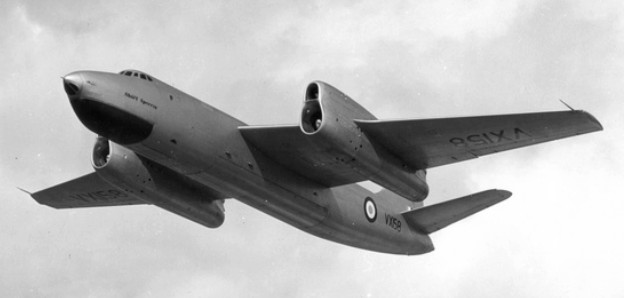
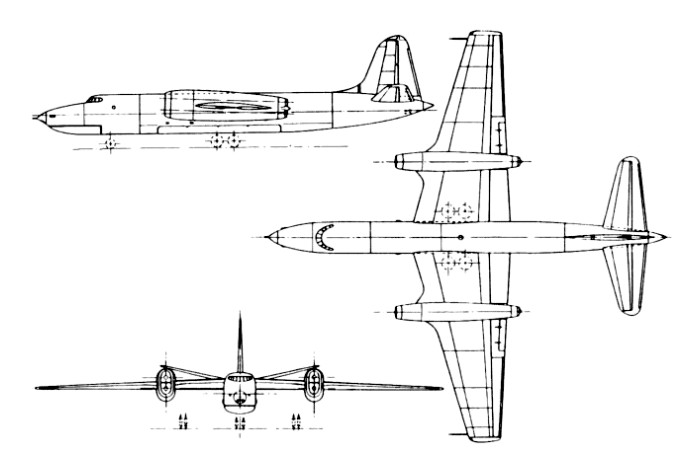
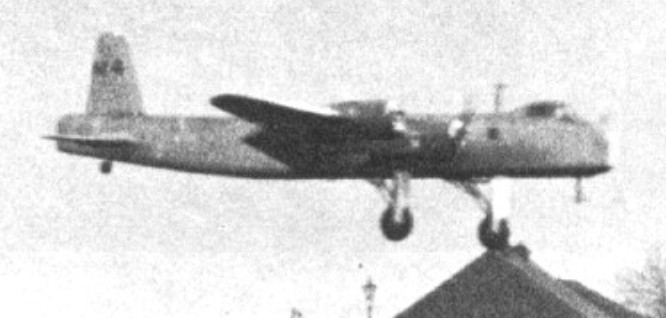
Even though the Valiant was produced as an interim type, the British felt it essential to develop an alternative in case the Valiant proved a failure in its initial trials. Designed to Specification B.14/46, the Short SA.4 Sperrin was intended as an insurance, which conformed to a less demanding specification in terms of speed and altitude over the target.
The aeroplane was thoroughly conventional by the structural and aerodynamic concepts of the day, with straight flying surfaces whose wings were set in the shoulder position on a comparatively deep fuselage whose lower portions accommodated the large nay/attack radar (chin position) and internal bomb bay (central position). One unusual feature was the powerplant, whose four Rolls-Royce Avon turbojets were located in under-and-over pairs on the wings about two-fifths of the way between the fuselage and the wingtips.
Short Sperrin prototype VX161 at Farnborough Golden Jubilee 9 July 1955
Two prototypes were built, the first flying on 10 August 1951 and used to test new high-altitude radar navigation and bombing equipment that was to be incorporated in the V-bombers. The second aircraft, which flew in August 1952, was used to test aerodynamic bomb shapes in connection with the development of Britain’s first atomic bomb, the MC.Mk 1 ‘Blue Danube’.
Engines: 4 x 2944kg Rolls-Royce Avon RA.3 turbojet Max take-off weight: 52200 kg / 115082 lb Wingspan: 33.20 m / 109 ft 11 in Length: 31.42 m / 103 ft 1 in Height: 8.69 m / 29 ft 6 in Max. speed: 913 km/h / 567 mph Ceiling: 13725 m / 45050 ft Range: 6050 km / 3759 miles Crew: 5
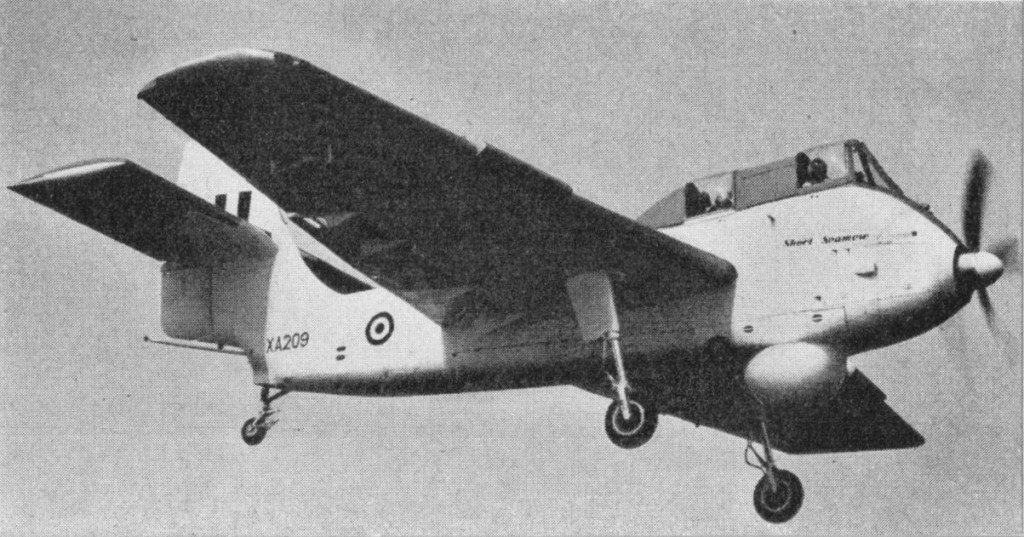
The Seamew was conceived as a cheap, rugged anti-submarine aircraft able to operate from small carriers used by the UK and some other allied nations. To this end it was built with a fixed landing gear and a strong structure. The fixed undercarriage legs could be jettisoned in the event of a ditching at sea. The need to house a large search radar under the belly led to the adoption of a tailwheel undercarriage layout. Despite this, the prototype was badly damaged on its first landing, although it was repaired in time for the Farnborough Air Show.
The Mamba powered anti submarine Short Seamew with 1,590 s.h.p. underwent intensive development with two prototypes. The higher lift characteristics at slow speeds for operation from escort type carriers have been improved by the installation of fixed slats at the mid span of each wing, while the slat under the inner tailplane leading edge was replaced by a vented fillet. The Seamew can power fold its wings and extended them.
In handling terms the Seamew was described as having some ‘vicious tendencies’. It was capable of aerobatics, but the chief test pilot seemed to be the only one able to wring the full manoeuvrability out of the Seamew – until he stalled the prototype Mk.2 during a display and was killed.
Production began for RAF Coastal Command and the Royal Navy, but the RAF order was cancelled in 1956 and the Navy’s was a victim of the defence cuts of the following year. The Mk 2 was a version for Coastal Command with larger wheels and manual wing folding. It was cancelled after rwo were completed.
Short SB-6 Seamew AS1
S.B.6 Seamew Engine: 1 x 1780hp Armstrong Siddeley Mamba turboprop Max take-off weight: 6804 kg / 15000 lb Wingspan: 16.75 m / 55 ft 11 in Length: 12.50 m / 41 ft 0 in Max. speed: 378 km/h / 235 mph Crew: 2
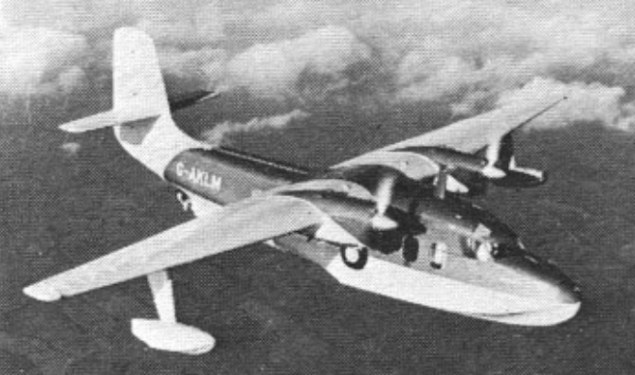
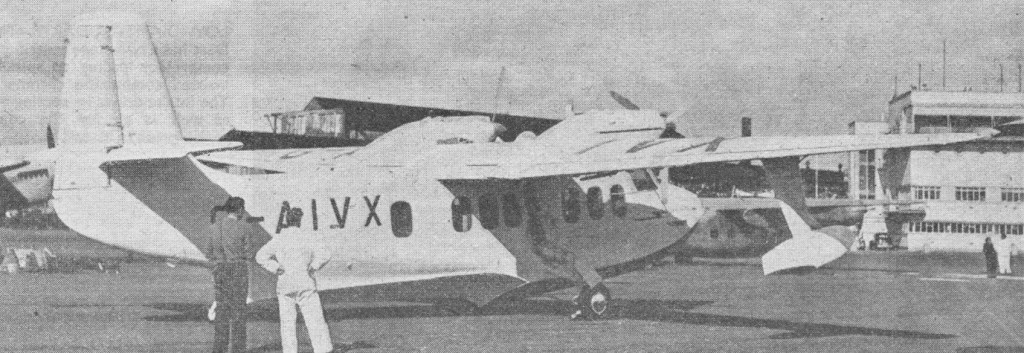
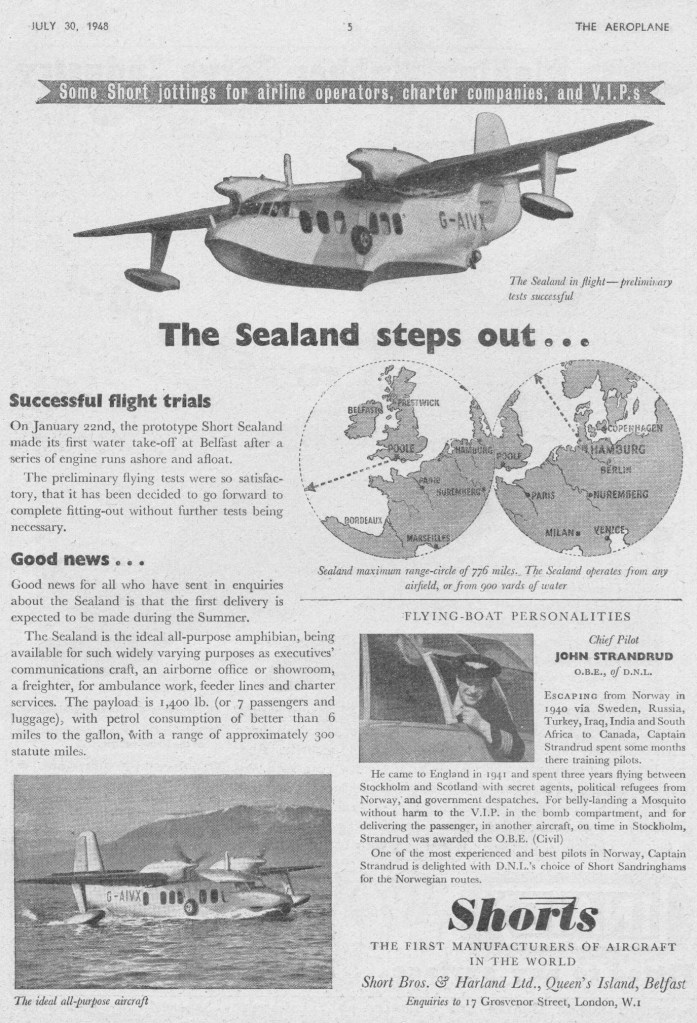
The Sealand twin-engined light commercial amphibian flying-boat was first flown on 22 January 1948. Power was provided by 254kW de Havilland Gipsy Queen 70 engines and accommodation was for five to eight passengers. Only a small number were produced, including three for the Indian Navy.
1948
September 1948
Sealand III Engines: 2 x de Havilland Gipsy Queen 70, 254kW Max take-off weight: 4128 kg / 9101 lb Empty weight: 3205 kg / 7066 lb Wingspan: 18.75 m / 62 ft 6 in Length: 12.85 m / 42 ft 2 in Height: 4.57 m / 15 ft 0 in Wing area: 32.79 sq.m / 352.95 sq ft Max. speed: 298 km/h / 185 mph Ceiling: 6340 m / 20800 ft Range: 958 km / 595 miles
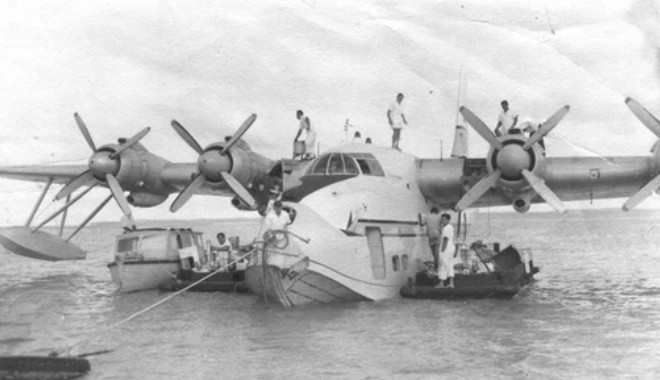
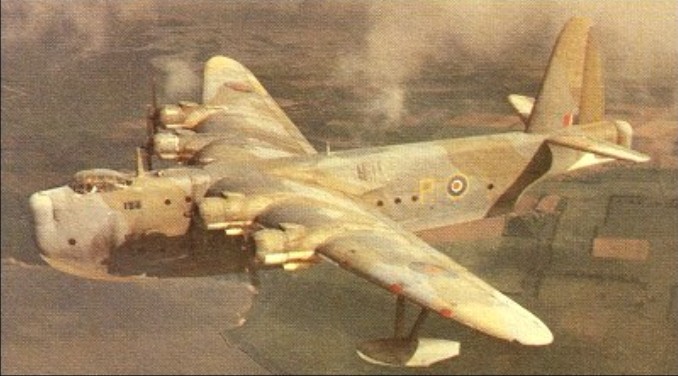
For service in the Pacific the Air Ministry required a more powerful, more heavily armed flying boat than the Short Sunderland, and specification R.8/42 was met by a new Short design, known originally as the Sunderland IV but later renamed Seaford, with the company designation S.45.
Gross weight rose to 34000kg and a number of structural improvements were incorporated to compensate for this; these included a strengthened wing and enlarged horizontal tail surfaces. The hull was also modified, its beam being increased by 0.99m. Armament comprised two 12.7mm machine-guns in a Brockhouse turret in the bow, and two 7.7mm machine-guns in the nose decking. Two 20mm cannon were mounted in a Boeing B-17 dorsal turret, and the Martin tail turret contained a pair of 12.7mm guns, two more of which were located in beam positions. A bomb load could also be carried in a fashion similar to that of the Sunderland. The first of two prototypes, powered by four 1253kW Bristol Hercules XVII engines, was flown on 30 August 1944 and 30 production aircraft, with 1283kW Hercules XIXs, were also ordered. Of these only six were completed.
In April and May 1946 No.201 Squadron carried out operational trials with the Seaford, in co-operation with the Marine Aircraft Experimental Establishment at Felixstowe, but the programme was cancelled and the completed machines were converted as 39-passenger aircraft for BOAC, acquiring the designation Solent 3. A seventh Solent 3 was a conversion of the second production Seaford, which had been evaluated by BOAC in 1946, leading to an order for 12 30-passenger Solent 2s which was delivered in 1948.
18 Solent were operated by BOAC as 30-passenger Solent 2s (12) and 34-passenger Solent 3s (6) before the company abandoned the use of flying-boats in 1950. Power for these was provided by Bristol Hercules 637 engines.
The was the civil version of the Seaford flying-boat, Four Solent 4s were operated by Tasman Empire Airways with Hercules 733 engines and accommodation for 42 day passengers.
S.45 Seaford Engines: 4 x Bristol Hercules XIX, 1283kW / 1696 hp Max take-off weight: 34000 kg / 74958 lb Empty weight: 20400 kg / 44975 lb Wingspan: 34.37 m / 112 ft 9 in Length: 27.00 m / 88 ft 7 in Wing area: 1486.939 sq.ft / 138.14 sq.m Max. speed: 210 kt / 389 km/h / 242 mph Range: 2694 nm / 4990 km / 3101 miles Armament: 2 x 20mm cannon, 4 x 12.7mm + 2 x 7.7mm machine-guns
Solent 3 Engines: 4 x Bristol Hercules 637, 1260kW Max take-off weight: 35650 kg / 78595 lb Empty weight: 21860 kg / 48193 lb Wingspan: 34.38 m / 113 ft 10 in Length: 26.72 m / 88 ft 8 in Height: 10.45 m / 34 ft 3 in Wing area: 156.72 sq.m / 1686.92 sq ft Max. speed: 430 km/h / 267 mph Ceiling: 4725 m / 15500 ft Range: 3540 km / 2200 miles
Solent IV Engines: 4 x Bristol Hercules, 2040 hp Cruise speed: 244 mph
Intended as a long-range flying-boat with a heavy armament, and much bigger than Short Sunderland. The first of two prototypes flew in 1944. The second prototype would have been a 40-passenger aircraft but was cancelled due to low demand.
In 1936 the RAF also decided to investigate the feasibility of the four-engined bomber. The Air Ministry Specification B.12/36 had several requirements. The bomb load was to be a maximum of 14,000 lb (6,350 kg) carried to a range of 2,000 miles (3218 km) or a lesser payload of 8,000 lb (3,629 kg) to 3,000 miles (4,800 km) (incredibly demanding for the era). It had to cruise at 230 or more mph at 15,000 ft (4,600 m) and have three gun turrets (in nose, amidships and rear) for defence. The aircraft should also be able to be used as a troop transport for 24 soldiers, and be able to use catapult assistance for takeoff. The idea was that it would fly troops to far corners of the British Empire and then support them with bombing. To help with this task as well as ease production, it needed to be able to be broken down into parts, for transport by train. Since it could be operating from limited “back country” airfields, it needed to lift off from a 500 ft (150 m) runway and able to clear 50 ft (15 m) trees at the end, a specification most small aircraft would have a problem with today.
Initially left out of those asked to tender designs, Shorts were included because they already had similar designs in hand and they had ample design staff and production facilities. Shorts were producing several four-engined flying boat designs of the required size and created their S.29 by removing the lower deck and boat hull of the S.25 Sunderland. The new S.29 design was largely identical otherwise: the wings and controls were the same, construction was identical and it even retained the slight upward bend at the rear of the fuselage, originally intended to keep the Sunderland’s tail clear of sea spray.
In October 1936, the S.29 was low down on the shortlist of designs considered and the Supermarine Type 317 was ordered in prototype form in January 1937. However it was decided that an alternative design to Supermarine was needed for insurance and that Shorts should build it as they had experience with four-engined aircraft. The original design had been criticized when considered and in February 1937 the Air Ministry suggested modifications to the original Short design, including considering the use of the Bristol Hercules engine as an alternative to the Napier Dagger, increasing service ceiling (28,000 ft) and reducing the wingspan. Shorts accepted this large amount of redesign. The project had added importance due to the death of Supermarine’s designer causing doubt in the Air Ministry. The S.29 used the Sunderland’s 114 ft (35 m) wing and it had to be reduced to less than 100 ft (30 m), the same limit as that imposed on the P.13/36 designs (Handley Page Halifax and Avro Manchester). In order to get the needed lift from a shorter span and excess weight, the redesigned wing was thickened and reshaped. It is often said that the wingspan was limited to 100 ft so the aircraft would fit into existing hangars. “The wing span was limited by the Air Ministry to 100 ft” but the maximum hangar opening was 112 ft (34 m) and the specification required outdoor servicing. The limitation was to force the designer to keep overall weight down.
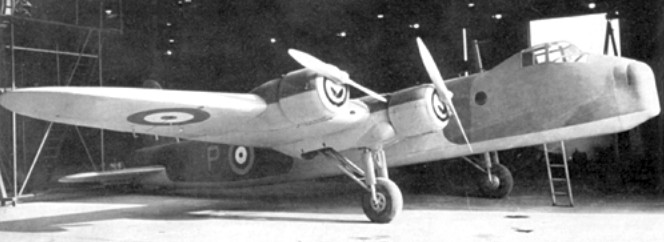
In June the S.29 was accepted as the second string for the Supermarine 316 and formally ordered in October. After receiving orders for two prototypes and 100 production aircraft to the S.29 design which became the Short Stirling, Shorts built in 1938 a 1/2-scale prototype at its own expense. Powered by four 90hp Pobjoy Niagara III engines, this Short S.31 (also known internally as the M4 – the title on the tailfin) was mostly of wooden construction apart from a semi-monocoque fuselage, and seated two in tandem. In overall silver finish and marked M4, the Short S.31 flew on September 19, 1938, at Rochester, piloted by Shorts’ Chief Test Pilot J. Lankester Parker.
The takeoff run was thought to be too long, and fixing this required the angle of the wing to be increased for takeoff, normally meaning the aircraft would be flying nose down while cruising (as in the Armstrong Whitworth Whitley). Short had originally decided on an incidence of 3° giving the best possible cruise performance, but the RAF asked that the incidence be increased to 6.5°, being more concerned with improving take-off performance than the cruising speed. In order to accommodate the RAF request for increased wing incidence a major re-design of the central fuselage would have normally be undertaken, but because of time restraints, Short decided on a “quick fix” by lengthening the main landing gear legs to give a higher ground angle. At the end of 1938, this change was incorporated on the Short S.31 prototype.
The single stage landing gear leg was discarded due to the increased length of the undercarriage rods which proved too long to be retracted into the engine nacelle wheel wells. A two stage undercarriage was built which retracted vertically and then backwards into the nacelle. The undercarriage retraction motors were originally located inside the nacelle, but were later relocated inside the fuselage to allow for manual retraction in the event of motor failure.
Other changes included the installation of four 115 hp (86 kW) Pobjoy Niagara IV radial engines in January 1939. In order to address longitudinal control problems horn-balanced elevators were installed but these were soon replaced by a larger tailplane with conventional elevators in March 1939.
In 1940, now in green/brown camouflage with yellow undersides, the Short S.31 was fitted with Va-scale mock-ups of the Boulton Paul Type O ventral and Type H dorsal twin-cannon turrets proposed for a version of the Stirling II, and was tested in the RAE 7.3m wind tunnel. Further flights were made from March 13, 1942, onwards (with a shortened u/c), and the Short S.31 was scrapped after a takeoff accident at Stradishall in February 1944.
Max take-off weight: 2586 kg / 5701 lb Wingspan: 15.09 m / 50 ft 6 in Length: 13.31 m / 44 ft 8 in Max. speed: 290 km/h / 180 mph











 All Aero