Sikorsky S-36 / XPS-1 / RS-3

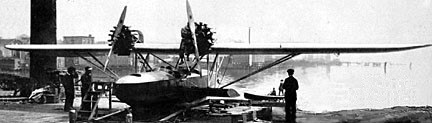
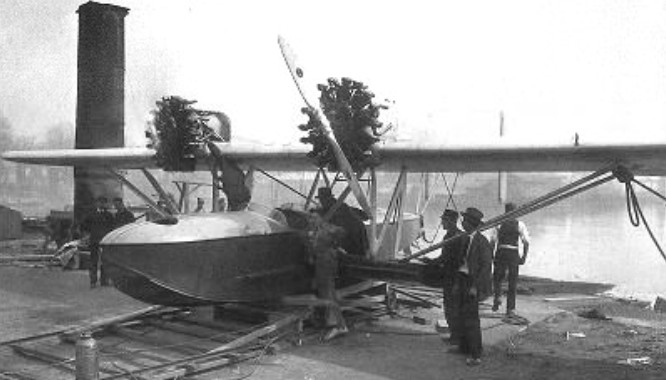
Sikorsky developed the S-36, a larger version of the S-34, and six S-36 amphibians were built, usually with two 200hp Wright J-4 Whirlwind engines. Certified ATC 2-275, the 1927 S-36 had various seating arrangements and various wingspans, from 56’0″ to 72’0″. The latter span for the long-range version. Length was 34’0″.

Five built were NX1282, N3001 (temporary, cancelled), NX3699, and N4567, plus XPS-1 A8005 in 1928.

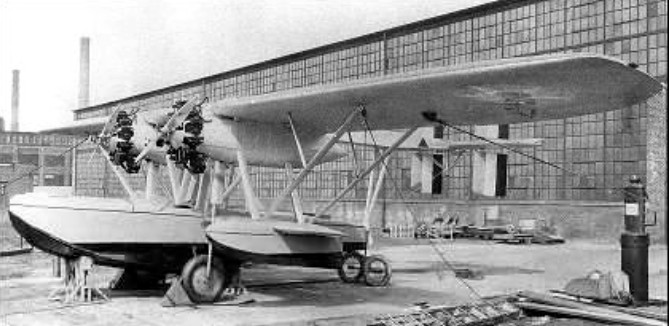
The US Navy used the PS-1, PS-2, PS-3, based on S-36 and -38, on patrol, transport and utility duties as the XPS-1. One was built as XPS-1 A8005 in 1928.

Sikorsky XPS-1 A-8005

Also in 1928, two PS-2 were built; A8089 and A8090.
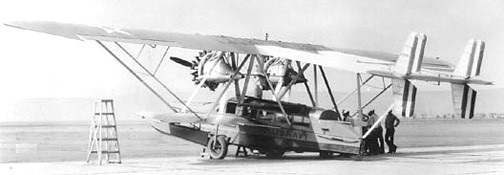
Sikorsky PS-2

Four PS-3 were built in 1929 (A8284 to 8287), later being designated RS-3. One was produced for the USN (A9055) and two for the USMC (A8922 and 8923).

Other S-36s, carrying two crew and up to six passengers on two facing bench seats with a table between, were delivered to Andean National Corporation and, on 7 December 1927, to the newly formed Pan American Airways for survey flights in the Caribbean.

An S-36, named Dawn, was bought by Mrs Frances Grayson, a niece of President Wilson, who wanted to be the first woman to fly the Atlantic. After take-off on 23 December 1927, with Mrs Grayson and two pilots on board, it vanished over the ocean.

XPS-1
Engines: Two 220hp Wright R-790
Wingspan: 71’0″
Length: 36’8″
Ceiling: 9,000′
Seats: 3-4

PS-2
Engines: Two 450hp P&W R-1340B
Wingspan: 71’8″
Length: 40’3″
Ceiling: 19,400′
Seats: 3-4

PS-3
Engines: Two 450hp P&W R-1340C
Wingspan: 71’8″
Length: 40’3″
Ceiling: 14,800′
Seats: 3-4
Sikorsky S-34

Sikorsky’s first attempt to build an amphibian, the six-seat S-34 NX883, flew in 1926. During a test flight in November 1927, piloted by Capt. Collier and with Igor Sikorsky as observer, it developed engine trouble while flying low over water and sank after forced landing. The two men were rescued and taken ashore by motor boat.

Sikorsky S-34 NX883

Engines: two 200hp Wright J-4
Wingspan: 50’5″
Sponsons width: 12’0″
Length: 34’0″
Useful load: 1600 lb
Max speed: 111 mph
Cruise: 90 mph
Stall: 52 mph
Range: 360 mi
Ceiling: 15,000′
Seats: 7

Siersma SRC-1

Designed by Earl Chelsea, Gerard Rogers and Herman Siersma, the 1962 Siersma SRC-1 was a single-place cabin, mid-wing monoplane midget racer,

Eleven years in construction, it was registered N4190C and first flew on 2 February 1962.

Engine: 85hp Continental C-85-12J
Wingspan: 17’0″
Length: 20’0″
Useful load: 330 lb
Max speed: 200 mph
Cruise: 170 mph
Stall: 85 mph
Range: 500 mi
Seats: 1

Sierra / Aircraft Industries BLW-1 / BLW-2

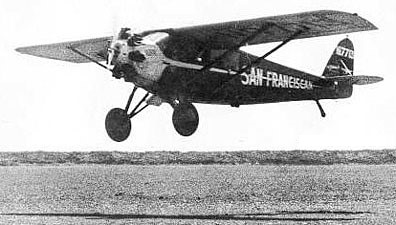
Sierra San Franciscan NR7713

Designed by H Sherman Tharpe, two 1929 Sierra were built with ATC 2-151. Priced at $8,000 and designated BLW-1 and BLW-2 registered NX215H and NX/NR7713, the latter as San Franciscan in unsuccessful endurance record attempts June-Aug 1929 at Mills Field, San Francisco (piloted by Jim Warner). It is said to have been sold after WW2 to someone in South America.

The design reappeared in the Hawke Duster.

Engine: 130hp Comet
Wingspan: 36’0″
Length: 25’8″
Useful load: 909 lb
Max speed: 125 mph
Cruise: 100 mph
Stall: 47 mph
Range: 400 mi
Seats: 3

Siebert Sie 3

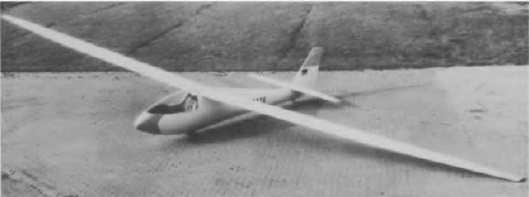
This wooden Standard Class single-seater was designed by Paul Siebert and first flew in prototype form in 1971; by January 1975 a total of 27 had been built by the Paul Siebert Sportund Segelflugzeugbau and sold to Belgium, Holland, Denmark and Portugal as well as to customers in Germany. Permission was being sought from the Luftfahrtbundesamt, the Federal German civil aviation authority, to offer the Sie 3 in a form suitable for amateur construction. Of conventional wooden construction, the Sie 3 is a cantilever high wing monoplane with a constant chord centre section and tapered outer panels; Schempp-Hirth aluminium air brakes are featured. The fin and rudder are swept back and the low-set tailplane is an all-moving surface. Landing gear consists of a monowheel with brake and a tailskid, and the pilot sits under a one-piece flush-fitting cockpit canopy.

Span: 49 ft 2.5 in
Length: 22 ft 0 in
Height: 3 ft 11 in
Wing area: 127.44 sqft
Empty weight: 467 lb
Max weight: 750 lb
Max speed: 124 mph (in smooth air)
Min sinking speed: 2.23 ft/sec at 48.5 mph
Best glide ratio: 34.3:1 at 56 mph

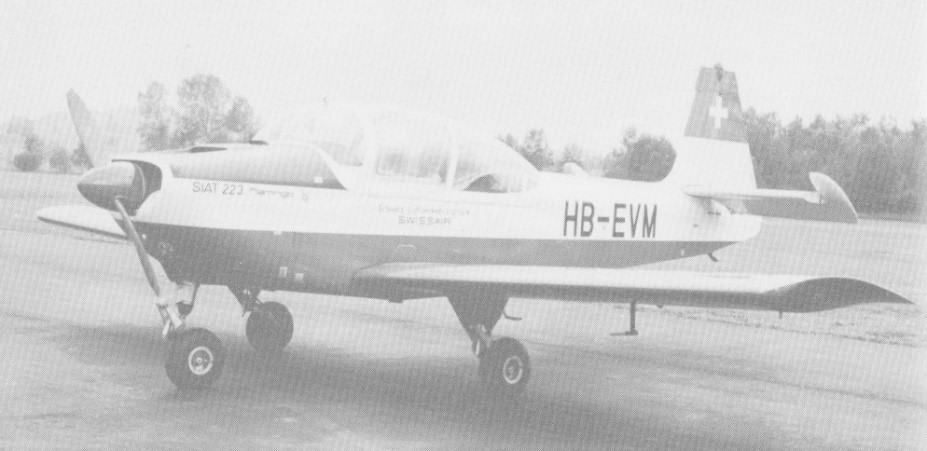
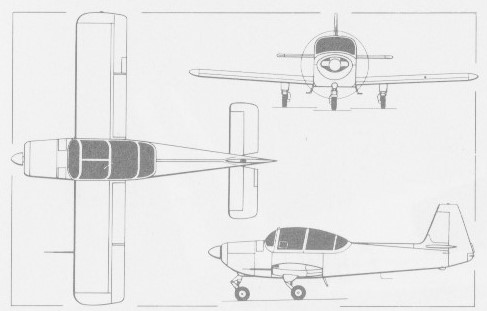
Siebel MBB-SIAT 223 Flamingo

Designed by the Siebelwerke and first flying in 1967 the Flamingo was turned into an aerobatics trainer.

There are two seats side-by-side at the front of the cabin with provision for fitting a folding seat for one adult or two children in the baggage area. Removable dual controls are fitted.

Originally produced in Germany by SIAT, CASA produced the 223A1 basic version in the Normal Category as a there/four-seater or agricultural aircraft, or in Utility Category as a two-seater intended primarily for training airline pilots.

The 223K1 single-seat fully-aerobatic version with a specially modified IO-360-C1B engine and stressed to +6 / -4g was also originally produced in Germany by SIAT, then CASA in Spain.

Later, in 1986 the Flamingo was used as a testbed for the new developed Porsche aviation engine.

CASA 223A1
Engine: Lycoming IO-360-C1B, 200 hp
Wingspan: 27 ft 2 in / 8.28 m
Length: 24 ft 4.5 in / 7.43 m
Empty weight equipped: 1610 lb / 685 kg
MTOW Norm: 2315 lb / 1050 kg
Max cruise 76%: 116 kt / 134 mph / 216 kph
ROC SL: 846 fpm / 258 m/min
Service ceiling: 12,300 ft / 3750 m
Range 30min res: 620 nm / 715 mi / 1150 km
Seats: 3-4
Baggage capacity: 200 lb / 90 kg
Cabin length: 7 ft 2.5 in / 2.20 m
Cabin width: 3 ft 8 in / 1.12 m
Cabin height: 3 ft 11 in / 1.20 m

MBB 223 PFM Flamingo
Engine: Porsche PFM 3200, 207 hp
Wingspan: 27.231 ft / 8.3 m
Max take off weight: 2425.5 lb / 1100.0 kg
Max. speed: 124 kts / 230 km/h
Range: 756 nm / 1400 km
Crew: 3

Siebel Si 202 Hummel

The Si 202 Hummel of 1938 was a side by side 2-seater of simple all-wooden construction.

The Fh 104 and a liaison machine, the Si 202 Hummel (which had lost out to Fiesler’s Fi 156 STORCH) shared production line space with license built Do 17s, all examples of the Siebels going to the Luftwaffe.

Siebel Si 202 P 4 Hummel
Engine: Zündapp 29-92, 49 hp
Length: 20.997 ft / 6.4 m
Height: 6.234 ft / 1.9 m
Wing span: 34.449 ft / 10.5 m
Max take off weight: 1212.8 lb / 550.0 kg
Max. speed: 86 kts / 160 kph
Service ceiling: 14108 ft / 4300 m
Range: 270 nm / 500 km
Crew: 1+1