The Simpson Special was built by F.Simpson in the 1950s. Registered N12V, it was a single-place, open cockpit, low-wing monoplane powered by an 85hp Continental C-85 engine.
Monoplane
Simpson Maverick
The 1951 Simpson Maverick N2924V was as single engine, either 2 or 4 seat cabin, high-wing monoplane, built by F.Simpson.
Simplex Aircraft Corp W-2-S Red Arrow
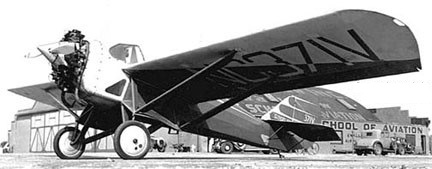
About 10 of the 1929 Simplex W-2-S Red Arrow (ATC 238) were built of which one, NX9412, was modified from a K-2-S. They were priced at $4,495.
Engine: 110hp Warner Scarab
Wingspan: 34’4″
Length: 22’2″
Useful load: 627 lb
Max speed: 125 mph
Cruise: 107 mph
Stall: 45 mph
Range: 650 mi
Seats: 2
Simplex Aircraft Corp R-2-D Red Arrow Dual Plane / Simplex Racer
The 1929 Simplex R-2-D Red Arrow Dual Plane was a convertible monoplane/biplane. The top shoulder wing was permanent, and 24’0″ lower wings could be easily added for increased lift and load-carrying.
The one built, NR43M, was flown as monoplane Simplex Racer with a 225hp Wright engine in the 1929 Nationals events with clocked pylon speeds of more than 220mph. It was piloted by Dick Myhres.
Monoplane
Engine: 165hp Wright J-6
Wingspan: 32’9″
Length: 21’0″
Useful load: 700 lb
Max speed: 140 mph
Cruise: 125 mph
Stall: 50 mph
Range: 600 mi
Seats: 1
Monoplane
Engine: 225hp Wright J-6
Wingspan: 32’9″
Length: 21’0″
Max speed: 165 mph
Cruise: 150 mph
Stall: 50 mi
Range: 550 mi
Seats: 1
Biplane
Engine: 225hp Wright J-6
Wingspan: 32’9″
Length: 21’0″
Max speed: 150 mph
Cruise: 135 mph
Stall: 45 mph
Range: 650 mi
Seats: 1
Simplex Aircraft Corp S-2 Kite / Sioux Kite
A monoplane called the S-2 Kite was developed in 1931. Designed by Omer Woodson, it was a probe into the inexpensive, ultralight aircraft market.
It had an uncovered, girder-like fuselage, and thick, cantilever wing. One was built, NX489M c/n 1002.
Simplex failed to get anywhere with the project, but the idea went with Woodson and company test pilot Myhres when they left in 1930 to form Cycloplane Co.
Sioux Aircraft Corporation built aircraft under the name Sioux Kite.
S-2 Kite
Engine: Szekely SR-3, 40hp
Seats: 1
Simplex Aircraft Corp K-2 Red Arrow
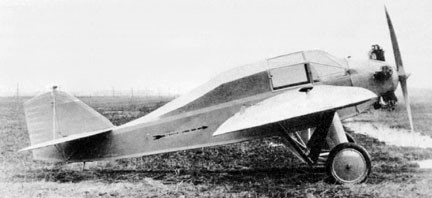
The 1928 Simplex K-2-C Red Arrow (ATC 44) was designed by Omer Woodson with origins in the Woodson M-6. Of wooden construction it was Side-by-side canopied cockpit and semi-cantilever wing. The first few were powered by 75hp Kinner engines and priced at $4,495.
The 1928 Simplex K-2-S Red Arrow (ATC 43) was the same as the K-2-C, but with side-by-side open cockpit and priced at $4,115.
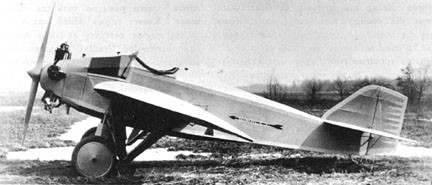
About 10 K-2s were built. Piloted by Dick Myhres, one, NC6504, won the 1928 California Class-A Race (Los Angeles-San Francisco) in a field of 16 aircraft in 3hr10min averaging 126mph.
Sioux Aircraft Corporation built aircraft under the name Sioux Red Arrow.
K-2-C Red Arrow
Engine: 90hp Kinner K-5
Wingspan: 34’4″
Length: 22’3″
Useful load: 570 lb
Max speed: 120 mph
Cruise: 108 mph
Stall: 37 mph
Range: 550 mi
Seats: 2
K-2-S Red Arrow
Engine: 90hp Kinner K-5
Wingspan: 34’4″
Length: 22’3″
Seats: 2
Simplex Racer
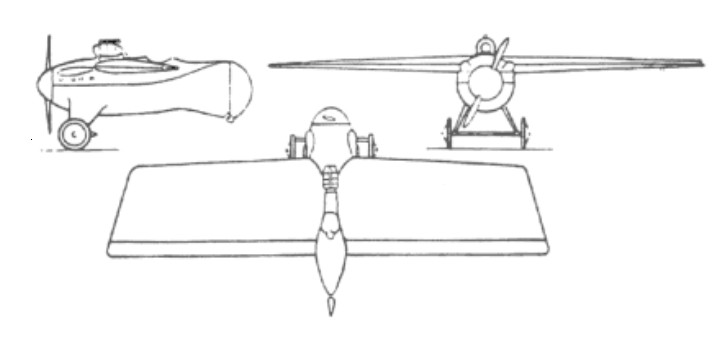
The first design of the Simplex firm was a racing monoplane with a 320 hp Hispano-Suiza engine for the Coupe-Deutsch race of 1922. The design was due to Carmier, and the plane was to be flown by a well-known fighter pilot, Georges Madon. It was a cantilever monoplane with a tractor engine and full-span controllers. The short fuselage ended in a vertical fin with a rudder. The pilot sat rather far back behind the leading edge of the wing ; in addition, a barrel radiator excluded any view forward. So it was not surprising that even a very experienced pilot like Madon could meet with an accident during a test flight prior to the race. He escaped with severe injuries, and the general impression created was rather unfortunate. Since Fétu had previously met with a grave accident with the Arnoux biplane, the fate of this interesting development was sealed. Arnoux himself seems to have been discouraged from further pursuing his line of investigation.
Simmons SP-1 Sport Monoplane
The 1928 Simmons SP-1 Sport Monoplane built by Herbert H Simmons was registered N7477 c/n 61. A two-place, open cockpit monoplane, the registration was cancelled on 22 July 1930.
Engine: Super LeRhône static
Wingspan: 36’6″
Length: 21’9″
Seats: 2
Simmonds Spartan Cruiser
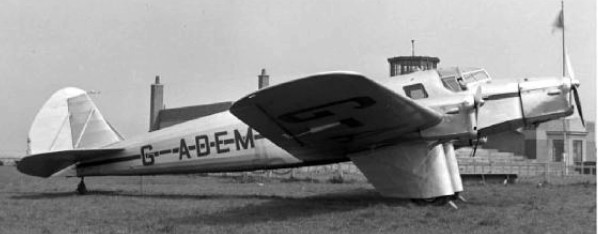
Spartan Cruiser was development of Saro-Percival (later Spartan) Mailplane G-ABLI of 1931. After
Percival sold his interest to Saunders-Roe Ltd, which eventuaally tied up with Spartan, the concept under the Spartan name into the Spartan Cruiser I, powered by three 120 hp de Havilland engines and carrying six passengers and two crew in a metal fuselage.
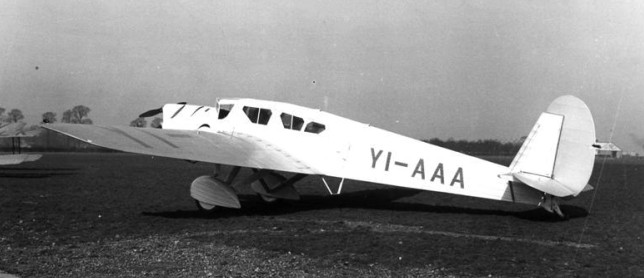
Early production Spartan Cruiser c/n 2 was operated by Airwork (Iraq) Ltd in 1933 on an air route between Baghdad and Mosul as YI-AAA. It returned to the UK in 1934 for British Airways Ltd and reverted to its original registration of G-ACBM. It was scrapped in 1937.
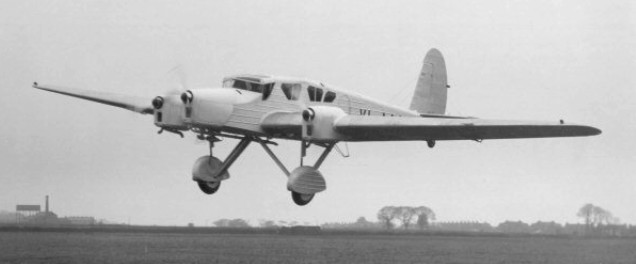
Twelve Spartan Cruiser II were built.
Three Cruiser III were built. The last was G-ADEM in May 1935.
Specifications:
Cruiser I
Engines: 3 x de Havilland, 120 hp
Cruiser II
Cruiser II
Engines: 3 x de Havilland Gipsy Major, 130 hp
Silver Wing Aircraft Co 1928 monoplane
In 1928 the Silver Wing Aircraft Co built a two-place, open cockpit, high-wing monoplane, designed by H C King. It utilized a Curtiss JN-4 fuselage and gear. Spin-proof, the company claimed, with a heavy, laminated spar that would withstand dives up to 175mph. Only one was built, registered N5268 c/n SWM-100.
First flown on 15 April 1928, piloted by Edward Euler, it was powered by a 90hp Curtiss OX-5, later changed to a 50hp Wright-Hisso engine.
Press releases told of two cabin versions under construction, but were apparently unfinished.
90hp Curtiss OX-5
Wingspan: 41’3″
Length: 26’9″
Useful load: 682 lb
Max speed: 110 mph
Cruise: 90 mph
Stall: 32 mph
Seats: 2
150hp Wright-Hisso
Wingspan: 41’3″
Useful load: 968 lb
Seats: 2
 All Aero