On 7 May 1943 three young engineers sat in the Bacchi Wapen restaurant in Stockholm together with Åke Forsmark, manager of Skandinaviska Aero, and chatted about aircraft. The three were Erik Bratt, Karl-Erik Hilfing and Björn Törnblom, all students at Kungliga Tekniska Högskolan, the Royal Technical University in Stockholm. Their ideas gradually evolved into this sketch, on the back of a menu. It was originally meant to be a glider towing aircraft, and by May 1944 the design work was complete, with 4,000 drawings and 2,500 load calculations, performed by Törnblom, the only one of the three who had previous experience in aircraft design. He also designed the wings, fin and rudder. Hilfig was responsible for the fuselage and Bratt worked on the engine installation, propeller and landing gear.
The BHT-1 is a wooden low-wing cantilever monoplane with a retractable tailwheel landing gear. Powered by a 60 hp (45 kW) Walter Mikron 4 piston engine it has an enclosed single-seat cockpit. The wings include slotted flaps.
The BHT-1 Beauty was built by Skandinaviska Aero of Stockholm and first flew on 4 December 1944. Only one, SE-ANX, wa built.
The BHT-2 was a proposed two-seat development. A prototype constant speed propeller was developed for the aircraft using differential between engine oil, and ram air pressure to control pitch.
Engine: 1 × Walter Mikron 4, 45 kW (75 hp) Length: 5.80 m (19 ft 0 in) Wingspan: 6.82 m (22 ft 4½ in) Height: 1.90 m (6 ft 3 in) Wing area: 7 m2 (75.3 ft2) Empty weight: 240 kg (538 lb) Gross weight: 420 kg (924 lb) Maximum speed: 250 km/h (155 mph) Cruising speed: 210 km/h (130 mph) Range: 1700 km (1056 miles) Service ceiling: 7500 m (24600 ft) Crew: 1
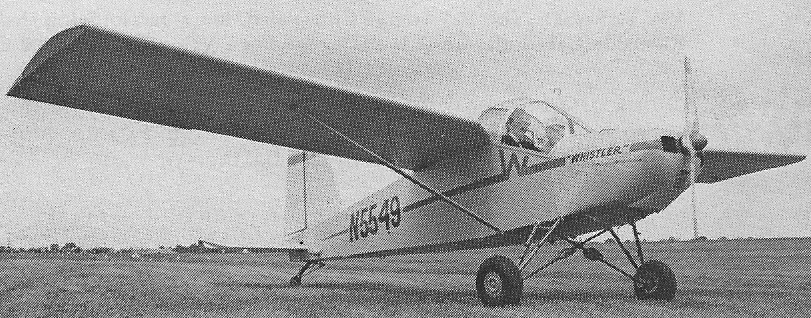
Bert Sisler, of Barnsville, Minnesots, second design was the mid-wing Whistler. The two-seat craft is convertible from tailwheel to tri-gear configuration. The fuselage is tubular steel and fabric, the wings and tail are of wood geodetic construction with fabric covering. The baggage compartment has a 70 lb capacity.
Whistler
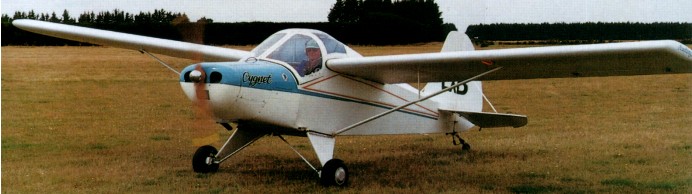
The SF-2 Whistler N5549 built in 1973 was improved to become the SF-2A Cygnet circa 1977.
Designed by Burt Sisler, USA, the two-place, plans-built, VW powered Cygnet has geodesic wing construction, offers excellent short-field performance, good climb rate and ease of control. It can handle two 175-pound people and 80 lbs of baggage. This is a United States designed side by side 2 seater being designed for STOL operations. The Cygnet features folding wings and is designed for running on Mogas. Early United States mac¬hines were powered by a 60 hp HAPI engine, providing a 100 mph cruise and 350 mile range.
The Cygnet Model SF-2A in 2008 was available from: Viking Aircraft 333 Sunny Hill Dr Elkhorn, Wisconsin 55312
SF-2 Whistler Engine: 70 hp Baker VW1834 Wingspan: 30’0″ Length: 19 ft Height: 5 ft 9.5 in Empty weight: 645 lb Useful load: 500 lb Baggage capacity: 70 lb Max speed: 95 mph Cruise: 86 mph Stall: 43 mph Landing speed: 42 mph Landing roll: 300 ft ROC solo: 700 fpm Seats: 2
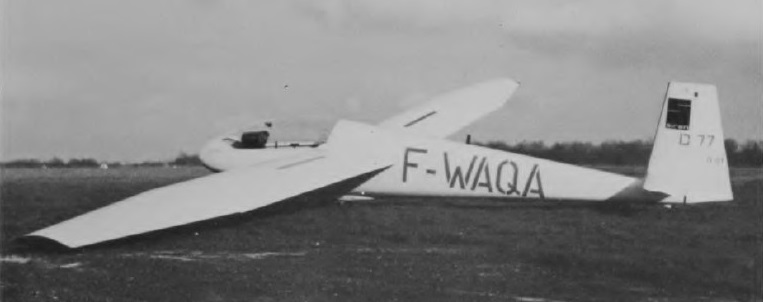
Design of the D 77 Iris single-seat training sailplane was started in 1973 by Siren SA. Of glassfibre/plastic foam sandwich construction, the Iris was also available in kit form for homebuilders, and has cantilever mid-set wings of Bertin E55-166 aerofoil section and glassfibre/polyester/PMC sandwich construction, with glassfibre ailerons and metal Schempp-Hirth air brakes in the upper surfaces. The fuselage is a glassfibre/polyester monocoque built in two halves and reinforced at the wing attachment points. As originally designed, the Iris had a cantilever T-tail but this was changed to one with a low-set fixed incidence tailplane and a spring tab in each elevator; the tail is of similar construction to the wings. There is a non-retractable unsprung monowheel with a Siren hydraulic brake, and a tailskid. The pilot sits in an adjustable semi-reclining seat under a one-piece flush-fitting cockpit canopy which opens sideways to starbaord.
The prototype first flew on 26 February 1977 and made its public debut at that year’s Paris Salon Aeronautique; after the manufacturer’s tests were completed, tests by the CEV (Centre d’Essais en Vol) followed early in 1978, after which certification got under way.
Production of the Iris and of the E 75 Silene became the responsibility of Societe Issorie-Aviation, which was formed late in 1977 by the President of Siren SA following the bankruptcy of Wassmer-Aviation; approximately 50 D 77s had been ordered by February 1979 when production was due to begin.
Issoire D 77 Iris Span: 13.5 m / 44 ft 3.5 in Length: 6.37 m / 20 ft 10.75 in Height: 0.9 m / 3 ft 11.25 in Wing area: 11.4 sq.m / 122.7 sq.ft Wing section: Berlin E-55-166 Aspect ratio: 16.0 Empty weight: 220 kg / 485 lb Max weight: 330 kg / 727 lb Water ballast: None Max wing loading: 27.2 kg/sq.m / 5.57 lb/sq ft Max speed: 145 mph / 126 kt / 234 km/h (in smooth air) Max aero-tow speed: 105 mph Stalling speed: 32.5 kt / 60 km/h Min sinking speed: 2.23 ft/sec / 0.68 m/sec at 50 mph / 39.5 kt / 73 km/h Best glide ratio: 33:1 at 48.5 kt / 90 km/h
Designed by Siren SA, this side-by-side two-seater training sailplane of 18m span was originally known as the CERVA CE 75 Silene, the letters CERVA standing for Consortium Europeen de Realisation et de Ventes d’Avions, which was owned jointly by Siren SA and Wassmer-Aviation SA.
Construction is entirely of glassfibre/polyester/PMC sandwich, and the cantilever mid-set wings, of Bertin E55-166 aerofoil section, have 2° forward sweep at the quarter-chord line. The two-section ailerons have spring tabs and there are Schempp-Hirth air brakes above and below the wings. The fuselage is a semi-monocoque, and the two pilots’ semi-reclining seats are slightly staggered, the starboard seat being a little to the rear, so as to keep fuselage width to a minimum; oxygen systems can be installed if desired. The rear section of the two piece canopy is hinged to open to starboard, and is jettisonable. There is a low-set fixed-incidence tailplane with a spring tab in each elevator.
Design of the Silene, which was the first French two-seater of glassfibre construction, began on 1 January 1972 and construction of the prototype by CERVA began on 1 February 1973; this first flew at Argenton on 2 July 1974. The Silene was intended to be suitable for all stages of training from ab initio to cross-country flights, and Siren SA was responsible for marketing it; by early 1978 40 Silenes had been ordered and six of them flown. But following the bankruptcy of Wassmer-Aviation, which built the wings and was the co-partner in CERVA, the President of Siren formed Societe Issorie-Aviation late in 1977, taking its title from Wassmer’s Aerodrome d’lssoire works, to continue production of the Silene, now known as the Siren E 75, and the D 77 Iris. The first six Silenes had a retractable rubber-sprung monowheel but a non-retractable monowheel can if the customer desires also be fitted as optional, and a Siren hydraulic brake is optional; there is also a tailskid.
French certification of the type was granted on 3 February 1978 and planned output for 1978 was two per month, with Siren SA building the fuselages.
The E 78 Silene is a new variant featuring improved and roomier accommodation for the pilots, an enlarged cockpit canopy, lowered seats and a slight increase in available cockpit width; the E 78B is the same as the E 78 but with a fixed monowheel. This was followed by the 1 79 variant which has flaps and provision for water ballast, and was under development in 1979. The modified wings incorporate carbon-fibre componets, and the flaps, air brakes and monowheel are hydraulically actuated.
E 75 Silene Span: 59 ft 0.5 in Length: 26 ft 1 in Height: 4 ft 11 in Wing area: 193.8 sqft Aspect ratio: 18.0 Empty weight: 805 lb Max weight: 1,246 lb Max speed: 124 mph (in smooth air) Max aero-tow speed: 105 mph Min sinking speed: 2.20 ft/sec at 56 mph Best glide ratio: 38:1 at 59 mph
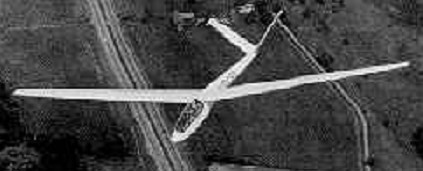
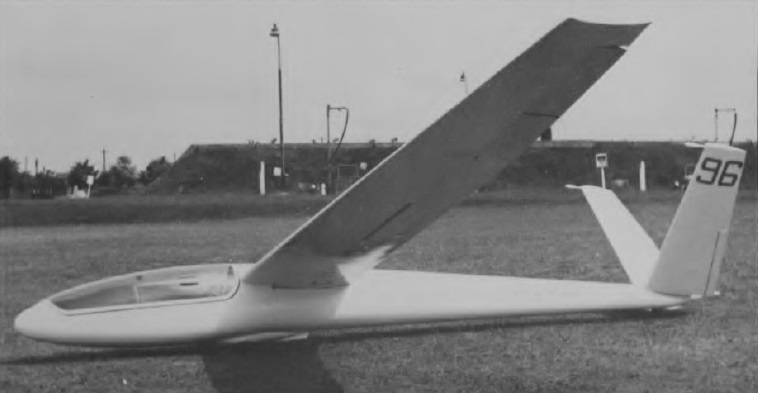
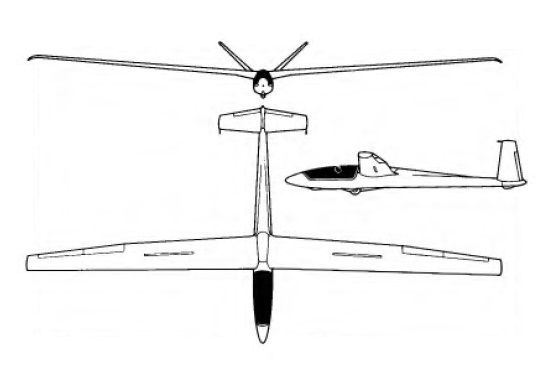
This high performance Standard Class single-seater was designed by Dr J. Cayla and features a V-tail and makes use of moulded plywood/Klegecel sandwich in its structure. The cantilever single-spar shoulder wings are foam-filled all-wood structures with only eight ribs, of sandwich construction, and are covered by a plywood/Klegecel sandwich skin 8mm thick; the down-turned wing tips are of reinforced plastics and the unslotted ailerons are all-metal. The air brakes in the upper and lower wing surfaces are interconnected with the hydraulic monowheel brake, and up to 110lb of ballast in the form of eight lead bars can be mounted in the wing roots so that the wing-loading can be varied; unlike the more conventional water ballast, this kind cannot be jettisoned. The fuselage is a moulded plywood/Klegecel sandwich structure made in two portions, with integral longerons and nose and tail cones made of laminated plastics. The V-tail consists of two identical all-moving surfaces, with an included angle of 90°, each with a trim tab; the leading edges are of wooden sandwich construction and the remainder is fabric-covered. There is a non-retractable monowheel with a hydraulic brake, and a castoring leaf-spring tailskid. The pilot sits in a semi-reclining seat under a long flush-fitting canopy hinged to starboard, and optional ‘extras’ that may be installed include a barograph, VHP radio, an oxygen system, artificial horizon, a Jaeger altimeter and a flight calculator.
The first of two Edelweiss prototypes made its maiden flight on 25 September 1962, and both prototypes took part in the 1963 World Championships at Junin in Argentina, finishing 2nd, flown by Jacki Lacheny of France, and 17th in the Standard Class contest.
The prototype differed from production aircraft, produced by Issoire, part of the goupe Siren, in having a slight forward wing sweep, longer span ailerons and air brakes and a longer fuselage nose. The first of an initial production batch of 15 was completed in January 1965, and one of these, piloted by Francois Henry, won the Standard Class section of the 1965 World Championships held at South Cerney, while another Edelweiss was placed 7th; two others of the type also finished 8th and 10th in the Open Class. The Edelweiss is no longer in production, but 50 had been delivered by 1 March 1968.
Siren C 30S Edelweiss
The Edelweiss IV was an Open Class version with a wing span increased to 17.5m (57ft 4.25in) and the length increased to 25ft 7in. The first of two prototypes of the Mk IV flew on 9 May 1968 but it did not go into production, and differed in some respects in structure from the earlier Edelweiss. The wings were built in two panels, with sandwich skins and pinch-webbed spars with spruce booms, and the fuselage was of completely moulded sandwich construction with built-in spruce longerons, and laminated plastic nose and tail cones. The monowheel was now retractable, and the wheel brake was also connected to operate with the air brakes.
C30S Edelweiss Span: 15 m / 49 ft 2.5 in Length: 7.5 m / 24 ft 7.25 in Wing area: 12.08 sq.m / 133.9 sqft Wing section: NACA 64 series Aspect ratio: 18.0 Empty Weight: 256 kg / 565 lb Gross Weight: 412 kg / 910 lb Payload: 156 kg / 345 lb Wing Load: 34.19kg/sq.m / 5.5lb/sq.ft Water Ballast: 0 Max speed: 140 mph / 121 kt / 220 km/h (in smooth air) Max aero-tow speed: 112 mph / 86 kt / 160 km/h Stalling speed: 35 kt (65 km/h) Min sinking speed: 2.1 ft/sec / 0.65 m/sec at 79 kph / 43kt / 50 mph Best glide ratio: 36:1 at 59 mph / 51 kt / 95 km/h L/DMax: 38 90 kph / 49 kt / 56 mph Seats: 1 No. Built: 65
C34 Edelweiss IV Length: 28.871 ft / 8.8 m Wingspan: 57.415 ft / 17.5 m Max take off weight: 1058.4 lb / 480.0 kg Landing speed: 21 kts / 38 km/h Cruising speed: 54 kts / 100 km/h Glide ratio: 45.5 Crew: 1
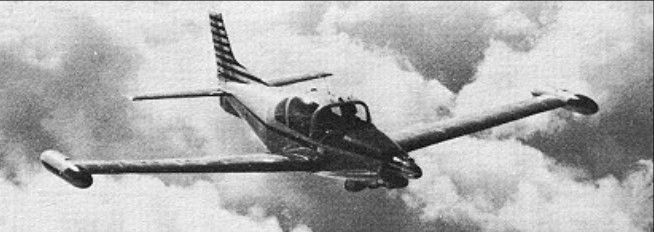
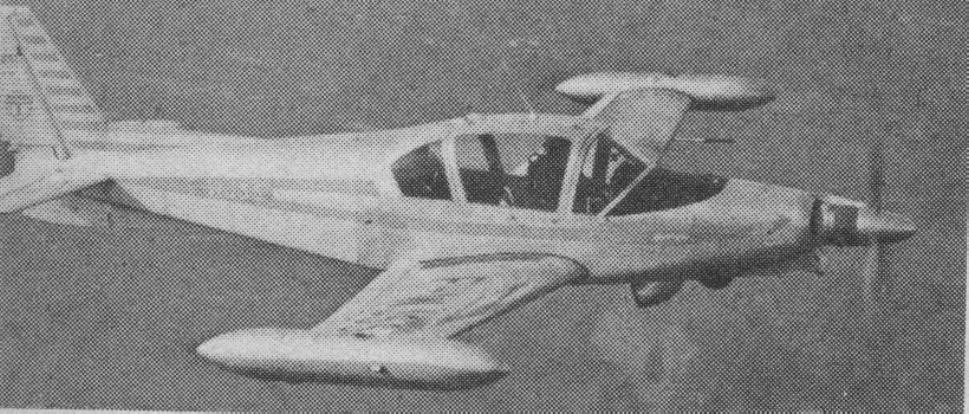
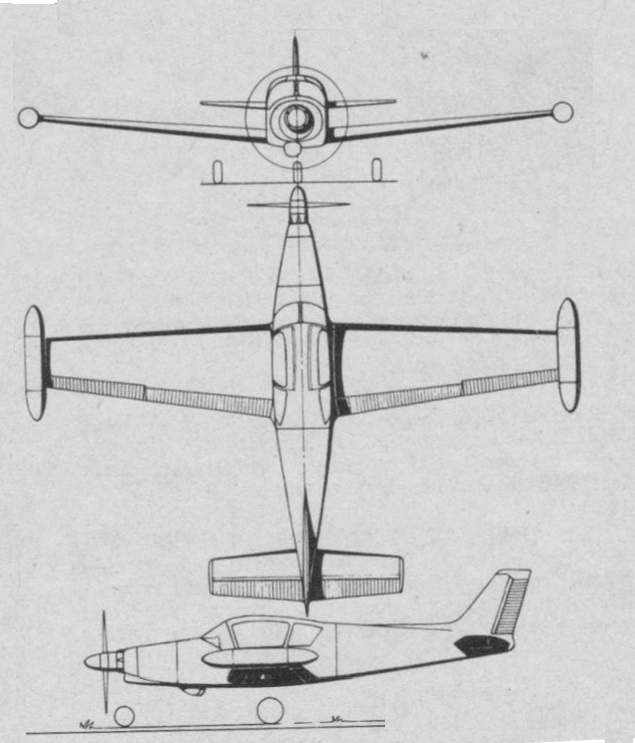
S-251 Engine: 1 x Turbomeca Astazou II, 560 hp Wingspan w/tip tanks: 37 ft Length: 29.52 ft Empty weight: 1948 lb MTOW: 3968 lb Range: 1240 mi at 280 mph with 5 pax Range at 19,700 ft: 1466 mi Service ceiling: 36,000 ft ROC: 2652 fpm TO run: 678 ft TO to 50ft: 1345 ft
S-2510 Engine: 1 x Turbomeca Astazou X turboprop, 496kW Max. speed: 436 km/h / 271 mph
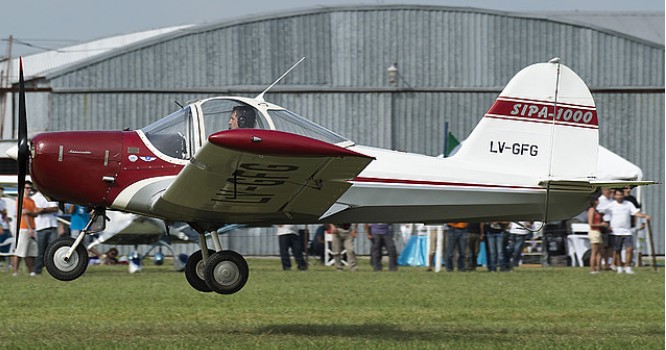
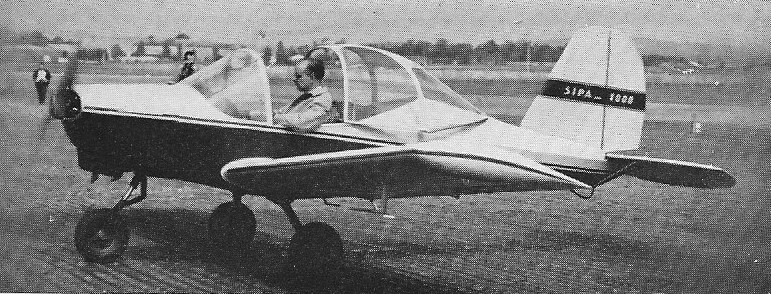
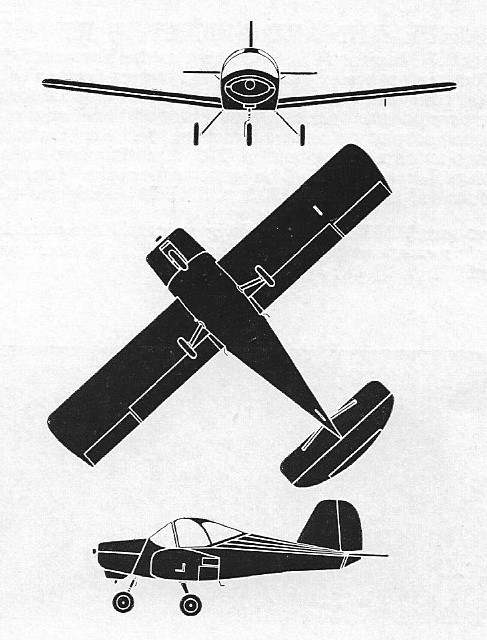
In 1955 Yves Gardan designed the SIPA 1000 Coccinelle side by side two seat light aeroplane with a 90 hp engine. It was designed and built in two months, first flying on 11 June 1955.
Designed for simplicity, the three undercarriage wheels are interchangeable and were from motor scooters. A number of automotive prats were used including oil pressure and temperature indicators, and the hydraulic brakes are from a Renault 4 cv car.
A 65 hp or 90 hp Continental engine could be fitted.
Production deliveries were scheduled for April 1956.
S.1000 Coccinelle Engine: Continental C90, 90 hp Wingspan: 25 ft 11 in Length: 17 ft 10 in Height: 7 ft 3 in Empty weight: 740 lb Loaded weight: 1260 lb Max speed: 125 mph Cruise: 112 mph Range: 375 mi Seats: 2






 All Aero