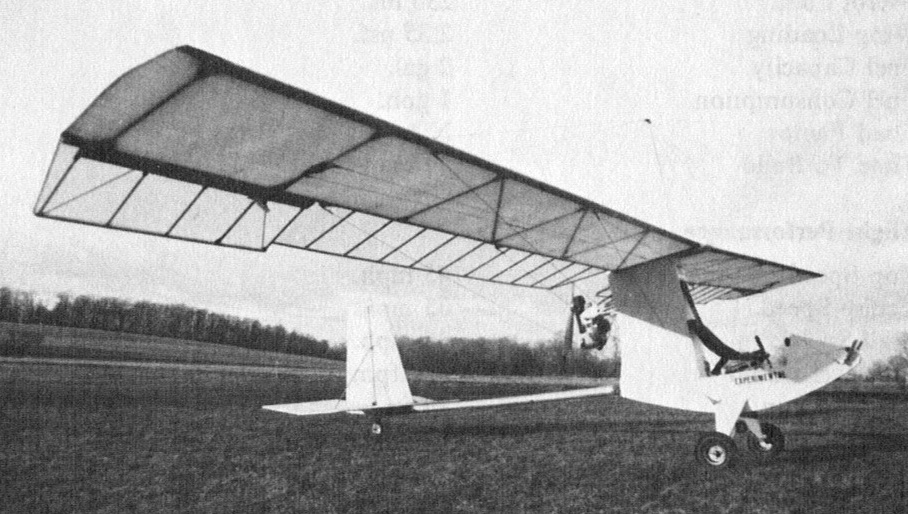
Single seat single engined high wing monoplane with conventional three axis control. Wing has unswept leading and trailing edges, and constant chord; conventional tail. Pitch control by elevator on tail; yaw control by fin mounted rudder; roll control by half span ailerons; control inputs through stick for pitch/roll and pedals for yaw. Wing braced from above by kingpost and cables, from below by cables; wing profile; double-surface. Undercarriage has three wheels in tail dragger formation; suspension on tailwheel and bungee suspension on main wheels. Push right go right tailwheel steering connected to yaw control. No brakes. Aluminium tube/wood/steel tube fuselage partially enclosed. Engine mounted below wing driving pusher propeller.
The single seat Skybaby is aimed at homebuilders and is therefore only sold as sets of plans. It is intended to have a McCulloch Mc101 engine developing 12.5 hp at 9000rpm or, for heavier pilots, the Yamaha KT100S of 15 hp at 10,000 rpm. Certain parts are available from Skyhigh Ultralights, for example the landing gear, controls, reduction drive, seat etc.
The price of the plans was $55 in 1982. According to Skyhigh, the construction time for the Skybaby should not exceed 200h.
Engine: McCulloch Mc 101, 12.5hp at 9000rpm Power per unit area 0.09hp/sq.ft, 1.1 hp/sq.m Fuel capacity 3.0 US gal, 2.5 Imp gal, 11.4 litre Length overall 17.0 ft, 5.18 m Height overall 5.0ft, 1.52m Wing span 32.0ft, 9.75m Constant chord 4.0 ft, 1.22 m Sweepback 0 deg Total wing area 128 sq.ft, 11.9sq.m Wing aspect ratio 8.0/1 Empty weight 155 lb, 70kg Max take off weight 360 lb, 163kg Payload 205 lb, 93kg Max wing loading 2.81 lb/sq.ft, 13.7 kg/sq.m Max power loading 28.8 lb/hp, 13.0kg/hp Load factors; +5.0, 3.0 ultimate Max level speed 40 mph, 64 kph Never exceed speed 50 mph, 80kph Max cruising speed 35mph, 56kph Stalling speed 24 mph, 39 kph Max climb rate at sea level 225 ft/min, 1.1 m/s Best glide ratio with power off 9/1 Take off distance 200 ft, 60 m Landing distance 100 ft, 30 m
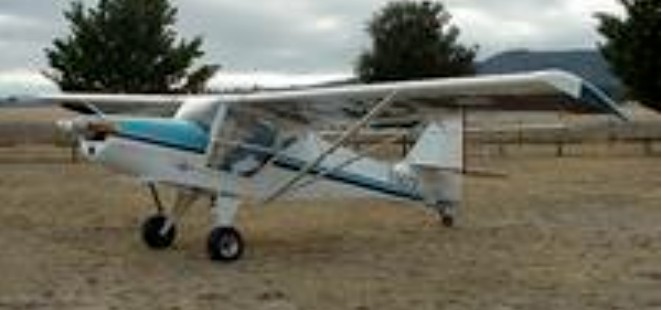
To meet market demand CA-22 were again reworked and a new type certificate was gained for the CA-25N (nose-wheel) Gazelle. This name stems from the fact that the redevelopment finance for this aircraft was obtained from the Swiss agents Gisela. Production of the CA-22 Elan and the CA-25 Impala (both with tail-wheels) continued but sales of the CA-25N (nose-wheel) went at about l0 to 1.
The CA-25N nose wheel development, first flew 1995.
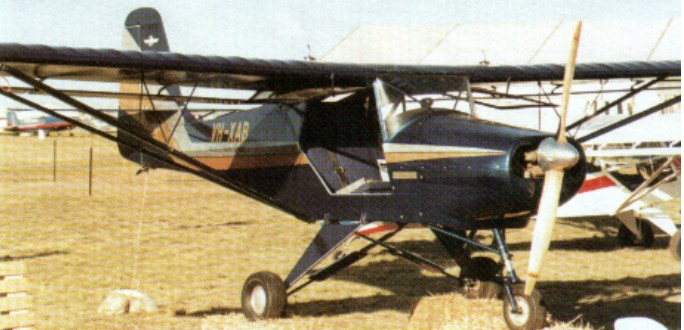
The airframe is built from 4130 chrome molyb¬denum steel, with the wings built up on tubular spars with an internal web, along with metal drag and anti drag braces. Plywood ribs are epoxy bonded to the spars. They are then covered with Stits polyfibre and Dulux paint. Power is from a Rotax 912, which gives the aircraft the flatter engine cowl¬ing — the easiest way to differentiate this machine from the radial type cowl of the US Kitfox.
Production ceased in late 1999 after about 106 tail-draggers and 83 nose-wheeled machines had been constructed.
About 100 CA-22 tail-wheel machines were built and registered either as CA-22s in the ultralight (AUF) class, or as CA-22As under full VH registration marks. To meet market demand these models were again reworked and a new type certificate was gained for the CA-25N (nose-wheel) Gazelle. Production of the CA-22 Elan and the CA-25 Impala (both with tail-wheels) continued but sales of the CA-25N (nose-wheel) went at about l0 to 1.
A single seat single engined high-¬wing monoplane with conventional three axis control. Wing has unswept leading and trail¬ing edges, and constant chord; cruciform tail. Pitch control by fully flying tail; yaw control by fully flying rudder; roll control by half¬span ailerons; control inputs through stick for pitch/roll and pedals for yaw. Wing braced from above by kingpost and cables, from below by cables; wing profile single¬surface. Undercarriage has three wheels in tail dragger formation; bungee suspension on all wheels. Push right go right tailwheel steer¬ing connected to yaw control. No brakes. Aluminium tube framework, with optional pod. Engine mounted below wing driving pusher propeller. Aluminium tubing is 6061T6 grade. Rigging is stainless steel cable. Wing covering is Dacron.
It is similar in layout to the Mk.I, but the control system has been changed to conventional three axis, with stick and rudder pedals.
The Skyseeker Mk.III is in effect a single seat version of the Mk.II, using the same control system and having very similar dimensions and only slightly lower empty weight. Apart from the seating arrangements, the most obvious difference is the use of 16 inch (41 cm) main wheels, as on the Mk.I, rather than the 20 inch (51 cm) type fitted to the Mk.II
This machine is supplied in kit form and the manufacturer says it takes 30h to build. Rigging time is listed as 30 min.
Floats, skis and instruments are available as on the Mk.I, while the Rotax engine can be replaced at customer’s request by a 215 cc single cylinder Cuyuna of 20hp.
Engine: Rotax 277, 28 hp at 6200 rpm Length overall 12.0 ft, 3.66 m Height overall 9.0ft, 2.74m Wing span 32.0ft, 9.75m Constant chord 5.0ft, 1.52m Dihedral 5 deg Sweepback 0 deg Elevator span 9.2ft, 2.80m Total aileron area 9.0 sq.ft, 0.84 sq.m Rudder height 5.0 ft, 1.52 m Total wing area 160sq.ft, 14.9sq.m Wing aspect ratio 6.4/1 Wheel track 4.2ft, 1.27m Main wheels diameter overall 16 inch, 41cm Tailwheel diameter overall 3 inch, 8 cm Optional floats, dimensions: 10.0ft long x 2.0ft wide, 3.05 x 0.61 m Optional skis, dimensions: 4.0 ft long x 10 inch wide, 1.22 x 0.25 m Empty weight 245 lb, 111 kg Max take off weight 496 lb, 225 kg Payload 251 lb, 114 kg Max wing loading 3.101b/sq.ft, 15.1 kg/sq.m Max power loading 17.71b/hp, 8.0kg/hp Load factors +4.0, 2.0 design Max level speed 55mph, 88kph Never exceed speed 65mph, 105 kph Max cruising speed 45 mph, 72 kph Economic cruising speed 42 mph, 68 kph Stalling speed 20 mph, 32 kph Max climb rate at sea level 700 ft/min, 3.6 m/s Min sink rate 250 ft/min at 30 mph, 1.3 m/s at 48 kph Best glide ratio with power off 6/1 Take off distance 50ft, 15m Landing dis¬tance 25ft, 8m Service ceiling 10,000ft, 3050m Range at average cruising speed 180 mile, 290 km
Side by side two seat single engined high-¬wing monoplane with conventional three axis control. Wing has unswept leading and trail¬ing edges, and constant chord; cruciform tail. Pitch control by fully flying tail; yaw control by fully flying rudder; roll control by half¬span ailerons; control inputs through stick for pitch/roll and pedals for yaw. Wing braced from above by kingpost and cables, from below by cables; wing profile single¬surface. Undercarriage has three wheels in tail dragger formation; bungee suspension on all wheels. Push right go right tailwheel steer¬ing connected to yaw control. No brakes. Aluminium tube framework, with optional pod. Engine mounted below wing driving pusher propeller. Aluminium tubing is 6061T6 grade. Rigging is stainless steel cable. Wing covering is Dacron.
The Skyseeker Mk.II is the two seater in the Skye Treck range. It is similar in layout to the Mk.I, but to fit it for its two seat role, the control system has been changed to conventional three axis, with stick and rudder pedals. A notable point is that whereas most three axis aircraft with single-¬surface wings use spoilers for roll control, the Skyseeker Mk.II uses ailerons.
Unusually for a two seater, the principal dimensions and engine specifications are virtually identical to the solo machine, the differences being largely confined to the undercarriage, where larger main wheels are used. As on the single seater, floats, skis and instruments are available as extras.
Engine: Rotax 277, 28 hp at 6200 rpm Length overall 12.5ft, 3.81m Height overall 9.0ft, 2.74m Wing span 32.0ft, 9.75m Constant chord 5.0ft, 1.52m Dihedral 5 deg Sweepback 0 deg Elevator span 9.2ft, 2.80m Total aileron area 9.0 sq.ft, 0.84 sq.m Tailwheel diameter overall 3 inch, 8cm Main wheels diameter overall 20 inch, 51 cm Rudder height 5.0 ft, 1.52 m Total wing area 160sq.ft, 14.9sq.m Wing aspect ratio 6.4/1 Wheel track 4.2ft, 1.27m Optional floats, dimensions: 10.0ft long x 2.0ft wide, 3.05 x 0.61 m Optional skis, dimensions: 4.0 ft long x 10 inch wide, 1.22 x 0.25 m
Single seat single engined high wing mono¬plane with hybrid control. Wing has unswept leading and trailing edges, and constant chord; cruciform tail. Pitch control by fully flying tall; yaw control by fully flying rudder; no separate roll control; control inputs through weight shift for pitch/yaw/roll. Wing braced from above by kingpost and cables, from below by cables; wing profile single surface. Undercarriage has two wheels with tailskid; bungee suspension on main wheels. Push right go right tail steering con¬nected to yaw control. No brakes. Aluminium tube framework, without pod. Engine mounted below wing driving pusher propeller. Aluminium tubing is 6061T6 grade, anodized. Rigging is stainless steel vinyl coated cable. AN hardware. The Skyseeker uses a taildragger undercarriage with skid.
The Skyseeker Mk.1 is a hybrid machine, with weight shift assisted by a rudder and elevator. Various engines have been fitted to the aircraft, but the usual one is a Rotax 277. However, there were also Skyseeker Mk.1s around with Cuyuna 215R engines, developing 20hp, or with single cylinder Kornet K 55 engines mated to a 48×20 inch (1.21×0.51m) propeller through a 2/1 reduction. Construction time is listed as 25 h and rigging time as 15 min. Options include floats, skis, and various instruments such as ASI, CHTG, EGTG, and compass. In addition, the factory will convert a Mk.I to Mk.III specification on request.
Engine: Rotax 277, 28 hp at 6200 rpm Propeller diameter and pitch 48 x 34 inch, 1.22 x 0.86 m Reduction ratio 2.1/1 Max static thrust 1801b, 82kg Power per unit area 0.18h p/sq.ft, 1.9 hp/sq.m Fuel capacity 4.8 US gal, 4.0 Imp gal, 18.2 litre Empty weight 225 lb, 102 kg Max take off weight 496 lb, 225 kg Payload 271 lb, 123 kg Max wing loading 3.101b/sq.ft, 15.1kg/sq.m Max power loading 17.71b/hp, 8.0kg/hp Load factors +4.0, 2.0 design Length overall 12.0 ft, 3.66 m Height overall 9.0ft, 2.74m Wing span 32.0ft, 9.75m Constant chord 5.0ft, 1.52m Dihedral 5 deg Sweepback 0 deg Elevator span 9.2ft, 2.80m Rudder height 5.0 ft, 1.52 m Total wing area 160sq.ft, 14.9sq.m Wing aspect ratio 6.4/1 Wheel track 4.2ft, 1.27m Main wheels diameter overall 16 inch, 41cm Optional floats, dimensions: 10.0ft long x 2.0ft wide, 3.05 x 0.61 m Optional skis, dimensions: 4.0 ft long x 10 inch wide, 1.22 x 0.25 m Max level speed 55 mph, 88 kph Never exceed speed 65 mph, 105 kph Max cruising speed 45 mph, 72 kph Economic cruising speed 42mph, 68kph Stalling speed 19 mph, 31 kph Max climb rate at sea level 800 ft/min, 4.1 m/s Min sink rate 220 ft/min at 32 mph, 1.1 m/s at 51 kph Best glide ratio with power off: 6/1 Take off distance 50ft, 15m Landing dis¬tance 25ft, 8m Service ceiling 11,000ft, 3350m Range at average cruising speed 180 mile, 290 km
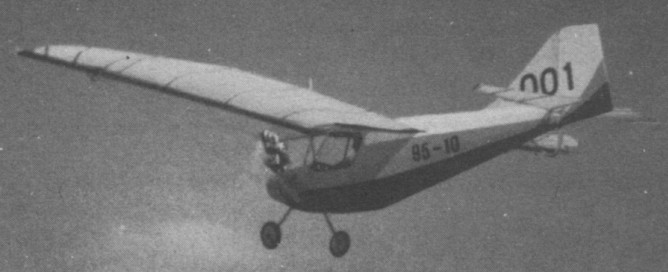
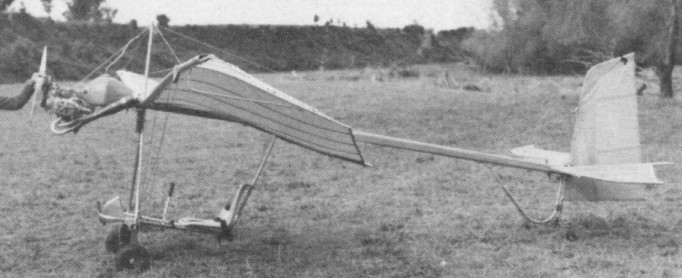
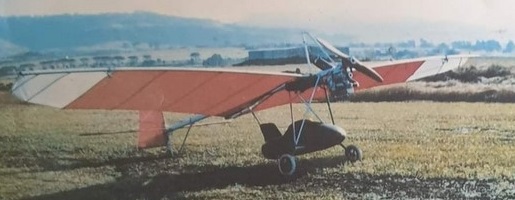
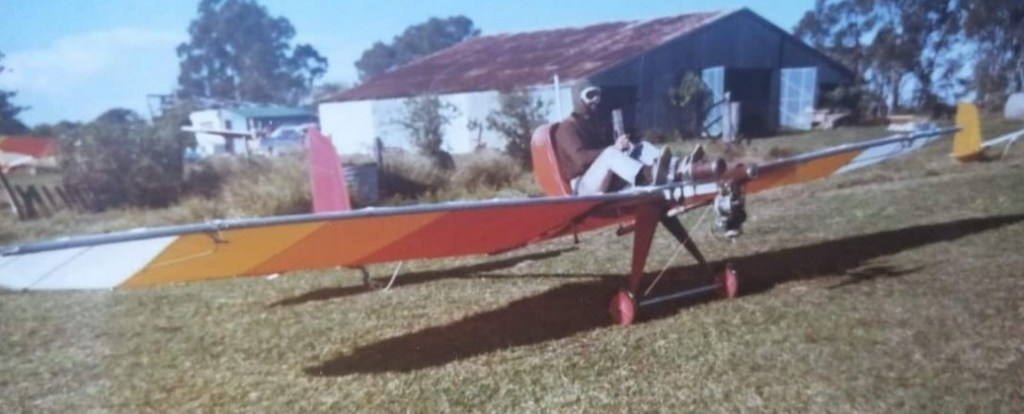
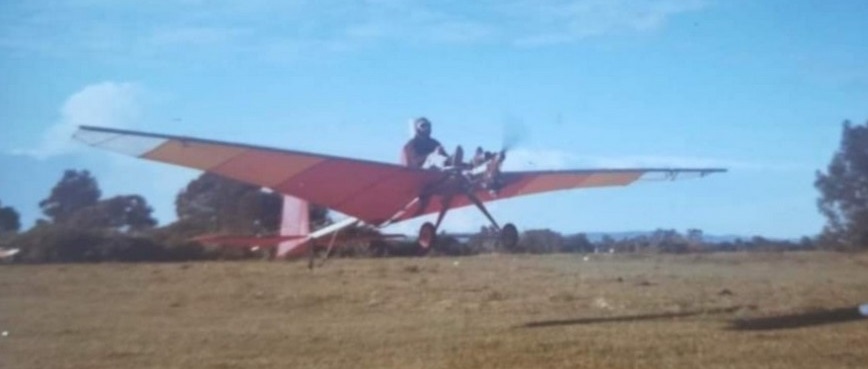
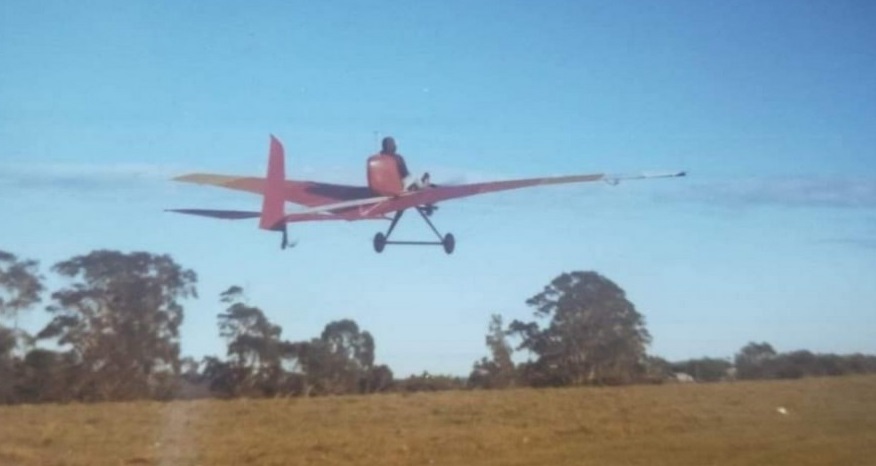
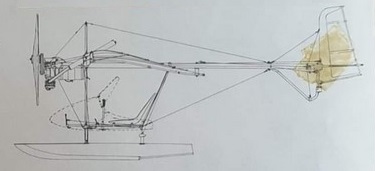
This Australian design was originally built by Ron Wheeler in 1972 as a powered version of his earlier Tweetie hang-glider design. First flown in May 1974, his friends asked him to build them one and by 1976 demand was so high Ron Wheeler set up Skycraft and full-scale production began in November 1976 after the issuing of the ANO 95.10. The stitching of catamaran sails is still evident in the wing of the very early models. The Scout, later dubbed Mk.1, was considerably cheaper than the other types available mainly because it is smaller and doesn’t offer quite the same performance. It is however more economical and resembles in many ways the very first microlight — the Santos Dumont Demoiselle of 1911. The single surface wire braced taildragger has three-axis control via the all flying tail “feathers and wing warping for roll control. Airframe is constructed from high tensile alloy section extruded from the company’s dies. The aircraft sits high on the main wheels, an advantage for its rough strip capabilities. An engine option was available as well as floats and a cockpit pod, and optional Rotax 377 engine. The floats were designed by Wheeler and added to his aircraft in September 1977. The aircraft with floats was first displayed at the Schofield Air Show in 1978.
A historic aircraft in Australia, being the first type to receive certification under to Ultralight classification. The first to do so is in the Powerhouse Museum in Sydney, Australia.
En route, it has gained a modified front axle and seat support (hence the Mk2 title) but otherwise it is little changed. The same 173cc Pixie Major engine is used, driving a tractor propeller, and controls are two axis, operated entirely by the stick and with no separate roll control for the single surface wing. The Scout Mk.2 was a single seat single engined high wing monoplane with two axis control. Wing has unswept leading edge, swept forward trailing edge and tapering chord; conventional tail. Pitch control by fully flying tail; yaw control by fully flying rudder; no separate roll control. Control inputs through stick for pitch/yaw. Wing braced from above by kingpost and cables, from below by cables; single surface wing. Undercarriage has three wheels in tail dragger formation; steel spring suspension on main wheels. Push right go right tailwheel steering connected to yaw control. No brakes. Aluminium tube framework, without pod. Engine mounted at wing height driving tractor propeller. Stainless steel rigging and control cables. Wing material is heavy duty Dacron.
Skycraft Scout 3
The combination of very small fuel tank and low maximum speed means that the Scout is more of a fine weather fun machine than an aircraft for cross country flying. Never the less the Scout has won many friends in its seven years of flying, not least because of its 15 minute rigging time, and has earned its place in the history of the sport.
Skycraft Scout 3
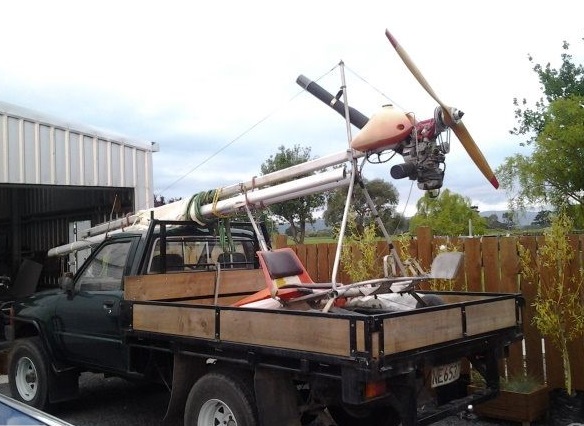
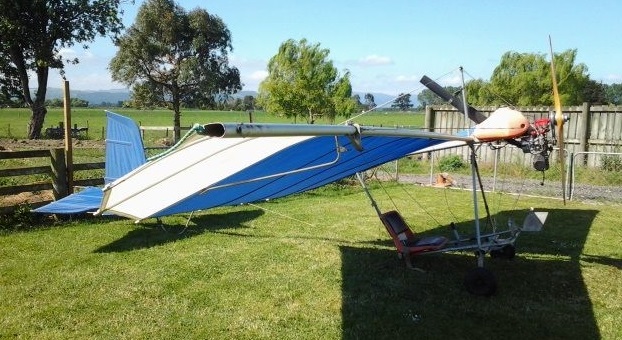
The Scout Mk.3/3/R was a single seat single engined high wing monoplane with conventional three axis control. Wing has unswept leading edge, swept forward trailing edge and tapering chord; conventional tail. Pitch control by fully flying tail; yaw control by fully flying rudder; roll control by wing warping; control inputs through stick for pitch/roll and pedals for yaw. Wing braced from above by kingpost and cables, from below by cables; single surface. Undercarriage has three wheels in tail dragger formation; steel spring suspension on mail wheels. Push right go right tailwheel steering connected to yaw control. No brakes. Aluminium tube framework, without pod. Engine mounted at wing height driving tractor propeller. Stainless steel rigging and control cables. Wing material is heavy duty Dacron. Introduced in 1982 to cater for pilots wanting conventional three axis controls, the Scout Mk3/3/R uses a wing-warping system for roll control. Rudder pedals control yaw and also operate the steerable tailwheel. However, the adoption of three axis control was not the only major change. The Pixie engine was discarded in favour of a 250 Robin, bringing a marked improvement in performance and giving rise to the ‘R’ in the designation title (the second ‘3’ indicates three axis). Typical output for a 250 Robin is 18 hp, but in this application 21 hp is claimed, using an exhaust system engineered specifically for this aircraft. There are also numerous detail engineering changes compared to the Mk2, plus a modified framework which gives better pilot protection.
While the wing warping system has proved effective as a wing levelling device, adverse yaw can be experienced under some circumstances and further modifications to eliminate this have been designed by one of Britain’s Scout dealers as the Flylite (East Anglia) Super Scout.
Scout Twin Mk.4 courtesy Steven Walker
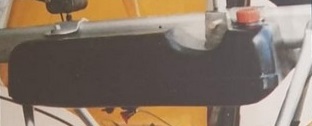
The Scout Twin Mk.4 was powered by a Rotax 377 engine and featured a fibreglass fuel tank, moulded to the fuselage and over the C of G, and a moulded fibreglass cockpit. The Mk.IV can also be fitted with floats. About 50 of these were built.
Scout Twin Mk.4 fuel tank courtesy Steven Walker
Components such as the moulded cockpit will fit the Mk.III as will the dual wire drag system. The aerolastic structure has been truck tested to air loads above 80 mph.
A further enclosed version was built.
courtesy Steven Walker
And another version place the pilot position above the fuselage.
Scout Mk.I Engine: Pixie Major, 14hp at 6500rpm Propeller diameter 48 inch, 1.23 m V belt reduction, ratio 3.0/1 Max static thrust 79 lb, 36 kg Power per unit area 0.13 hp/sq.ft, 1.4hp/sq.m Fuel capacity 0.6 US gal, 0.5 Imp gal, 2.5 litre Length overall 17.1 ft, 5.20 m Height overall 6.2ft, 1.90m Wing span 28.8ft, 8.77 m Chord at root 6.5ft, 1.98 m Chord at tip 1.3ft, 0.40m Sweepback 0 deg Tailplane span 10.5ft, 3.2m Rudder height 4.8 ft, 1.47 m Total wing area 109 sq.ft, 10.1 sq.m Total elevator area 12.5 sq.ft, 1.16 sq.m Wing aspect ratio 17/1 Wheel track 4.5ft, 1.37m Wheelbase 12.5ft, 3.80m Tailwheel diameter overall 4 inch, 10cm Main wheels diameter overall 12 inch, 31 cm Empty weight 122 lb, 55.5 kg Max take off weight 297 lb, 135 kg Payload 175 lb, 79.5 kg Max wing loading 2.72 lb/sq.ft, 13.4 kg/sq.m Max power loading 21.21b/hp, 9.65kg/hp Load factors; >+3.0, > 3.0 ultimate Max level speed 47 mph, 75 kph Never exceed speed 75 mph, 120 kph Max cruising speed 40 mph, 65 kph Economic cruising speed 40 mph, 65 kph Stalling speed 20 mph, 32 kph Max climb rate at sea level 200ft/min, 1.0m/s Min sink rate 510 ft/min at 40 mph, 2.6 m/s at 65 kph Best glide ratio with power off 7/1 at 40 mph 65 kph Take off distance 230 ft, 70 m Land¬ing distance 100ft, 30m Service ceiling 9900ft, 3000m Range at average cruising speed 28 mile, 45 km
Mk.III Engine: Robin 244cc 2 stroke Wing Span: 28 ft 6 in (8.8 m) Wing Area: 149 sq. ft Cruise speed: 46 mph (75 kmh) Stall speed: 19 mph (32 kmh) Max speed: 105 kph Max. rate of climb: 550 fpm Empty weight: 130 lb (58.03 kg) Max. pilot weight: 205 lb (91 kg) Engine: 244 cc/19 hp Fuji Robin 1-cylinder Two-stroke Fuel capacity: 19 ltr Prop: 122cm Range: 55 miles
3/3/R Engine: Robin EC25PS, 21 hp at 6500 rpm Propeller diameter: 48 inch, 1.23 m V belt reduction, ratio 2.2/1 Max static thrust 130 lb, 59 kg Power per unit area 0.19 hp/sq.ft, 2.1 hp/sq.m Fuel capacity 1.6 US gal, 1.3 Imp gal, 6.0 litre Empty weight 130lb, 59kg Max take off weight 310 lb, 141 kg Payload 1180 lb, 82 kg Max wing loading 2.84 lb/sq.ft, 14.0 kg/sq.m Max power loading 14.8 lb/hp, 6.7 kg/hp Load factors design; >+3.0, > 3.0 ultimate Max level speed 53 mph, 85 kph Never exceed speed 75 mph, 120 kph Max cruising speed 47 mph, 75 kph Economic cruising speed 47 mph, 75 kph Stalling speed 20 mph, 32 kph Max climb rate at sea level 550 ft/min, 2.8 m/s Min sink rate 470 ft/min at 40 mph, 2.4 m/s at 65 kph Best glide ratio with power off: 7/1 at 40 mph, 65 kph Take off distance 130 ft, 40 m Land¬ing distance 100ft, 30m Service ceiling 9900ft, 3000m Range at average cruising speed 56 mile, 90 km
Scout Twin Mk.4 Engine: Rotax 377 Empty weight: 82 kg AUW: 180 kg Wingspan:8.7 m Wing loading: 7 kg/sq.m Takeoff distance: 25-40 m Landing roll: 24-30 m Stall: 32 kph ROC: 600 fpm Max speed: 100 kph Cruise: 75 kph Glide ratio: 7-1 Fuel capacity: 15 lt Fuel burn: 8 lt/hr
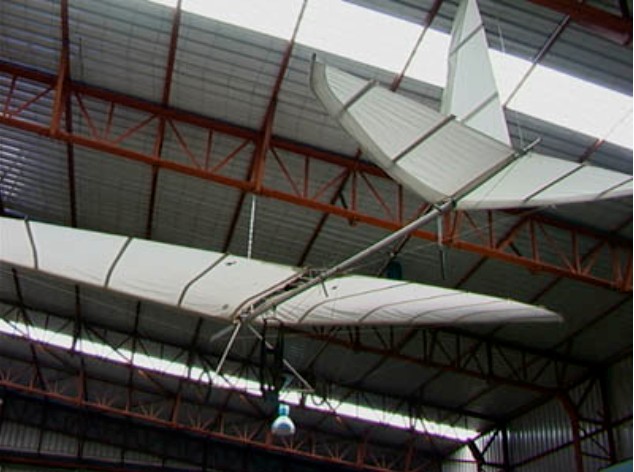
In 1974 Ron Wheeler developed the “Tweetie” hang glider. The Tweetie was almost exactly the same as the Scout only it did not have the engine, the tail plane was fixed and the pilot hung from the A-frame below the wing. Apart from being quite a successful hang glider the Tweetie allowed Ron to experiment and get experience with the Scout design.

 All Aero