Slepcev Storch

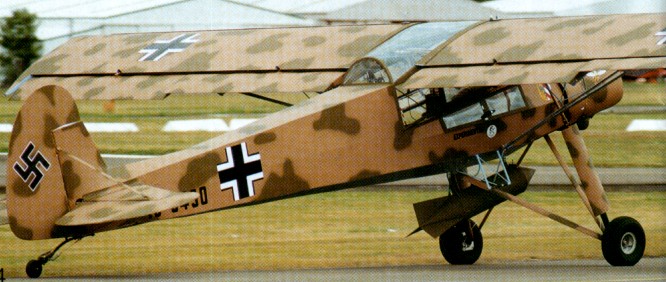
The Slepcev Storch is a kit plane designed by Nestor Slepcev and is produced at the factory in Beechwood, Port MacQuarie, Australia. The Slepcev Storch is a dual control 75% scale replica of the Feisler Fi-156 Storch modified for simplicity. Initially designed in 1992 as a single seater, the Slepcev Storch is produced as a two seat tandem Ultralight STOL aircraft.

The Slepcev Storch is JAR-VLA certified, Type Certificate No.VA505 issued by the Australian CASA on 14 October 1991. It also meets Australian Noise Certification to standard 66.8dBA.

The plane was designed around a light fuselage rated at +6/-3G. Reportedly it will fly as slow as 20 mph with full flaps and 30% power. The construction is 4130 chromemoly steel tubing for the fuselage, rudder and elevator. The wings are all-aluminium and the main landing gear is made of 4130 tubing with 10 inches of travel. Standard wheels are 8.00 x 6 mains, and a Maule tailwheel. Brakes are hydraulic disc, and the fuel is contained in the wings.

The kit consists of JAR-VLA certified components and is fully welded with the fuselage and empennage primed for protection against corrosion. Also supplied are upholstered seats, the main landing gear, wheels, hydraulic disc brakes and the Maule tailwheel. The aluminium wingspars and ribs are pre-drilled and the lightening holes are flanged. All the hardware is included, as are the wingskins. Much of the control system is installed, including the stick and all of the fuselage pushrods. The Lexan windows are supplied, and all hardware. No special tools are required.
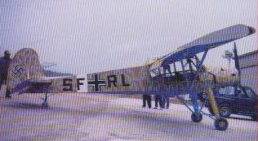
Slepcev Storch Mk.4

The interior measures 2.6 ft wide, 3.3 ft high, and 4.9 ft long. The fuel tank holds three hours and an optional 26.4 gallon belly tank can add another four hours.

The controls are aluminium pushrods, through the rudder and the elevator trim trim are controlled by cables. The brakes are toe-operated.

Avaliable ready to fly or as an advanced kit 2009 Price: A$44,000.

Slepcev Microlight Storch
Stall: 22 kt / 25 mph / 41 kmh
Cruise: 72 kt / 83 mph / 133 kmh
VNE: 80 kt / 92 mph / 148 kmh
Empty Weight: 289 kg / 637 lbs
MTOW Weight: 450 kg / 992 lbs
Climb Ratio: 800 ft/min / 4 m/s
Take-off distance (50ft obstacle): 30 ft / 9 m
Landing distance (50ft obstacle): 30 ft / 9 m

Engine: Rotax 618, 75 hp
HP range: 65-100
Height: 7.5 ft
Length: 21.33 ft
Wing span: 33.5 ft
Wing area: 160 sq.ft
Weight empty: 618 lb
Gross: 1056 lb
Fuel cap: 14 USG
Speed max: 78 mph
Cruise: 65 mph
Range: 300 sm
Stall: 16 mph
ROC: 1200 fpm
Take-off dist: 30 ft
Landing dist: 50 ft
Service ceiling: 16,500 ft
Seats: 2
Landing gear: tail wheel

Engine: Rotax 912, 80 hp
HP range: 80-120
Height: 7.5 ft
Length: 24 ft
Wing span: 33.7 ft
Wing area: 180 sq.ft
Empty weight: 650 lb
Gross weight: 1200 lb
Fuel capacity: 18 USG
Top speed: 95 mph
Cruise: 75 mph
Stall: 16 mph
Range: 250 sm
Rate of climb: 1200 fpm
Takeoff dist: 30 ft
Landing dist: 50 ft
Service ceiling: 15,000 ft
Seats: 2 tandem
Landing gear: tailwheel

Engine: Rotax 912S, 100 hp
Length: 22.3 ft
Wing span: 32.8 ft
Wing area: 172.2 sq.ft
Empty weight: 771.6 lb
Gross weight: 1212.5 lb
Fuel capacity: 19.8 Gal
Top speed: 78 kt
Cruise: 70 kt
Stall: 25 kt
Rate of climb: 700 fpm
Takeoff dist: 50-100 ft
Landing dist: 50-100 ft
Service ceiling: 15,000 ft
Seats: 2
2009 price (JAR-VLA) fly away: A$63,000
2009 price (JAR-VLA) Advanced kit: A$44,000
2009 price (JAR-VLA) kit: A$35,000

Slepcev Storch Mk.4
Engine: Rotax 912, 80 hp
Wing span: 10 m
Wing area: 16 sq.m
MAUW: 450 kg
Empty weight: 289 kg
Fuel capacity: 75 lt
Max speed: 150 kph
Cruise speed: 125 kph
Minimum speed: 27 kph
Climb rate: 6 m/s
Seats: 2
Fuel consumption: 11 lt/hr
Price (1998): 77,000 DM
Kit price (1998): 29,650 DM
Sky-World PJ-II Dreamer

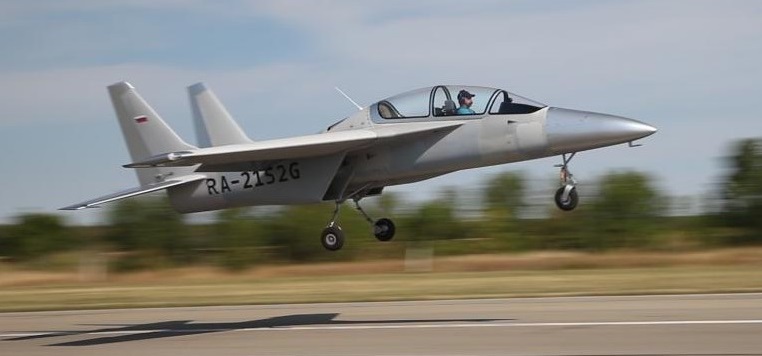
The “PJ-II “Dreamer” is two place ducted fan semi-fighter jet replica kit-build airplane. It is a semi-replica because it was never intendant to be design as exact copy of any current “Jet Fighter”.

The aircraft is made of composite constriction with all the parts made in the “molds”. Standard fiberglass and resin (Carbon fiber can be used, as customer request) is used throughout, being of aerospace quality sourced from Germany. Skins with ribs and bulkheads are utilized in a fairly traditional composite build up for sophisticated high performance experimental aircraft.

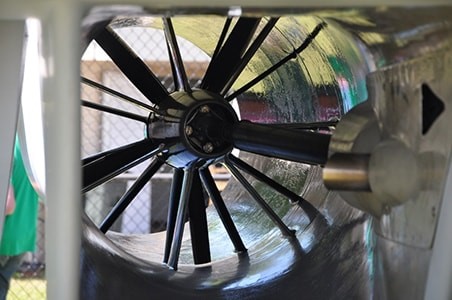
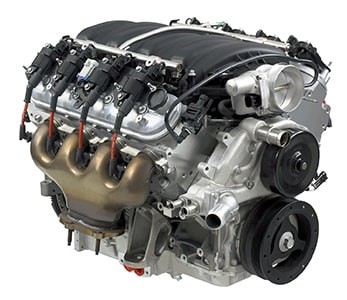
PJ-II “Dreamer” design around LS6 GM V-8 400 hp automotive (converted for aircraft use) piston engine. Because this is automotive engine, automotive premium or aviation LL100 fuel can be used the “Ducted Fan” propulsion system makes this aircraft look and fly like a jet airplane. It’s no P-factor and torque to deal with.

Certificate of Airworthiness of the Federal Air Transport Agency of the Russian Federation, number 2082164591, was received on February 9, 2016.

Demonstration flights of PJ-II at the exhibition Sun-n-Fun 2016 in Lakeland, Fl. USA, April 2016, arouse much interest. During the air show and in the following few months, the interest was confirmed by the announced intentions of more than 50 pilots, who wished to purchase the kit-build aircraft. The two-seat aircraft first flew in March 2015 and had about 40 flying hours so far. The particular aircraft was to stay in the US for the EAA AirVenture show at Oshkosh at the end of July.

The company reached an understanding, that manufacturing and developing will allow producing only 10-12 kits in 2017, with the increase in their number in the future. $3000 deposits were securing delivery dates in 2018.

PJ-II “Dreamer” Kit Contents:
Airframe:
Pre-molded Composite Airframe Components;
Canopy Frame and Glass;
Landing Gear Retract System;
Aileron, Elevator, Control Stick System;
Rudder Control System;
Flap Control System;
Elevator Electric Trim System;
Interior Closeout Panels and seats;
Fan drive:
Engine/Gearbox Mount;
Gearbox;
Fan Drive Shafts;
Fan Assemblies.

Items Not Included In The Kit:
Engine (LS6/LS7);
Hydraulic, Fuel, Electrical Systems and Avionics;
Wheels, Brakes and Tires;
Radio/ Nav and Antennas;
Interior and Exterior Lighting;
Upholstery and Finishing Materials.

GM LS6 V8

Sky-World was offering the kit from a start price of $89,950 which includes retractable landing gear, engine gearbox, fan assemblies and engine mount, but not the engine itself. A total cost of $125,000 is suggested. Build time is advertised at 2,000 to 2,500 hours.

Engine: GM LS6 V8 388 hp@5000rpm
Wing Span: 8,025 m (26’4”)
Wing Area: 10 sq. m (106,17 sq.ft.)
Wing Airfoil: LS(1) – 0413
Length: 8,435 m (27’8”)
Height: 3,015 m (9’9”)
Empty weight: 986 kg (2,169 lbs)
Maximum gross weight: 1380 kg (3,036 lbs)
Fuel Capacity: 280 lt (74 USG)
Structural limit loads: +4,4/-2,2 G
Wing Loading: 130 kg/sq.m (27 lb/sq.ft.)
Fuel Consumption: 57 lph (15 USGph)
Top Speed S/L: 350 km/h (218 mph)
Cruise Speed: 300 km/h (187 mph)
Stall Speed (no flaps): 120 km/h (75 mph)
Stall Speed (full flaps): 90 km/h (56 mph)
Rate of Climb S/L: 14 m/s (2500 fpm)
Range: 1200 km (750 mi)

Sky-Walker Sky-Walker

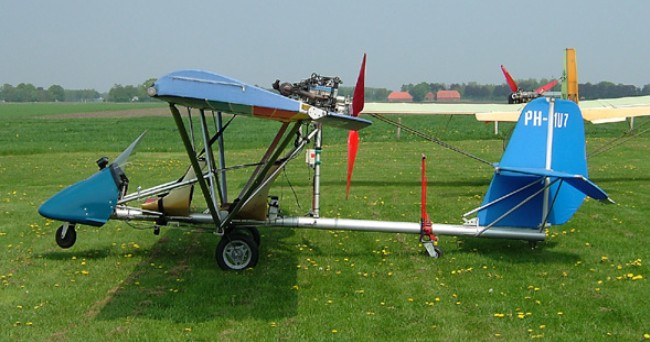
The two-seat Sky-Walker Sky-Walker 1+1 was popular as an ultralight training aircraft. The airframe exists out of an aluminium-tube construction. The plane is constructed out of alu-tube covered with sailcloth. As powersource the Sky-Walker 1+1 had a four cylinder, horizontal opposed air-cooled Limbach L 1700 EA engine. The L 1700 EA was a perfect engine for the ultralight Skywalker with a continous 56 hp (maximum 60 hp) and a weight of only 73 kg.

The dated Limbach engine of the PH-1U9 was replaced by a Rotax 462 UL CB.

Sky-Walker II
Engine: Rotax 582 UL DCDI
Stall: 32 kt / 37 mph / 60 kmh
Cruise: 43 kt / 50 mph / 80 kmh
VNE: 54 kt / 62 mph / 100 kmh
Empty Weight: 68 kg / 150 lbs
MTOW Weight: 159 kg / 350 lbs
Climb Ratio: 1000 ft/min / 5 m/s
Take-off distance (50ft obstacle): 330 ft / 100 m
Landing distance (50ft obstacle): 490 ft / 150 m

Sky Sports Humbug

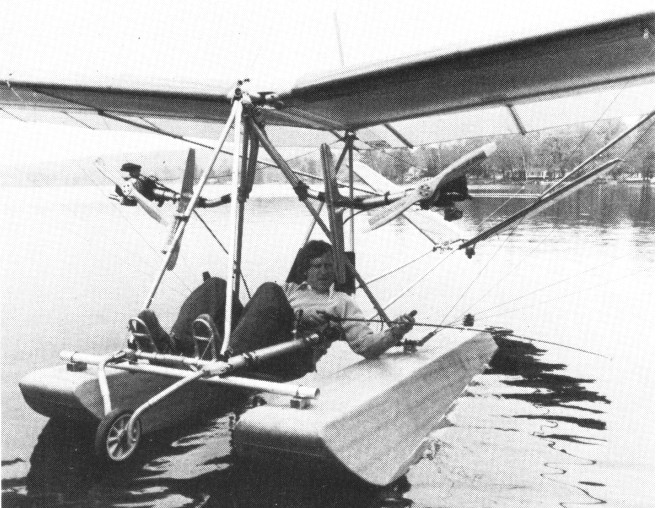
While the Humbug is foot-launchable and foot-recoverable, “auxiliary” wheels are available as well as floats, skis, ice skates or dune buggy wheels. The convenient mixer stick operates three-axis controls, and foot pedals operate the rudder. Construction, for the most part, consists of aluminum tubes and channel fittings, plastic end caps, nylon cable eyes, stainless cables and 3.8-ounce Dacron envelopes for the tail and wings. Power for the Humbug can come from several options; the most popular to this point is a twin-engine Gemini power system that uses a Partner (Swedish chain saw) engine which can be modified to develop from five to nine hp. Chrysler engines which are rated at 10 hp each are also available. Setting up the Humbug for flight requires only 20 minutes. It was available as a finished, test-flown airplane or as a kit.

Skyseeker Aircraft Skyseeker Mk.III

  1. Centre mounted joy stick, rudder pedals, tailwheel steerable through rudder pedals.

Empty wt: 252 lbs
Wing span: 32 ft
Wing area: 160 sq.ft
Height: 9 ft 9 in
Length: 19 ft
Fuel cap; 5 USG
Construction: Aluminium, Dacron
Engine: Rotax 277 (268 cc) 28 hp
Static thrust: 180 lbs
Max wt: 496 lbs
Stall: 20 mph
Max speed: 60 mph
Vne: 75 mph
Climb rate: 750 fpm @ 30 mph
Design limit: +4, -2g
Glide ratio: 6-1
Wing loading: 3.1 lbs/sq.ft
Power loading: 17.71 lbs/hp