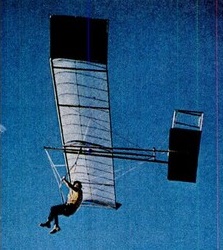
Dean Smith built the 1974 Fly Me II from scrap and surplus aluminium tubing, covering wing and tail with polyethylene sheeting.
Wingspan: 29 ft 4 in
Weight: 65 lb
Dean Smith built the 1974 Fly Me II from scrap and surplus aluminium tubing, covering wing and tail with polyethylene sheeting.
Wingspan: 29 ft 4 in
Weight: 65 lb

This glider was built by Charlie Smith in 1928 from plans. Mr C Smith was a garage proprietor in Palmerston, New Zealand. The glider was taken to Waikouaiti Beach in 1928 and towed into the air by his daughter Flossie driving his Studebaker car. Flossie is shown with the glider and towrope at the Matanaka end of the Waikouaiti Beach prior to the flight.
It was widely known locally that “Charlie was the pilot, it took off well and flew but as it got higher the wind took it out to sea and Charlie panicked and in getting it back to the beach, crash landed it. This was its one and only flight and thereafter it lay for years among the rafters in Smith’s Garage.
It was of wooden construction with fabric covering doped silver. The mainplane, tailplane and fin were all rectangular as were the rudder and elevators except they were cut away to allow free movement. The fuselage was a circular polygon in cross section.
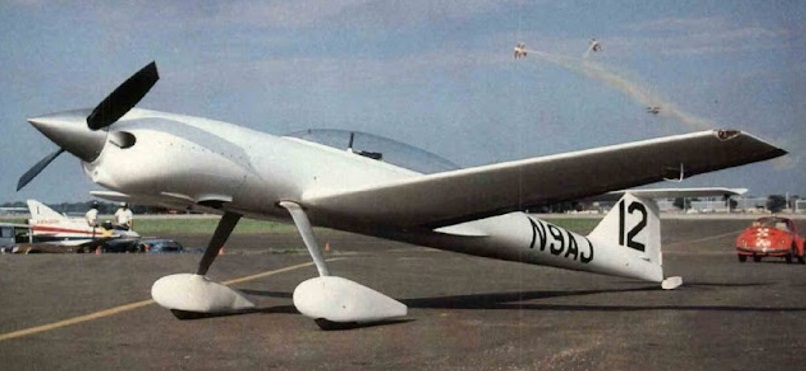
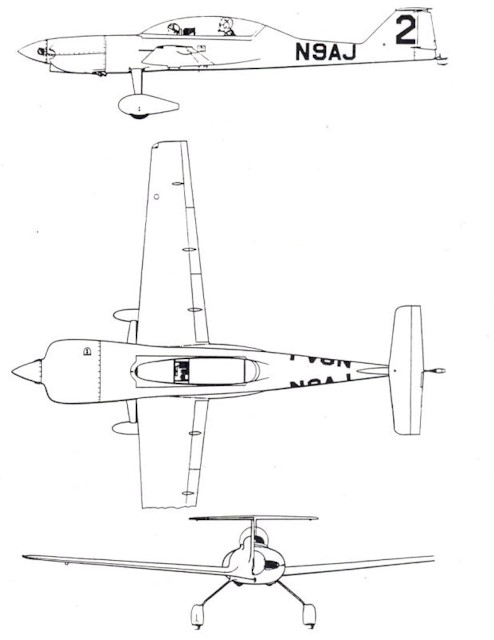
The AJ-2 was designed as a cross-country touring aircraft. It had two seats. The passenger seat was intended to serve as a baggage area when only the pilot was aboard. The engine is a Lycoming IO-360. It makes about 215 hp and has a custom, “one-off” McCauley constant-speed prop. Long-range cruise (55% power) reportedly resulted in 200 mph and 40 mpg. Normal cruise (75% power) was said to be 250-255 mph and about 23-24 mpg.
For the airframe, A.J. utilized techniques developed by the Germans in WWII. It consists of bulkheads spanned by balsa and foam. The wing is one piece, designed to be easily replaced with an updated version that contained retractable gear. The updated version was, to my knowledge, never manufactured or mounted. The wing pictured uses a NACA 64212 airfoil, 12% thick, with a constant section and a .5 taper ratio with no twist. The lack of twist produced undesirable stall characteristics, so A.J. added stall strips and rigged the ailerons up a quarter of an inch, providing an effective twist.
The airplane has a T-tail that also uses NACA sections – 9% for the horizontal, and 12% for the vertical. The tailwheel is a Henry Haigh locking version mounted on a Wittman-type tapered rod spring.
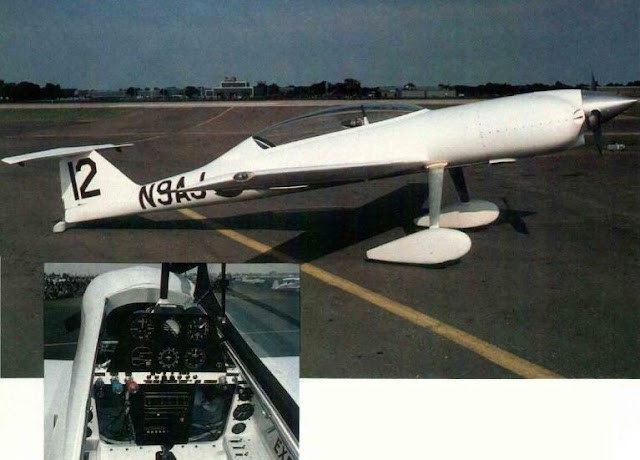
Andrew’s experience with gliders clearly translated into the exquisitely efficient design of the AJ-2. Indeed, according to Mike, Andrew once claimed that the total drag of the airplane was approximately equivalent to a 12″x12″ square piece of plywood being pushed through the air.
This paid off in cross-country competition. First flown on 15 July 1981 registered N9AJ, Andrew and the AJ-2 won a cross-country race that emphasized efficiency known as the Oshkosh 500. The airplane, AJ-2, was designed to compete in a new EAA sponsored efficiency race, the Oshkosh 500. AJ competed successfully, winning seven years in a row. He won the race with an average speed of just under 218mph while burning only 19.2 gallons to cover the 500 mile long course. On August 6, 1982 he flew the AJ-2 to a 500 km closed course speed record – 253.3 mph (407.7 km).

Andrew apparently was interested in donating the AJ-2 to a museum, but ultimately ended up selling it before passing away in 2004. It was then stored in a hangar at a nearby airport in rural Wisconsin.
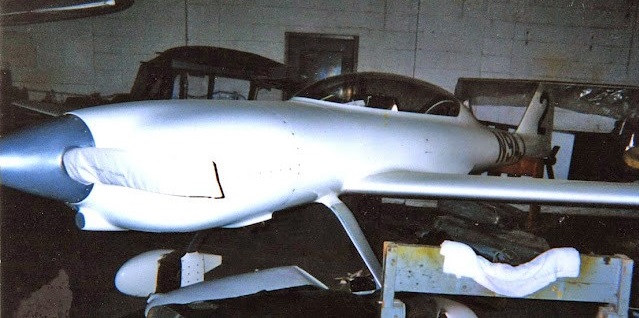
In addition to the aircraft itself, there was a vast quantity of plans, diagrams, and three-ring binders of handwritten calculations and data that AJ used to design it.
After purchasing the AJ-2 back in the early 2000s, the new owner still has yet to fly it. But he thought it will likely happen later when he completes the removal of a wing modification. This project should return the AJ-2 to its standard/original configuration.
Engine: 215hp Avco Lycoming IO-360-A1B6
Wingspan: 24’0″
Length: 22’0″
Useful load: 600 lb
Max speed: 298 mph
Cruise: 255 mph
Stall: 68 mph
Seats: 2
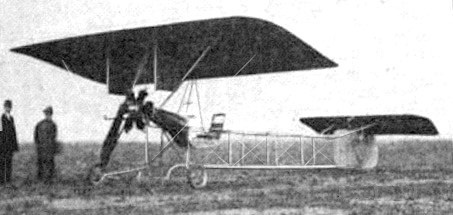
The Franklin P Smith 1911 Monoplane photographed for Aero 3/16/12. Apparently it flew only once.
Based on the Lazor-Rautenstrach Belle of Bethany and built by Robert R Smidley in 1959, the Smidley Rapid Robert was a single-place cabin, low wing monoplane.
Engine: 85hp Continental C-85
Wingspan: 17’10”
Length: 15’8″
Useful load: 220 lb
Seats: 1
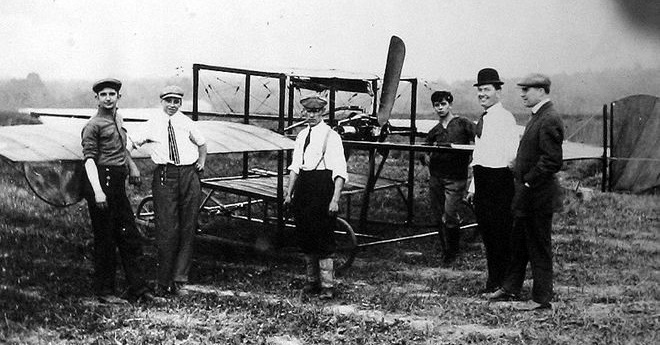
Smidley began construction of his monoplane in 1909. It was described in the August 1909 NY Times as having large wings on either side of the central rectangular box. A smaller plane was above and in front, and a fixed semicircular plane was at the tail. Control was a semicircular device at the front with the halves of the semicircle moving together as elevator or separately. It was mounted on four small wheels that ran on rails. This was the 223 pound bamboo version with 18 hp engine. At some point the machine was changed to larger wheels for take-off from the ground and probably rebuilt in other ways. Smidley is credited with three aircraft and a completely rebuilt version of his first machine was reported to be ready for testing in a March 1910 Aeronautics. There is a small picture in November 1910 Aeronautics that shows a machine with the larger wheels, powered by an 18 hp 2-cylinder Stevens Duryea air-cooled engine, and the structure doesn’t look like bamboo. These machines were not powered by an electric motor, but a machine identified as Smidley’s third machine was displayed at a Harrisburg auto show in early 1910, where an electric motor was used to run the propeller in the exhibition. The picture is either the second version incomplete or the third, with the Duryea.
Engine: Duryea auto
Wingspan: 32’0″
Seats: 1
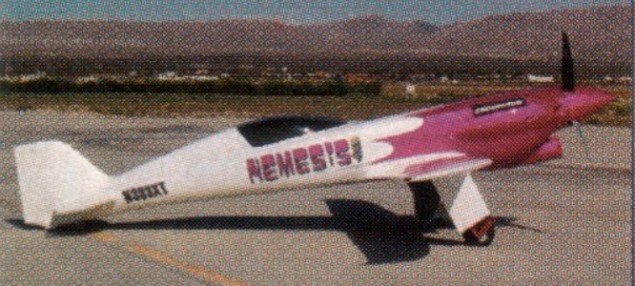
Engine: Lycoming TIO-540-NXT, 350 hp
HP range: 310-350
Length: 23 ft
Wing span: 24 ft
Wing area: 70 sq.ft
Empty weight: 1600 lb
Gross weight: 2600 lb
Fuel capacity: 90 USG
Cruise: 345 mph
Stall: 88 mph
Range: 1380 sm
Rate of climb: 3000 fpm
Takeoff dist: 3000 ft
Landing dist: 3000 ft
Seats: 2
Cockpit width: 37 in
Landing gear: retract/tailwheel
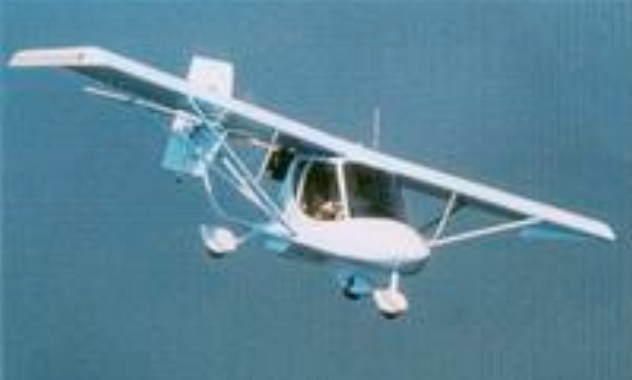
Originally designed by Chuck Hamilton and prototyped in 1992, the Genesis is a two-place, roomy, side-by-side aircraft for a 2009. Available with a choice of dual yoke controls or center stick, and equipped with the standard Rotax 582, in solo configuration take-off roll is 100 feet, with a 250 foot landing roll and a climb rate of 1,000 fpm. The Genesis base 2009 Price also included dual 10-gallon wing tanks to provide for four hours endurance.
The series were originally produced by Innovation Engineering of Davenport, Iowa and then by SlipStream International of Wautoma, Wisconsin.
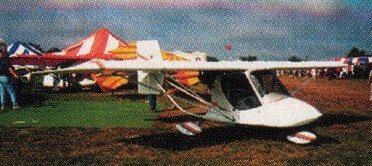
The XL version has extended wings. The kit price in 1997 was US$12,900, including engine.
Optional are “Shark Series” amphibious floats. Computer designed to reduce drag and to provide for rapid hydroplaning, the “Shark Series” floats are built to withstand impacts in excess of 3,000 lbs. per square inch and are rated for up to 1,600 lbs.
With an average empty weight of 565 lbs., the Genesis equipped with the standard Rotax 582 has a useful load of 635 lbs. With any of the larger optional powerplants, and the gross weight capability increases to 1400 lbs., providing for a larger useful load. The HD option has a “beefed up” airframe capable of safely carrying up to 1600 lbs. and a useful load envelope of over 800 lbs.
The Genesis typically will take about 400 hours to complete. All of the welding and fabrication is done before the kits leaves the factory, and the manuals are written with step by step instructions, and numerous photos, illustrations and CAD drawings.
The Genesis airframe sold for US$11,073 in 2009, and includes all of the flight surfaces, fuselage, fiberglass enclosure, landing gear, wheels and tires, control system and doors. Among the options are custom hydraulic brakes, cabin heating, floats, wheel pants, strut fairings, complete instruments packages, and finishing systems.
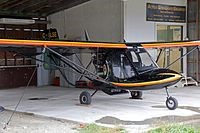
A complete Genesis aircraft, ready to fly, typically runs from $21,000 to $32,000, depending on your powerplant and choice of options.
Stall: 41 kt / 47 mph / 76 kmh
Cruise: 87 kt / 100 mph / 161 kmh
VNE: 104 kt / 120 mph / 193 kmh
Empty Weight: 295 kg / 650 lbs
MTOW Weight: 590 kg / 1300 lbs
Climb Ratio: 800 ft/min / 4 m/s
Take-off distance: 350 ft / 107 m
Innovation Engineering Genesis
Engine: Rotax 503, 53 hp.
HP range: 53-100.
Speed max: 90 mph.
Cruise: 85 mph.
Range: 225 sm.
Stall: 40 mph.
ROC: 800 fpm.
Take-off dist: 150 ft.
Landing dist: 100 ft.
Service ceiling: 10,000 ft.
Fuel cap: 13.5 USG.
Weight empty: 490 lbs.
Gross: 1000 lbs.
Height: 6.92 ft.
Length: 19.33 ft.
Wing span: 26.67 ft.
Wing area: 155 sq.ft.
Seats: 2.
Landing gear: nose wheel.
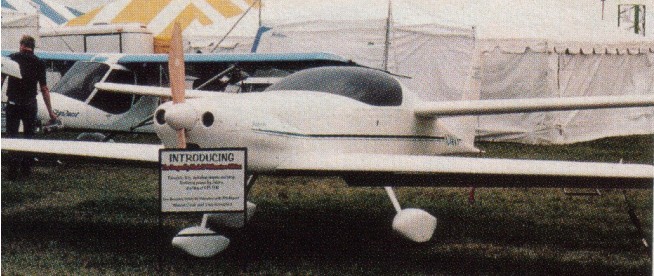
In 2001 the Slipstream Industries new trigear Dragonfly Mak III Millennium kit plane was ready for flight testing. Improvements included Hammerhead landing gear, redesigned seatbacks, and a raised panel to accommodate larger pilots.
Engine: Jabiru 2200, 80 hp
In 1911 an open-cockpit, single seat, mid-wing monoplane was built by (James B) Slinn Aeroplane Co for Eugene Brown of Peoria IL.
The only one built had an oversize elevator mounted above the wing almost making this one a biplane. It was a headless monoplane design with tricycle gear and pusher engine.
 All Aero