SNCAC NC.150

When the nationalisation of the French aircraft industry resulted in the creation of the Société Nationale de Constructions Aéronautiques du Centre (SNCAC) from the merger of Farman Aviation Works and Hanriot in 1936, the new company inherited Farman’s experience in high-altitude research, and this research continued.

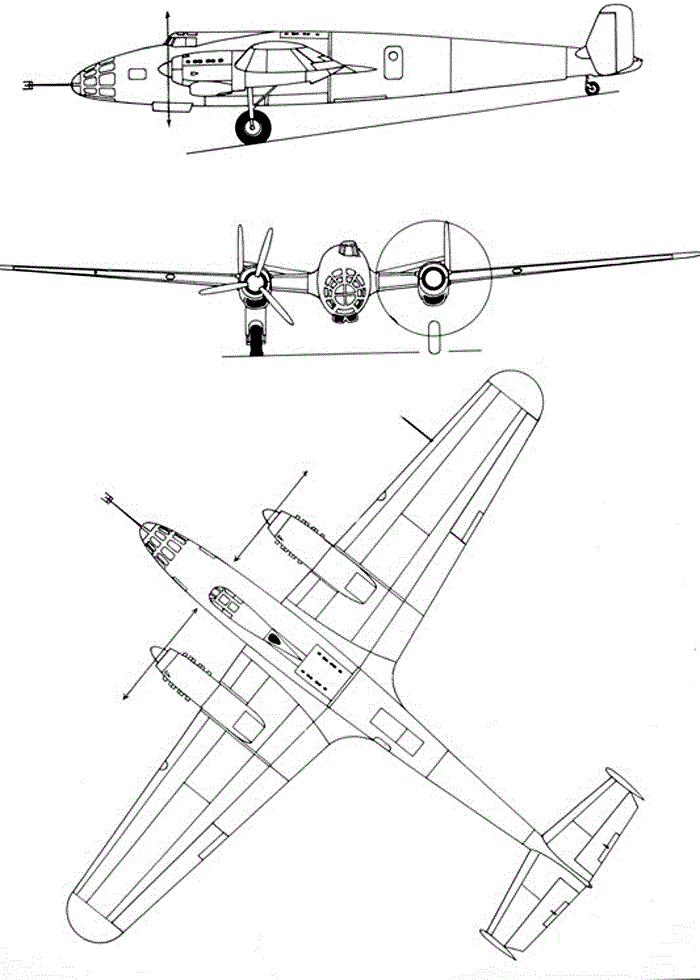
SNCAC continued work on high-altitude aircraft, proposing two pressurised bombers in 1938. The first, the NC.140, was a four-engined bomber using the wings of the Farman F.223.3 but was quickly abandoned in favour of the smaller, twin-engined NC.150. The NC.150 was a mid-winged monoplane with a retractable tailwheel undercarriage which was designed to make maximum use of non-strategic materials such as wood. The wings were of mixed construction, with a metal centre-section, and wood outer wings that had metal spars, wooden ribs and plywood skinning. Similarly, the fuselage had wooden forward and aft fuselage section connecting to the metal centre section, while the twin tail was of wooden construction with plywood skinning. It was to be powered by two Hispano-Suiza 12Y V12 engines, with power being maintained at high altitudes by using a single three-stage supercharger driven by a separate Hispano-Suiza 12X engine mounted in the fuselage.

SNCAC began work on two prototypes as a private venture in 1938. These two prototypes were not to be fitted with cabin pressurisation, although this was planned for a third prototype. The French Air Ministry placed an order for the two prototypes on 24 April 1939, with the second aircraft to carry full armament.
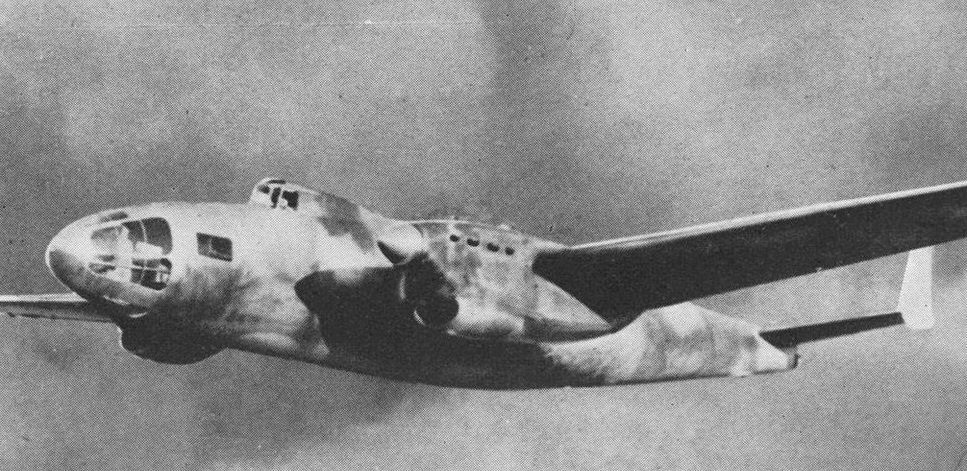
The first prototype, designated NC.150.01, made its maiden flight from Toussus-le-Noble on 11 May 1939. Following the tests, the aircraft received numerous improvements: modifications of compressors, addition of a glass nose, and modified rudders.
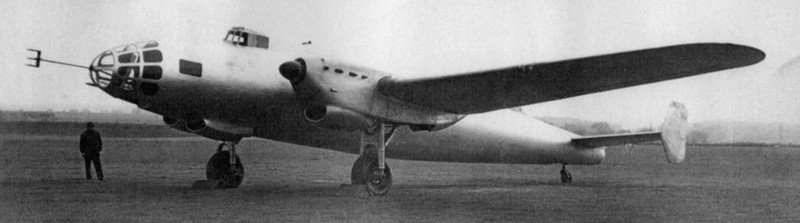
Meanwhile, the French Air Ministry had become worried about possible delays to the Lioré et Olivier LeO 45 and Amiot 354 twin-engined bombers which were planned to re-equip the medium bomber squadrons of the Armée de l’Air caused by shortages of light alloys, and after successful testing in early 1940, ordered a change of plans. Pressurisation was to be abandoned, and the unusual central supercharger with its dedicated engine (known as the “bi-tri” concept) was to be replaced by individually supercharged engines.
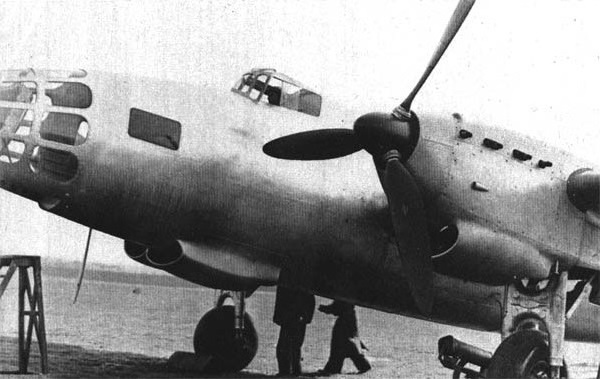
The NC150 was transferred to the CEMA (Test Center of the Air Materials) at the beginning of 1940, while the construction of the second prototype, equipped this time, of its armament. The events called into question the project and it was asked the SNCAC to abandon the pressurized bi-tri formula in favour of more conventional formulas using Hispano-Suiza 12Y compressor or Pratt & Whitney Double Wasp engines respectively NC152 and NC153.
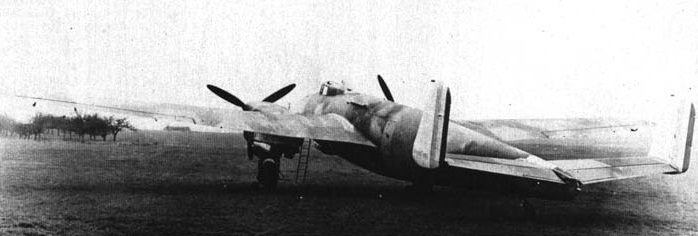
Two production versions were planned, the NC.152, powered by Hispano-Suiza engines, and the NC.153, with imported American radial engines. Although testing was promising, and orders were planned for a modified version as a back-up for the Lioré et Olivier LeO 45 and Amiot 354 bombers, the surrender of France in June 1940 ended development with only the single example being built, both the second and third prototypes being abandoned before completion. The first prototype, NC150-01, disappeared after its evacuation on Bordeaux-Mérignac, the second one was never finished, and the third, NC151-01, which was to be the final prototype equipped with pressurization, never came into being.

NC.150
Powerplant: 2 × Hispano-Suiza 12Y 32/33, 720 kW (960 hp) each
Powerplant: 1 × Hispano-Suiza 12Xirs liquid-cooled V12 engine driving NC-C2 supercharger, 510 kW (690 hp)
Wingspan: 21.882 m (71 ft 9.5 in)
Wing area: 61.10 sq.m (657.7 sq ft)
Length: 17.60 m (57 ft 9 in)
Height: 4.19 m (13 ft 9 in)
Empty weight: 7,733 kg (17,048 lb)
Gross weight: 10,077 kg (22,216 lb)
Maximum speed: 600 km/h; 324 kn (373 mph) at 8,000 m (26,250 ft)
Cruise speed: 510 km/h; 275 kn (317 mph) at 8,000 m (26,250 ft) (long-range cruise)
Range: 2,200 km; 1,188 nmi (1,367 mi)
Service ceiling: 11,380 m (37,350 ft)
Time to altitude: 19 min 7 s to 8,000 m (26,250 ft)
Crew: Four
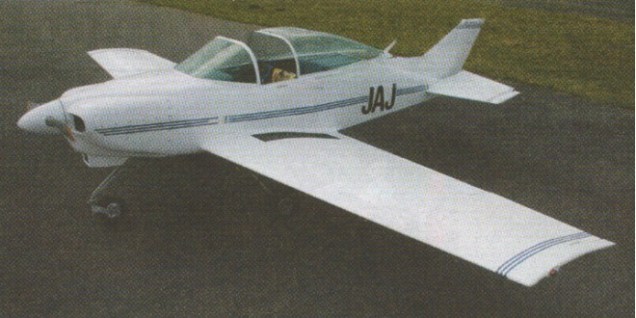
Smyth Sidewinder

This side-by-side two-seater combines good looks and performance in an all-metal package that makes it more like a factory-built aircraft than a homebuilt. The design was started by former Navy pilot, Jerry Smyth in 1958, later modified by George Blair, and the prototype finally flew in February 1969. The design received the “Outstanding Design” award at the 1969 17th Sport Aviation Convention at Rockford, Illinois. Several have been built since then including some with fully-retractable undercarriage.

Fuselage is built around steel tubing for superior crash protection. Stabilizer is all-flying with an anti-servo tab to provide control fell and pitch trim. Airfoil is NACA 63-009. Alt control surfaces are mass-balanced. All three trike gear wheels wear pants. Provision is made for engines of 60 to 180 hp that weigh up to 310 lbs. A 125 hp unit giving a cruising speed of 255 km/h and a range of 685 km. It is a side-by-side two seater that uses a sliding canopy, tapered steel rod landing gear, stabilators and fiberglass cowling.

It is stressed to 9 g’s “ultimate”.

EU-Wish is the owner of the Smythe Sidewinder Design. The plans package contains 112 pages with many full size parts shown and all the necessary information to build the Sidewinder. Original copyright protected plans with official serial numbers were available from EU-WISH Aircraft.

Engine: Lycoming 125-hp 0-290
Wingspan 24’l0”
Wing area: 96 sq.ft
Length 19’4”
Height: 5ft 5.5in
Gross Wt. 1450 lb
Empty Wt. 867 lb
Fuel capaci¬ty: 17.5USG
Top 185 mph
Cruise (75 per¬cent) 160 mph
Stall 55 mph
Climb rate 900 fpm
Range 425 sm
Seats: 2

Engine: Lycoming O-320-E2A, 150hp
Prop: Hartzell CSU, 66in
Gross Wt. 1600 lb
Empty Wt. 1129 lb
Fuel capaci¬ty: 103 lt
Wingspan 24’l0”
Length 19’4”
Height: 5ft 5.5in
Wing area: 96 sq.ft
Seats: 2

EU-Wish Aircraft Sidewinder
Engine: 125 Hp
Wing Span: 24′ 10″
Wing Area: 96 sq. ft.
Fuel Capacity: 17.5 gal.
Baggage Weight: 60 lbs.
Gross Weight: 1450 lbs.
Empty Weight: 867 lbs.
Useful Load: 583 lbs.
Max. Speed: 175 mph
Cruise Speed: 160 mph
Stall Speed – No Flap: 55 mph
Rate Of Climb: 900-1500 fpm

EU-Wish Aircraft Sidewinder S&GA
Engine: Lycoming O-320, 160 hp
HP range: 90-180
Length: 19.3 ft
Wing span: 24.8 ft
Wing area: 96 sq.ft
Empty weight: 867 lb
Gross weight: 1550 lb
Fuel capacity: 17.5 USG
Cruise: 167 mph
Stall: 60 mph
Range: 490 sm
Rate of climb: 1200 fpm
Takeoff dist: 1200 ft
Landing dist: 900 ft
Seats: 2
Cockpit width: 38 in
Landing gear: nosewheel

S-M-J Maverick I

Built by M L Shanklin, (–) Moore, and (–) Johnson in 1968, the S-M-J Maverick I was a single place open cockpit monoplane.

Reported built at Kelly Field, Mooresville, it was registered N6417 and first flew on 2 July 1968.

It was destroyed there in a crash on 20 September 1969 after a wing failure.

Engine: 150hp Lycoming O-320
Wingspan: 25’0″
Length: 19’0″
Useful load: 725 lb
Max speed: 160 mph
Cruise: 140 mph
Stall: 80 mph
Seats: 1

Smith, W. Termite

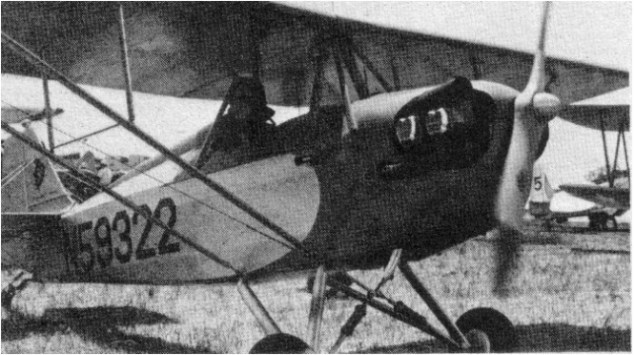
The original circa 1955 Termite N7939A, designed by Wilbur Smith, was powered by a 36-hp Aeronca engine, but since then other engines such as the 38-hp Continental and the 65-hp Lycom¬ing have been used.

The Termite is a single-seat sporting monoplane with a braced parasol-type wing Its wing struc¬ture is built with two wood spars, an aluminum leading edge and fabric covering aft of the front spar. The fuselage is an all-wood structure with plywood covering from the rear of the cockpit forward and fabric covering aft. The tail section is also fabric covered. The Termite’s landing gear is a Piper Cub type.

Engine: 40hp Continental
Wingspan 23’6”
Length 15’l”
Gross Wt. 658 lb
Empty Wt. 432 lb
Top speed 95 mph
Cruise 83 mph
Landing mph 38
Climb rate 450 fpm
Ceiling 6000 ft
Takeoff run 350 ft
Landing roll 400 ft
Range 150 sm

Smith, J. 1929 monoplane

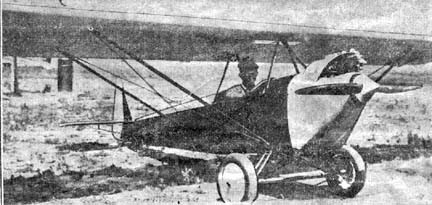
Circa 1929 J W Smith of Cicero IL. USA, built a single-place, open cockpit, high-wing monoplane.

The monocoque fuselage was made from red fiber paper rolled into shape and riveted. The wings were steel-tubing framed—the first-ever wing to have metal ribs. The fuselage hung below the wing with a pivoting arrangement somewhat like that which George Spratt would champion much later.

According to William B Stout, “Its one bad habit was changing shape from day to day as the humidity increased or decreased.”