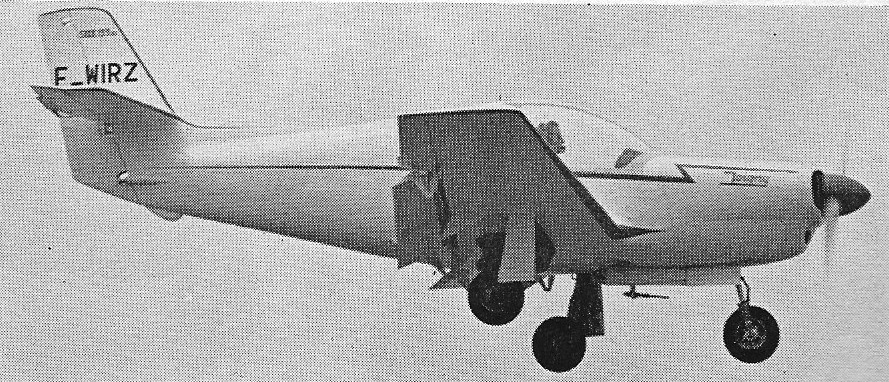
After failing to obtain a license to build the CAB Supercab, Societe De Recherches Et De Constructions Mecaniques designed a new lightplane known as the SRCM-153 Joigny, which first flew in March 1960. This was a three/four-seat monoplane with retractable landing gear, powered by a 150 hp Lycoming O-320A engine.
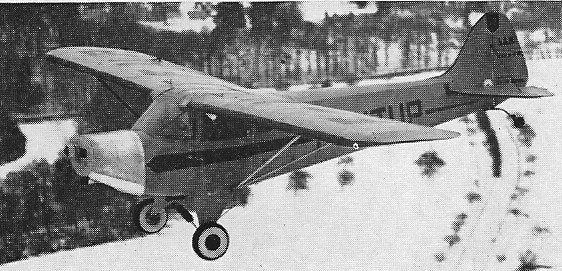
Societe D’etudes Et De Constructions D’avions Detourisme was established in 1938, produced the RG-60 single-seat biplane, RG-75 two-seat cabin monoplane, and S.5 two-seat high-wing cantilever monoplane. Production ended at outbreak of Second World War.
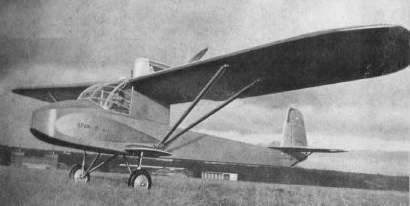
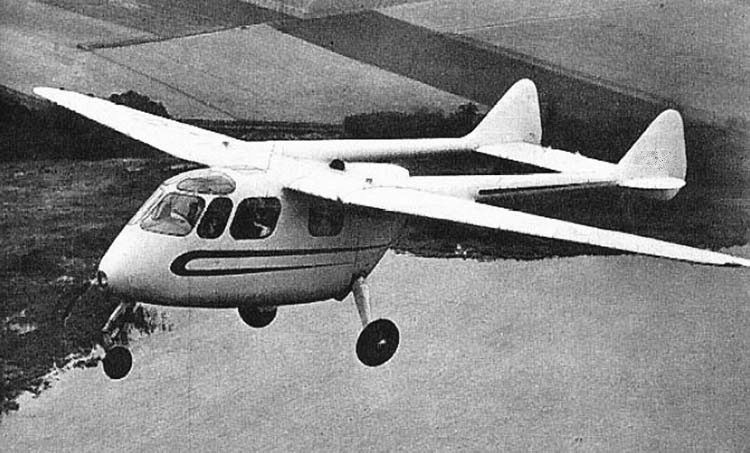
After Second World War Societe D’etudes Et De Constructions Aero Navales undertook to produce all-metal light aircraft. Resulted in Courlis twin-boom monoplane of 1946, with tricycle landing gear and special loading arrangements.
Societa italiana aeroplani – founded in Milan in 1912 by attorney Enrico Luzzatto after the close of the Helios firm – made use of the work of engineer Flaminio Piana Canova, who left the workshops of Somma Lombardo’s Battaglione Aviatori, and briefly assumed the role of technical director for all of Asteria where soon he built an almost identical monoplane to the Sia Italia, called Asteria MB, and also presented at the 3rd International Exhibition of Aerial Locomotion of Turin (May 17-24, 1913).
The Sochen Phoenix was a single engine, three axis control microlight designed by Edwin Sochen and produced in South Africa in the early 1980s.
The original single seat ES-1 Phoenix began as a rebuild by Edwin Sochen of a storm-destroyed Quicksilver MX but emerged a much refined aircraft, with two-surface wings, ailerons rather than spoilers and a fully steerable undercarriage. One of these was built and flown, then Sochen developed it into the CII two-seater.
Seating apart, the two variants were generally similar. The two surface wing, tapered in plan with a straight leading edge and a forward swept trailing edge, was braced from below on each side by a single strut, assisted by jury struts. The ailerons filled the whole span. The fuselage of the Phoenix was a completely open aluminium frame structure which carried the exposed pilot’s seat, placing his head just below the leading edge of the wing and supporting the engine in pusher configuration immediately behind. The fuselage frame extended rearwards to carry a conventional tail with horizontal surfaces at the same height as the wing and an all-moving rudder with a swept leading edge, extending below the tailplane aft of the rudder post. The rudder of the CII was swept on both edges, unlike that of the single seat version, and extended downwards further. The tricycle undercarriage had three similarly sized wheels mounted on short legs interconnected by a triangular frame. The front wheel was steerable from the rudder bar and the rear pair were differentially braked.
After two prototypes the CCII was put into production by Court Helicopters. Only eleven were completed before production was stopped.
CII Engine: 1 × Rotax 503, 52 hp (39 kW) Propeller: 2-bladed, 4 ft 10 in (1.47 m) diameter Wingspan: 32 ft 0 in (9.75 m) Empty weight: 315 lb (143 kg) Maximum speed: 65 mph (105 km/h; 56 kn) Cruise speed: 50 mph (80 km/h; 43 kn) Stall speed: 28 mph (45 km/h; 24 kn) Range: 100 mi (87 nmi; 161 km) at average cruising speed Rate of climb: 350 ft/min (1.8 m/s) from sea level Take-off distance: 230 ft (70 m) Landing distance: 100 ft (30 m) Crew: Two
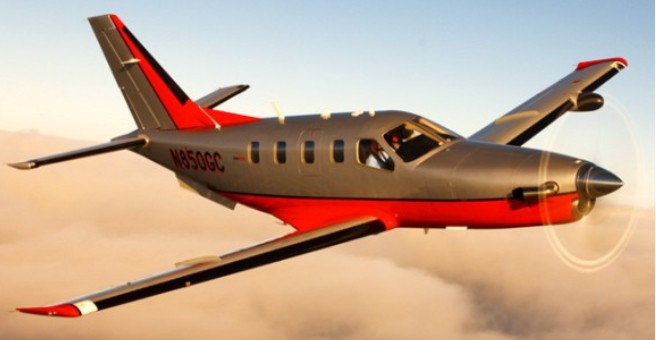
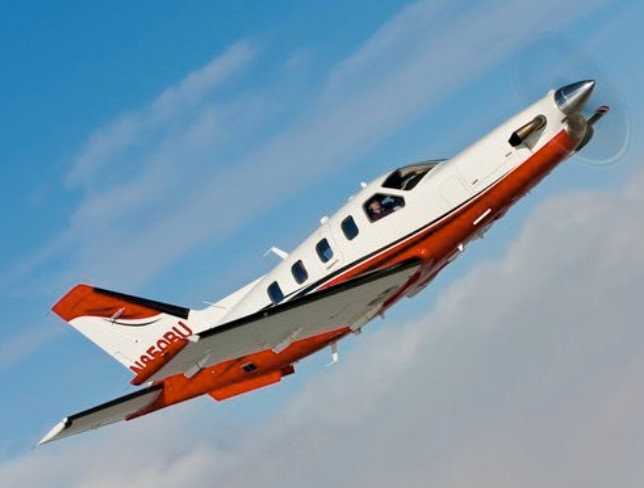
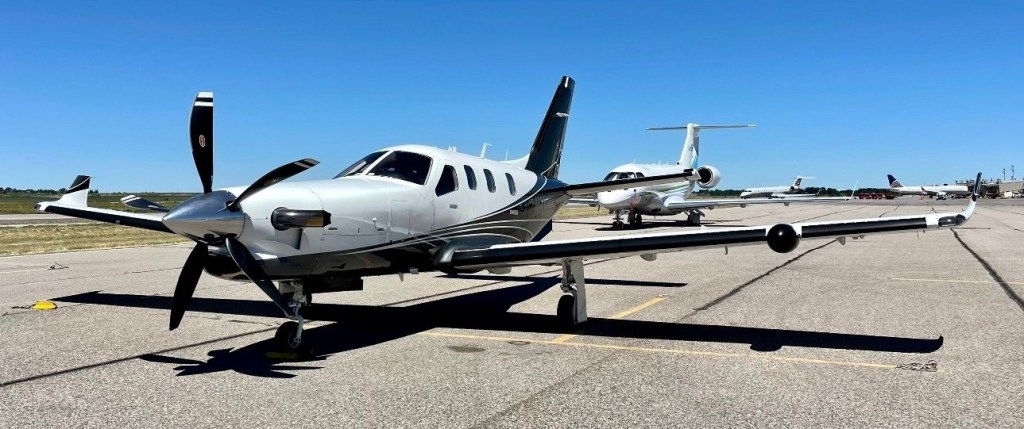
In December 2005, EADS Socata announced the TBM 850, an upgraded version of its single-engine turboprop TBM 700. After some 15 years of production, three different models and more than 300 airplanes, the 700 was replaced on the production line by the TBM 850. Featuring a 1,825-shp Pratt & Whitney PT6A-66D turboprop engine flat rated to 850 shp, at maximum takeoff weight, the 850 can climb to FL 260 in 15 minutes and to its service ceiling of FL 310 in 20 minutes. At FL 260 the 850’s cruise speed at maximum cruise power is 320 ktas. IFR cruising range is 1,365 nm. At FL 310 and ISA +20°C, the 850’s cruise speed is more than 55 knots faster than that of the TBM 700 C2.
Although described by Socata as the “Ultimate Personal Aircraft,” it offers performance numbers that virtually match-and in some cases even exceed-those of the twin-engine very light jets. The TBM 850 will have advantages including a significant reduction in direct operating costs, longer-range capability, a reduction in transition training requirements and potentially lower insurance premiums.
The TBM 850 airframe design employs fail-safe structural design techniques, including the use of multiple load paths and a crack-stopper band to maximize sub-system reliability/durability and structural life. The TBM 850 aircraft is essentially identical to that of the TBM 700 C2 model.
The TBM 850 airframe designers carefully chose a variety of aluminum alloys, high strength steel (including titanium) as well as advanced composite materials to maximize structural strength and durability while minimizing aircraft weight and both acquisition and life-cycle support costs. The majority of the TBM 850 structure is manufactured from conventional aluminum alloys. The wing spars, flap tracks and windshield frames are machined from solid bars of aluminum
The TBM 850 cabin is 14.96 ft long and 4 ft in height and width, and offers 6 leathers seats with adjustable backrests, folding armrest and a large folding executive table in the center.
Easy access to the cabin is possible through a large electric door, stairs and a ramp. Once inside, 7 rectangular windows with pull down sunshades protect privacy and a fully automated dual zone environmental control system adds comfortable.
Cabin lighting consists of dome lights, baggage compartment lights, access stair lighting, and individual reading lights at all seats. 14/24V power outlets and storage cabinets are fitted.
The TBM 850 carries six adults, climbs to the certified ceiling of 31,000 ft in as little as 20 minutes, range over 1,400 nm with NBAA IFR reserves, and can land in a 2,100 ft strip or a mountain runway.
Beyond performance, the TBM 850 introduced avionics upgrades and improved handling characteristics. The aircraft retained the same fuselage as the TBM 700 but featured a more modernized cockpit, including optional glass panel avionics.
Before its official introduction more than two-thirds of 2006’s production had already been sold. First delivery to a U.S. customer was slated to occur on February 23, 2006. Base price in 2006 of the TBM 850 was $2,576,930; with typical options and equipped for RVSM the airplane will list at $2,799,850, roughly $120,000 more than the TBM 700.
TBM 850s have an 1,825-shp PT6A-66D engines, derated to 850 shp. The derating yields better hot-and-high performance. It also lets the -66Ds produce those 850 horsepower right up to FL260-280, where maximum cruise speeds can reach 320 to 325 KTAS under optimal temperature conditions.
The PT6s used in TBMs do not have full authority digital engine controls (FADECs), so start procedures involve a few simple steps that the pilot must manually perform. However, both the -64s and -66s have torque limiters, so the chances of a ham-fisted pilot’s shoving the power lever past torque limits are minimized.
The TBM 850 was introduced with a new torque control. For takeoff and landing—using the TO flap defection—automatic torque limiting keeps torque below 110 percent. But once established in the climb you lift the flap switch up and over a detent, this disengages torque limiting, allowing the 121.4 percent torque redline, which gives the engine’s full, 850 horsepower.
Since 1998, TBMs have come with a large entry door that allows easier access to both the cabin and the aft baggage compartment; there’s another, smaller baggage compartment in the nose. When the door extends, a handrail and a set of stairs do too. To close the door, a fuselage-mounted push button activates an electric motor that starts the process. An optional pilot door ($89,350) is installed forward of the left wing root and next to the front left seat; of the 40 TBM 850s delivered in 2011, 17 ordered the pilot door. The landing gear can be extended at speeds up to 178 KIAS, the same extension speed as the first notch of flaps.
The TBM 850 was further improved with the TBM 850 G1000 featuring a G1000 Integrated Flight Deck, available on models from 2008 onwards, and fuel tank extension modification.
The TBM 850 Elite includes four cabin seats in a forward-facing configuration, which allowed for an increased cargo area aft of the cabin.
The TBM 850’s G1000 features a large 15-inch diagonal multifunction display (MFD) capable of showing a wide range of information. This includes a crew alerting system (CAS) that posts warnings and sounds aural alerts. Data entry for the MFD is via a keypad mounted forward of the center console. Aft of the power controls is the fuel selector, which automatically switches tanks to prevent fuel imbalances. Four leather seats in a club configuration are standard, although an optional ($9,990) toilet can be installed in place of the left center seat.

 All Aero