Following 1998 restructure, Soko Air Ltd created the Soko 2 two-seat very light monoplane (first flown November 1996).
Monoplane
Soko G.4 Super Galeb

Designed to replace the T-33 and the earlier G.2A Galeb in Jugoslavian Air Force service, this two-seat basic trainer/light strike aircraft has swept wings and all-swept tail surfaces, the tailplane having pronounced anhedral, and stepped tandem seating. Its performance is improved by the introduction of a 17.8kN Rolls-Royce Viper turbojet.
The first of two prototypes was flown on 17 July 1978 and the first of six pre-production aircraft on 17 December 1980. These and the first prototype were designated G-4 PPP, and had fixed tailplanes with inset elevators and no anhedral.
Production examples (and the second prototype) were designated G-4 and featured an all-moving anhedral tailplane and comprehensive avionics improvements. Armament includes a detachable underfuselage 23mm cannon pod, and a variety of stores on four underwing hardpoints. A Ferranti D282 gyro gunsight is standard equipment.
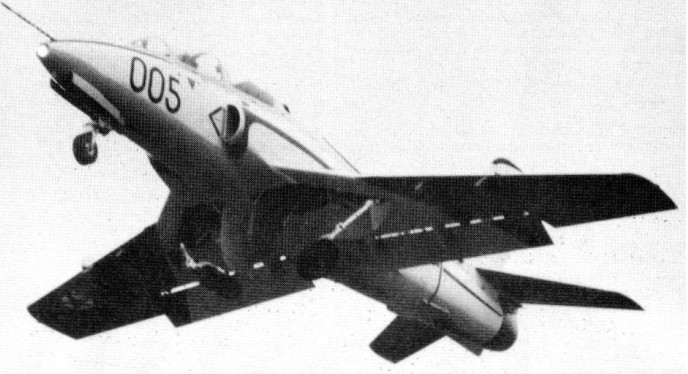
The G-4 was been ordered in large numbers for the Yugoslav air force. They were delivered to the Air Academy at Zemunik (later relocated to Udbina) and to advanced flying schools at Pula and Totograd. The academy fleet includes the ‘Letece Zvezde’ (Flying Stars) formation display team, whose aircraft are painted in a red, white and blue colour scheme.
Twelve G-4s, in two batches of six, were delivered to Myanmar in 1991 and 1992.
A ground-attack trainer, with advanced avionics, an upgraded nav/attack system, and wingtip missile launch rails was developed under the designation G-4M, but no prototype has flown. A similar single-seat derivative designated G-5 was also under development.
The UTVA factory was heavily bombarded in 1999 and certain parts of it were still off limits due to the unexploded ordnance in 2012. All five original lasta 95 prototypes were destroyed in the factory and the only existing Supergaleb G4MD prototype was lightly damaged.
G.4 Super Galeb
Engine: 1 x R-R Viper 632 Mk. 632
Installed thrust: 17.8 kN
Span: 9.88 m / 32 ft 5 in
Length: 11.86 m / 39 ft 11 in
Height: 4.28 m / 14 ft 1 in
Wing area: 19.5 sq.m / 209.90 sq ft
Empty wt: 3250 kg
MTOW: 6330 kg / 13955 lb
Loaded weight: 3250 kg / 7165 lb
Warload: 1350 kg
Max speed: 491 kt / 910 kph / 565 mph
Landing speed: 89 kt / 165 km/h
Cruising speed: 459 kt / 850 km/h
Initial ROC: 1800 m / min
Ceiling: 15,000 m / 49200 ft
T/O run: 600 m
Ldg run: 550 m
Fuel internal: 1720 lt
Combat radius lo-lo-lo: 300 km
Range w/max.payload: 600 km / 373 miles
Armament: 1 x 23 mm GSz-23L cannon
Hardpoints: 5
Crew: 2
Soko J-1 Jastreb
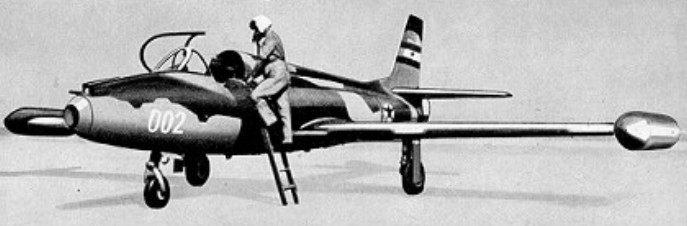
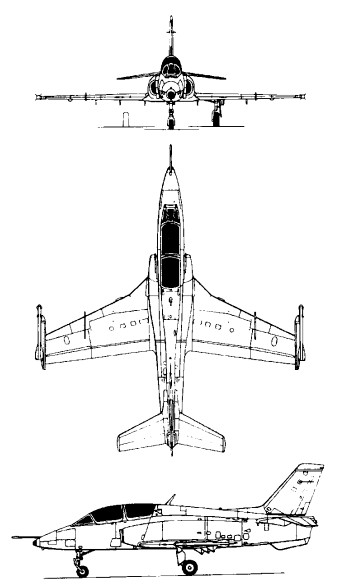
The Galeb was complemented by a generally similar but higher performance single-seat light attack/tactical reconnaissance version designated J-1 Jastreb (Hawk), which had a strengthened airframe and was powered by the improved Rolls-Royce Viper 531 turbojet. This was built as the J-1 attack and RJ-1 tactical reconnaissance aircraft for the Yugoslav air force, with corresponding J-1E and RJ-1 E versions for export. For operational conversion a two-seat TJ-1 was developed.
Production of all versions of the Jastreb ended during 1978.
J-1 Jastreb
Engine: 1 x Rolls-Royce “Viper” 531, 1361kg
Max take-off weight: 5100 kg / 11244 lb
Loaded weight: 2820 kg / 6217 lb
Wingspan: 11.68 m / 38 ft 4 in
Length: 10.88 m / 36 ft 8 in
Height: 3.64 m / 12 ft 11 in
Wing area: 19.43 sq.m / 209.14 sq ft
Max. speed: 820 km/h / 510 mph
Ceiling: 12000 m / 39350 ft
Range w/max.fuel: 1520 km / 945 miles
Armament: 3 x 12.7mm machine-guns
Hard points: 8
Crew: 1

Soko G.2 Galeb

The first of two prototype SOKO G2-A Galeb (Gull) two-seat trainer and light attack aircraft was flown during May 1961 and production was started in 1963.
Powered by a 2,500 lb / 1134kg thrust Rolls-Royce Viper 22-6 turbojet, the G2-A was the standard version for the Yugoslav air force. A G2-AE export variant became available from late 1974 and was built for Libya and Zambia. The basic G2 A version served with the Yugoslav Air Force and G 2A Es with Libya and Zambia.
Production of the G-2A Galeb ended in 1983.
G-2A Galeb
Engine: 1 x 2500 lbs.t. (1134 kgp) Bristol Siddeley Viper A.S.V.11 Mk. 22-6 turbojet
Span: 34ft 0.75 in (10.38 m)
Length: 33 ft 11.5 in (10.35 m)
Height: 3.3 m / 11 ft 10 in
Wing area: 209.14 sq.ft (19.43 sq.m)
Empty weight: 5485 lb (2488 kg)
Loaded weight: 7,438 lb. (3374 kg)
Max. speed: 505 mph (812 kph) at 20,340ft (6200 m)
Cruise: 334 mph (537 kph)
Initial climb: 4,500 fpm (22.86 m/sec)
Ceiling: 10000 m / 32800 ft
Range w/max.payload: 1250 km / 777 miles
Crew: 2

Soko P-2 Kraguj

First flown in 1966, a total of thirty piston-engined P-2 Kraguj were built at Mostar, Yugoslavia, as a counterinsurgency aircraft.
Engine: Lycoming IO-540, 340 hp
Soko 522
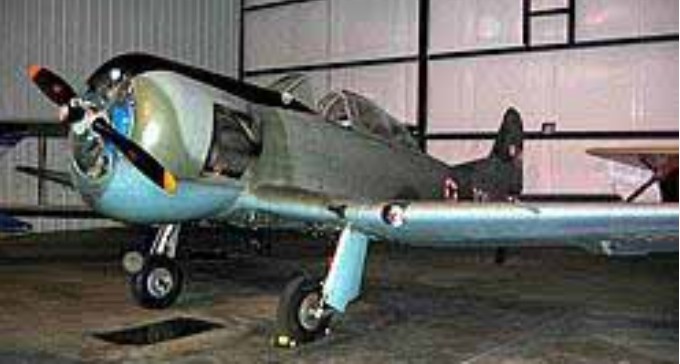
Ground attack aircraft
Dual Controls. 2 place tandem cockpit
Engine: Pratt & Whitney 600 hp
Cruise: 165 mph
Seats: 2
SPCA 40T
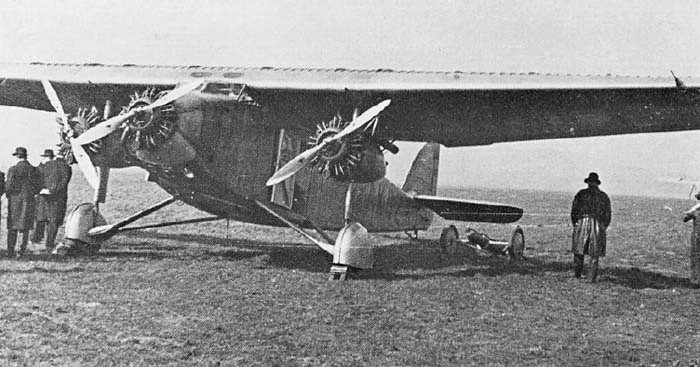
Type 40T was three-engined all-metal airliner which gave good service in early 1930s.
SPCA 30-M.4
A big multiseat landplane fighter with two fuselages and central nacelle.
SPCA E.5
Under Paulhan-Pillard license-built E.5 three-engined monoplane flying-boat and T3-BN.4 twin-engined twin float coast-defense floatplane.
Sud-Est SE 5000 Bardoudeur / SE 5003 Bardoudeur

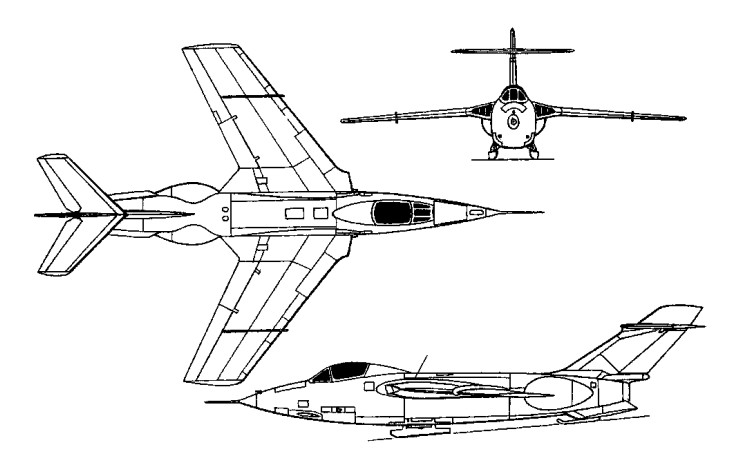
A private-venture single-seat tactical support fighter, the SE 5000 Baroudeur – a name derived from the Arabic word baroud for battle, and, in French Foreign Legion parlance, describing a pugnacious fighter – was designed by Wsiewolod J Jakimiuk. Of all-metal construction with a wing sweptback 36 degrees at quarter-chord, the Baroudeur represented an attempt to achieve a measure of independence from permanent runways. In place of a conventional undercarriage, it was provided with a combination of jettisonable take-off trolley and landing skids like the Me 163B Komet.
Sud Est SE 5000 Bardoudeur Article

The first prototype was powered by a 2,395kg SNECMA Atar 101B turbojet and flew on 12 May 1954.
Proposed armament comprised two 30mm or 37mm cannon. The Baroudeur was progressively re-engined with the Atar 101C and 101D-1, this last, rated at 2,600kg, powering a second prototype, which flew on 12 May 1954 and featured a three degree increase in wing anhedral.
Two months earlier, an official contract covered both SE 5000 prototypes as well as three SE 5003 pre-series aircraft. The first SE 5003 was flown in September 1955 with an 3,700kg Atar 101E-4, the second and third aircraft having a 2,850kg Atar 101D-3 and a 3,500kg Atar 101E-3 respectively. The Baroudeur eventually demonstrated the ability to take-off without recourse to the jettisonable trolley and the first SE 5003 was flown with flush-fitting auxiliary fuel tanks on the aft fuselage sides. The NATO nations elected to adopt a more conventional aircraft to meet the lightweight tactical fighter requirement and development of the Baroudeur was discontinued.
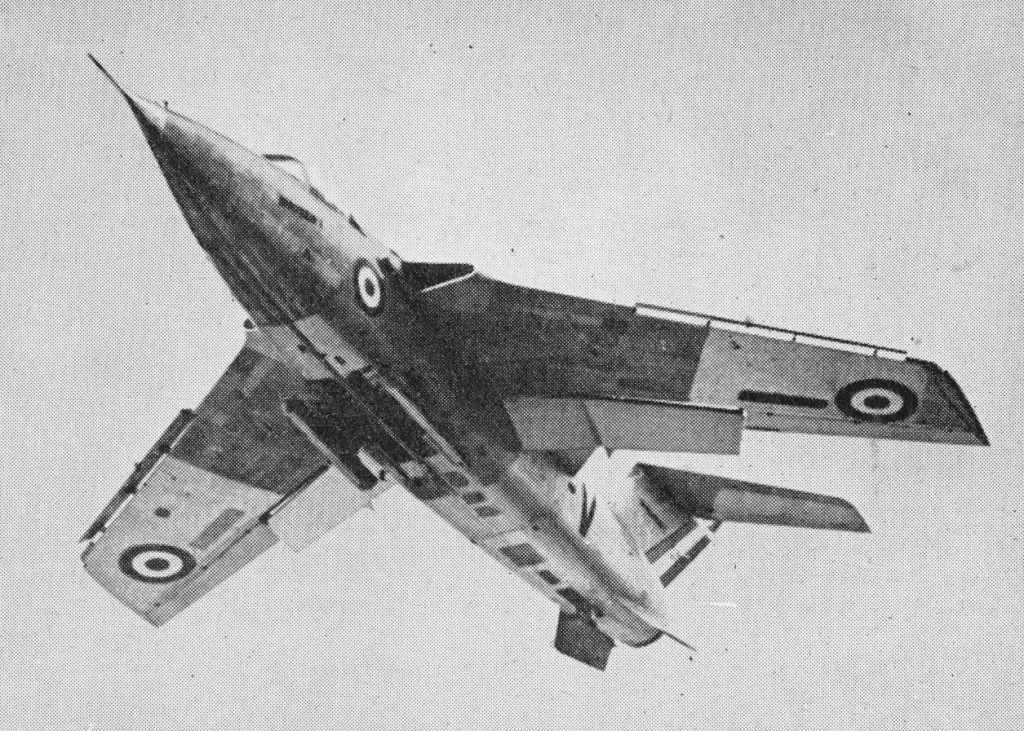
SE 5003
Engine: 1 x SNECMA “Atar” 101C, 27.5kN
Loaded weight: 7150 kg / 15763 lb
Empty weight: 4520 kg / 9965 lb
Wingspan: 10.0 m / 33 ft 10 in
Length: 13.66 m / 45 ft 10 in
Height: 3.25 m / 11 ft 8 in
Wing area: 25.30 sq.m / 272.33 sq ft
Max. speed: 1033 km/h / 642 mph
Crew: 1
 All Aero