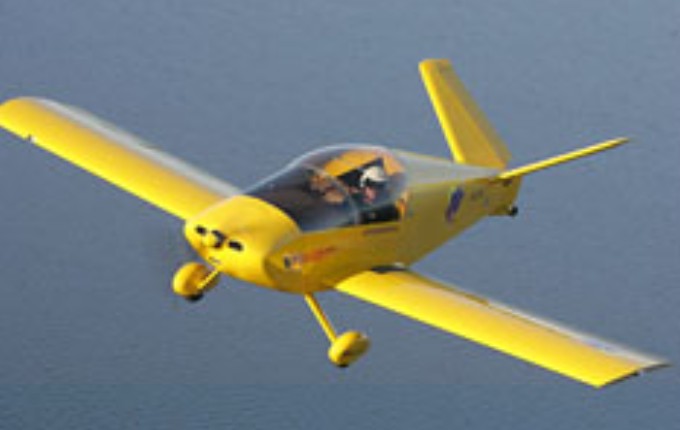
WAIEX (pronounced “Y-X”) is simply a Y-tail Sonex. Built purely for it’s good looks, the Waiex specifications and performance numbers are identical to those of the Sonex and, like the Sonex, is perfectly suited to the new US Sport Pilot/LSA regulations. The Waiex retains the same Sonex flight characteristics and high performance in all phases of flight, including aerobatics.
The Waiex is only available in kit form. The Waiex complete kit includes many pre-fabricated precision parts.
Engine: 80 hp 2180 AeroVee Length: 18′ 1″ Wing Span: 22′ Wing Area: 98.0 sq. ft. Tail Configuration: Y-tail Tail Height (Std Gear): 51″ Tail Height (Tri-Gear): 69″ Tail Width – with tail tips: 88″ Main Gear Width: 71″ (with wheel pants) Air Foil: 64-415 Primary Structure: 6061 aluminum Cockpit Width: 40 in. Fuel Capacity: 16 US Gal. Stall Speed (full flaps): 40 mph [64 km/h] Stall Speed (clean): 46 mph [74 km/h] Max Flap Extended Speed (Vfe): 100 mph [161 km/h] Maneuvering Speed: 125 mph [201 km/h] Never Exceed Speed (Vne): 171 kt / 197 mph / 317 km/h Empty Weight: 620 lbs. Range: 550 miles Cruise Speed @ Sea Level: 130 mph Cruise Speed @ 8000 ft (TAS): 150 mph Power Loading (GW/HP): 13.125 T.O. Distance: 400 ft Landing Distance: 500 ft Cockpit width: 40 in Utility Category Gross Weight: 1100 lbs Baggage (Max): 40 lbs Useful Load: 480 lbs Rate of Climb: 800-1000 fpm Load Factor: +4.4 / -2.2 G L/D: 11:1 CG Limits: 20-32% Wing Chord Aerobatic Category Gross Weight: 950 lbs Baggage (Max): 10 lbs Rate of Climb: 1000-1250 fpm Load Factor: +6.0 / -3 G CG Limits: 23-29% Wing Chord
Engine: 80 hp Jabiru Length: 18′ 1″ Wing Span: 22′ Wing Area: 98.0 sq. ft. Tail Configuration: Y-tail Tail Height (Std Gear): 51″ Tail Height (Tri-Gear): 69″ Tail Width – with tail tips: 88″ Main Gear Width: 71″ (with wheel pants) Air Foil: 64-415 Primary Structure: 6061 aluminum Cockpit Width: 40 in. Fuel Capacity: 16 US Gal. Stall Speed (full flaps): 40 mph [64 km/h] Stall Speed (clean): 46 mph [74 km/h] Max Flap Extended Speed (Vfe): 100 mph [161 km/h] Maneuvering Speed: 125 mph [201 km/h] Never Exceed Speed (Vne): 171 kt / 197 mph / 317 km/h Empty Weight: 620 lbs. Range: 550 miles Cruise Speed @ Sea Level: 130 mph Cruise Speed @ 8000 ft (TAS): 150 mph Power Loading (GW/HP): 13.125 T.O. Distance: 400 ft Landing Distance: 500 ft Cockpit width: 40 in Utility Category Gross Weight: 1100 lbs Baggage (Max): 40 lbs Useful Load: 480 lbs Rate of Climb: 800-1000 fpm Load Factor: +4.4 / -2.2 G L/D: 11:1 CG Limits: 20-32% Wing Chord Aerobatic Category Gross Weight: 950 lbs Baggage (Max): 10 lbs Rate of Climb: 1000-1250 fpm Load Factor: +6.0 / -3 G CG Limits: 23-29% Wing Chord
Engine: 120 hp Jabiru Length: 18′ 1″ Wing Span: 22′ Wing Area: 98.0 sq. ft. Tail Configuration: Y-tail Tail Height (Std Gear): 51″ Tail Height (Tri-Gear): 69″ Tail Width – with tail tips: 88″ Main Gear Width: 71″ (with wheel pants) Air Foil: 64-415 Primary Structure: 6061 aluminum Cockpit Width: 40 in. Fuel Capacity: 16 US Gal. Stall Speed (full flaps): 40 mph [64 km/h] Stall Speed (clean): 46 mph [74 km/h] Max Flap Extended Speed (Vfe): 100 mph [161 km/h] Maneuvering Speed: 125 mph [201 km/h] Never Exceed Speed (Vne): 171 kt / 197 mph / 317 km/h Empty Weight: 620 lbs. Range: 400 miles Cruise Speed @ Sea Level: 135 mph Cruise Speed @ 8000 ft (TAS): 170 mph Power Loading (GW/HP): 9.583 T.O. Distance: 250 ft Landing Distance: 500 ft Cockpit width: 40 in Utility Category Gross Weight: 1150 lbs Baggage (Max): 40 lbs Useful Load: 530 lbs Rate of Climb: 1200-1400 fpm Load Factor: +4.4 / -2.2 G L/D: 11:1 CG Limits: 20-32% Wing Chord Aerobatic Category Gross Weight: 950 lbs Baggage (Max): 10 lbs Rate of Climb: 2000+ fpm Load Factor: +6.0 / -3 G CG Limits: 23-29% Wing Chord
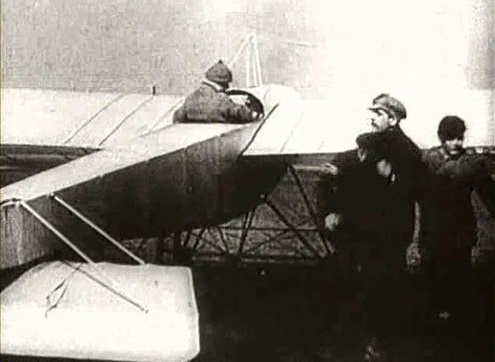
Built by the Illinois Aero Construction Company and designed as an automatically stable machine by William E. (Billy) Somerville.
The 1910 Somerville-Borel was mentioned in the 27 September 1913 Aero and Hydro as a 50hp Gnôme-powered monoplane being flown at Rensselaer IN. Advertised as “automatically stable,” it might have been a copy, rather than a rebuild as thought, of the Morane-Borel.
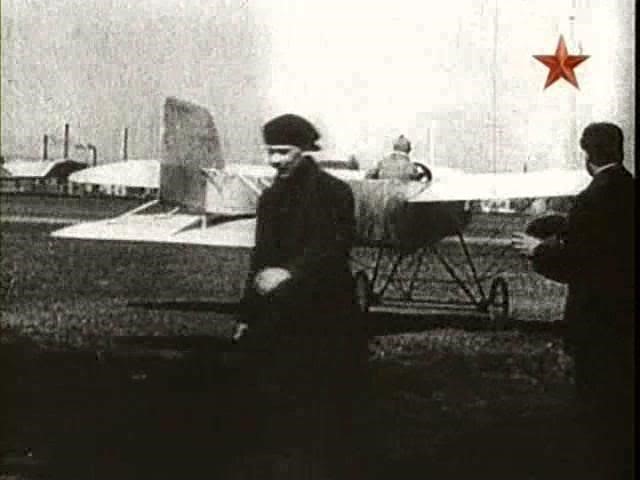
This Roger Sommer monoplane, a fabric covered fuselage version, was designed by Ingénieur Tonnet and flown circa 1911/1912. Léon Bathiat flew many variants of this fast monoplane in several competitions during 1910 and 1911, and in 1912 all interests were purchased by Bathiat who sold these monoplanes under the name Bathiat-Sanchez. Very similar to the Bathiat-Sanchez Type E, shown at the Paris Aero Salon of 1913.
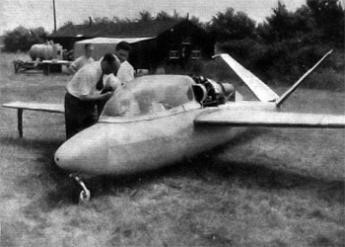
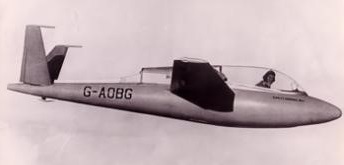
Funded by Nat Somers and designed by Hugh Kendall the Somers Kendal SK-1 was planned to win a Royal Aero Club prize for the design of a light aircraft, and to race, all with acrobatic abilities.
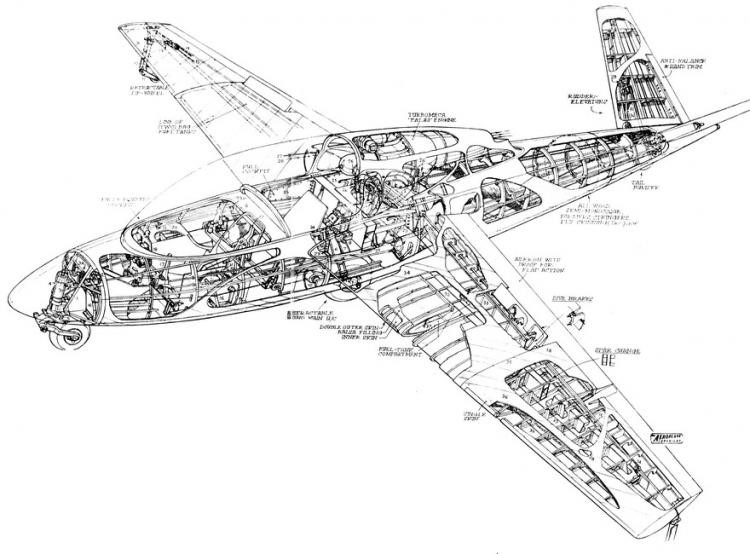
The tandem two-seat SK-1 is made of wood. The wings each hold a structural tank. Both tanks have a total capacity of 227 liters. The leading edge and wing tips are made of synthetic fiber impregnated fiberglass. The laminar wing has an aspect ratio of 8. The flaps extend over the entire span and contribute to the high lift by simultaneously operating down.
The only metal parts of the aircraft are the engine mounts, the landing gear and butterfly tail. The undercarriage front wheel was a Miles Gemini tail wheel, with a singe main wheel. Side outriggers fully retracted into the wing.
The butterfly tail is full flying and smaller trailing edge flaps act as servo trim tabs.
Built at Woodley, the first flight of the SK-1 was flown by Hugh Woodley Kendall, its designer, on Oct. 8, 1955, registered G-AOBC. It suffered a mid-air turbine failure on 11 July 1957.
The lack of market opportunity (either as aircraft race or as training aircraft for the RAF) terminated the project.
It went to the College of Aeronautics, Cranfield for use as a design example but departed in the mid-1960s.
It was found in 1974 under re-build at a farm near Dunstable.
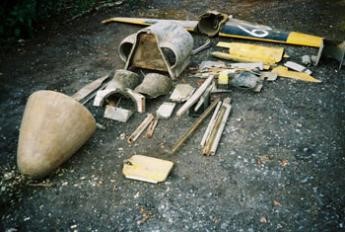
Circa 2010, the Somers-Kendall SK-1 was bought by Peter Bishop of Hamburg, Germany. The body is in good condition and it was transferred to Classic Aero Services in France for restoration.
Some other elements exist, but the wings and canopy were missing.
Engine: Turbomeca Palas, 160 Kp Span 22 ft 9 in / 6.93 m Wing area: 6.25 m² Length 20 ft 10 in / 6.35 m Height: 1.62 m Fuselage weight: 217 Kg Engine and accessories weight: 90 Kg Equipment and oil weight; 35 Kg Empty weight: 343 Kg Aerobatic mauw 1300 lb Fuel capacity: 228 lt Vne: 645 km / h Max speed: 332 mph / 535 Km / h (at sea level) Max cruise: 450 km / h Initial climb rate: 1850 ft / min Range: 1160 km at 20,000 ft at 190 kts Take-off (50 feet, 750 Kg): 685m Landing dist (50 feet to 650 Kg): 595m Load factor: + / – 6 g
The first flight of Soloy Corporation’s modified Cessna 208B Cara¬van, Pathfinder 21, was successfully made on 30 April at Olympia, United States. Flying the aircraft was Soloy’s chief test pilot Paul Haggland and on board for the milestone was crew chief Dan Wright and company president Joe Soloy. The Pathfinder 21 is equipped with two Pratt & Whitney Canada PT6D-114A engines powering a single propeller. The arrangement incorporates a Soloy Dual Pac gearbox assembly, which was certified by the FAA on 18 November 1997. The aircraft’s wings, struts and landing gear have been reinforced to enable its gross ramp weight to be increased to 5,675 kgs (12,500 lbs). The aircraft’s fuselage length has also been increased to almost 2 m more than Cessna’s design.
Engines: 2 x Pratt & Whitney Canada PT6D-114A Max ramp wt: 5,675 kgs (12,500 lbs)
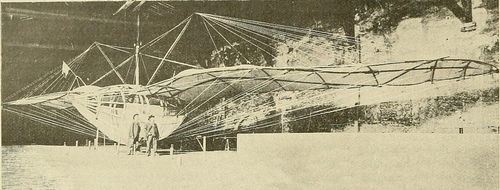
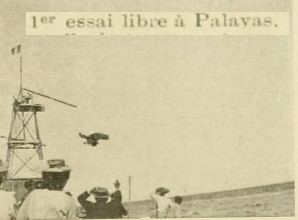
MM. Solirène, preparers at the Montpellier School of Pharmacy, undertook in 1903, the construction of the gigantic glider. Built during 1903/1904 by Solirène and son from Montpellier, the first was never flown due to financial problems.
A second, smaller glider was built.
Around Montpellier, on a 12 meters high pylon by the sea in Palavas, the glider was launched.
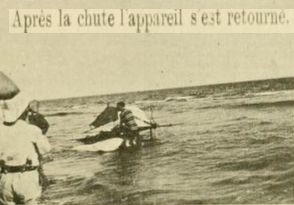
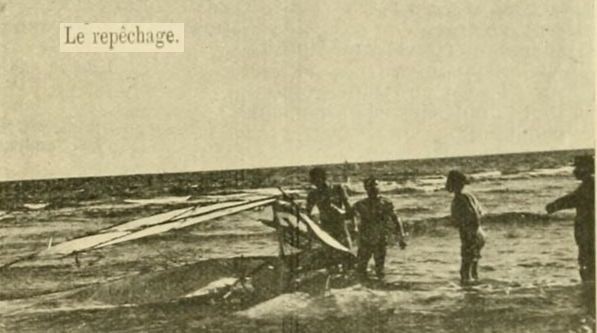
The airplane gets up a bit but the right side where all the wires of the right wing are attached breaks and the airman falls roughly to the side, the depth of the water (0.30m) not being sufficient to cushion the fall.
The damage was repaired, Mr. Solirène beginning on August 23, 1905.
The Solar One, made its public debut June 1979. 750 solar cells charge 24 accumulator cells to drive four electric motors linked together for a combined 4 hp. The aircraft, which looks like a conventional glider but with a pylon mounted power unit located on the nose immediately forward of the pilot, takes off at 20kts and has reached a maximum of 42kts.
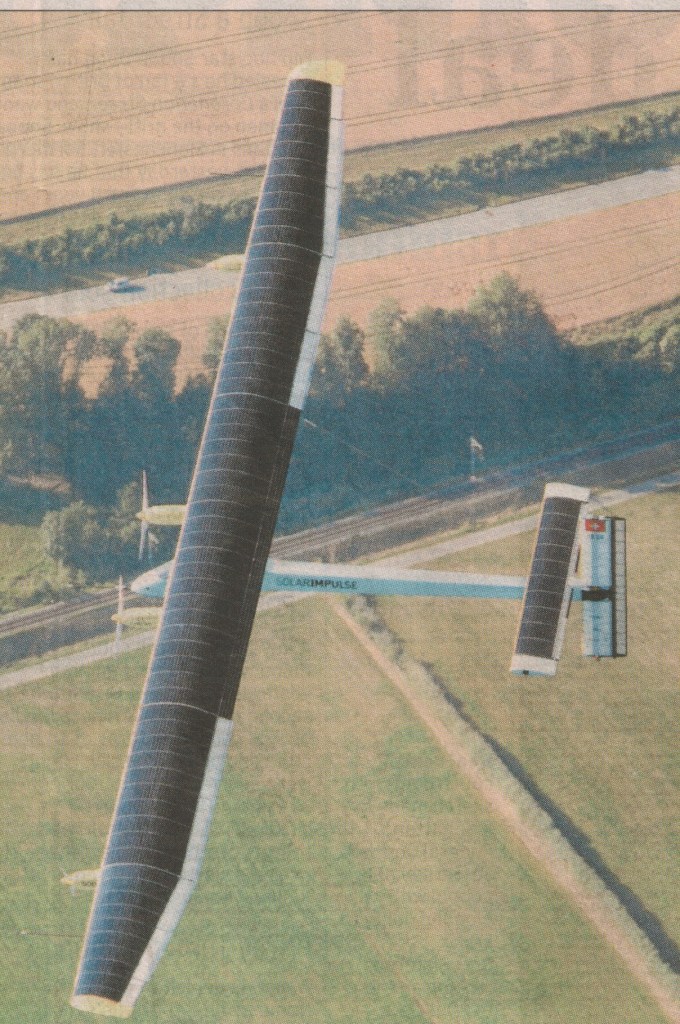
Solar Impulse is a Swiss long-range solar powered aircraft project developed at the École Polytechnique Fédérale de Lausanne. The project eventually hopes to achieve the first circumnavigation of the Earth by a piloted fixed-wing aircraft using only solar power. The project is led by Swiss psychiatrist and aeronaut Bertrand Piccard, who co-piloted the first balloon to circle the world non-stop, and Swiss businessman André Borschberg.
Piccard initiated the Solar Impulse project in 2003. By 2009, he had assembled a multi-disciplinary team of 50 specialists from six countries, assisted by about 100 outside advisers. The project is financed by a number of private companies. The four main partners are Deutsche Bank, Omega SA, Solvay, and Schindler. Other partners include Bayer MaterialScience, Altran, Swisscom and Swiss Re (Corporate Solutions). Other supporters include Clarins, Semper, Toyota, BKW and STG. The EPFL, the European Space Agency (ESA) and Dassault have provided additional technical expertise, while SunPower provided the aircraft’s photovoltaic cells.
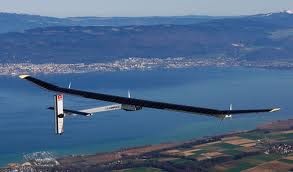
The first aircraft, bearing the Swiss aircraft registration code of HB-SIA, is a single-seater monoplane, capable of taking off under its own power, and intended to remain airborne up to 36 hours. This aircraft conducted its first test flight in December 2009, and first flew an entire diurnal solar cycle, including nearly nine hours of night flying, in a 26-hour flight on 7–8 July 2010. Piccard and Borschberg completed successful solar-powered flights from Switzerland to Spain and Morocco in 2012, and conducted a multi-stage flight across the USA in 2013.
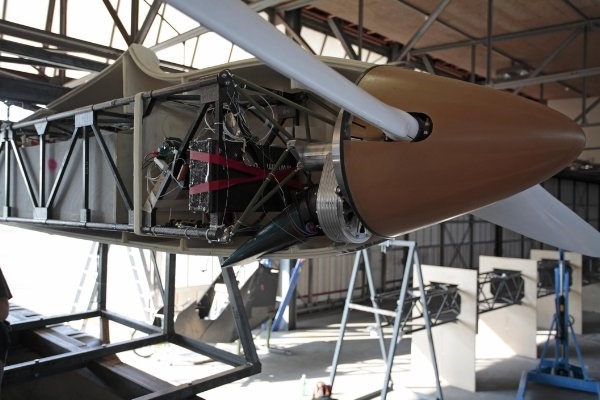
With a non-pressurized cockpit and a limited flight ceiling, the HB-SIA is primarily a demonstrator design. The plane has a similar wingspan to the Airbus A340 airliner. Under the wing are four nacelles, each with a set of lithium polymer batteries, a 10 hp (7.5 kW) motor and a twin-bladed propeller. To keep the wing as light as possible, a customised carbon fibre honeycomb sandwich structure is used.
Under the wing, 4 nacelles are fixed, each containing a 10-HP motor, a set of lithium polymer batteries and a management system that controls the maximum load and temperature limit. Thermal insulation is conceived to conserve the heat released by the batteries and thus allows them to function despite the -40 ° C encountered at 8500 meters. Each motor is provided with a reducer that limits the rotation of a propeller with two blades of 3.5 meters in diameter to 200-400 revolutions / minute.
11,628 photovoltaic cells on the upper wing surface and the horizontal stabilizer generate electricity during the day. 10,768 solar cells on the wing and 880 on the horizontal stabilizer. 200 cubic meters of photovoltaic cells and 12% of the total efficiency of the propulsion chain, the average power generated by the 4 engines of the plane, does not exceed 8 CV or 6 KW. These both propel the plane and charge its batteries to allow flight at night, theoretically enabling the single-seat plane to stay in the air indefinitely. The 11628 150 micron thick monocrystalline silicon cells have been selected for their quality of lightness, flexibility and efficiency. At 22%, its performance could have been even better, but its weight would then have been excessive, penalizing the aircraft during night flight. As this phase is the most critical, the main difficulty of the project is at the level of energy storage in polymer lithium batteries.
Reaching a 63.40 m wingspan for a fully equipped 1600 kg is a challenge never before experienced in aeronautics in terms of rigidity, lightness and flight control. Solar Impulse is built around a structure in composite materials made up of carbon fiber and honeycomb assembled in a sandwich. The upper surface of the wing is covered with a skin composed of encapsulated solar cells, and the underside of a high resistance flexible film. 120 carbon fiber ribs distributed all 50cm outline these two layers to give them their aerodynamic shape.
The aircraft’s major design constraint is the capacity of the lithium polymer batteries. Over an ideal 24-hour cycle, the motors will deliver a combined average of about 8 hp (6 kW), roughly the power used by the Wright brothers’ pioneering Flyer in 1903. As well as the charge stored in its batteries, the aircraft uses the potential energy of height gained during the day to power its night flights.
On 26 June 2009, the Solar Impulse was first presented to the public in Dübendorf, Switzerland. Following taxi testing, a short-hop test flight was made on 3 December 2009, piloted by Markus Scherdel. André Borschberg, co-leader of the project team, said of the flight:
"It was an unbelievable day. The airplane flew for about 350 metres (1,150 ft) and about 1 metre (3 ft 3 in) above the ground ... The aim was not to get high but to land on the same runway at a speed to test its controllability and get a first feeling of its flying characteristics ... the craft behaved just as the engineers had hoped. It is the end of the engineering phase and the start of the flight testing phase."
On 7 April 2010, the HB-SIA conducted an extended 87-minute test flight, piloted by Markus Scherdel. This flight reached an altitude of 1,200 m (3,937 ft). On 28 May 2010, the aircraft made its first flight powered entirely by solar energy, charging its batteries in flight.
On 8 July 2010, the HB-SIA achieved the world’s first manned 26-hour solar-powered flight. The airplane was flown by André Borschberg, and took off at 6:51 a.m. Central European Summer Time (UTC+2) on 7 July from an airfield in Payerne, Switzerland. It returned for a landing the following morning at 9:00 a.m. local time. During the flight, the plane reached a maximum altitude of 8,700 m (28,500 ft). At the time, the flight was the longest and highest ever flown by a manned solar-powered aircraft; these records were officially recognized by the Fédération Aéronautique Internationale (FAI) in October 2010.
On 13 May 2011, at approximately 21:30 local time, HB-SIA landed at Brussels Airport, after completing a 13-hour flight from its home base in Switzerland. It was the first international flight by the Solar Impulse, which flew at an average altitude of 6,000 ft (1,829 m) for a distance of 630 km (391 mi), with an average speed of 50 km/h (31 mph). The aircraft’s slow cruising speed required operating at a mid-altitude, allowing much faster air traffic to be routed around it. The aircraft was piloted by Andre Borschberg. The project’s other co-founder, Bertrand Piccard, said in an interview after the landing: “Our goal is to create a revolution in the minds of people…to promote solar energies – not necessarily a revolution in aviation.”
A second international flight to the Paris Air Show was attempted on 12 June 2011, but the plane turned back half-way and landed back in Brussels, where it had taken off, due to adverse weather conditions. In a second attempt on 14 June, André Borschberg successfully landed the aircraft at Paris’ Le Bourget Airport at 9:15 pm after a 16-hour flight.
On 5 June 2012, the Solar Impulse successfully completed its first intercontinental flight, flying a 19-hour trip from Madrid, Spain, to Rabat, Morocco. During the first leg of the flight from Payerne, Switzerland, to Madrid, the aircraft broke several further records for solar flight, including the longest solar-powered flight between pre-declared waypoints (1,099.3 km (683 mi)) and along a course (1,116 km (693 mi)).
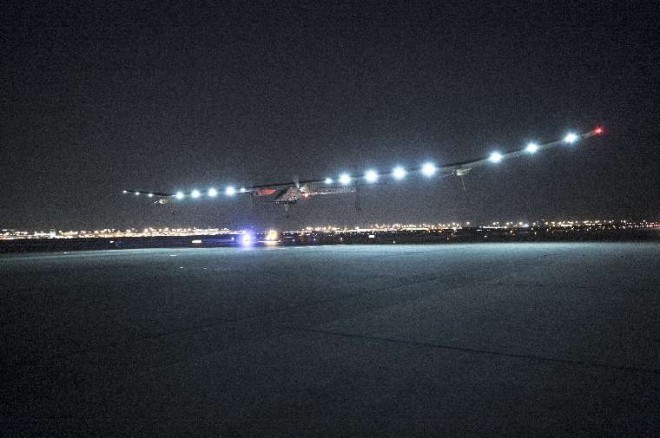
On 3 May 2013, the plane began its first cross-US flight with a journey from Moffett Field in Mountain View, California, to Phoenix Sky Harbor International Airport in Arizona. Successive legs of the flight took the Solar Impulse to Dallas-Fort Worth airport, Lambert–St. Louis International Airport and Washington Dulles International Airport; it finally concluded at New York’s John F. Kennedy International Airport on 6 July. Each flight leg took between 19 and 25 hours, with multi-day stops in each city between flights.
After the first leg to Phoenix, the aircraft completed the second leg of its trip on 23 May, landing at Dallas-Fort Worth International Airport. This flight, which covered 1,541 kilometres (958 mi), set several new world distance records in solar aviation. On 4 June, the plane landed in St. Louis, Missouri. It departed for Washington DC on 14 June, briefly stopping in Cincinnati, Ohio, to change pilots and avoid strong winds. On 16 June, the plane landed at Washington Dulles International Airport in Virginia. On 6 July 2013, following a lengthy layover in Washington, Solar Impulse completed its cross-country journey, landing successfully at New York City’s JFK International Airport at 11:09 p.m. EDT. The landing occurred three hours earlier than originally intended, because a planned flyby of the Statue of Liberty was cancelled due to severe damage to the aircraft’s left wing. The Solar Impulse was placed on public display at JFK after its landing.
Solar Impulse pilot André Borschberg completed the record-setting flight after flying more than 950 miles on solar power alone. Borschberg landed in Dallas with his batteries at about 60 percent, and used that juice to begin the third leg of his journey. As the headwind exceeded the speed of the airplane at times, Borschberg traveled backward relative to the ground. At one point, a little less than three hours before he actually landed, he was only 20 miles or so from Dallas/Fort Worth International Airport and found himself lined up with runway 13L, where he planned to touchdown. Landing on 13L required closing the runway, and there was simply too much commercial traffic. It was after midnight before air traffic control allowed him to land, so he spent the intervening hours in a holding pattern above the runway. As he descended, the windspeed increased and he encountered a 25- to 30-knot wind at 2,000 to 3,000 feet. This meant Borschberg had to be careful not to turn downwind, because he would be blown too far north and would have to make another approach to land, covering the ground at less than five miles per hour with the headwind. The sideways translation eventually brought him over the top of runway 13L, where he touched down 23 May 2013, at 1:08 a.m. local time, 18 hours and 21 minutes after departing Phoenix.
The flight to Dallas was fairly smooth, with just a few sections of turbulence. Flying 832 nautical miles (957 miles) broke the team’s own distance record for a solar powered airplane (and for any electric airplane). It also provided valuable experience and expand the Solar Impulse team’s flight techniques for future flights — including their planned circumnavigation of the world in a larger aircraft in 2015.
Construction of the second Solar Impulse aircraft, carrying the Swiss registration HB-SIB, started in 2011. The wingspan of HB-SIB will be 80.0 m (262.5 ft), slightly wider than an Airbus A380, the world’s largest passenger airliner, but unlike the 500-ton A380, the carbon-fibre Solar Impulse will weigh little more than an average automobile. It will feature a larger, pressurized cockpit and advanced avionics to allow for transcontinental and trans-oceanic flights. Supplemental oxygen and various other environmental support systems will allow the pilot to cruise at an altitude of 12,000 metres (39,000 ft).
Completion was initially planned for 2013, with a circumnavigation of the globe in 20–25 days in 2014. However, following a structural failure of the main spar during static tests in July 2012, a more likely date for the circumnavigation is 2015. The flight would circle the world in the northern hemisphere, near the equator. Five stops are planned to allow changes of pilots. Each leg of the flight will last three to four days, limited by the physiology of each pilot. Once improved battery efficiency makes it possible to reduce the aircraft’s weight, a two-seater is envisaged to make a non-stop circumnavigation.
Solar Impulse II
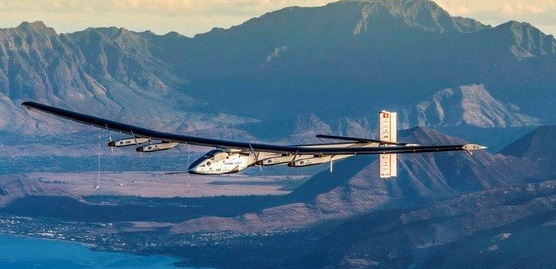
The Solar Impulse II landed in Hawaii on July 3, 2015, after breaking a five-day flight record and nights (117 hours and 52 minutes) in the air and about 8900 km from Japan. However, the long journey took its toll and the plane suffered damage to the battery due to overheating.
It remained grounded at the airport Kalaeloa during the northern hemisphere winter. Between February and mid-April, 13 test flights were conducted to ensure the proper functioning of the cooling system for the newly integrated battery.
Specifications – HB-SIA Powerplant: 4 × electric motors, powered by 4 x 21 kWh lithium-ion batteries (450 kg), 7.5 kW (10 HP) each Length: 21.85 m (71.7 ft) Wingspan: 63.4 m (208 ft) Height: 6.40 m (21.0 ft) Wing area: 200 sq.m (2,200 sq ft) Loaded weight: 1,600 kg (3,500 lb) Max. takeoff weight: 2,000 kg (4,400 lb) Take-off speed: 35 kilometres per hour (22 mph) Cruise speed: 70 kilometres per hour (43 mph) Stall: 35 km / h Endurance: 36 hours (projected) Service ceiling: 8,500 m (27,900 ft) Maximum altitude of 12,000 metres (39,000 ft) Crew: 1
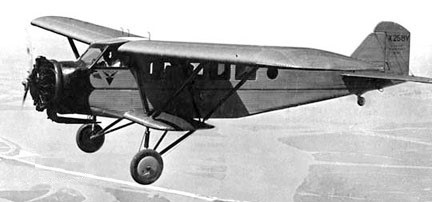
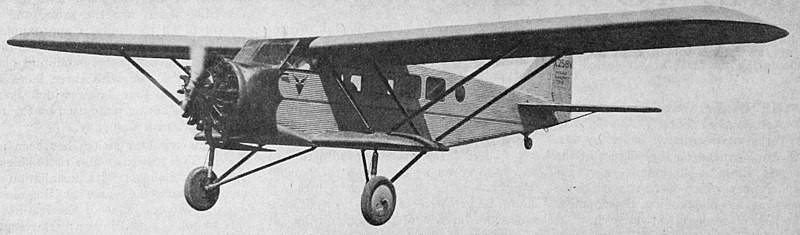
Designed by William L. Lewis, the 1930 Solar MS-1 (ATC 2-252) was a sesquiplane all-metal eight-passenger transport aircraft evolution of Prudden SE-1.
Its wings were braced to each other with warren truss-style struts. The lower stub wings carried the well separated legs of the fixed undercarriage. The fuselage was of rectangular cross-section and featured a fully enclosed flight deck and passenger cabin. The tail was of conventional design with strut-braced stabilizers and carrying a fixed tailwheel. Construction was of metal throughout with corrugated skins, and was powered by a single 420 hp (310 kW) Pratt & Whitney Wasp radial engine in the nose.
First flying on 21 January 1930, piloted by Doug Kelly, the one built was registered NX/NC258V. Kelly described it as “one of the finest closed planes I have ever flown”, and Charles Lindbergh also praised the MS-1 when he flew it a few days later. Despite this, the airlines did not order the type, although Northwest Airways and ten other airlines considered, and rejected buying examples due to the effect that the onset of the Great Depression was having on their traffic volumes.
A 6,000 mi (9,700 km) record flight from Los Angeles, California to Tokyo was planned, but never happened. The high point was a 7,000 mi (11,000 km) transcontinental flight over 25 states that the president of Solar took with his entire family, including his wife and three children, aged 9, 7 and 3, which attracted considerable interest from the media who dubbed it the “flying nursery”. A purchasing agent for a major airline then promised a substantial order, but dropped dead of a heart attack the day the order was to be signed, and his replacement called off the deal.
Solar made the prototype available for charter flights for a while, but in 1931 sold it to an operator in Mexico who used it to transport coffee beans. On the Mexican register as XB-AFK, the MS-1 was destroyed in a crash in 1936.
Solar would never build another aircraft after the MS-1, turning to saucepans to survive the depression, and later stainless-steel exhaust shrouds.
Solar MS-1 Powerplant: 1 × Pratt & Whitney R-1340 Wasp, 420 hp (310 kW) Propeller: 2-bladed fixed pitch metal Upper wingspan: 56 ft 6 in (17.22 m) Upper wing chord: 100 in (2.54 m) Upper wing dihedral: 2° Lower wingspan: 18 ft 0 in (5.49 m) Lower wing chord: 70 in (1.78 m) Lower wing dihedral: 0° Wing area: 496.5 sq ft (46.13 sq.m) Airfoil: Göttingen 398 Length: 35 ft 11 in (10.95 m) Height: 10 ft 2 in (3.10 m) Empty weight: 3,650 lb (1,656 kg) Gross weight: 7,000 lb (3,175 kg) Fuel capacity: 135 US gal (112 imp gal; 510 l) Oil Capacity: 8 US gal (30 l; 6.7 imp gal) Maximum speed: 130 mph (210 km/h, 110 kn) Cruise speed: 115 mph (185 km/h, 100 kn) Landing speed: 60 mph (52 kn; 97 km/h) Service ceiling: 15,000 ft (4,600 m) Absolute ceiling: 18,400 ft (5,600 m) Rate of climb: 750 ft/min (3.8 m/s) initial Wing loading: 14 lb/sq ft (68 kg/sq.m) Power/mass: 16.4 lb/hp (10.0 kg/kW) Crew: Two Capacity: Eight passengers Undercarriage track: 9 ft 6 in (2.90 m)
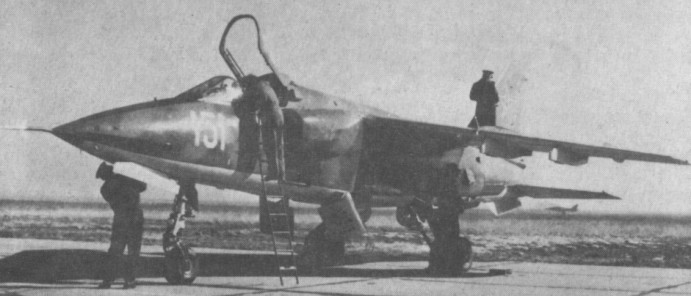
Built in Yugoslavia as the Soko Orao (eagle) and in Romania as the CNIAR (Centrul National al industriei Aeronautica Române) IAR-93, the aircraft was designed by a joint team and developed under a programme known as YuRom, the name indicating the partner countries. Prototypes assembled by Soko and CNIAR made their first flights within minutes of each other on 31 October 1974, and these were followed by a pair of two-seat variants, both of which flew on 29 January 1977. During 1978, deliveries began of a pre-production batch of 15 to each country, after which the initial series model, known in Romania as the IAR-93A, entered service. This was fitted with a pair of non-afterburning Viper Mk 632 engines, but after a short run of single and two-seat aircraft to this standard (20 of them for Romania) manufacture began of the definitive IAR-93B which features a licence-built afterburner and structural changes such as integral wing fuel tanks and a honeycomb rudder and tailplane.
The uprated Orao 2/IAR-93B flew in Jugoslavia in October 1983, and in Romania in 1985. The principal difference from the earlier Orao 1/IAR-93A is the introduction of a licence-built Viper 633 with reheat, giving improved performance and weapons carrying capability. The Orao 2 has a Thomson-CSF headup display, and four underwing and one underfuselage stores pylons. Optical and infrared reconnaissance pods are available for carriage on the centreline station.
Romania required 165 IAR-93Bs, including some two-seat models, with similar operational capability to the main version, for advanced training and weapons instruction. Yugoslav plans were believed to be similar. The Orao/lAR-93 is limited to the close support role by its lack of radar or inertial navigation, but low-level interception is a secondary duty.
The J-22 Orao/IAR-93 attack aircraft was out of production before all deliveries made, due to regional conflict.
Orao 2/IAR-93B Engine: 2 x Rolls-Royce Viper Mk 633-47 afterburning turbojets Installed thrust (dry / reheat): 37.7 / 44.8 kN, 2268-kg (5,000-1b) Span: 9.62 m (31 ft 6.75 in) Length excluding probe: 13.96 m (45 ft 9.5 in) Height 4.45 m (14 ft 7.25 in) Wing area: 26 sq.m (279.86 sq ft) Empty equipped wt: 5900 kg (13,007 lb) MTOW: 10,097 kg (22,260 lb) Warload: 2800 kg Max speed: 1160 kph (721 mph) at sea level Initial ROC: 5.5 min to 13,000 m / 3960 m (12,990 ft) per min Service ceiling 12500 m (41,010 ft) T/O run: 690 m Ldg run: 1050 m Combat radius hi-lo-hi: 360 km Fuel internal: 2600 lt Air refuel: No Armament: two 23-mm GSh-231, twin-barrel cannon (with 200 rpg) in front fuselage four wing pylons and one centreline pylon carrying five x 250-kg (551-1b)
SOKO J 22 Orao 2 Engine: 2 x Rolls Royce Viper 633 41, 17462 N Length: 45.932 ft / 14.0 m Height: 14.764 ft / 4.5 m Wingspan: 31.496 ft / 9.6 m Wing area: 279.864 sq.ft / 26.0 sq.m Max take off weight: 24806.3 lb / 11250.0 kg Weight empty: 12678.8 lb / 5750.0 kg Max. payload weight: 12127.5 lb / 5500.0 kg Max. speed: 626 kts / 1160 km/h Landing speed: 148 kts / 274 km/h Cruising speed: 394 kts / 730 km/h Initial climb rate: 13779.53 ft/min / 70.0 m/s Service ceiling: 44291 ft / 13500 m Wing loading: 88.77 lb/sq.ft / 433.0 kg/sq.m Range: 572 nm / 1060 km Crew: 1 Armament: 2800kg ext 5pods







 All Aero