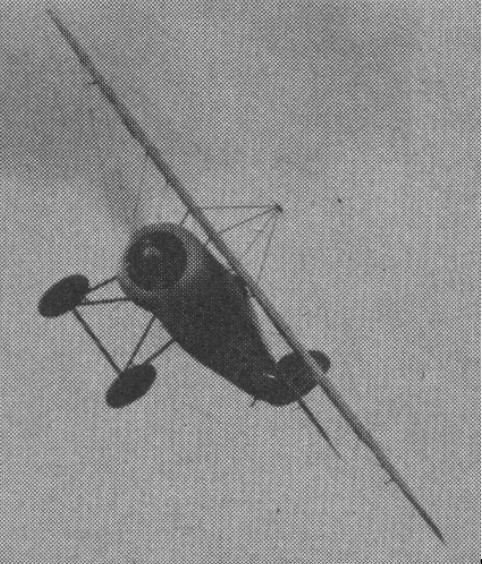
Southampton University MPA / SUMPAC

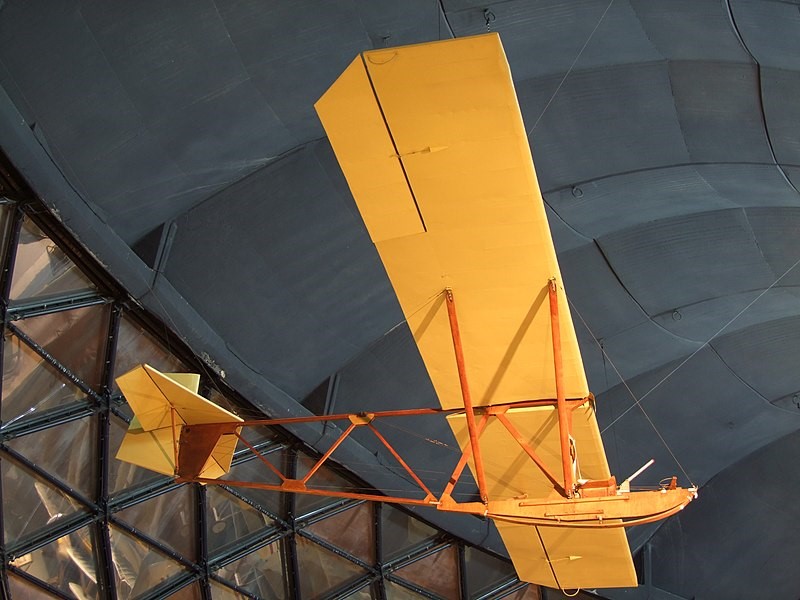
Built specially to compete for the Kremer prize of £5,000 for man-powered flight, design started in July 1960 and actual construction in January 1961. It was finished in September 1961.

First flown on 9 November 1961 at Lasham, the first flight was about 50 yds at a height of about six feet over level ground and in still air. A single seat, fixed wing monoplane with the propellor driven by pedalling.

By 1962 SUMPAC was flying up to 650 yds and executing turns.

In 1964 it was modified in various details and given a different belt drive mechanism. In flight test it was damaged after a stall at about 30 ft.

The machine was donated to the Shuttleworth Trust where it was displayed at Old Warden. It was allocated BAPC.7.

Wingspan: 80.00 ft
Wing area: 300 sq.ft
Aspect ratio: 21:1
Empty weight: 128 sq.ft
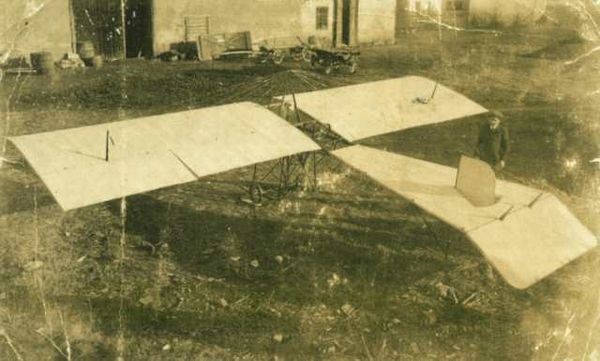
Šoštarko Monoplane

1911-12 monoplane of Austro-Hungarian/Croatian origin built by Slavoljub Šoštarko in Zagreb (Agram), Croatia – then part of the Austro-Hungarian Empire. Šoštarko was probably an automobile racer who crossed over to airplane design and flying, but when his monoplane was exhibited in Zagreb in 1912, it was destroyed during his very first attempt at flight. There is no evidence that Šoštarko flew after this. As one of a few others who were experimenting right next to the sheds of Mihajlo Mercep at the gates of Zagreb, to be expected, the Šoštarko monoplane shows some resemblance to the Mercep Rusjan-Novak monoplanes; i.e. wing-posts, tail assembly with rudder running through the stabilizer, etc.

Šoštarić Vrabac / UTAV Vrabac

Utva Vrabac A, on display at the Aviation Museum – Belgrade

The Soštarić Vrabac, (Serbian: Врабац / Vrabac – sparrow), was a primary glider for basic pilot training designed and built in the Kingdom of Yugoslavia.

Of mixed composition, mostly wood and canvas, with undercarriage skis for landing, the Vrabac was designed by engineer Ivo Šoštarić in 1939, inspired by the success of the Zögling, a German primary glider. Unlike the Zögling, the Vrabac was not wire-braced, lacking a kingpost and using struts to brace the wings to the lower fuselage.

During tests at Vršac the Vrabac showed far better flight characteristics than not only its German exemplar, but also from the Polish Kocjan Wrona.

Production of 15 aircraft in two versions – A manufactured in the factory at Pančevo, and B began in 1939, as the first serially built glider in Serbia. Production continued after World War II and more than 150 were made. Due to the simple design of this glider, it was also made in local aeroclubs’ workshops during the winter, so that they could be used for training during the summer.

Vrabac A
Wingspan: 10 m (32 ft 10 in)
Wing area: 15 m2 (160 sq ft)
Aspect ratio: 11.7
Length: 6.03 m (19 ft 9 in)
Height: 2.15 m (7 ft 1 in)
Empty weight: 90 kg (198 lb)
Gross weight: 170 kg (375 lb)
Stall speed: 42.5 km/h (26.4 mph, 22.9 kn)
Never exceed speed: 70 km/h (43 mph, 38 kn)
Rate of sink: 1.17 m/s (230 ft/min) at a speed of 47.1 km/h (25 kn)

Sorrell Bathtub

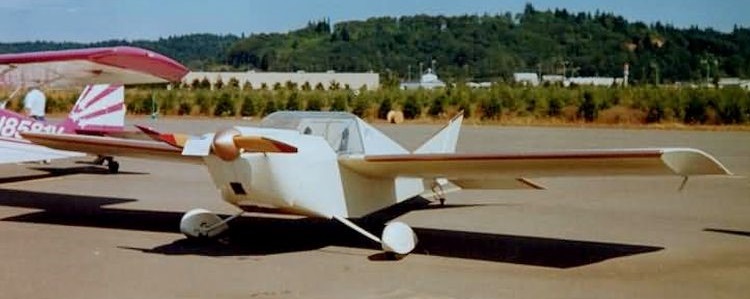
Built by Otto Sorrell circa 1950, the Sorrell Bathtub was a single-place, open cockpit, high wing monoplane, inspired by 1924 Dormoy Bathtub.

An “ultra-ultralight” powered by a geared-down chain-saw motor and tricycle gear, it was further developed by Michael Kimbrel, of Oakville WA, who in 1978 flew a tail-wheel version with a VW engine, then promptly sold 400 sets of drawings to home-builders.

Sorenson Special

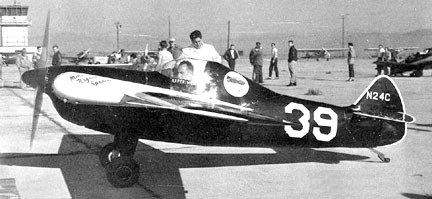
Sorenson Special Deer Fly N24C

In 1948 Keith Sorenson built two midget racers:

Deer Fly N24C
Piloted by K Sorenson and Mike Argander
Competed successfully under various owners until it crashed at Tampa FL in 1966, killing pilot Bill Stead.

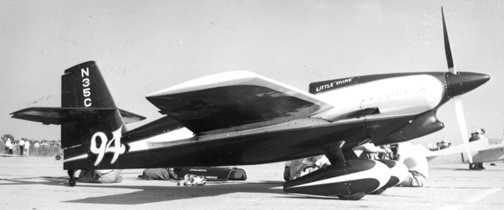
Sorenson Special Little Mike N35C

Little Mike N35C
Modified tail
Modified for 1949 competition as Foss Jinny

Sorenson Special
Engine: Continental C-85, 85hp
Wingspan: 18’6″
Length: 15’6″
Seats: 1

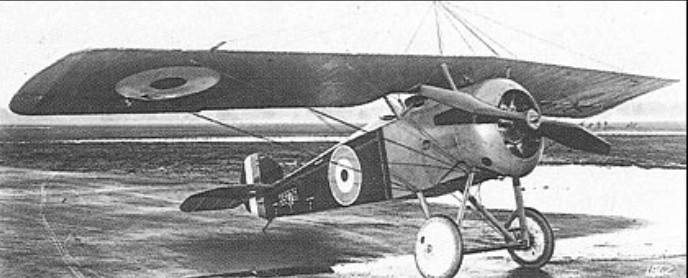
Sopwith Swallow

Utilising a Pup fuselage mated with a parasol wing, the Swallow single-seat fighter monoplane was powered by a 110hp Le Rhone 9J nine-cylinder rotary engine and carried the standard armament of twin synchronised 7.7mm machine guns. Flown for the first time in September 1918, the Swallow was delivered to Martlesham Heath for official trials on 29 October 1918, remaining there until May 1919, the trials having been delayed by fuel system problems. The performance of the Swallow as revealed at Martlesham did not warrant further development, and the prototype was scrapped.

Max take-off weight: 644 kg / 1420 lb
Empty weight: 403 kg / 888 lb
Wingspan: 8.79 m / 29 ft 10 in
Length: 5.72 m / 19 ft 9 in
Height: 3.10 m / 10 ft 2 in
Wing area: 14.86 sq.m / 159.95 sq ft
Max. speed: 182 km/h / 113 mph

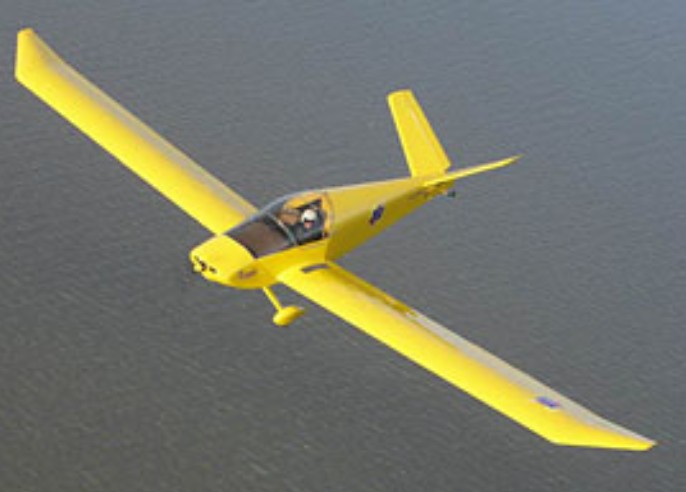
Sonex Aircraft Xenos

The XENOS follows in the Monnett tradition of bringing the cost of motor gliding to a highly affordable level. Using the same cost-effective and easy-to-build construction techniques and materials of the Sonex and Waiex, the Xenos offers another Reality Check for the soaring world. The Xenos comes standard with utility wing tips that can be easily removed to fit inside a 40 foot hangar, and can be quickly interchanged with optional aerobatic wingtips. The Xenos can either be flown as a Sport Pilot/LSA, or it can be flown by pilots that hold a glider rating with a self-launch glider endorsement. The Xenos can be flown as a powered aircraft, a self-launched glider that soars with the engine off, or it can motor-soar over great distances with incredible fuel economy.

The Xenos can either be flown as a Sport Pilot/LSA, or it can be flown by pilots that hold a glider rating with a self-launch glider endorsement. The Xenos can be flown as a powered aircraft, a self-launched glider that soars with the engine off, or it can motor-soar over great distances for fuel economy.

The Xenos is only available in kit form. The Xenos complete kit includes many pre-fabricated precision parts. Landing gear can be nose or tail wheel. Dual stick controls are standard.

Engine: 80 hp 2180 AeroVee
Length: 19′ 9″
Wing Span (Utility): 45′ 8″
Wing Span (Aerobatic, solo): 39′ 4″
Wing Area (Utility): 158 sq ft
Wing Area (Aerobatic, solo): 144 sq ft
Tail Configuration: Y-tail
Tail Height: 59″
Tail Width–with tail tips: 102″
Main Gear Width: 71″ (with wheel pants)
Primary Structure: 6061 Aluminum
Cockpit Width: 40 in. More Info
Fuel Capacity: 16 US Gal
Stall Speed (clean): 44 mph [71 km/h]
Maneuvering Speed: 115 mph [185 km/h]
Never Exceed Speed (Vne): 150 mph [241 km/h]
Empty Weight: 750 lbs
Baggage (Max): 40 lbs
Range: 400 miles
Cruise Speed @ Sea Level: 100 mph
Cruise Speed @ 8000 ft (TAS): 120 mph
Power Loading: 15.938
T.O. Distance: 300 ft
Landing Distance: 300 ft
Cockpit width: 40 in
Utility
Gross Weight: 1275 lbs
Useful Load: 525 lbs
Rate of Climb: 800-1000 fpm
Load Factor: +4.4 / -2.2 G
L/D: 24:1
CG Limits: 25-36% Wing Chord
Aerobatic
Gross Weight: 1050 lbs
Rate of Climb: 1000-1250 fpm
Load Factor: +6.0 / -3.0 G
CG Limits: 27-32% Wing Chord

Engine: 120 hp Jabiru
Length: 19′ 9″
Wing Span (Utility): 45′ 8″
Wing Span (Aerobatic, solo): 39′ 4″
Wing Area (Utility): 158 sq ft
Wing Area (Aerobatic, solo): 144 sq ft
Tail Configuration: Y-tail
Tail Height: 59″
Tail Width–with tail tips: 102″
Main Gear Width: 71″ (with wheel pants)
Primary Structure: 6061 Aluminum
Cockpit Width: 40 in. More Info
Fuel Capacity: 16 US Gal
Stall Speed (clean): 44 mph [71 km/h]
Maneuvering Speed: 115 mph [185 km/h]
Never Exceed Speed (Vne): 150 mph [241 km/h]
Empty Weight: 760 lbs
Baggage (Max): 40 lbs
Range: 350 miles
Cruise Speed @ Sea Level: 120 mph
Cruise Speed @ 8000 ft (TAS): 140 mph
Power Loading: 10.625
T.O. Distance: 250 ft
Landing Distance: 300 ft
Cockpit width: 40 in
Utility
Gross Weight: 1275 lbs
Useful Load: 515 lbs
Rate of Climb: 1200-1400 fpm
Load Factor: +4.4 / -2.2 G
L/D: 24:1
CG Limits: 25-36% Wing Chord
Aerobatic
Gross Weight: 1050 lbs
Rate of Climb: 2000+ fpm
Load Factor: +6.0 / -3.0 G
CG Limits: 27-32% Wing Chord
VNE: 167 kt / 192 mph / 309 kmh