The Spezio DAL-1 Tuholer stems from a design by Tony Spezio in the late 1950s and is said to have been based loosely on the Howard Ike racer of the 1930s. As the Tuholer name implies, it is a two-seat, open cockpit, strut-braced, low-wing taildragger. The original was built using parts collected from various surplus and wrecked sources, and with no hangar space the wings were designed to fold. The first flight of the type occurred on 2 May 1961.
Spezio Tuholer N9110R
Marketed plans for home-builders. Mechanix Illustrated Golden Hammer Award c.1961 for design.
N140P First plans built DAL-1, builder Ken Patsch, August 1987
The fuselage and tail structure are welded steel tubing. Its large center section, supporting the folding wing mechanism is fashioned from a trio of one-inch .049 tubing with end plates, fittings and large bolts that allow the wings to fold for storage. The wings are wood with fabric cover.
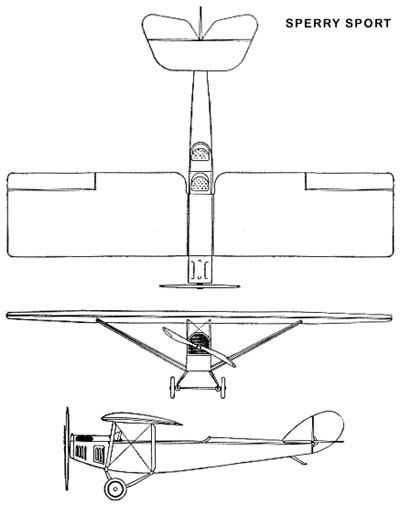
The 1922 Hi-Lift was an experiment by Sperry in modifying a Curtiss JN-4D into a monoplane with an internally-braced, one-piece high-wing with I-beam spars, to produce a craft capable of carrying five, when it was originally designed for two. Despite successful trials and demonstrations, nothing came of the idea.
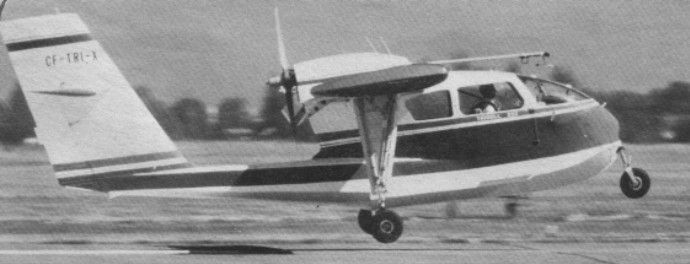
P. H. Spencer and Bob Dent decided the world needs is a new and better Seabee, so they dreamed up the Trident. That was back in the 1960s. Spencer and Dent started their work, in Los Angeles, with only $125,000 which soon ran out. Hazelwood bought the project, took it to Vancouver where the idea for it had been born. He has been at it for six years. After a brief romance with the Canadian Federal Government, which loaned Hazelwood’s company money through the prototype stages, the project by 1976 had moved under the wing of Canadian Aircraft Products, a manufacturer of aircraft floats and subassemblies in Vancouver. That company’s president, D. C. Cameron, says that the airplane is “on the back burner, and we’re not doing too well in our attempts to find a backer for production.” Cameron says certification of the initial prototype is within a few percent of completion. The airplane has flown about 275 hours and needs to fly another 40 or so. A second conformity prototype is 75 percent complete, he says, and will have to fly off its own approval program under the regulations of Canada’s Ministry of Transport.
Hazelwood is an indefatigible supporter of the airplane, and although each year seems to bring only the minimally sustaining increments for progress toward his goal of a full production airplane, his enthusiasm is unflagging or at least he must be very good at hiding any discouragement he may feel. All specs are being met or exceeded, and the abandonment of the Tiara 320 engine at the insistence of the government backers in favor of the certificated 285 (the 320 wasn’t certificated) has resulted in little loss of performance. He is delighted with the progress of the certification flights, he says. The production prototype is coming nicely, with engineering changes incorporated to cut the number of parts in half, eliminate many machined parts, use fiberglass instead of aluminum for the cabin enclosure (which is nonstructural) and add some beading in the skin. “Technically and physically, the airplane is just great. What we need is ‘trigger’ money to kick us off; we have plenty of follow on funds once we get past. . . . There is little chance of finding that kind of funding in the commercial loan market in Canada; they are mostly keyed to mortgages and are no help at all. It will take government help, and we feel we’re entitled to part of the support that’s being given the airframe industries right now.”
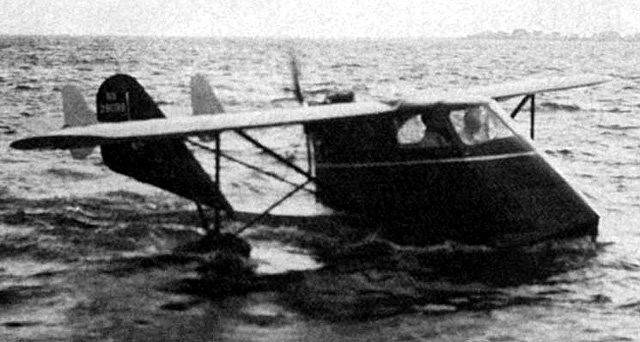
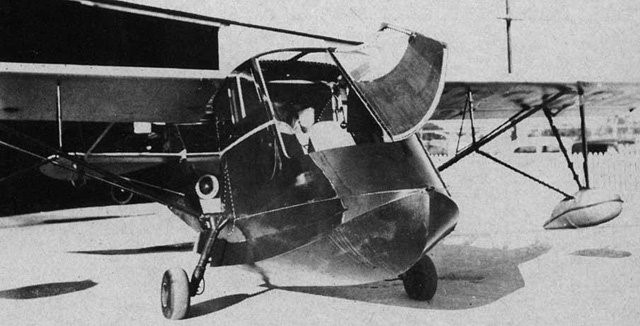
Percival H. Spencer left Spencer-Larsen in September 1940 and starts the work on his own S-12 Air Car amphibian design. The Spencer Air Car was his 12th design. On 1 March 1941, the first parts are cut for the amphibian Air Car. It was built of steel tube and fabric, featuring an angular cabin with a high wing, a slender low-mounted tail boom, and an engine mounted at the back of the wing / cabin, driving a two-bladed propeller in pusher configuration.
S-12 Air Car
The Spencer S-12 Amphibian Air Car, NX29098, took to the air for the first time on 8 August 1941, from sea on Belmore, Great South Bay, Long Island.
S-12 Air Car NX29098
After the USA is at war, from the Pearl Harbor attack on 7 December 1941, Spence put the Air Car in storage.
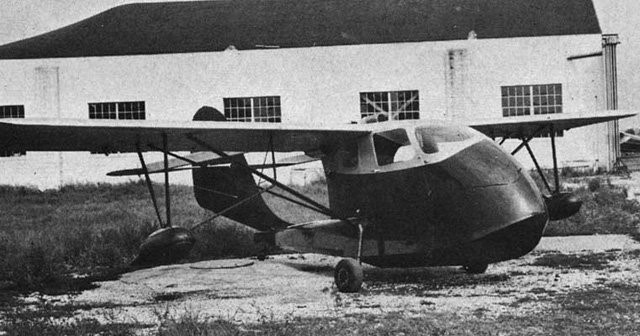
Spence accepts a job offer from The Mills Novelty Company, Chicago, IL, which was interested in the potential of the Air Car as a promotional gimmick for their company, in 1943. In April the Air Car was flown from Long Island to Chicago, Illinois. Using the wood-forming facilities at Mills, the Air Car forward cabin or reformed to a rounder ‘egg’-shape.
S-12 Air Car
The Mills Novelty Company was not likely to put the Air Car into production, so Spencer showed it off to his former employers at Republic. By that time, Republic officials were thinking of what the company should be doing when the war came to an end. Expecting private aviation to boom once the fighting stopped, the Air Car plans and manufacturing rights were sold to Republic Aviation Corporation, Farmingdale, New York, in December 1943. Redesign of the Air Car design started in January 1944, to develop an all metal production version. The first development prototype is named Model RC-1 Thunderbolt Amphibian.
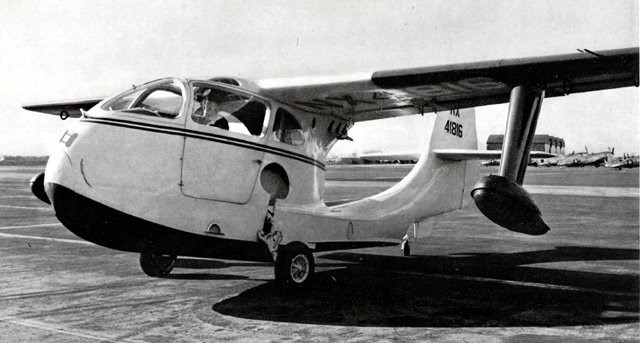
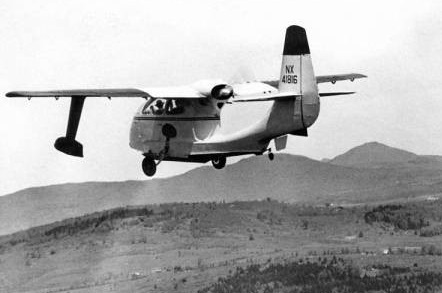
Republic RC-1 Thunderbolt
The RC-1 prototype, NX41816, made her first flight from Republic Farmingdale Airport on Long Island, on 30 November 1944. Spence is at the controls.
Republic RC-1 Thunderbolt Amphibian (NX41816)
The Republic Amphibian was presented at the St. Louis Convention in December 1944. A ‘Seabee’ diorama was displayed at the RAC booth at Jefferson Hotel and tentative arrangements are made with the first distributors. Quota commitments made at the convention totals 1972 airplanes at a basic retail price of $3,500. The Republic Aviation Corporation’s Board of Directors approved the plans for RAC’s entry into the personal plane market. Also, in December 1944, NX41816 is demonstrated for the USAAF, US Navy and USCG from National Airport, Washington D.C.
The US Navy officially approved the commercial use of the name “Seabee” for the new Republic amphibian on 19 February 1945.
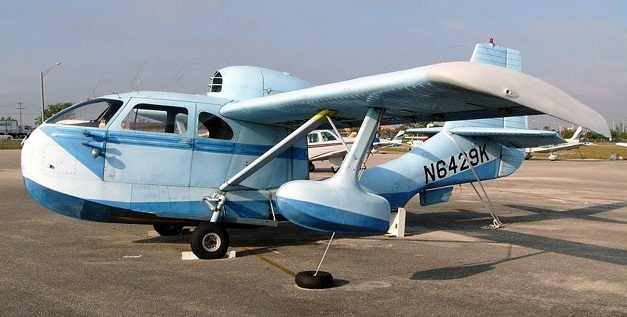
May 1947 saw Seabee NC6429K (s/n 674) built. It was delivered new by Republic’s pilots and demonstrated by Republic’s pilots for a total of two days to the USAAF as Model YOA-15. The Republic pilots then flew it back to the factory where it was used by the factory as a demonstrator on the east coast the rest of that year and the next.
NC6429K was never assigned a military number or painted any other color than a standard Seabee. Republic sold it to a John Philbrook, who used it in his air charter business, Adirondiacs Airways Maine. John had a second Seabee in the business and was killed in that one. Mr. Herman Mau bought it from the estate and based it at his Florida home, land locked (for a few years) because the water level in the lake it is on is too low to fly it out.
Republic RC-3 Seabee NC6429K (s/n 674)
On 17 April 1945, RAC President Alfred Marched ordered full steam ahead for engineering, tooling and manufacturing divisions, after initial contract is made with US Army for the order of OA-15 Seabees to be used for rescue work in the Far East. The projected military rescue amphibian was to be powered by a geared engine and have a cabin arrangement for 2 litters. The contract is later cancelled, when US Army after V-J Day cancelled orders with RAC for $242,000,000.
Republic RC-3 Seabee
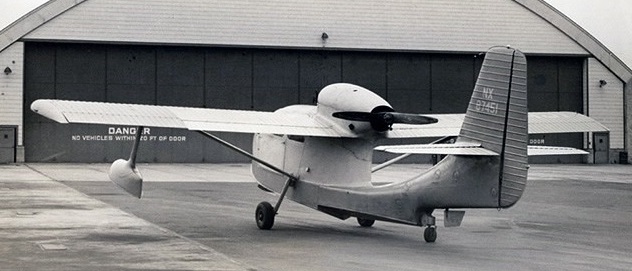
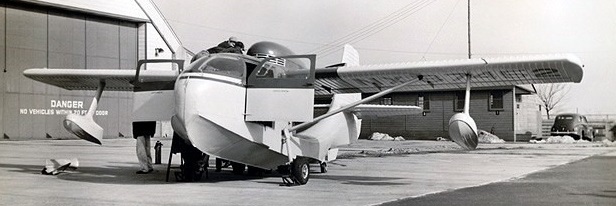
In the wake of massive cutbacks following the end of the war in August 1945, the military orders for the Seabee were cut; it is unclear if the military ever got their hands on any. Work on the civilian Seabee continued, with the prototype of the production RC-3 Seabee, NX87451, rolled off the construction line at Republic Aviation Corporation on 22 November 1945. At 9:17 a.m, 1 December 1945, the first prototype Model RC-3 Seabee, NX87451, makes her first flight, taken to the air by designer and test pilot Percival H. Spencer from Republic Airport, Farmingdale.
Republic RC-3 Seabee
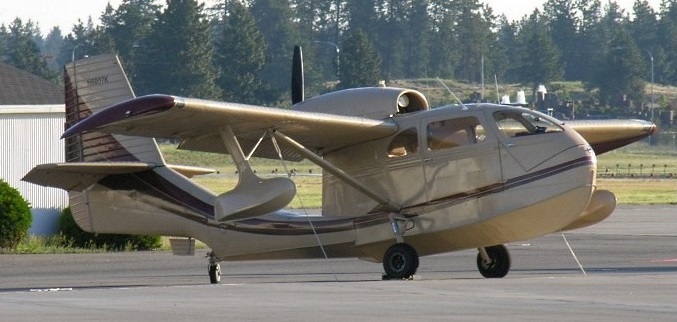
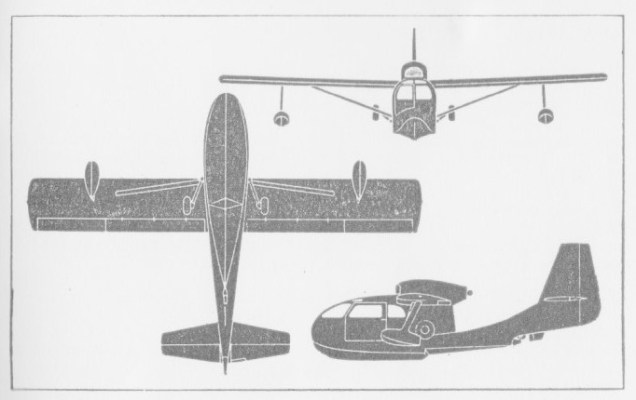
The first standard production Model RC-3 Seabee rolled off production lines at Republic in March 1946. As the production RC-3 Seabee emerged, it was built mostly of metal, with an egg-shaped forward fuselage and a slender tailboom, both riding on a stepped boat hull. It had a high strut-braced wing with fixed floats mounted just outboard of mid-span. It was powered by Franklin 6A8-215-B8F or -B9F air-cooled flat-six piston engine providing 160 kW (215 HP), mounted in pusher configuration at the rear of the cabin, behind the wing. Images of surviving Seabees show them to have a three-bladed variable-pitch propeller, but apparently the RC-3 was originally built with a two-bladed fixed-pitch prop. The fuel tank was in the wing center section.
The Seabee had tailwheel landing gear, all gear with single wheels, the main gear retracting up and back to (not into) the fuselage, the tail wheel hinging up behind the rear of the boat hull. There was a water rudder behind the tail wheel. Flight controls were conventional — ailerons, elevators, rudder, and one-piece flaps. There were seats for four, including the pilot, access being through a front-hinged car-style door on each side of the fuselage.
P. H. Spencer, designer of Republic’s Seabee, smilingly painted the ‘NC’ on the tail of Seabee NC87457 (ex NX87457) to celebrate the CAA certification of the Seabee on 21 July 1946.
The first Seabee, N87463 (s/n 13) is officially delivered to a customer on 25 July, 1946, when handed over to president J. G. (Tex) Rankin, Rankin Aviation Industries, Tulare, California, at Republic.
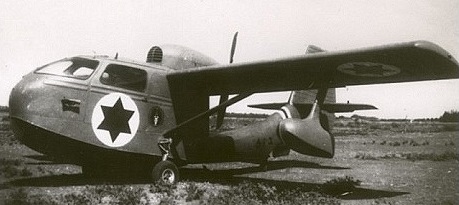
In 1947 Republic RC-3 Seabee s/n 1019 (NC6731K) was sold from Republic Aviation to a businessman. Official RAC records list says that s/n 1019 was imported to Israel by Aerogypt High Speed Development Company, Palestine, Israel. This businessman donated the Seabee to the new Israel AF for utility flying. The Seabee was initially registered VQ-PAV, but was soon transferred to the Israel AF.
Republic RC-3 Seabee B-61 (s/n 1019) Israel 1948
During the 1980s a Republic Seabee was donated to the Israeli Air Force Museum, Beer Sheva, Israel, by an American businessman, Mr. Robert Hebron. The Seabee, s/n 864 (ex N6564K), was put on display painted as the original Israel AF Seabee.
Republic had hoped to sell 5,000 Seabees a year but the boom in private aviation didn’t really materialize. Republic had also raised the price, with a Seabee going for $6,000 USD in 1946. On the 4th of October 1947 Republic Aviation Corp. announced that the production of the RC-3 Seabee amphibian has been terminated. Last production RC-3 Seabee was N6770K (s/n 1060). The last Seabees were not sold until early 1948.
Republic RC-3 Seabee
The S-12-D Air Car first flew on 25 May 1970.
In 1984 P. H. Spencer planned to resume production of all the metal parts for his S12-E model four-place Amphibian Air Car. He had stopped production early in 1982. In addition to the metal parts, he was contemplating manufacture of hull and empennage parts should a market survey indicate a favorable response.
The Air Car is basically a wooden aircraft, skinned with fiberglass in molded sections for the hull, cabin, engine cowl, wing root fairings, wingtips, floats, etc. Its heart is a single steel tube weldment combining engine mount, wing spar carry-throughs, and lift strut attach points. This section carries all major flight and water loads. Wings are wooden with three-ply skin. Original powerplant was a 260-hp Lycoming, later replaced with the Teledyne Continental Tiara which came in two models, the 6-285-B, C (285 hp) and the 6-320 (320 hp). A Hartzell three-bladed, reversible propeller permits backing up during taxiing to dock.
The S12-E has a span of 37 feet and a length of 26 feet with an empty weight of 2150 pounds and a gross of 3200 pounds. Max speed is 155 mph, cruise 140 mph, landing 55 mph with a 300-hp Continental Tiara engine. Ten were flying in 1984 and 35 are under construction, including one each in Indonesia, New Zealand and Brazil.
All owners pronounce it a rugged, stable and forgiving airplane. It has been flown with six different engines, ranging from 180 to 300 hp.
S-12 Air Car NX29098 Engine: 110hp Franklin Wingspan: 33’7″ Length: 23’3″ Useful load: 527 lb Max speed: 95 mph Cruise: 86 mph Stall: 50 mph Seats: 2 Undercarriage: amphibian
S-12-D Air Car Engine: 260hp Lycoming O-540-E4B5 Wingspan: 37’4″ Length: 26’0″ Useful load: 1050 lb Max speed: 147 mph Cruise: 135 mph Stall: 53 mph Range: 600 mi Seats: 4
S-12-E Air Car N111DA 1970 Engine: 285hp Teledyne Continental Tiara 6-285-B Max speed: 155 mph Cruise:135 mph Stall: 53 mph Range: 800 mi Seats: 4
RC-3 Seabee Engine: 1 x Franklin 6A-215-B8F, 160kW / 215 hp Wingspan: 11.48 m / 38 ft 8 in Length: 8.53 m / 28 ft 0 in Height: 2.92 m / 10 ft 7 in Wing area: 18.21 sq.m / 196.01 sq ft Max take-off weight: 1429 kg / 3150 lb Empty weight: 953 kg / 2101 lb Max. speed: 193 km/h / 120 mph Ceiling: 3660 m / 12000 ft Range: 579 km / 360 miles Crew: 1 Passengers: 3
Republic RC-3 Seabee Wingspan: 11.5 m / 37 ft 8 in Length: 8.5 m / 27 ft 10 in Height: 3.1 m / 10 ft 1 in Wing area: 17.8 sq.m / 192 sq.ft Empty weight: 995 kg / 2,190 lb MTOW: 1,430 kg / 3,150 lb Max speed at altitude: 240 kph / 150 mph / 130 kt Service ceiling: 3,650 m / 12,000 ft Range: 840 km / 520 mi / 450 nmi
Described by its inventor in Jan 1984, then 87, as “… a little puddle-jumper I made just for fun at Brainerd Field, Hartford CT, in 1922… The fuselage was laid out on the floor with spruce longerons and corner gussets and was fabric covered. The cockpit opening was formed by the wood rim of a bicycle wheel… (The) engine quit and parts began falling (but made a) normal landing. There was a teenager in the assembled crowd and I gave the plane to him. I don’t know if he re-engined it or what became of the plane.”
The S-10 Monoplane was a single-place, open cockpit, low wing monoplane, powered by a 25hp Lawrance La-3, and using wings from a Curtiss Oriole.
Appeared in 1926 as a Spenser with a 35hp Lawrance—possibly the re-rated La-3. Wing span: 32’0″ Length: 20’0″ Useful load: 220 lb Max speed: 55 mph Cruise: 50 mph Stall: 28 mph
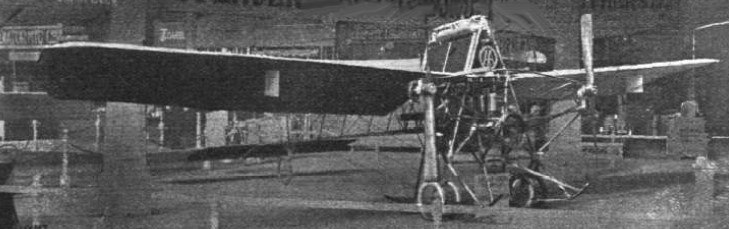
A tractor monoplane built by C. G. Spencer and Sons and displayed at the 1910 Aero Show at Olympia. It was designed by Herbert Spencer and W. Stirling, powered by a four-cylinder 40 hp British Aeroplane Syndicate R.H. engine, which drove by chains two propellers of 6 ft. 6 ins. diameter mounted on the leading-edges of the wings. A reverse gear was incorporated in one propeller bracket for opposite rotation. The fuselage was of the “A”-frame type. The machine was tested at Brooklands, but it was not successful and it was soon abandoned.
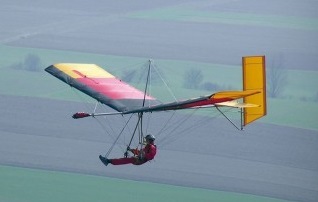
Bill Spencer designed and built a low cost glider aimed at the “lazy day soaring” crowd. It was interesting enough to be reviewed twice in Kitplanes, a magazine
The fuselage weighs only 29 pounds total. It is built of pop-riveted aluminum tubes and a plywood seat.
The Compact 110 is designed for foot launching from a gentle slope into a steady wind. Essentially, the pilot stands in the cockpit, picks it up, and runs down the slope into the wind until the seat picks the pilot up.



 All Aero