Stampe Et Renard SR.7 Monitor / Farman F.521 Monitor III

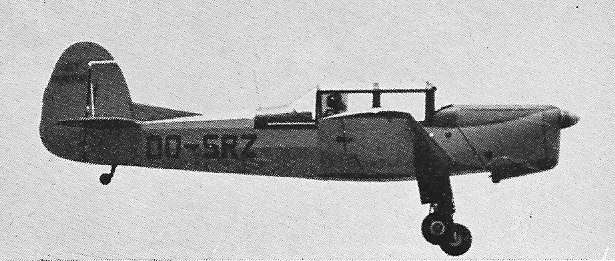
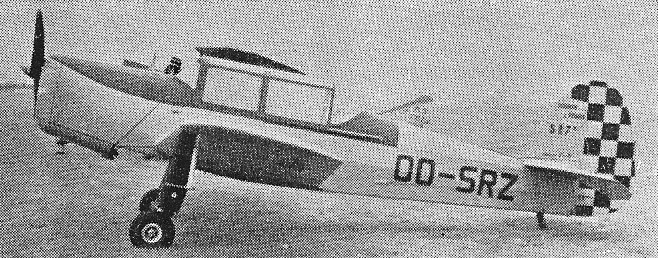
SR.7 Monitor III

The Monitor I incorporated the fuselage, tail assembly and 140 hp Renault 4 Pei engine of the S.V.4C biplane married to a wooden wing.

The Monitor II had a metal wing and a 240 hp Salmson-Argus engine.

The SR.7 Monitor III, also known as the Farman F.521 Monitor III, was built in France by the Societe des Usines Farman with the collaboration of Stampe-Renard.

The Monitor III first flew on 15 June 1954.

Stampe et Renard S.6.7B Monitor 4-01 prototype

Monitor I
Engine: 140 hp Renault 4 Pei

Monitor II
Engine: 240 hp Salmson-Argus

Monitor II
Engine: 170 hp SNECMA-Regnier 4L-22
Wing span: 30 ft 11 in
Length: 22 ft 2.5 in
Height: 7 ft 11 in
Empty weight: 1232 lb
Loaded weight: 2083 lb
Max speed: 143 mph
Cruise: 118 mph
ROC: 787 fpm

Stallings Air Master

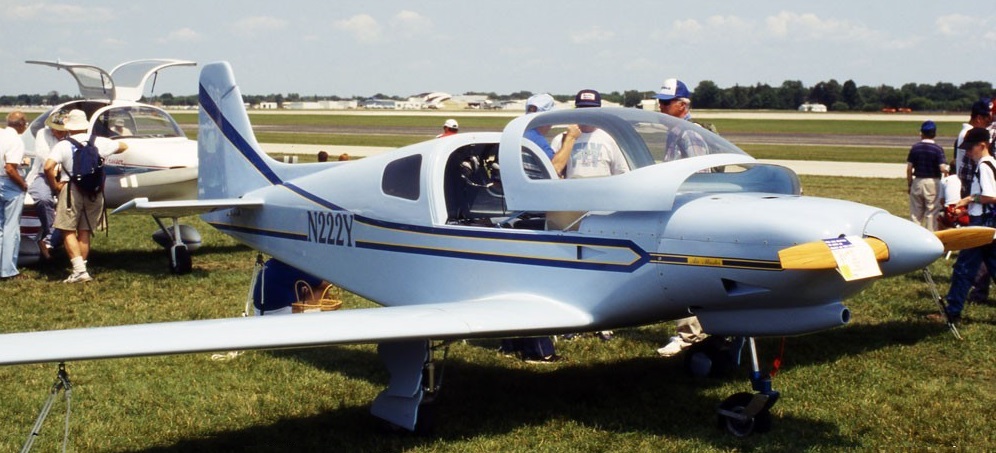
The Air Master was an original homebuilt design of Jerry J. Stallings reportedly influenced by the Lancair 320, but was built of different composite materials and had several major differences.

The type was suitable for engines in the 150 to 200 hp range, and from 1995 was marketed via Airplane Builders Company, founded by the designer. The type was planned to become available (ultimately) in kit form, although initially only plans were made available.

The first and sole example was built by the designer, possibly together with M.D. Kraft and powered by a 150 hp Lycoming O-320 engine it was first flown during 1994.

Development halted when the prototype aircraft was lost in a crash on July 25, 1996, killing the designer and his passenger. An Air Master 2 with registration N10AX was never completed.

Engine: Textron-Lycoming O-320, 150hp
Wing span: 26’6″
Length: 21’0″
Max speed: 238
Cruise: 200 mph
Range: 1000 mi
Seats: 2

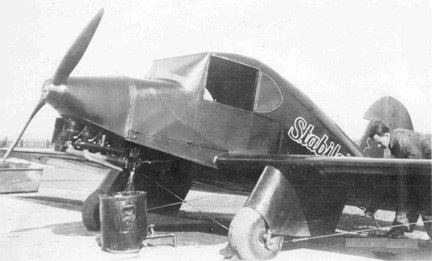
Staib Special / LB-2 / Little Bastard / Little Bit / The Monster

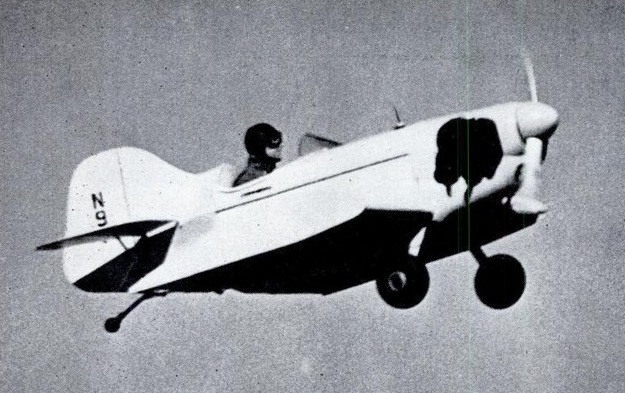
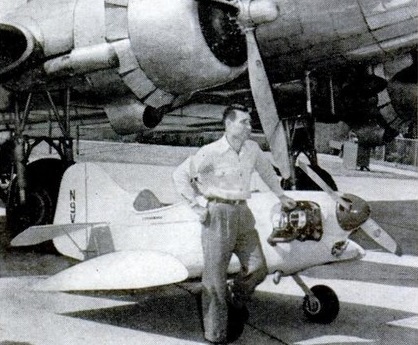
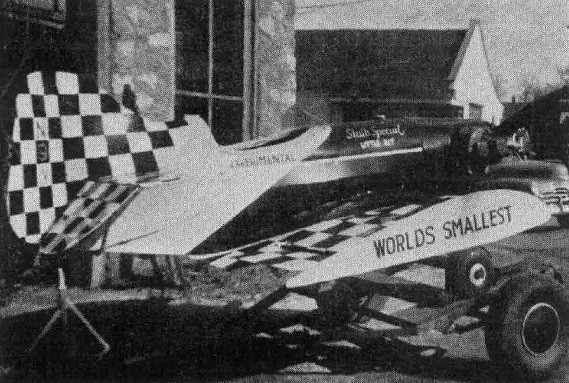
The Staib LB-2, also called the Little Bastard, Little Bit and The Monster, is a homebuilt aircraft design of Wilbur Staib. It once held the title as the “world’s smallest monoplane”. Staib flew his aircraft in airshows with the title “The Diamond Wizard”.

The LB-2 is a single engine low-wing, open cockpit monoplane with conventional landing gear. LB-2 was the considered the “World’s Smallest Monoplane” when built to take the title from Ray Stits 7 ft 6 in span aircraft. The wing section was adapted from a Piper Cub airfoil.

Named the “Little Bit”, but nicknamed the “Monster” it would do 160 mph., and was used for “one flight around the pattern” at exhibits, and was not flown other-wise.

It was later dismantled for parts, as a ” hazard to the life and limb of Wilbur Staib”. Powered by an 85 hp. Continental engine, it weighed 390 lb empty. It bore the registration number N-9V(X), leading one to believe that a biplane may have been built from the remains of the “Monster”. Originally, the biplane had a tail group similar to that of the “Monster”, though later modified, and the fuselages are quite similar.

LB-2
Powerplant: 1 × Continental C-85, 85hp
Wingspan: 7 ft 6 in (2.29 m)
Wing area: 31 sq ft (2.9 m2)
Airfoil: Clark Y
Length: 11 ft (3.4 m)
Empty weight: 390 lb (177 kg)
Fuel capacity: 5 U.S. gallons (19 L; 4.2 imp gal)
Maximum speed: 140 kn (160 mph, 260 km/h)
Cruise speed: 130 kn (150 mph, 240 km/h)
Stall speed: 100 kn (120 mph, 190 km/h) est.
Endurance: 1 h
Crew: 1

Staib LB-4 Airey-Plane

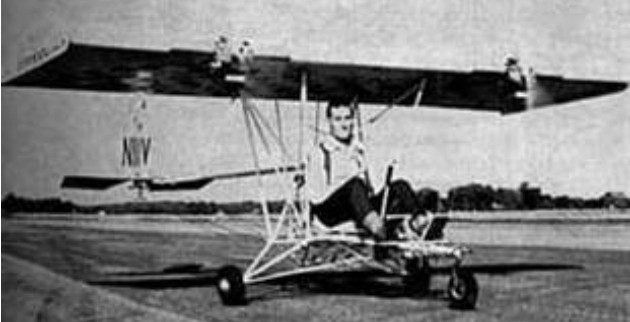
Wilbur Staib built this small airplane in limited spare time and working in limited hangar space in 1966. The “Airy-Plane” is a twin-engine aircraft registered N11V. Three months and about $500 were spent on the craft.

The LB-4 is a high-wing, uncovered welded steel tube fuselage, single seat twin-engine tricycle gear aircraft. It was registered by the FAA in 1966, and was considered at the time to be the world’s smallest twin engine aircraft. The wing ribs were a shortened pattern from a Piper Cub, assembled with staples. The tail is section is mounted on a wire braced removable boom for storage. Fuel tanks are made from 1 U.S. gallon (3.8 L; 0.83 imp gal) paint-thinner cans.

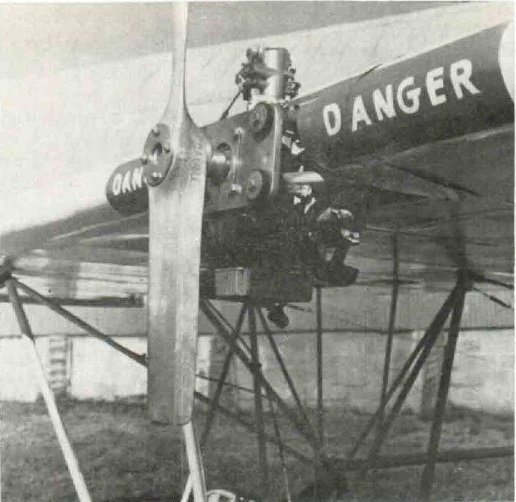
The engines are more or less inserted into the leading edge of the rather thick wing. Equipped with recoil starters they swing 24 in Troyer wood props.

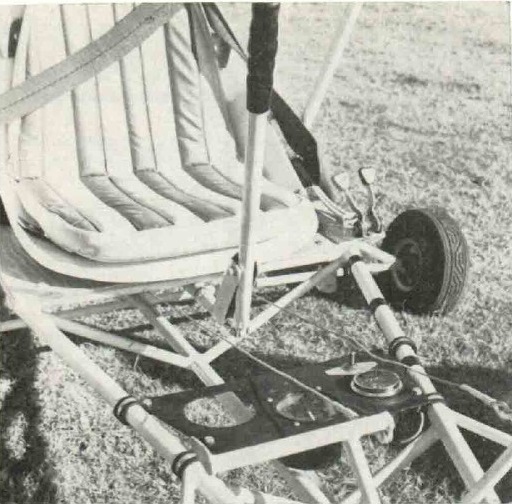
The fuel is carried in two 1 USG paint thinner cans. Instruments consist of an airspeed indicator and a tacho with a left-right toggle switch to pick up the reading from either engine.

Registration was N11V.

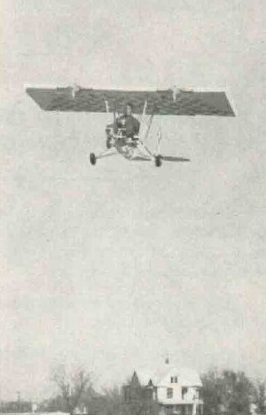
First flying in 1966, only the one was built. The LB-4 was test flown in 1966 at Carthage, Missouri. The aircraft cruises at 60 mph (97 km/h) and must be flown at full throttle. Later configurations included a third 10 hp (7 kW) engine mounted on top of the wing in pusher configuration.

Engines: 2 x 10 hp (7.5 kW) West Bend 820 chain-saw
Propellers: 2-bladed Troyer
Wing span: 14 ft (4.3 m)
Wing area: 70 sq ft (6.5 m2)
Airfoil: Modified Clark-Y
Length: 15 ft (4.6 m)
Empty weight: 175 lb (79 kg)
Gross weight: 340 lb (154 kg)
Useful load: 165 lb
Fuel capacity: 2 U.S. gallons (7.6 L; 1.7 imp gal)
Maximum speed: 52 kn (60 mph, 97 km/h)
Cruise speed: 52 kn (60 mph, 97 km/h)
Stall speed: 30 kn (35 mph, 56 km/h)
Seats: 1

Squirecraft SA102.5 Cavalier / K & S SA102.5 Cavalier

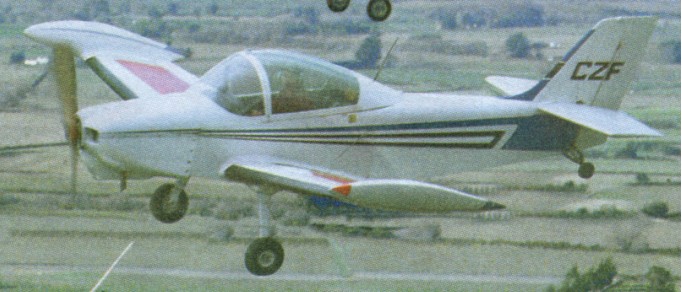
The original plans built, all wood, two place Cavalier SA.102 was designed in 1964 by Stan McLeod of Calgary, Alberta, and was based on the French Minicab. Retaining much of the basic airframe of the GY-20 but features a redesigned cockpit with a third, child, seat. The tail surfaces were redesigned and the aircraft sits on a tricycle undercarriage.

The initial version, the SA.102, encountered stability problems but these were solvrf by the addition of angled tip-tanks. This version first flew in February 1971, designated SA.102.5.

Subsequent revisions by McLeod led to the 100 to 125 hp SA.102.5 and SA.102.88.

The SA 102-5 Cavalier is a side-by-side two-seater of all wood and fabric construction, that can use any four-cylinder Continental, Lycoming or Franklin engine and rated in the 85 to 150-hp range. The prototype flew in 1969. The wing section is a NACA23015 at the root and NACA23012 at the tip. The wing structure consists of a single wooden box spar plywood leading edge, an auxiliary rear spar for the flaps and ailerons and a diagonal drag spar. The entire centre section is plywood covered, the remainder of the wing being fabric covered. The fuselage is a wooden truss type structure of spruce and ply construction. The cockpit doors and canopy are of moulded fibreglass. The rear decking is fabric covered. The empennage is of all wood construction with fabric covered control surfaces. The standard aircraft has a fixed tricycle under-carriage, but a tailwheel version is available. Fuel is carried in wing tip tanks of 13 or 1 6 Imp gallon capacity.

Gross Wt. up to 1800 lb
Empty Wt. 900 lb
Fuel capacity 40 USG
Wingspan 26’l0”
Length 18’4”
Wing area: 118 sq.ft
Top speed 200 mph
Cruise speed 165 mph
Stall 50 mph
Climb rate 1500 fpm
Range 850 sm
Landing roll 800 ft
Seats: 2

Engine: Lycoming O-290, 125 h.p
Span: 27’4”
Length: 22’0”
Wing Area: 118 sq. ft
Empty Weight: 9001b
Loaded Weight: 1,500 lb
Max. Speed: 150mph
Cruise Speed: 130mph
Stall Speed: 50mph
Initial Climb: 1,000 fpm
Range: 715 miles

Engine: 135 hp
Cruise: 150 mph
ROC: 2000 fpm
Range: 700 sm

SA.102.5-88
Engoine: 125 hp
Empty weight: 950 lb
MTOW; 1800 lb
Tip tank cap: 38 USG
Max level speed: 170 mph
Vne: 200 mph
Cruise: 150 mph
Rate of Climb: 1200 fpm
Loading: +3g
Take off dist: 500 ft
Landing dist: 600-800 ft
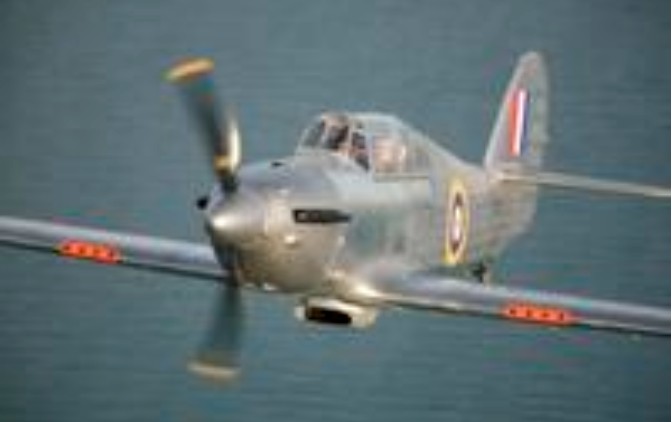
Squadron Leader Hawker Hurricane

Hawker Hurricane
Stall: 39 kt / 45 mph / 72 kmh
Cruise: 132 kt / 152 mph / 244 kmh
VNE: 180 kt / 207 mph / 333 kmh
MTOW Weight: 285 kg / 628 lbs
Climb Rate: 1150 ft/min / 6 m/s
Take-off distance (50ft obstacle): 600 ft / 183 m
Landing distance (50ft obstacle): 600 ft / 183 m

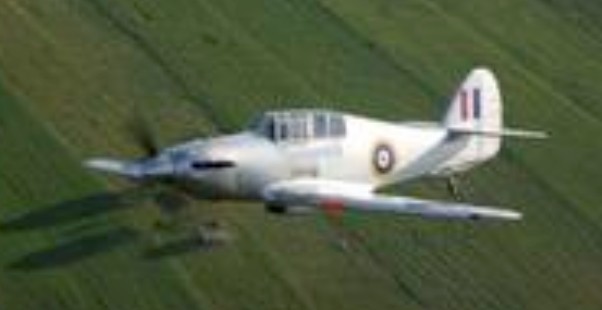
Hawker Hurricane MKII Replica
Stall: 34 kt / 39 mph / 63 kmh
Cruise: 115 kt / 132 mph / 212 kmh
VNE: 156 kt / 180 mph / 290 kmh
MTOW Weight: 599 kg / 1320 lbs
Climb Rate: 1150 ft/min / 6 m/s
Take-off distance (50ft obstacle): 850 ft / 259 m
Landing distance (50ft obstacle): 850 ft / 259 m