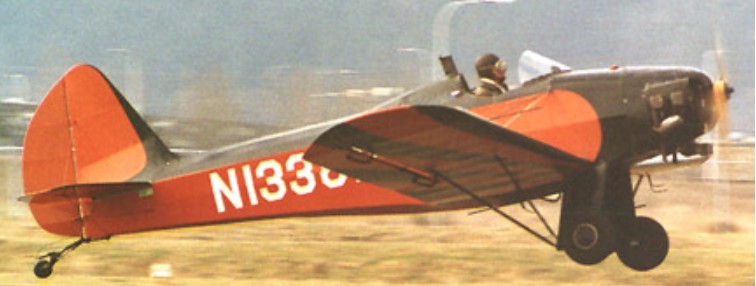
Story Special

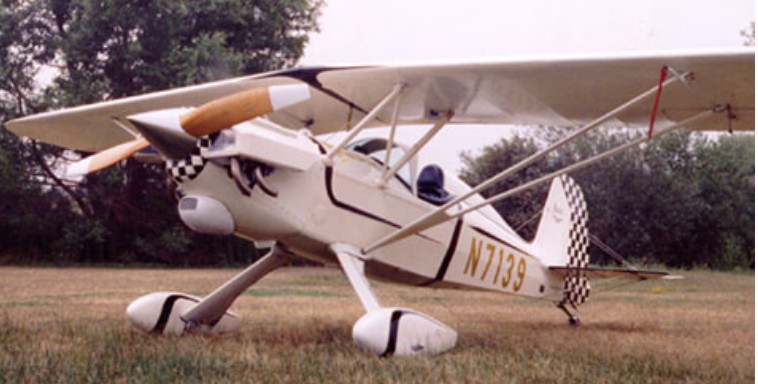
George Bogardus modified the Story Wimpy, calling it Little Gee Bee. He successfully flew across the country several times, and his efforts helped lead to the introduction of the Experimental/Amateur-Built category.
About the time of Bogardus’ flights, a friend of Tom Story’s named George Andrus decided he wanted a similar plane. Story wanted one again, himself, so he struck a deal:. Andrus would supply the materials, and Story would do the welding.

The airplanes were built on the cheap…the severe cheap. Two A-65s were bought from the junkyard and given a rag overhaul. Andrus also bought the tubing for the metal fuselages from the junkyard. He didn’t have a pickup truck or a trailer, so he’d buy a crashed J-3, cut the tubing in lengths long enough to fit in the trunk of his car, then take it home for Story to weld.

The planes turned out well. They were almost identical to Little Gee Bee, except they were open-cockpit. Story kept S/N 1 for himself, and Andrus took S/N 2.

S/N 1 eventually got a canopy added…the plane still exists today, and is the spitting image of Little Gee Bee.

Andrus kept S/N 2 for several years, then decided to sell it in 1954. He advertised it for $600.

Cecil Hendricks, a young garage mechanic in Seattle, saw the ad. The plane was just perfect for him…but in the mid ’50s, $600 was a lot of money. He decided to look for three partners.

Unfortunately, he found only two. One of the potential partners liked the airplane a lot, though, and decided to buy two of the shares so they could buy the airplane.

The partner’s name? Peter M. Bowers.

Pete flew the Story for a number of years. When EAA announced their design contest, he started thinking. The Story was a fun airplane, but one of the factors in the contest was ease of building. The Story had some fairly complex weldments in it. It just wasn’t suited for the design contest requirements.

But Les Long has already proven the low-wing design was the most efficient. Pete decided to design a new airplane, of similar configuration as the Story, but all-wood in construction.

The result, of course, was the Fly Baby. The Fly Baby isn’t just a Story Special in wood…you can’t just replace a steel tube with a wooden longeron without a major design effort, and the Fly Baby landing gear is much simpler than the Story’s.
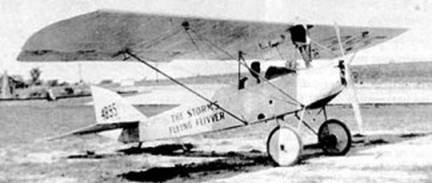
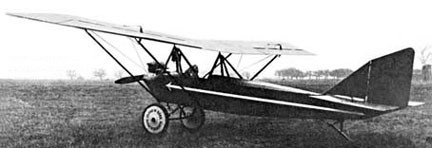
Storms Aircraft Co Flying Flivver

Storms Flying Flivver prototype N4895

The 1928 Storms Aircraft Co Flying Flivver was a kit plane advertised in kit form, less motor, for $1135. Power was normally a 36hp Ford T engine, or optional 60hp Ford A. A parasol wing was $985.

Storms Flying Flivver

About seven were registered in the USA including;
N4895, which a newspaper report had as crash-landing in 1928, piloted by A J Storm.
N11917, appears in Texas registers as (Wyley J) Wood-Storms
N882Y shows as Lee-Storms
N627W
N882Y
N10212

One was constructed at Wesport, New Zealand in the 1930s. The aircraft kitset imported from the USA by Jack Kilkenny and partners was a Storms WhizBang. In April 1933 following assembly it was inspected by a member of the NZPAF and found to be built from substandard material. Nevertheless the group were not deterred and it was taken to Carters beach with intentions to fly it. However although one of the group had previously had two hours dual instruction, he and Kilkenny’s brother-in-law were unable to get it of the ground. A week or two later John Spencer Allan after additional dual flying tuition successfully flew the aircraft on several occasions however it crashed with Spencer Allan at the controls following engine failure and was badly damaged. Plans to rebuild the aircraft were shelved following a second visit from the PAF inspector who advised them of the consequences should they fly it again.
In June 1970 John Spencer Allan was killed near Taupo in the crash of AESL Airtourer ZK-CXS. His passenger survived.
By all accounts the WhizBang kit was a real “Heath Robinson” affair. The PAF inspector noted that the timber supplied for wings and fuselage was Sugar Pine, the aileron hinges were cheap cupboard hinges and the elevator and rudder hinges were fashioned from leather shoe tongues and tacked to the spars. The Westport aircraft was kit #7 and another kit is believed to have been imported by Mr Hildred, Te Aroha, New Zealand, but it seems probable construction of this aircraft was not completed

Eddie Campbell of Prineville, USA, had, in 1930, got hold of the plans for a homebuilt design called “The Storms Flying Flivver,” a tiny high-wing monoplane powered by a Ford Model A engine. The Model A engine was roughly the same size and weight as the Model T, but made twice as much power. And Eddie worked at a Ford dealership’s repair facility, so he had access to the equipment necessary to soup it up a bit. Ted was out of town for a week when Eddie finished his project, and not expected back for another four days. Eddie, already a fairly experienced glider pilot, grew impatient. Plus, it was his plane; he wanted to be the first to fly it. So, he pulled it out and fired it up and pointed it down the field. It would not take off. He tried it several times; at the proper speed, it simply would not leave the ground. Eddie looked it over, scratched his head, and decided the problem was that it was “nose heavy.” Getting his tools out, he took the wing loose and moved it a little bit forward. Then he climbed back in to try again. This time, the plane came off the ground, all right. It went straight into a steep climb, completely ignoring Eddie’s attempts to control it; stood on its tail, trying to hang from the prop, about 100 feet in the air; then stalled and pitched forward and slammed down into the ground, nose first, ending up in a tangled heap.

Flying Flivver
Engine: 36hp Ford T
Wingspan: 31’0″
Length: 20’6″
Useful load: 350 lb
Max speed: 65 mph
Cruise: 45 mph
Stall: 20 mph
Range: 135 mi
Seats: 1

Flying Flivver
Engine: 60hp Ford A
Wingspan: 31’0″
Length: 20’6″
Max speed: 70 mph
Cruise: 50 mph
Stall: 20 mph
Seats: 1

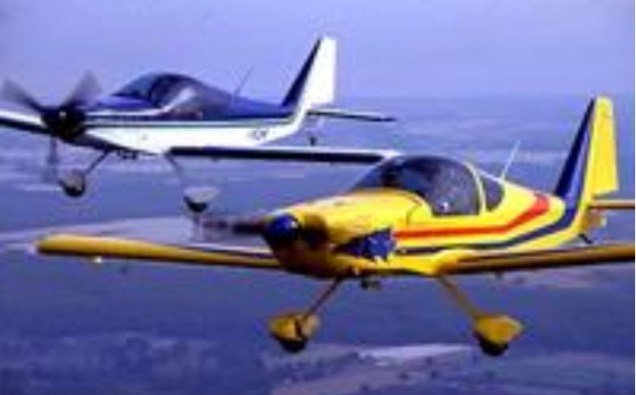
Storm Aircraft Rally

Rally
Stall: 35 kt / 40 mph / 65 kmh
Cruise: 107 kt / 123 mph / 198 kmh
VNE: 145 kt / 167 mph / 269 kmh
Empty Weight: 345 kg / 760 lbs
MTOW Weight: 599 kg / 1320 lbs
Climb Ratio: 1200 ft/min / 6,5 m/s

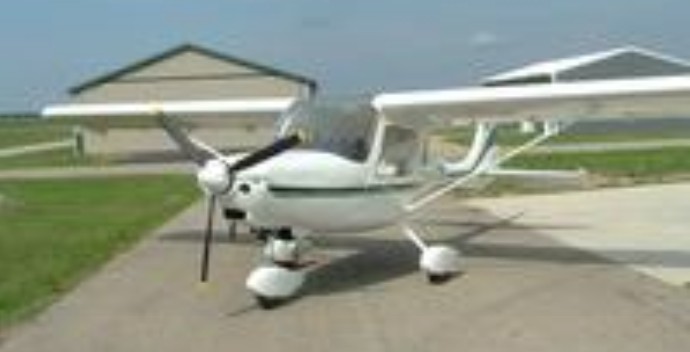
Storm Aircraft Rally LSA
New price: $107,900
Engine: Rotax 912 ULS, 100 hp
TBO: 1500 hr
Fuel: 100/mogas
Propeller: 70-inch, 3-blade FP
Landing gear type: Tri./Fixed
Max ramp weight:1320 lb
Gross weight: 1320 lb
Landing weight: 1320 lb
Empty weight, std: 760 lb
Useful load, std: 560 lb
Usable fuel, std: 21 USG
Payload, full std. fuel: 434 lb
Wingspan: 30 ft. 1 in
Height: 7 ft
Wing area: 125 sq. ft
Wing loading: 10.6 lbs./sq. ft
Power loading: 13.2 lbs./hp
Wheel size: 5.00 x 5 in
Seating capacity: 2
Cabin doors: 2
Cabin width: 43.7 in
Cabin height: 40 in
Cruise speed 75% power @ 24,000 ft.: 107 kt
Fuel consumption 75% power: 6 USgph
Vso: 35 kt
Best rate of climb (SL): 800 fpm
Service ceiling: 12,000 ft
Takeoff ground roll: 360 ft
Takeoff over 50-ft. obstacle: 600 ft
Landing ground roll: 450 ft
Landing over 50-ft. obstacle: 1000 ft

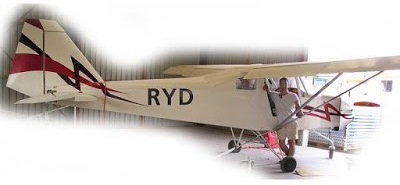
Stoof Joyrider

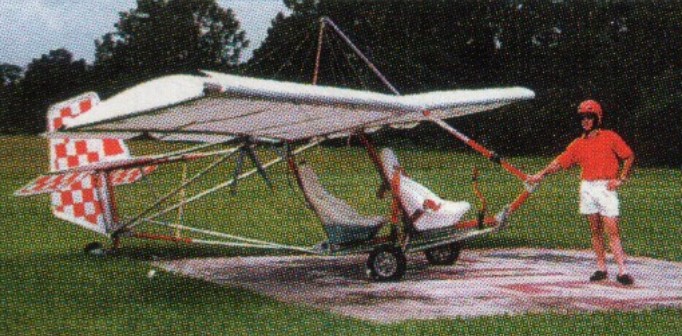
Rino Stoof of Cambridge, New Zealand, built his Stoof Joyrider in the late 1990s/early 2000s and got it to the stage of carrying out engine runs. Unfortunately it never made it into the air, but it was registered with CAA.
The tri-gear Stoof Joyrider was of all-wooden construction and had removeable wings and tailplane. It had a wingspan of around 10 metres and a length of around 6 metres. It was powered by a 2 litre EJ 20 Subaru engine with a Hintz gearbox and was fitted with a Ballistic Recovery Parachute.

ZK-RYD (c/n 05/01) was registered to Rino P P Stoof of Cambridge on 14 April 2005. It was withdrawn and cancelled from the register on 8 May 2013.

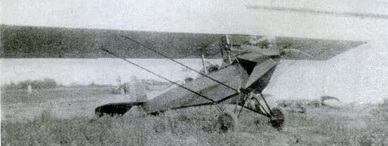
Stolz Torpedo-Flugzeug

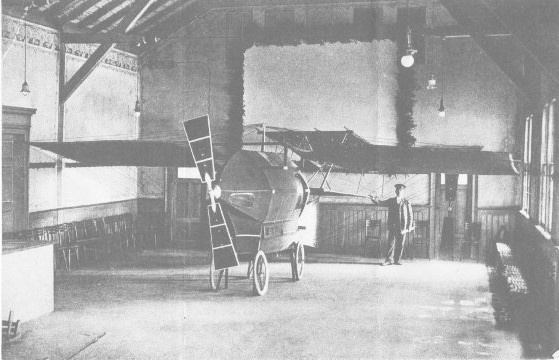
Franz Stolz built his design in 1909 in the German town Rastatt. Due to its form it was named the ‘Torpedo-Flugmaschine’ [Torpedo Flying machine]. To fund (further) construction the design of Stolz was exhibited against payment in the Carl Franz Halle, but this financial help was not enough. Stolz had to auction his machine in December 1909 and the machine never did fly.

Stolp SA-500 Starlet

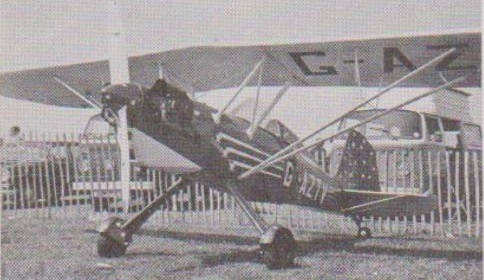
First flown in 1968, the Starlet is a single-place parasol-winged monoplane. This ship was originally designed by Lou Stolp to handle a Volkswagen engine but now has been modified to house small air¬craft engines. Engines most commonly used are the VW 1500 or the 108-hp Lycoming.

Construction follows standard Stolp Starduster practice. All basic structure except the wing is made of 4130 steel tubing. The wing uses spruce spars and plywood ribs with cap strips. The airfoil is a Clark Y, High-Lift.
Optimum engine is the 108 HP Lycoming; however, engines of 85 HP to 125 HP may be used. The Starlet will fly well with Rotax, Subaru, Suzuki, or Continental engines.

The drawings are quite complete and easy to follow, with ribs printed to full size. The drawings are printed on an offset press so they will not fade and shrinking is held to a minimum.

All material kits are available from Stolp Starduster Corporation at reasonable prices. In addition, we can furnish fabricated wings ready to cover, complete welded assembly, turtlebacks, nose cowls, wheel pants, windshields, aluminum fuel tanks, etc.

Sid Miles G-AZTV, Sywell, UK. The first to fly in UK

The Starlet SA500 is easy and economical to build and fun to fly. It is stable and relatively fast. The parasol wing makes it especially suitable for operating out of rough field. Although a small airplane, the Starlet has a roomy cockpit suitable for a large adult.

Kits and plans were marketed for home-builders for $35.00.

SA-500 Starlet
Engines: VW 1500cc to 100hp
Wingspan: 25’0″
Length: 17’0″
Useful load: 450 lb
Cruise speed: 90 mph
Stall: 55 mph
Range: 350 mi
Seats: 1

Engine 100-hp Con¬tinental
Gross Wt. 1000 lb
Empty Wt. 630 lb
Fue1 capacity 20 USG
Wingspan 25’
Length 17’
Wing area: 83 sq.ft
Top speed 150 mph
Cruise 130 mph
Stall 55 mph
Climb rate 1,500 fpm
Takeoff run (50’) 500 ft
Landing run (50’) 900 ft
Range 500 miles
Seats: 1

Engine: VW 1500 cc
HP range: 65-100
Height: 6.7 ft
Length: 17 ft
Wing span: 25 ft
Wing area: 83 sq.ft
Weight empty: 700 lb
Gross: 1058 lb
Fuel cap: 22 USG
Speed max: 130 mph
Cruise: 105 mph
Range: 600 sm
Stall: 45 mph
Service ceiling: 12,000 ft
Seats: 1
Landing gear: tail wheel