Stringfellow Flying Machine

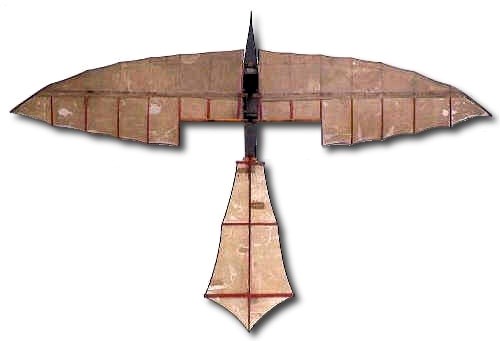
The Stringfellow Flying Machine of 1848 was built by John Stringfellow using a Henson steam engine modified by himself. The model was demonstrated attached to a cable inside a lace production shed at Chard, Somerset, England and at Cremorne Gardens in 1848 flying a distance of 40 m before crashing into a wall. Having a wingspan of 10.5 feet and a wing surface area of 12 square feet, it used a six and three-quarter pound engine. This was the first successful flight by a heavier-than-air machine to fly under its own power.

Stratos Aviation Stratos

Single seat single engined mid wing monoplane with conventional three axis control. Wing has unswept leading and trailing edges, and constant chord; cruciform tail. Pitch control by elevator on tail; yaw control by fin mounted rudder; roll control by one third span spoilers; control inputs through stick for pitch/roll and pedals for yaw. Wing braced from below by struts; wing profile NACA Series 23000; double surface. Undercarriage has three wheels in tricycle formation; suspension on all wheels (type NC). Push right go right nosewheel steering connected to yaw control. Aluminium tube/fabric/ steel tube framework, with optional pod. Engine mounted at wing height driving pusher propeller.

The prototype Stratos made its first flights during the summer of 1982. It had been designed and built by Larry Burke, an engineer specialised in the study of fatigue problems and the breaking points of materials at Lawrence Livermore National Laboratory.

Commencing design studies on this single seater in December 1981, Larry included in his design target a minimum load factor of +6, 3g at 5001b (227kg) weight. The Stratos was designed to be a low profile fully triangulated strut braced aircraft that places the pilot ahead of the wing, almost giving 360 degrees visibility. The machine is expected to be on sale in ready built form during the summer of 1983 and Stratos Aviation has plans for a two seater which will be classified as an experimental aircraft in the United States.

The Stratos single seater is fitted with a Cuyuna 430R but the manufacturer intends that alternative engines shall be offered eventually as an option.

Engine: Cuyuna 430R, 30 hp at 5500 rpm
Propeller diameter and pitch 50 x 32 inch, 1.27 x 0.81 m
Belt reduction, ratio 2.0/1
Power per unit area 0.18 hp/sq.ft, 1.9hp/sq.m
Fuel capacity 5.0 US gal, 4.2 Imp gal, 18.9 litre
Length overall 19.0ft, 5.79 m
Height overall 4.5ft, 1.37m
Wing span 33.0ft, 10.05m
Constant chord 5.0 ft, 1.52 m
Sweepback 0 degrees
Total win area 166 sq.ft, 15.4 sq.m
Total spoiler area 4.0 sq.ft, 0.36 sq.m
Wing aspect, ratio 6.5/1
Empty weight 250 lb, 113kg
Max take off weight 500 lb, 226kg
Payload 250 lb, 113kg
Max wing loading 3.01 lb/sq.ft, 14.6 kg/sq.m
Max power loading 16.7 lb/hp, 7.5 kg/hp
Load factors +6.0, 3.0 design
Max level speed 63 mph, 101 kph
Never exceed speed 70 mph, 112.5 kph
Cruising speed 63 mph, 101 kph
Stalling speed 27 mph, 43 kph
Max climb rate at sea level 750 ft/min, 3.8 m/s
Min sink rate 250 ft/min at 35 mph, 1.3 m/s at 56 kph
Best glide ratio with power off 8/1 at 35 mph, 56kph
Take off distance 100ft, 30 m
Land¬ing distance 100ft, 30m
Service ceiling 16,500 ft, 5030 m
Range at average cruising speed 150 mile, 241 km

Stratos Aircraft Stratos 714

The existence of the Stratos 714 project was announced on 16 July 2008 by Stratos Aircraft of Redmond, Oregon and a cabin mock-up was shown at AirVenture in July 2009. At that time the company predicted the jet would sell for about US$2M. The company was seeking US$12M to build two prototypes and a further US$100M to complete certification and commence production. In November 2016 the company indicated it had no firm schedule for certification.

The company was accepting refundable customer deposits of US$50,000 to be held in interest-bearing escrow in 2009. The first deposit was made by Cascade Air Charter, of Bend, Oregon in October 2009.

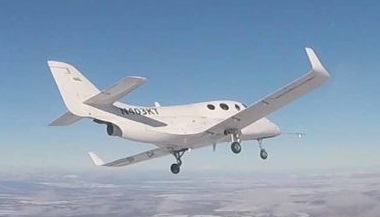
The aircraft features a cantilever low-wing with winglets, a cruciform tail, a four-seat cabin pressurized to 10.0 psi (69 kPa), retractable tricycle landing gear and a single Pratt & Whitney Canada JT15D-5 jet engine. The airframe is made predominately from carbon fiber reinforced polymer. Initial design goals included a 400 kn (741 km/h) cruise speed and 1,500 nmi (2,778 km) range, with NBAA IFR reserves.

First flight of a proof of concept aircraft, registered N403KT, was achieved on 21 November 2016. The initial flight of the 714 was limited to 128 knots and 3,700 feet agl with the gear extended and flaps at 24 degrees.

The company intended to make a public introduction of this aircraft at AirVenture in July 2017. The test pilots logged 52 hours on 33 flights. The aircraft topped out at 320 ktas and 17,000 feet, with a max test weight of 8,300 pounds.

In February 2017 prototype flight testing continued. The company did not have the funding to complete certification, and was no longer accepting deposits from customers. Stratos CEO Michael Lemaire indicated at that time, “we are privately funded for the prototype phase, during which we are planning to explore the full flight envelope and draw conclusions for the certification stage. We are not yet funded for the certification phase. At present, we have no plan to take deposits towards deliveries, which are still many years away.”

Gallery

Stratos 714
Engine: 1 × Pratt & Whitney Canada JT15D-5, 2,900 lbf (13 kN) thrust
Wingspan: 40.5 ft (12.3 m)
Length: 35.8 ft (10.9 m)
Height: 9.8 ft (3.0 m)
Empty weight: 4,367 lb (1,981 kg)
Gross weight: 7,213 lb (3,272 kg) maximum take-off weight
Fuel capacity: 2,605 lb (1,182 kg)
Maximum speed: Mach 0.7
Cruise speed: 415 kn (478 mph; 769 km/h)
Stall speed: 63 kn (72 mph; 117 km/h)
Range: 1,500 nmi (1,726 mi; 2,778 km) with NBAA IFR reserves
Service ceiling: 41,000 ft (12,000 m)
Time to altitude: 17 minutes to FL370
Crew: one
Capacity: three passengers