The “Letatlin” during a gliding parade in Moscow in 1933
The ornithopter designed by Vladimir Tatlin from 1929 to 1932 and Tatlin built three versions of his machine. The word Letatlin is formed from the verb letat (fly), associated with the name of its creator, Tatlin. In the Stalin years, Tatlin, one of the major artists of the constructivist movement of the Soviet revolutionary years, designed his ornithopter inspired from birds.
Tatlin had carried out a trial flight that hadn’t worked out.
The ornithopter designed by Tatlin from 1929 to 1932 had disappeared. It had been more or less abandoned for twenty years in a warehouse belonging to the Molino Russian Federation Central Air force museum, next to Star City, the Youri-Gagarin cosmonaut training center fifty kilometers away from Moscow. It was the KSEVT, team, the space culture center in Slovenia, that by chance came across the machine in a precarious state during a protocol visit to the Monino museum in 2014. In February 2014, they were taken to the historical part of the Monino museum where one can see pioneers’ flying machines, since the Russians went into aeronautics very early. Miha Turšič, director of KSEVT until 2016, member of the collective Postgravityart, spotted the Letatlin in the corridors of the Monino museum in April 2014.
While the group was in discussion, Miha Turšič went ahead, getting a bit lost in the aisles of the museum, and suddenly I found myself face to face with a machine that looked like a plane but wasn’t one. He knew of the Letatlin and there it was right in front of him. We immediately asked if they knew what they had there, one of the most iconic works of 20th century art. They told us: “Yes, it’s an old Russian artist who built sort of flying machines rather like Leonardo de Vinci.” They had no idea of the importance of the piece. They considered it as best as an experimental flying machine that had never flown. Tatlin was mentioned, but with no context.
It was Letatlin n°3 that was found. It would have reached Monino in 1996 after being damaged on the way back from a presentation in an exhibition in Athens and was left there, abandoned in the context of complicated years following the collapse of the USSR.
Restoration of the “Letatlin”
The Molino Air force museum had just retrieved it a year earlier from the museum storeroom where it lay in bits in a corner, deteriorated, really damaged, and they had reassembled it to hang it in their museum.
The “Letatlin” restored in the Tretiakov gallery in Moscow
It was obvious that a renovation was necessary for the Letatlin. The Monino museum and the Tretiakov gallery finally found an agreement for its renovation. Turšič went to Moscow at the end of December 2017 to meet the curator of the museum and saw it displayed in the 20th century art collection.
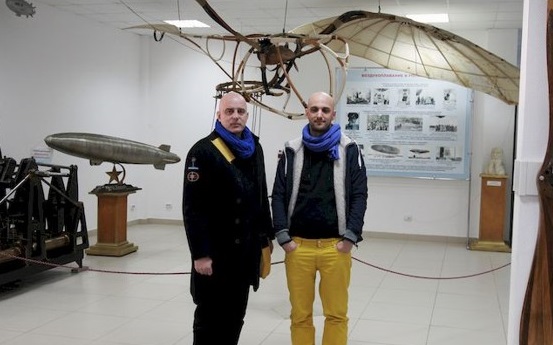
Dragan Živadinov and Miha Turšič in front of the “Letatlin” at the Monino museum on April 11, 2014.
The Letatlin finally found the perfect place for its presentation to the public.
This single pilot manned test-bed was built by Jim Kern’s TASK Research Inc. of Santa Paula, California in 1982, which supplied many composite structures/components for the Rutan designed Long-EZ, Defiant, and Voyager aircraft during the early to mid-1980’s under contract to Northrop’s Electric Mechanical Division in the late 1980s to test early avionics/electronic equipment for remotely piloted vehicles.
The Vantage was a single-seat pusher canard which resembled a Rutan Long-EZ, but was slightly larger with more rounded fuselage sides, a large bulbous two piece canopy. The craft also incorporated an extra long pitot tube in the front. Power was supplied by a single Lycoming O-360 (180 HP) engine turning a variable pitch wood or composite propeller. The aircraft incorporated a retractable nose gear which was powered by an electric motor. The wing root to fuselage joint was blended/contoured and flowed seamlessly into the cockpit. Nicknamed “Sneeky Pete” by its pilots, the undesignated aircraft was outfitted with various special avionics depending on the specific mission requirement. The exterior was painted white, with the name “Sneeky Pete” written along the side of the fuselage, though this is not apparent in the one picture that was released.
Although the maiden flight of “Sneeky Pete” took place at Mojave Airport on July 18th, 1982 with Dick Rutan at the controls (Mike Melvill, along with many others served as test pilots for this aircraft), Rutan Aircraft Factory or Scaled Composites apparently were not involved in the elaboration and building process of the aircraft. It is believed that the flight test program for “Sneeky Pete” first took place at the remote Groom Lake test site in Nevada widely known as “Area 51” (AFFTC DET. 3) in late 1982. The aircraft was periodically tested over the years with various equipment, put into seclusion at various times, but has never been officially retired. During its “down time”, “Sneeky Pete” was most likely stored in a top-secret facility known as “Dyson’s Dock” at Groom Lake which was also the location of the Northrop “Tacit Blue” technology demonstrator after it was retired in 1985.
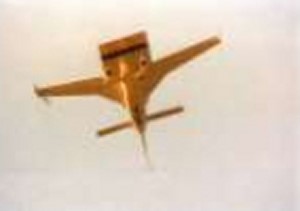
In 1993, “Sneeky Pete” was acquired and rebuilt by Scaled Composites and experimentally fitted with a Williams FJ107 jet engine, a small turbofan engine designed to power cruise missiles and developed by the Williams International company from their WR19.The FJ107 was notably the powerplant for the AGM-86 ALCM, BGM-109 Tomahawk, and AGM-129 ACM, as well as the experimental Williams X-Jet flying platform. In its jet-powered form, the aircraft was first tested in August 1993 and was known at Scaled Composites as the Jet LEZ Vantage or Model 61-B. A striking feature of the revised aircraft was a square, flat section, as seen from below, added at the back of the aircraft. The section wasn’t as wide as the strakes at the front wing roots but was longer along the fuselage, in comparison.
Jet LEZ Vantage
Only one airframe was ever constructed. The data gathered throughout the “Sneeky Pete” program contributed to today’s advanced UAVs such as the Northrop/Grumman Global Hawk, General Atomics Predator, Boeing X-45, Northrop/Grumman X-47 Pegasus. The aircraft was returned to a more conventional configuration and still appears on the civil register as being owned by Scaled Composites, but its current whereabouts are unknown, and, like many experimental variants of the Long-EZ, it is not properly documented, due to its classified use by the military.
N3142B c/n 1 Powerplant:1 x Lycoming O-360 (180 hp) / 1 x Williams FJ107 / 1 x Lycoming IO-320 (150 hp) Wingspan: 28 ft. Overall length: 17ft. (approximate) Weight: up to 12,499 lb. (with Lycoming engine) Crew/passengers: 2
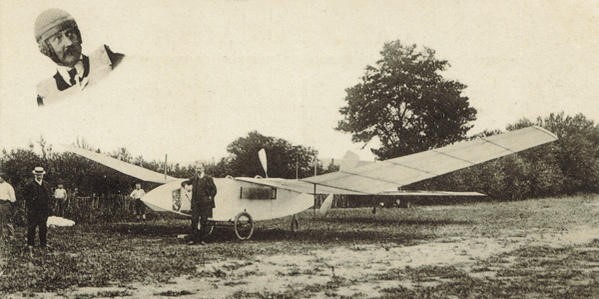
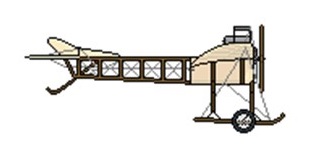
This peculiar monoplane, also known as the “Monoplan de course Paul de Lesseps”, was designed and built in 1910 by Taris, a Polytechnique graduate that taught aerodynamics at the Ligue Nationale Aérienne. A characteristic feature was its intricate triangular fuselage, uncovered and the front and covered at the rear and with a triangular cockpit floor breaking the lines. It was powered by a 50 hp Gnôme driving a ground-adjustable four-bladed propeller. It crashed in 1911.
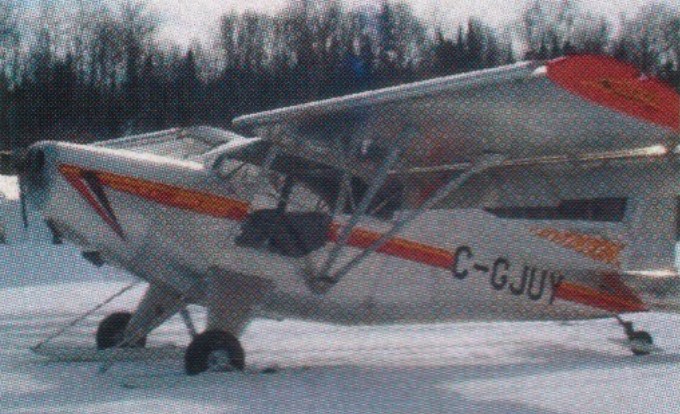
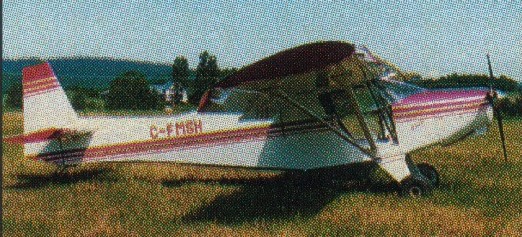
The Tapanee Levitation 4 is a Canadian four-seat STOL aircraft designed to be homebuilt by Michel Lequin for Tapenee Aviation of Quebec. A larger version of the companies earlier Pegazair bushplane, the Levitation is a high-wing monoplane with V-strut bracing, first flown in 2002. Powered by a 180 hp (134 kW) Lycoming O-360 flat-six piston engine with a two-blade propeller. The Leviation has a fixed conventional landing gear with a tailwheel and a cabin holding a pilot and three passengers in two rows of side-by-side seating. By December 2004 five kits had been sold.
Variants: Levitation 2 Levitation 4
Specifications:
Levitation Engine: Lycoming O-360, 180 hp / 134 kW Propeller: Hartzell 80 in Length: 7.47 m (24 ft 6 in) Overall Height: 2.44 m (8 ft 0 in) Wingspan: 10.21 m (33 ft 6 in) Wing area: 180 sq.ft / 16.72sq.m Wing Loading: 13.9 lb/sq.ft Gross weight: 2500 lbs / 1133 kg Empty Weight: 621 kg (1368 lb) Usefull load: 1138 lbs Stall Speed: 38 Mph / 62 km/h Cruise speed: 115-120 Mph VNE: 159 Mph / 255 km/h Range at cruise: 575 sm / 925 km Gross wgt takeoff dist: 400 ft Landing Distance: 300 ft Climb rate at Gross: 700 fpm / 3.6 m/s Power Loading: 13.9 lb/hp Cabin Length: 109 in Cabin width at elbow: 48 in Usable fuel: 55 US Gallons Fuel Optional, Wings: 36 USG Baggage Area: 25 cu.ft Seats: 4
In 1909 Czesław Tański started design works on an aircraft with longitudinal axis steering done by change of the angle-of-attack of the whole wing. Construction lasted until 1911 and in autumn of that year, the airplane, named Łątka (Dragonfly) underwent trials at Warsaw’s Mokotów airfield. Unfortunately, Tański, witnessing numerous undercarriage failures on other aircraft, designed very heavy one for his aircraft, which resulted in aircraft – powered by relatively weak Anzani engine – never managed to take off the ground.
In 1966 Tallmantz Aviation built the Phoenix specially for the motion picture, “Flight of the Phoenix”. Based on a Fairchild C-82A, with North American AT-6 and other parts, power was a 450hp P&W R-985.
Built for filming in “The Flight of the Phoenix” the aircraft was not sufficiently strong nor the engine powerful enough for an actual landing and take-off on the desert floor. Instead, Paul would simulate takeoff and landing with low approaches and climb outs.
On July 6, Paul made his first attempt to film the scenes. Shortly after take-off from Yuma, he returned with an overheating engine. He tried again the next day, and in the relative cool of daybreak he flew the Phoenix to Buttercup Valley in the desert for the first time. Crouching just behind Paul in a makeshift crew position was stuntman Bobby Rose, with three plywood cut-outs of men attached on top of the wings near the fuselage, to depict ‘passengers’.
On that early morning he flew the requested low approaches in front of three widely-spaced motion picture cameras and returned safely to Yuma before the air got too hot and thin. Only later did the second unit director decide the cameras were set up too close to the scene and requested a repeat the next morning.
Before the sun broke above the horizon, Paul and Bobby again clambered up the ungainly Phoenix and strapped themselves in. They took off shortly after 05:00 for the short flight westward. Paul rolled into the shallow valley, sun rising behind him, descending to just feet above the desert floor, gunning the Pratt & Whitney R-985 and, with exaggerated effect for the cameras to depict the struggling Phoenix reaching for the sky, barely cleared a ridge of sand dunes. The director was pleased with what he knew his cameras had captured but called for an “insurance shot” just to make sure what he needed was in the can.
Paul knew the routine. He was heard over the radio vowing to “give them a good one” and brought the Phoenix around one more time. During the second approach it was obvious the descent rate was far too high and whatever Paul was doing to correct it wasn’t enough. The Phoenix hit the desert hard on its makeshift landing gear, right in front of a camera.
Quickly recovering, Paul struggled to pull the Phoenix back into the air. But the jarring impact had neatly snapped the aircraft just aft of the wing where the wooden fuselage joined the centre section. With the fuselage disintegrating and out of balance, the nose dropped and the propeller dug in to the desert causing the engine to shear off. The resulting wreckage tumbled across the desert floor.
Within the billowing cloud of dust and wreckage, Paul was killed instantly. Mantz might have survived the crash, as the cockpit section was relatively undamaged but, instead of a crash helmet, he was requested to wear a soft hat like actor James Stewart wore in the film. Bobby was thrown clear, miraculously surviving the crash, but with serious injuries.
The movie, of course, remained in production, but key scenes planned for the ending remained unshot. The footage from Buttercup Valley was usable, up until the accident anyway, but it amounted to a minute or less of film.
With no aircraft to film, the film crew packed up and moved back to Hollywood while other plans were considered. As the impending release date approached, Twentieth Century Fox finally came up with a makeshift replacement. A stubby North American O-47 belonging to The Air Museum at Ontario, California, was hurriedly modified to fill in as the Phoenix, at least for distant shots. The landing scenes were awkwardly deleted from the script but the end of the film was essentially as planned, with the survival of the eight men from their desert ordeal.
Tallmantz footage depicting the take-off amounted to about 18 seconds in the completed film, with the replacement O-47 sequence occupying about the same time in later scenes. The completed film, released in December 1965, does the best with what it has, but the loss of the flying Phoenix early in the filming is obvious.






 All Aero