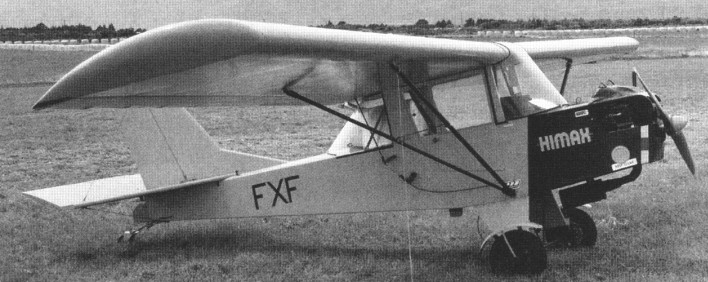
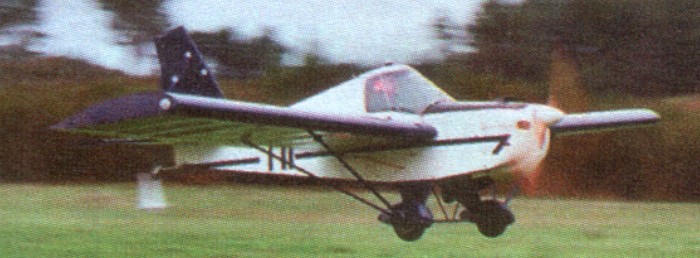
First flew in 1989. Take one or more parts from an already proven design, add a few parts for creature comfort and/or customer preferences, a wrap-around windshield of Lexan makes for excellent visibility and comfortable flying, and optional windows are removable for open-air flying in the summer. For power recommended is a Rotax 447, or any engine up to 45 hp.
Wood was chosen as the basic building material. It is easy to work with, dependable in its strength characteristics, and is not bothered by the vibrations associated with 2-cycle engines.
Construction techniques are of the old-fashioned, tried and true wood truss and plywood gusset method. It is very simple, and builds quickly. If you have ever built a balsa-wood model airplane, you have the experience required to build this “full-scale” model! While construction time will vary from builder to builder, approximately 300 hours is the average.
March 1999
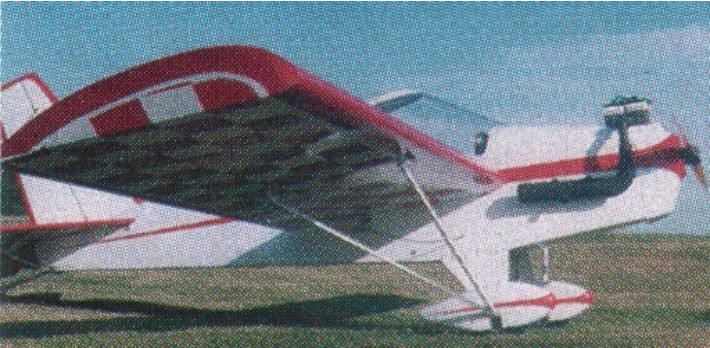
1700R Hi-MAX Standard equipment: Fiberglass engine cowl Prop spinner Quick removable wings Shoulder harness/seat belt Strut-braced tail 5 gallon gas tank 2009 Price: 5795 US$
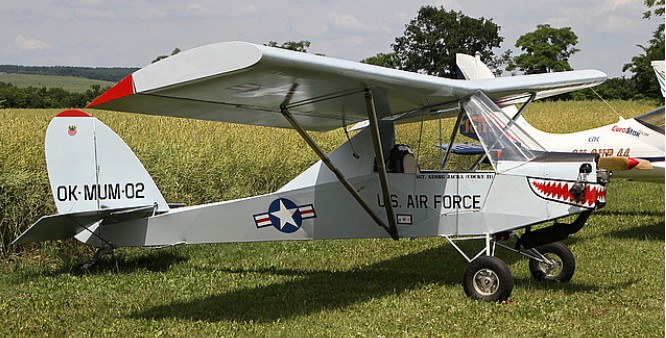
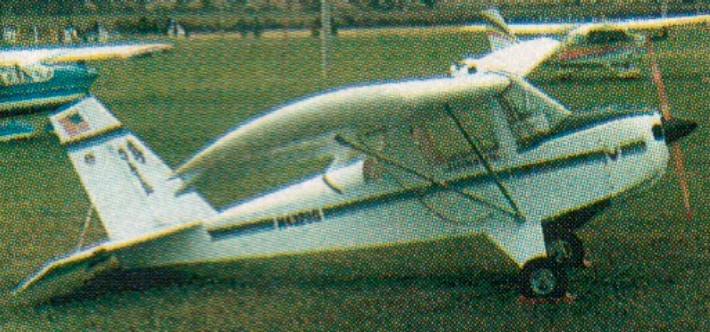
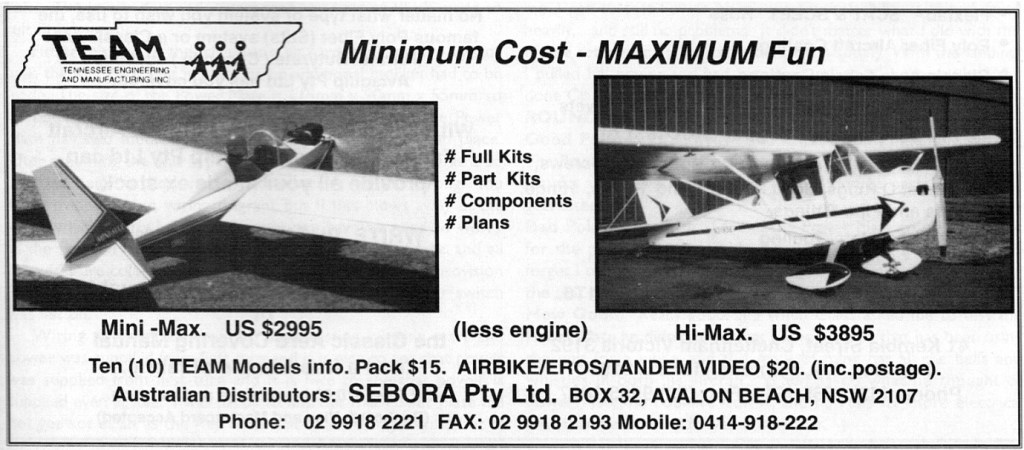
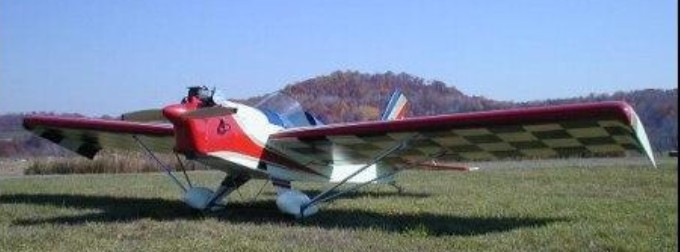
The Mini-MAX 1100R is a minimum cost aircraft, requiring a Minimum of building space, time or skill. A “Maximum” high of pure pleasure and performance. Mini-MAX 1100R standard equipment: Quick removable wings Shoulder harness/seat belt Full-span flaperons Curved windshield Strut-braced tail 5 gallon gas tank 2009 Price: 4795 US$
Tne Mini-MAX 1100R can be upgraded to models 1550R and 1260R.
Mini-MAX 1100R
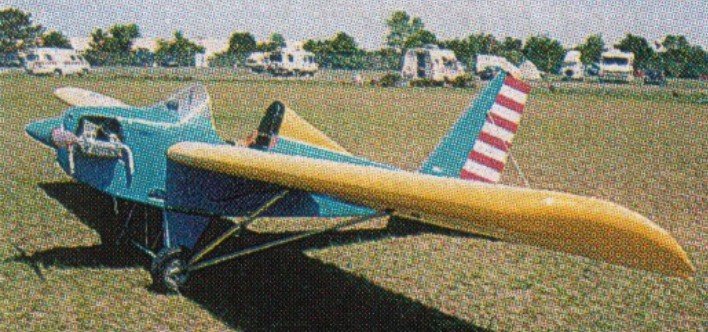
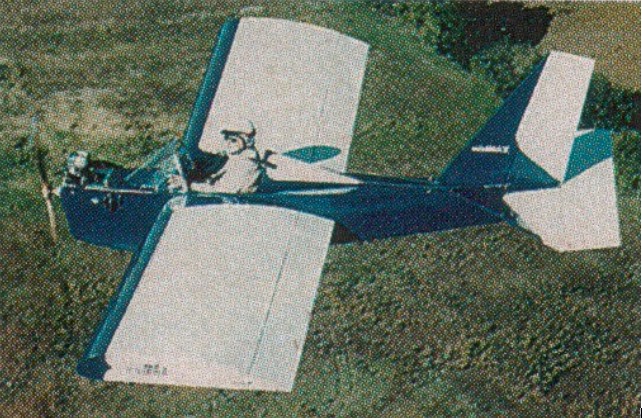
1200Z
The 1200Z can be upgraded to the 1500R. First flown in 1984.
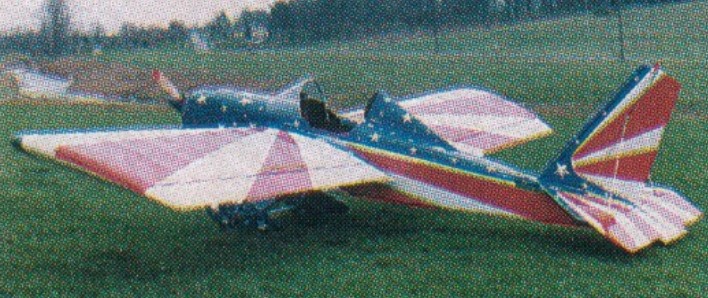
The TEAM 1300Z MiniMAX was first flown in 1991.
TEAM 1300Z
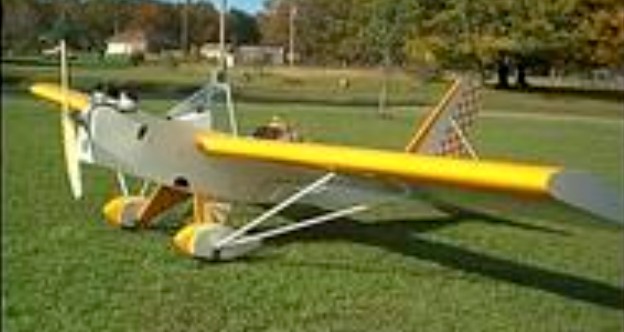
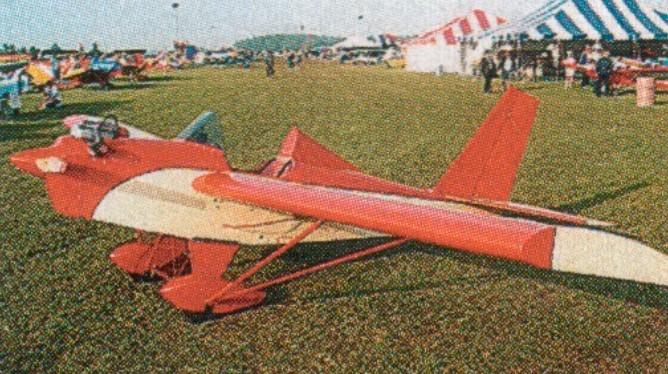
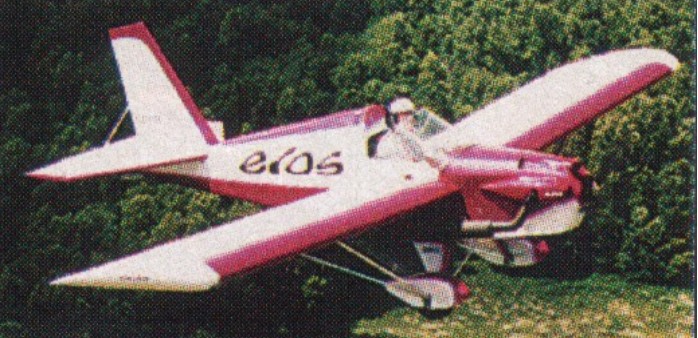
The 1500R was first flown in 1991. A Minimum-cost aircraft, requiring a Minimum of building space, time or skill. Wood was chosen as the basic building material. It is easy to work with, dependable in its strength characteristics, and is not bothered by the vibrations associated with 2-cycle engines.
1500R
1500R construction techniques are of the old-fashioned, tried and true wood truss and plywood gusset method. It is very simple, and builds quickly. If you have ever built a balsa-wood model airplane, you have the experience required to build this “full-scale” model. While construction time will vary from builder to builder, approximately 300 hours is the average.
March 1999
The 1500R was also marketed as the JDT 1500R.
1500R SPORT Standard equipment: Fiberglass engine cowl Prop spinner Quick removable wings Shoulder harness/seat belt Curved windshield Strut-braced tail 5 USgallon gas tank 2009 Price: 5290 US$
When during the 1950s the Chinese People’s Republic decided to revive the country’s sporting gliding movement it was to Poland that they turned for help, and with the aid of instructors, technicians and designers from the Polish SZD organisation a central Gliding School was organized at An-Yan and large gliding establishments were set up at Tchan-Tia-Kou. It was here that a Chinese glider design office was formed towards the end of 1956 under the direction of Dipl Ing Niespal of the Polish SZD, and a Glider Manufacturing Centre was organized for the licence production of Polish types such as the ABC, Salamandra, the SZD-8 Jasolka, the SZD-12 Mucha 100 and the SZD-9 Bocian, examples of which had already been purchased from Poland; production of these types began during 1955-56.
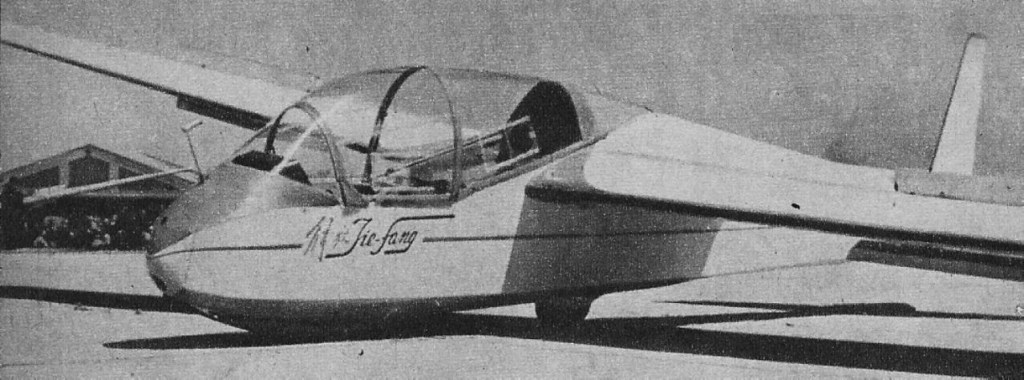
It was at Tchan-Tia-Kou that the first Chinese glider of original design, the Lie-Fang (or Liberation) two seater intermediate trainer, was created. The design of the Lie-Fang, one of the first gliders to originate in China, was led by the Polish J. Niespal. He was assisted by two Chinese engineers, Tchen-Kuei-Wen and Li-Ti-Tuin.
Niespal used the 1953 SZD-12 Mucha 100 as a starting point. There were many differences between the Mucha and the Lie-Fang, partly because the latter was a two-seat aircraft and therefore longer, with a much modified nose and more strongly forward-swept wings; the Lie-Fang’s fuselage was a simpler, flat sided structure compared with the Mucha’s oval section monocoque and the empennage was more angular.
The Lie-Fang 1 (English: Liberation 1), some sources Jeifang 1, is wood framed, with some use of the local “poton” wood and with a mixture of plywood and fabric covering. It has a high mid mounted single spar wing with a plywood covered torsion box leading edge, Behind the spar the wing is fabric covered. In plan it is straight tapered with unswept leading edges, resulting in forward sweep of 2° at one quarter chord. There is 4° of dihedral and 2° of washout. Its ailerons are slotted and fabric covered and spoilers, mounted behind the spar at about one third span, open above and below the wing.
The wooden slotted ailerons are also fabric covered and there are spoilers on both top and bottom wing surfaces. The fuselage is a plywood monocoque with a light alloy nose-cap, and the cantilever tail unit is of wood with fabric covering.
The fuselage is a flat sided monocoque which tapers gently to the rear, with the straight tapered tailplane mounted on top of it and forward of the fin. The rear surfaces are fabric covered. The straight edged rudder extends to the keel and moves in a cut-out between the elevators, one of which has a trim tab. The cockpit, mostly ahead of the wing leading edge, seats pupil and instructor in tandem with a single set of instruments that they can both see. The fixed, two part forward canopy reaches almost to the nose; a rear transparent section opens sideways for access to both seats. The Lie-Fang lands on a fixed monowheel undercarriage under the wing, fitted with brakes and aided by a short, rubber sprung nose skid and a tail bumper.
The landing gear consists of a non-retractable monowheel with brake, and a rubber-mounted skid under the forward fuselage. The two pilots are seated in tandem under a large sideways-opening Perspex canopy.
The prototype made its first flight on 10 May 1958. It was cleared for cloud flying and classed as semi-aerobatic. It went into production at the Tchan-Tia-Kou manufacturing centre, Shenyang, and was intended that pupils should graduate from the Lie-Fang to the single-seat SZD Mucha, which it resembles in appearance, for their first solo flights and the Lie-Fang went into small-scale production for the Chinese gliding centres.
Wingspan: 15.00 m (49 ft 3 in) Length: 8.00 m (26 ft 3 in) Wing area: 18.5 m2 (199 sq ft) Aspect ratio: 12.4 Airfoil: Göttingen 549 over most of the span, NACA 4412 at tip Height: 1.35 m (4 ft 5 in) Empty weight equipped: 242 kg (534 lb) Max takeoff weight: 420 kg (926 lb) Stall speed: 55 km/h (34 mph, 30 kn) Never exceed speed: 165 km/h (103 mph, 89 kn) Rough air speed max: 138 km/h (85.7 mph; 74.5 kn) Aerotow speed: 140 km/h (87.0 mph; 75.6 kn) Winch launch speed: 100 km/h (62.1 mph; 54.0 kn) Terminal velocity: with full airbrakes 165 km/h (103 mph; 89 kn) g limits: +4.5 Max l/d: 22 at 53 mph / 86 km/h / 46.4 kn Min sinking speed: 0.8 m/s / 160 ft/min / 2.62 ft/sec at 38.5 mph / 62 km/h / 33.5 kn Min sink: 2.6 ft/sec at 38.5 mph Crew: Two
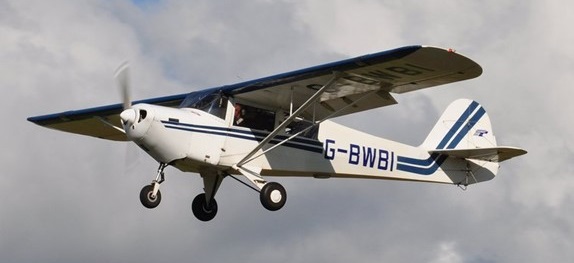
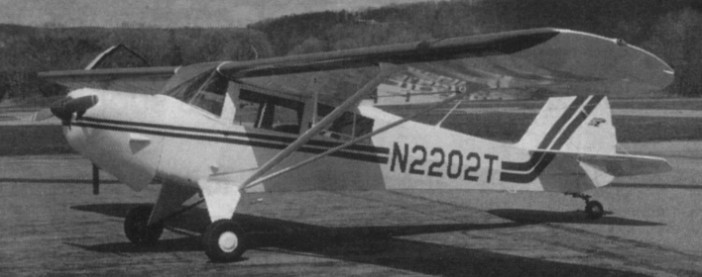
The design has its origins in the Taylorcraft Model B of the early 1940s, which was developed into the F-19 that was built until 1980. A higher-powered version, the F-21 two-seat sporting trainer, was designed with aluminium ‘T’-beam wing spars and a new fuel system. This in turn has given way to the F-22, in which the most noticeable change is the introduction of a nosewheel and flaps.
Other innovations on the F-22 include wider doors with hinged windows for better ventilation, easier access to seats, and quick-removal rear seats for cargo flights.
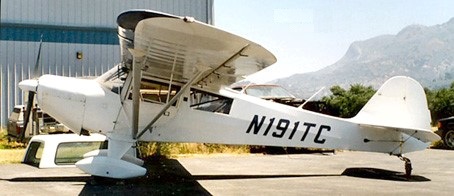
The 1990 F22 was a revival of original Taylorcraft BC-12D design, this time with flaps, options of IFR, tri-gear or conventional gear. When powered by a 180hp Lycoming engine it sold for $42,975.
The 1992 F22A Nose Wheel Taylorcraft aircraft were built by Taylorcraft in the old Piper Plant in P.A. USA.
Taylorcraft F22A Tracker
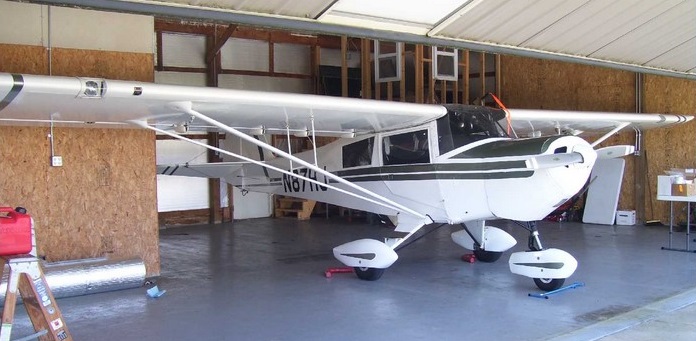
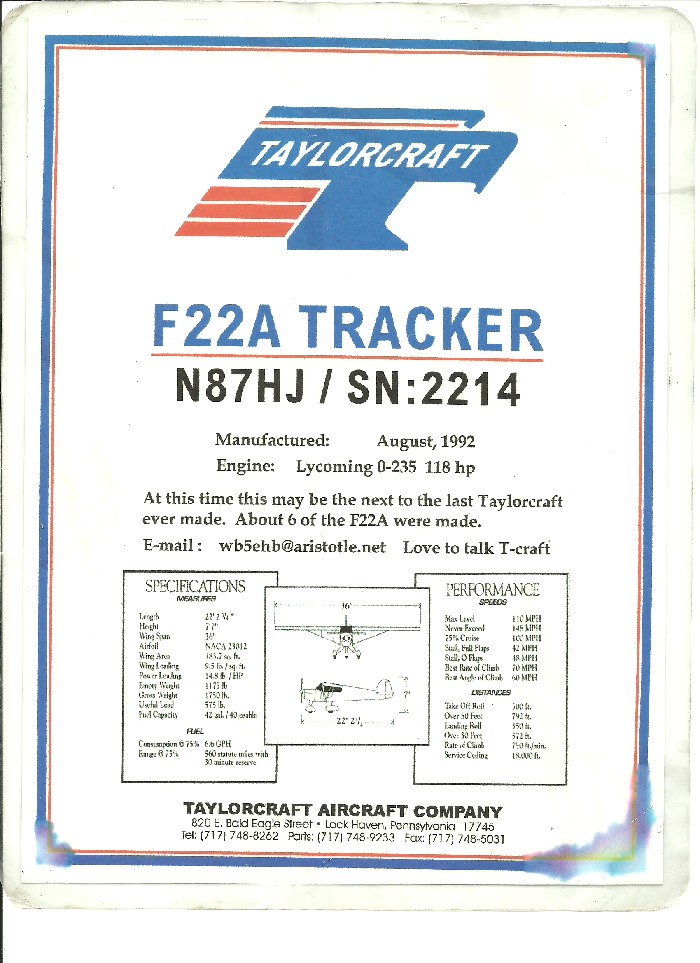
F-22A Tracker N87HJ sn/2214 Courtesy Paul Harrington – Harrington Aviation
This 1992 Taylorcraft F-22A has flaps, strobe lights, nav lights, dual landing lights, heated pitot tube, new sealed wing struts, disc brakes, full sky light, stall warning system and much more.
About 6 of the nosewheel F-22A were built as late as 1992. These models were about the last 6 or so to come out of the Taylorcraft factory, when it ended production.
US aircraft manufacturer Taylorcraft was marketing a Taylorcraft STOL 180 in 1990 as well as a Ranger and 118hp model. Features of the new 180 range include a three-¬bladed fully reversable Sensenich propeller as well as a Sports Special an aerobatic variant intended as a candidate for the USAF Air Training Command’s aerobatic screening aircraft for potential fighter pilot candidates. The Sports Special is reportedly capable of 155 mpb in level flight and a 2300 fpm capability.
A three seat 180 hp Lycoming powered aircraft. The 180GT is billed as a STOL performer with an initial climb rate of over 1600 fpm.
STOL 180
180GT Engine: Lycoming, 180 hp Seats: 3 ROC: 1600fpm
With origins in the Taylorcraft Model B of the early 1940s, the F-19 and F-20 are revived and improved versions of the Models 19 and 20. Three models of the F-19 Sportsman were offered as Standard, Custom, and Deluxe. There was a modernisation after Continental suspended production of the O-200 engine.
A higher-powered version, the F-21 two-seat sporting trainer, was designed with aluminium ‘T’-beam wing spars and a new fuel system. This in turn has given way to the F-22.
The F-21B has been certificated in Australia, and the manufacturer hoped that this would generate sufficient interest for the production line to start up again. The price for a standard, equipped aircraft had risen to $33,000, which Taylorcraft says reflected higher engine costs, which are “going out of sight”.
The 1979 T Craft was the F model. With 100 horsepower, it weighs 900 pounds and it can lift another 600 pounds. The T Craft tops out at 110 knots, it stalls at 37, and it departs or returns to Earth fully loaded over a 50 foot obstacle in 375 feet. It will cruise 350 miles while sipping six gallons an hour.
The F-19 was built until 1980.
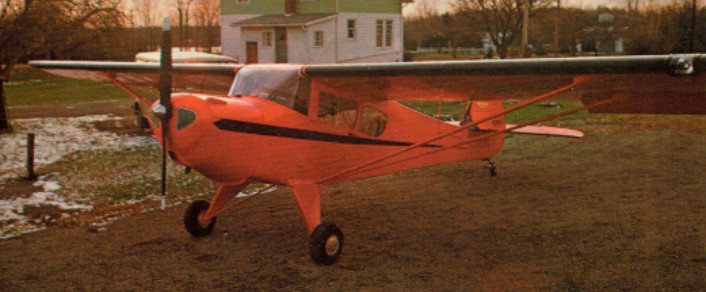
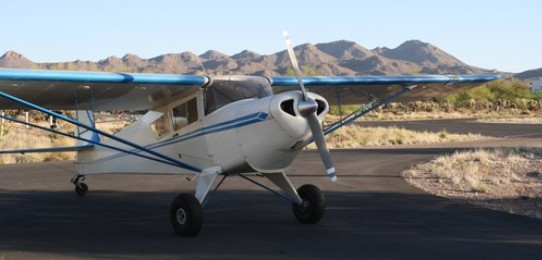
1975 model Taylorcraft F-19
Built in 1979 at the plant in Alliance, Ohio, wrapped in Dacron and painted, each T Craft is towed a couple of miles out to Barber Field for final assembly.
The F-21 was first built in 1980.
1980 Taylorcraft F-21
Taylorcraft production includes 100 prewar Model As, 1800 military L-2s, more than 2800 post-war BC-12Ds, and more than 120 F-19 Sportsmans.
19 Sportsman Engine: 1 × Continental C-85, 85 hp (63 kW) Prop: 2-bladed metal Wingspan: 36’0″ Length: 22’0″ Empty weight: 860 lb (390 kg) Gross weight: 1,500 lb (680 kg) Fuel capacity: 18 U.S. gallons (68 L; 15 imp gal) Maximum speed: 120 mph (193 km/h; 104 kn) Cruise speed: 110 mph (96 kn; 177 km/h) Stall speed: 38 mph (33 kn; 61 km/h) Range: 300 mi (261 nmi; 483 km) Service ceiling: 17,000 ft (5,182 m) Rate of climb: 700 ft/min (3.6 m/s) Crew: one Capacity: one passenger
F-19 Engine: 1 x Continental O-200-A, 100 hp Seats: 2 Wing loading: 8.17 lb/sq.ft Pwr loading: 15 lb/hp Gross wt: 1500 lb Empty wt: 870 lb Equipped useful load: 585 lb Payload max fuel: 441 lb Range max fuel/75% pwr: 401nm/3.9hr Service ceiling: 18,000 ft 75% cruise: 100 kt 55% cruise: 78 kt Stall: 37 kt 1.3 Vso: 49 kt ROC: 775 fpm Min field length: 400 ft Fuel cap: 144 lb
 All Aero