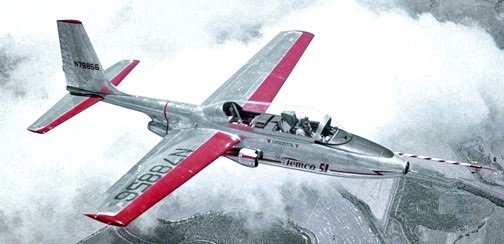
The United States Air Force issued a requirement in 1952 for a jet-powered primary trainer, and Texas Engineering and Manufacturing Company (Temco) responded with the Model 51 Pinto. Powered by a Continental J69-T-9 turbojet, the Pinto was a tricycle-geared mid-wing cantilever monoplane, with tandem seating for the instructor and student in an enclosed cockpit.
First flown on 26 March of 1956, the prototype, N78856, was tested by the U. S. Navy, which subsequently ordered 14 of the aircraft under the designation TT-1 (144223-144236), to study the feasibility of using jet aircraft for primary training. No additional TT-1 Pinto aircraft were manufactured.
Temco TT-1 N78856
The United States Air Force issued a requirement was met by the Cessna T-37
In June 1968 American Jet Industries Inc first flew the Super Pinto, a jet primary trainer or light strike aircraft developed from TT-1 Pinto built by Temco.
Temco TT-1 Super Pinto
One original surplus Temco TT-1 Pinto became the Super Pinto when modified with the J-85-17 engine by Frank Guzman. Registered N7753A, it first flew on 15 January 1972.
On November 8, 1976 the Philippine government bought the Super Pinto (Cali) prototype, including design and manufacturing rights.
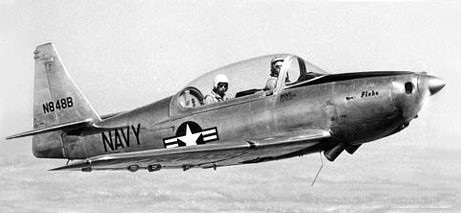
The TE-1A Buckaroo primary trainer development of Globe Swift lead in 1953 to the civil Model 33 Plebe. First flying on 23 August 1953, N848B, the sole example built, was an unsuccessful bid to replace the North American T-28.
Pappy Gunn landed a post-war job as technical advisor to the Philippine Air Force, and leaked word that the PAF just might be in the market for a tiny tandem trainer that could mount a pair of machine guns in the wing to go shoot up rebellious natives or whatever. Robert McCullough, who was then president of TEMCO, asked the sales department whether a commercial version of such a plane would find a market, and when they said yes, the engineers, under Dave Tacke, got busy and hand-built a modification of a standard Swift into what was called the TE-1A.
The only changes in this initial prototype were to install tandem instead of side-by-side seats, tandem controls, a new canopy and a squared off rudder, much like that of the T-6. The sirnilarity was not accidental TEMCO was originally founded to hold together a postwar production team of outstanding skill, and more than 90% of the employees had worked for North American building T-6s and P-51 Mustangs. To come up with something in a hurry, the prototype trainer was designed originally as a converted Swift, which was already in production at TEMCO since Globe went bankrupt.
The TE-1A had tandem cockpits; 24v electrics, raised horizontal tail, strengthened wing with added fillets, and improved landing gear. In late 1948 the first TE-1A prototype was ready to fly, behind a 125-horsepower Continental, when word came that the USAF planned a competition in early 1949 for a new primary basic trainer. There was no time for a major redesign, so they cleaned up the canopy and sent the ship off to Wright Field to compete against the Fairchild T-31 and the Beech T-34, with Fairchild winning that round. Forgetting the Air Force’s interest, TEMCO decided to press on with the Buckaroo as a COIN aircraft for smaller foreign governments, brought in a noted small-plane engineer, H.G. Erickson, and went to work on a complete new program to come up with a really first class plane with no restrictions.
Scrapping the original TE-1A design, a whole new aircraft was evolved, still designated the TE-1A, of the same general weight, type, and configuration, but designed to military standards. Starting from scratch with a plaster and steel mockup, they, designed a brand new fuselage and wing center section, bulging the rear fuselage slightly, raising the deck, lengthening the nose and adding three inch’s to the overall length. Outer wing panels were stressed to 9 G’s and the tips squared off. The only vestige of its Swift lineage was to leave in the leading edge slot assembly, which gave more positive control at low airspeed.
About the only parts of the original airframe left were the cowl and canopy, neither of which survived the initial flight test stage. The canopy became a three-piece sliding type with magnesium framework, and the cowl was redesigned to provide downdraft rather than updraft cooling.
Other changes included a panel redesign to conform to the Air Force Standard Cockpit layout that originated with the T-6 Texan in World War 11, addition of an Aeromatic Model F-200H propeller with altitude control, a 24-voll electrical system, and a single fuel tank of 27.6 gallon capacity.
The finished product looked so good that in late 1949 TEMCO tooled up for limited production of 10 items, with 145-horsepower Continentals’ but just then they heard through the grapevine that the Air Force actually wanted to buy three YT-35s, as they were then called, for a new evaluation at Randolph AFB (the earlier USAF contract had been cancelled). So the horsepower went from 145 to 165 and the Buckaroo went to the lists as the TE-1B.
The official policy line was no more taildraggers in the Air Force.
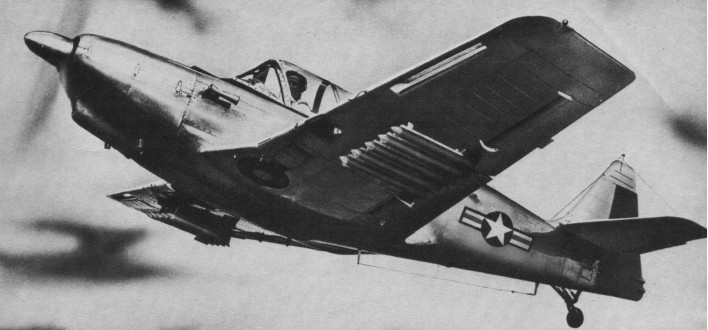
The Israeli Air Force got the first TE-IA, N90080, in June, 1950, with machine guns and ten 2.75-inch rockets, one TE-1A went to the Greek Air Force, while the original three TE-1Bs, designated YT-35 Buckaroos, went to the Air Force the next month. Saudi Arabia took delivery of ten more Buckaroos, 53-4465 to 53-4474. Saudi Arabia installed two .30 wing guns and ten underwing rocket launchers.
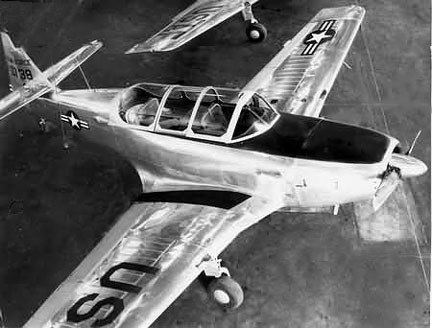
Temco T-35
The three USAF TE-1Bs, 50-738 to 50-740, were finally shipped to San Marcos AFB as instrument trainers for Field Force Liaison Pilots, and ten months later were returned to TEMCO for factory overhaul preparatory to still another round of evaluation tests at Goodfellow AFB, against the YT-34, with a T-6 Texan serving as control ship. Thus it was that Beech beat out TEMCO and the three TE-1Bs (or YT-35s) went up for sale as military surplus.
A Jack Hardwick picked up the three Buckaroos from the government and eventually disposed of them.
YT-35 Engine: 165 h.p. Franklin 6A4-165-B3 Span: 29 ft. 2 in Weight: 1,975 lb Max. Speed: 156 mph
T-35 Buckaroo Engine: Franklin 6A-165-B3, 165 hp Wingspan: 29′ 10″ Length: 21′ 8″ Useful load: 620 lb Max speed: 150 mph Cruise speed: 142 mph Stall: 56 mph Range: 550 mi Seats: 2 Tandem Undercarriage: retractable
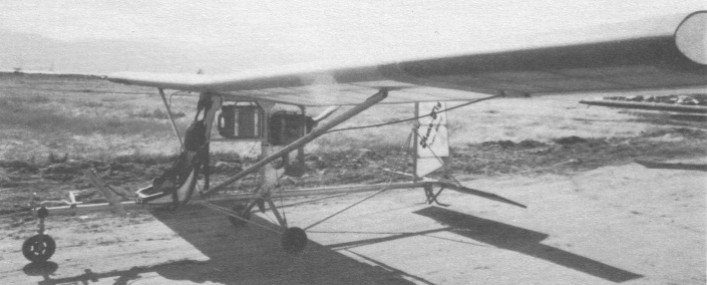
Single seat single engined high wing mono¬plane with conventional three axis control. Wing has unswept leading and trailing edges, and constant chord; conventional tail. Pitch control by fully flying tail; yaw control by fully flying rudder; roll control by one third span ailerons; control inputs through yoke for pitch/roll and pedals for yaw. Wing braced from below by struts; wing profile modified Clark Y (incidence: 6 deg at root, 3 deg at tip); double surface. Undercarriage has three wheels in tricycle formation with additional tailskid; steel spring suspension on nosewheel and bungee suspension on main wheels. Push right go right nosewheel steering connected to yaw control. Brake on nosewheel. Aluminium tube framework, without pod. Engine mounted below wing driving pusher propeller.
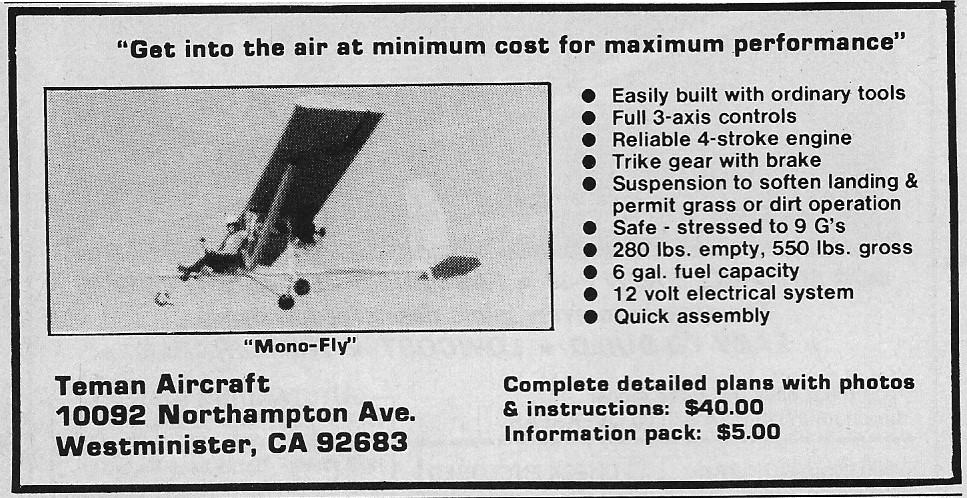
Bob Teman worked as a structural engineer on the space shuttle and Cruise missile programmes and over the last few years he has designed and built several aircraft including a man powered machine. His Mono Fly is the result of five years of development during which the main boom of the fuselage is the only part which has not been modified. Trials began in January 1976 and the first flight was made in duly 1979, experimental category FAA certification being granted on 7 July 1980, though the latest version just qualifies as an ultralight. Three different wings had been built the prototype even appeared once as a biplane three different engines, four types of suspension, two tails etc. Although he started by selling his MonoFly only as plans, Bob Teman was quickly overwhelmed by the demand and had to form Teman Aircraft to do it properly. This company now sells the Mono Fly as plans for $40, requiring around 300h labour and approximately $1910 for materials, engine included. In standard form, the engine was a twin cylinder, four stroke Onan (as used by Quickie) developing up to 22 hp and used with direct drive. Bob next offered as an option, the Kawasaki TA440 of 38.5 hp, whilst producing a prototype powered by a Rotax 503, which became the standard power pack in March 1983.
At Sun ‘n’ Fun in 1983 at Lakeland, Florida, where the Mono Fly put on several displays, Teman Aircraft also announced that two kits were now available. One, called the material kit, offers the Mono Fly complete except for paint and battery for $3540 or $2155 without the engine and requires around 150h assembly. The other, called the fast build kit, needs 80h assembly according to Teman Aircraft and is sold for $3900 complete or $2515 without engine. The latter offers, on top of that in the material kit, sheet, plate, angle and tube all cut to size including bends and pilot holes, while the engine is modified and ready to bolt on.
The Mono Fly is designed with demountable wings to facilitate transport and rigging without tools takes ten minutes for one person.
Engine: Rotax 503, 46 hp at 6500 rpm Propeller diameter and pitch 52 x 34 inch, 1.32 x 0.86 m Reduction ratio 2.0/1 Max static thrust 300 lb, 136 kg Power per unit area 0.37 hp/sq.ft, 4.0 hp/sq.m Fuel capacity 5.0 US gal, 4.2 Imp gal, 18.9 litre Optional fuel: 6.0 US gal, 5.0 Imp gal, 22.7 litre Length overall 17.2 ft, 5.23 m Height overall 6.6ft, 2.01m Wing span 30.8ft, 9.37m Constant chord 4.0ft, 1.22m Dihedral 3 deg Sweepback 0 deg Total wing area 124sq.ft, 11.5sq.m Total aileron area 8.0sq.ft, 0.74sq.m Rudder area 10.0 sq.ft, 0.93 sq.m Total elevator area 14.0 sq.ft, 1.30 sq.m Wing aspect ratio 7.6/1 Empty weight 250 lb, 113kg Max take off weight 550 lb, 249kg Payload 300 lb, 136kg Max wing loading 4.43 lb/sq.ft, 21.6kg/sq.m Max power loading 12.0 lb/hp, 5.4kg/hp Load factors; +10.0, 10.0 ultimate Max level speed 63 mph, 101 kph Max cruising speed 45 mph, 72kph Stalling speed 20mph, 32kph Max climb rate at sea level 1000ft/min, 5.1m/s Take off distance 100 ft, 30 m
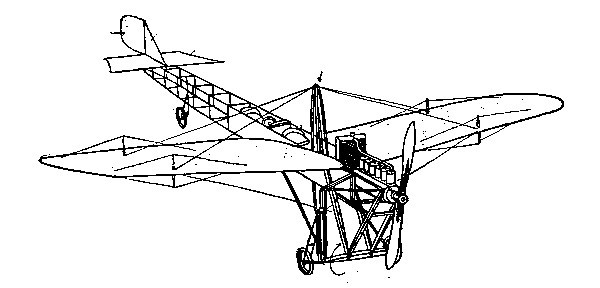
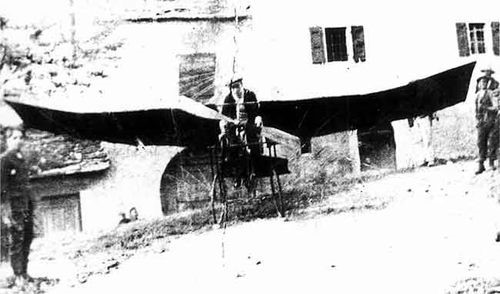
The Tellier company mainly built monoplanes with 4-cylinder engines before its 1910 bankruptcy, but this machine with a 6-cylinder engine fits the characteristics of the two-seater “type militaire” with 55 hp Panhard-Levassor engine, displayed at the Paris Aéro Salon in Autumn 1910.
One of this type was sold to the Russian Government.
Motorboat builder Alphonse Tellier (one of his craft towed Voisin’s float glider in 1905) built his first aircraft, for Emile Dubonnet, in 1909-1910, but went into liquidation in 1911.
The Teichfuss Nibio (the German-speaking Teichfuss’s spelling of the Italian Nibbio or English: Kite) was an Italian single seat glider, designed by Luigi Teichfuss.
The original Nibio, the Nibio I was designed as a primary glider and was built in the Royal Aircraft factory at Pavullo nel Frignano Airport during 1929. Apart from its span of 12.5 m (41 ft 0 in), empty weight of 145 kg (320 lb) and all-up weight of 220 kg (485 lb) very little information on it exists. Some launches were made by aerotow, behind an Aviatik from Taliedo. The Nibio II, sometimes known as the Nibio II Freccia Nera (English: Black Arrow) followed the next year with a new wing. Its greater span, increased by 900 mm (35 in), provided an increase in aspect ratio. Despite its longer wing the Nibio II was 20 kg (44 lb) lighter.
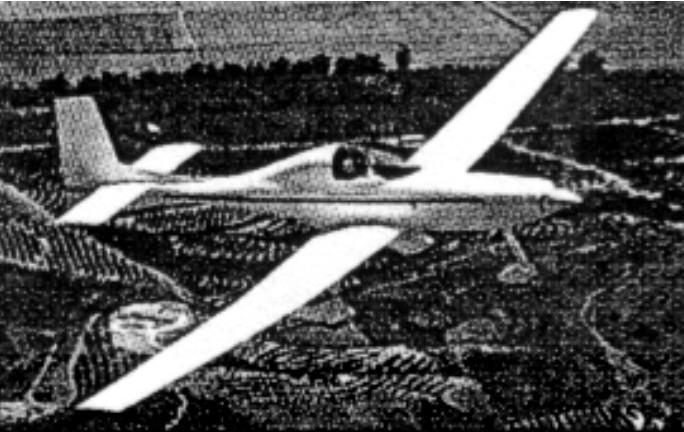
The Nibio II was a high-wing monoplane with its wing braced by a single faired strut on each side, joining the lower fuselage to the outer end of the central panel at about one third span. This central panel was rectangular in plan and was without dihedral. The outer panels were straight tapered to blunt tips, the wing becoming thinner and thus acquiring dihedral though retaining a horizontal upper surface. Ailerons occupied the whole trailing edges of these outer panels; there were no inboard flaps or air brakes.
Its wood framed, plywood skinned fuselage was hexagonal in cross section, tapering markedly on its underside towards the tail. The wing was mounted on a pedestal which sloped away aft into the upper fuselage. The pilot’s cockpit, open behind a small windscreen, was immediately ahead of the pedestal and below the wing leading edge. The tail surfaces were straight tapered and straight tipped, with the tailplane mounted on the fuselage. The rudder extended down to the keel, operating within a small cut-out between the elevators and protected from the ground by a small underfin which served as a tail bumper. There was a short landing skid running from near the nose to just aft of the wing strut.
Only one of each version was ever built.
Nibio I Wingspan: 12.5 m (41 ft 0 in) Empty weight: 145 kg (320 lb) All-up weight: 220 kg (485 lb)
Nibio II Freccia Nera Wingspan: 13.40 m (44 ft 0 in) Wing area: 12.60 m2 (135.6 sq ft) Aspect ratio: 14.2 Airfoil: Göttingen 535 and NACA M6 Length: 6.20 m (20 ft 4 in) Height: 1.3 m (4 ft 3 in) Empty weight: 125 kg (276 lb) Gross weight: 210 kg (463 lb) Wing loading: 16.7 kg/m2 (3.4 lb/sq ft) Maximum glide ratio: estimated 19:1 Rate of sink: 0.8 m/s (160 ft/min) minimum Capacity: One
The Teichfuss Balilla was an Italian single seat primary glider, designed by Luigi Teichfuss.
In 1939 Luigi Teichfuss designed an improved version of the Nibio I, the Balilla. It was a simple, low cost, robust, high wing, strut braced monoplane with an unswept, constant chord, elliptically tipped wing. Mounted with dihedral, this was supported over the fuselage on a narrow pedestal and braced on each side by a parallel pair of faired lift struts from the lower fuselage to the wings at about half span.
Its fuselage was wood framed, flat sided and plywood skinned. Its cockpit, open but with a small windscreen, was immediately ahead of the wing leading edge; there were no instruments. The Balilla’s tail surfaces were all straight edged: the tailplane, single strut braced from below, had a sharply swept leading edge and carried elevators with angled tips and a cut-out for rudder movement. The vertical tail was tapered with a squared tip; the rudder reached to the keel, where it was protected by a wire loop tail bumper. Elevators and the rudder lacked aerodynamic balances. A conventional skid, running from the nose to below the wing trailing edge formed the undercarriage.
The Ballila first flew in 1939. Ten were built, serving all the gliding schools of the R.U.N.A. It could be winch launched and was straightforward to fly, training novice pilots to their B-certificate.
Wingspan: 12.50 m (41 ft 0 in) Wing area: 16.6 m2 (179 sq ft) Aspect ratio: 9.4 Airfoil: Göttingen 535 Length: 6.38 m (20 ft 11 in) Height: 1.48 m (4 ft 10 in) Empty weight: 126 kg (278 lb) Gross weight: 211 kg (465 lb) Maximum glide ratio: estimated 17:1 Rate of sink: 0.85 m/s (167 ft/min) minimum Wing loading: 11.6 kg/m2 (2.4 lb/sq ft) Seats: One





 All Aero