In 1931 Milford H Thompson produced the Midget single-place open cockpit shoulder-wing monoplane, registered N12067, and powered by a 29hp Harley Davidson engine.
Engine: Harley Davidson, 29 hp
Speed: 75 mph
Empty weight: 350 lb
Take-off run: 175 ft
In 1931 Milford H Thompson produced the Midget single-place open cockpit shoulder-wing monoplane, registered N12067, and powered by a 29hp Harley Davidson engine.
Engine: Harley Davidson, 29 hp
Speed: 75 mph
Empty weight: 350 lb
Take-off run: 175 ft
In 1928 Milford H Thompson produced a single place open cockpit, parasol wing monoplane, powered by a 29hp Harley-Davidson engine. It was capable of 65 mph.
The two place cabin monoplane A-2 Sport N717Y built by Walter J Thomas in 1931 was powered by a 55hp Michigan Aero engine.
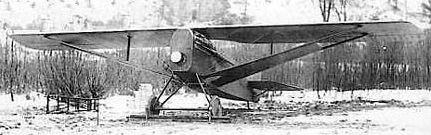
The Thomas-Morse MB-1 of 1918 featured faired lifting struts and parasol wing. Only one was built, and flown only once, as the landing gear proved to be too frail for its weight. It collapsed while taxiing out for another trial flight.
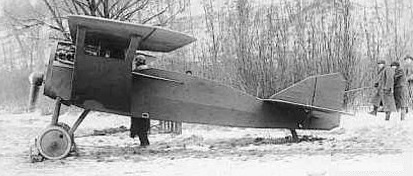
Engine: Liberty 12, 400hp
Wingspan: 37’0″
Length: 22’0″
Seats: 1
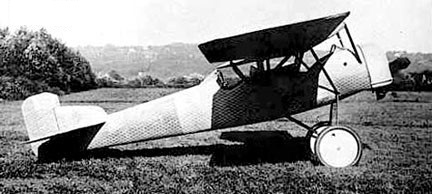
The Thomas-Morse MB-10 of 1921 was an Army primary trainer. Only one of the all-metal trainer was built and it had poor flight characteristics. It was converted into the MB-9 Army pursuit in 1921.
The MB-9, modified from the MB-10 with 300hp Wright H-3 and 29’0″ wing, still suffered design and structural problems. The one conversion was test-flown a few times (piloted by Paul Wilson), then relegated to storage.
MB-9
Engine: Wright H-3, 300hp
Wingspan: 29’0″
Seats; 1
MB-10
Engine: LeRhône, 110hp
Seats: 2
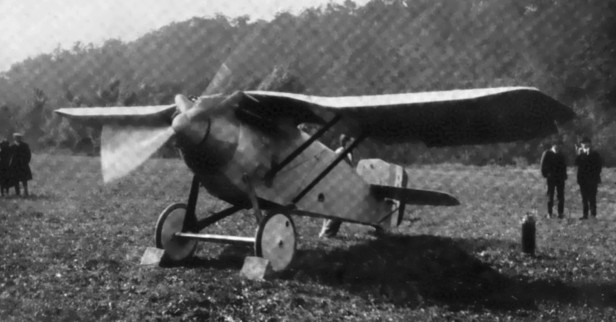
The 1921 Thomas-Morse MB-7 were MB-3 from USAS inventory converted to single-place strut-braced, gulled, high wing monoplanes for USN racers. First flying on 29 September 1922 piloted by Capt Frank O Hunter, two were built as R-5 military entries in the 1921 Pulitzer races; AS64373 / A6070 (dropped out with lubrication problems) and AS64374 / A6071 (destroyed in crash during trial flight). One was reportedly tested with a 400hp Curtiss D-12, both subsequently destroyed in static testing.
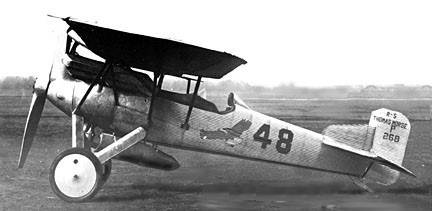
Engine: Wright-Hisso H-3, 400hp / Packard 1A-2025, 585hp
Wingspan: 29’0″
Length: 25’0″
Speed: 155 mph
Seats: 1
The 1913 Thomas Monoplane was a single place Blériot look-alike with quad gear.
Engine: 40hp Maximotor or 65hp Kirkham pusher
Wingspan: 32’0″
Length: 30’0″
Seats: 1
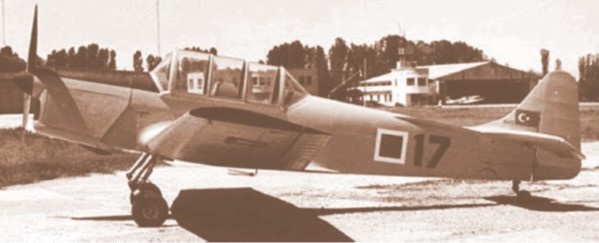
A tandem two-seat primary trainer, the THK-15 was an updated Magister, made of metal, and with a cockpit canopy.
Of 100 ordered for the Turkish Air Force, 60 had been delivered and production ceased in 1956.
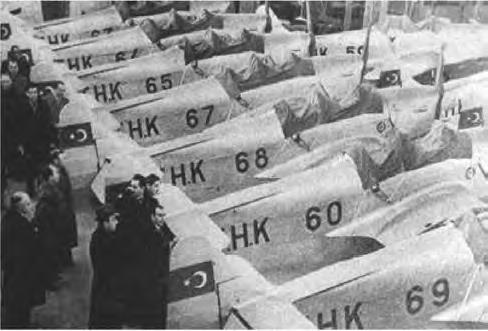
54 were used by the Turkish Air Force 1955-1963 and the remaining THK-15 were donated to the Jordan Royal Air Force.
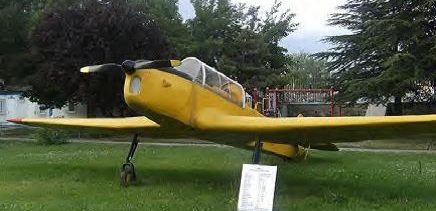
After the change to MKEK the MKEK-4 designation was used.
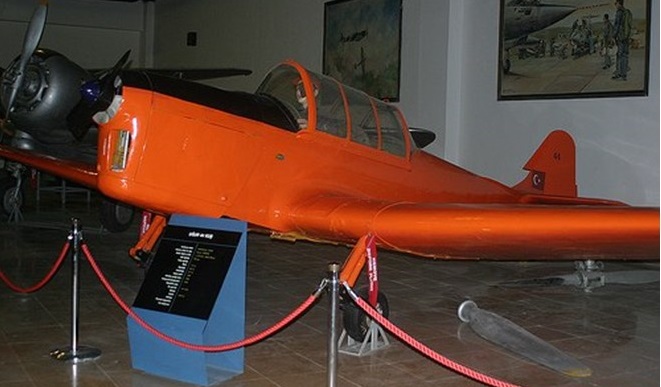
MKEK 4 Ugur
Engine: DH Gipsy Major 10 Mk.I, 145 hp
Wing span: 31 ft 2.5 in / 9.50 m
Wing area: 171 sq.ft
Length: 24 ft 7.25 in
Empty weight: 1465 lb
Loaded weight: 2045 lb
Max speed: 135 mph
Cruise: 110 mph
ROC: 800 fpm
Service ceiling: 16,000 ft
Range: 300 mi
Seats: 2 tandem
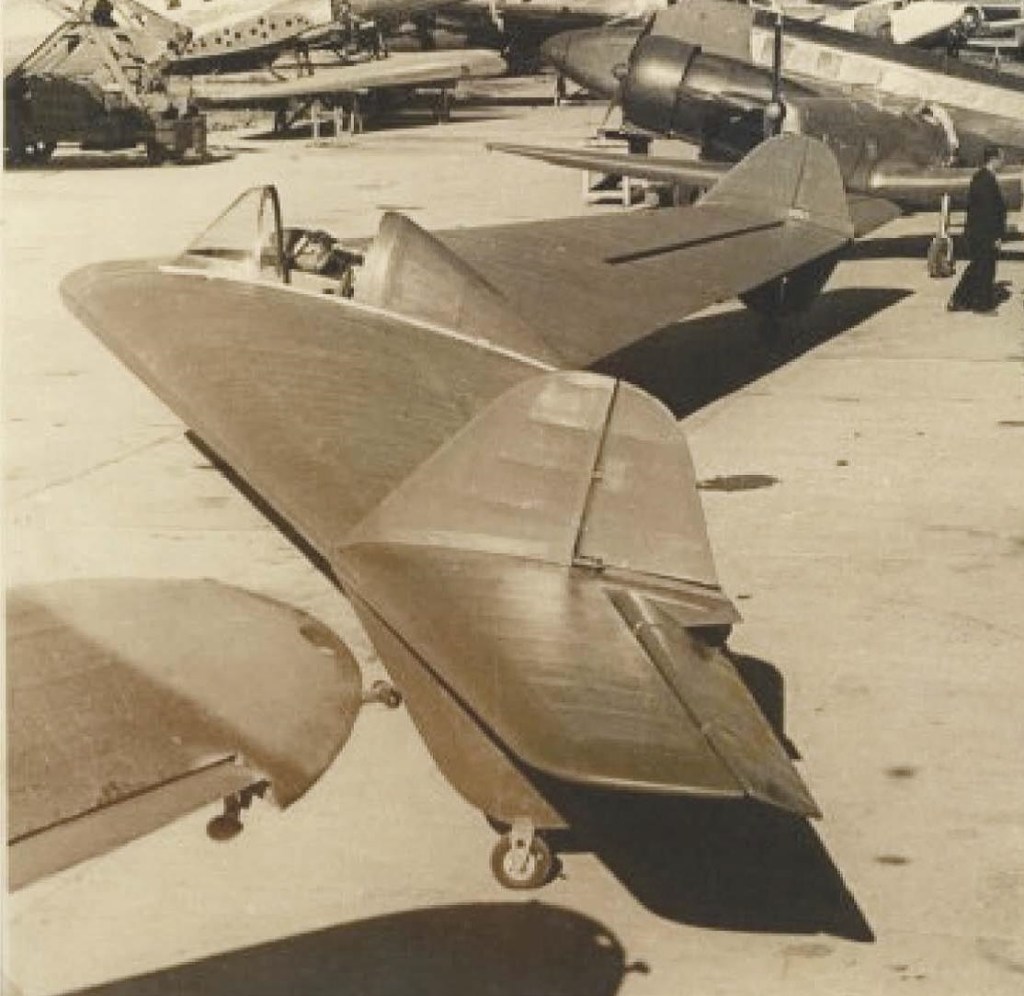
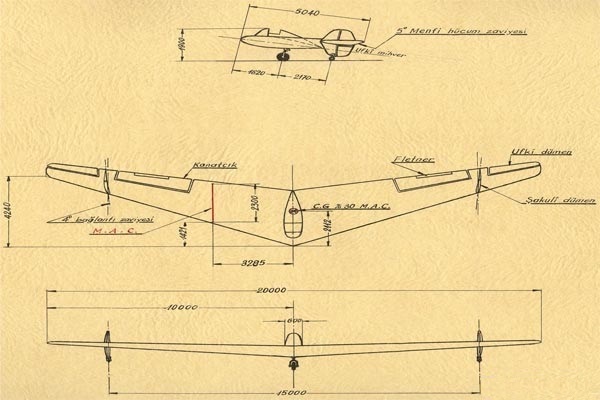
The 1948 THK-13 single-seat tailless wood and fabric glider was for aerodynamic research. It was planned to produce a Gipsy-powered version when the glider had successfully completed stability trials.
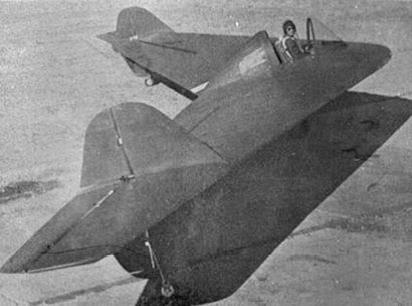
The undercarriage consists of a single main wheel under the nacelle, and small castering stabilizing wheels attached to the vertical fins.
In 1948, designed by Senior Engineer Yavuz Kansu and Y.Muh, the test flight pilots were Kadri Kavukçu and Pilot Cemal Uygun.
Exhibited at the 1949 Aerospace Exhibition in Paris.
The project was not developed after an accident.
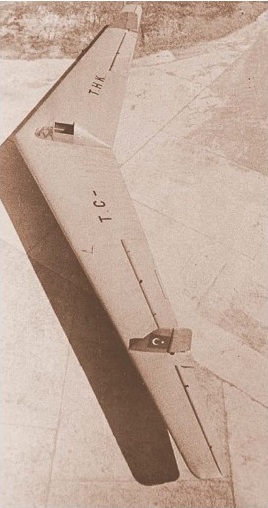
Wing span: 65 ft 7 in
Height: 6ft 6 in
Wing area: 431 sq ft.
Loaded weight: 1,014 lb
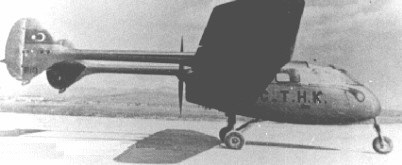
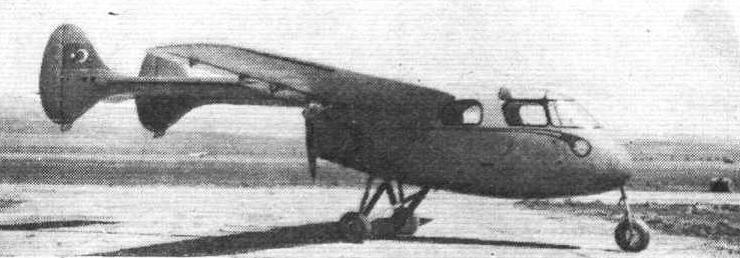
The THK-11 was a high-wing twin-boom three-seat cantilever cabin monoplane with a 135 hp (101 kW) de Havilland Gipsy Major piston engine driving a pusher propeller. It has a fixed nose-wheel landing gear and was first flown in 1947.
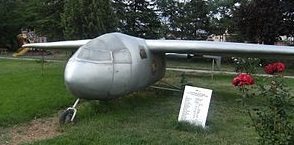
The sole THK-11 is on display at the Ankara Türk Hava Kurumu Müzesi – (Ankara Turkish Aeronautical Museum).
Engine: 1 × de Havilland Gipsy Major, 101 kW (135 hp)
Propeller: 2-bladed fixed-pitch pusher
Wingspan: 11.80 m (38 ft 9 in)
Wing area: 18.7 sq.m (201 sq ft)
Length: 8.44 m (27 ft 8 in)
Height: 2.59 m (8 ft 6 in)
Empty weight: 828 kg (1,825 lb)
Gross weight: 1,150 kg (2,535 lb)
Maximum speed: 201 km/h (125 mph; 109 kn)
Cruise speed: 164 km/h (102 mph; 89 kn)
Landing speed: 80 km/h (50 mph; 43 kn)
Range: 800 km (497 mi; 432 nmi) in still air
Service ceiling: 3,500 m (11,500 ft)
Rate of climb: 3.5 m/s (690 ft/min)
Wing loading: 61.5 kg/sq.m (12.6 lb/sq ft)
Power/mass: 11.4 kg/kW (18.7 lb/hp)
Crew: 2
Capacity: 1 passenger
 All Aero