Tijonrarov AVF-1 Arap

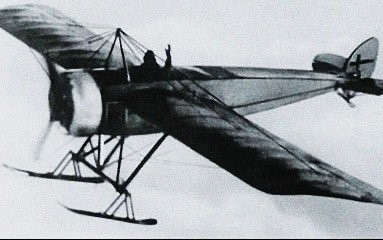
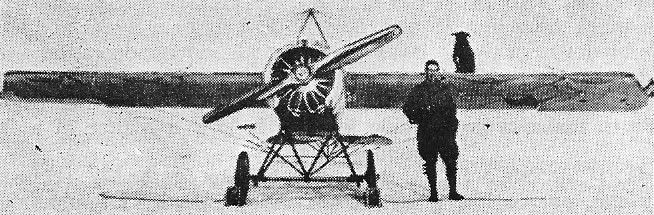
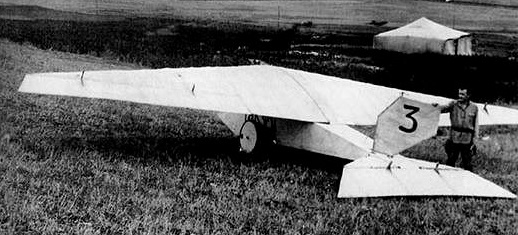
Tijonravov AVF-1 “Arap” at the First National Competitions of 1923.

In March 1923 the Society of Friends of the Air Fleet (ODVF) was created (in Russian: Общество друзей Воздушного флота (ОДВФ)) with the aim of supporting the construction of airplanes and aeronautical engines, familiarizing the population with aeronautics and with the study of airplanes, engines, gliders, parachutes, as well as the development of gliding. To this end and under the direction of KK Artseulov, the Center for Motorless Aviation was created within the ODVF.

Tijonrarov became interested in the construction process and began to combine his studies at the Academy with the projection of a glider that he called “Arap”. This was the first glider created within the Air Fleet Academy (AVF), for which it was officially designated AVF-1 (Russian: АВФ-1 “Арап”).

The AVF-1 “Arap” was developed by a group of academy students. The assembly was carried out at the “Aviarabotnik” factory in Moscow.

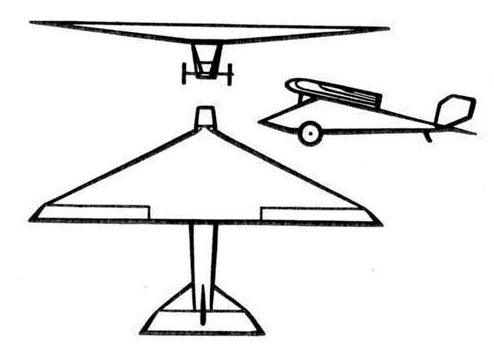
The AVF-1 “Arap” glider was designed as a monoplane with a triangular cantilever wing. The structure was built in wood with a textile covering. The wing profile was achieved by taking the shape of a Junkers monoplane with modifications to the shape and its structure had wooden stringers converging at a point on the wing root, joined with perpendicular ribs. Roll control was ensured by large ailerons on the trailing edge.

The fuselage, with a trapezoidal section, was made up of two flat surfaces joined by pieces of wood. Towards the tail section the fuselage closed towards a horizontal rib to which the tail was attached.

The tail unit was of the monoplane type. The large area horizontal stabilizer was located at the rear of the fuselage with a single large area elevator. The empennage functioned entirely as a rudder.

The landing gear was of the conventional type, fixed, with a tail skid. The two large wheels were located on either side under the cab, with a large light between them.

The cockpit for the pilot was located in the forward portion of the fuselage, under the wing.

The first flight was made on October 12, 1923. The AVF-1 was ready in time to participate in the First National Sailing Competitions, promoted by the ODVF and held between November 1 and 18, 1923 in the Uzun-Sirt mountains, Crimea.

Ten gliders appeared in this contest. The technical commission, chaired by Professor VP Vietchinkin authorized the flight of only 9, among which stood out the AVF-1 Arap of MK Tijonrarov, the AVF-2 Strizh of VS Pyshnov, the AVF-3 “Mastyazhart-1” of SV Ilyushin; the Maori of SN Lyushin and tailless glider BICH-1 of BI Cheranovski.

After tests that comprised flight for more than 15 seconds, the AVF-1 was one of the four gliders that were authorized to perform flights. In November or December 1923, piloted by VF Denisov, this flight lasted only 1 minute 5 seconds in which the glider reached 385 meters with a maximum height of 70 meters. On the second flight the “Arap” made a turn and destroyed the wing.

AVF-1 Arap
Wingspan: 10.1 m
Wing area: 15 m²
Aspect ratio: 6.8
Length: 6.2 m
Height: 1.9 m
Empty weight: 70 kg
Wing loading: 9.5 kg / m²
Stabilizer surface 0.65 m²
Elevator surface 2.5 m²
Rudder surface area: 0.65 m²
Spoiler area: 2.4 m²
Accommodation: 1
Thurston Tawney Owl

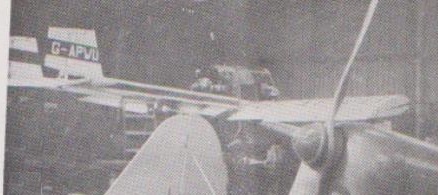
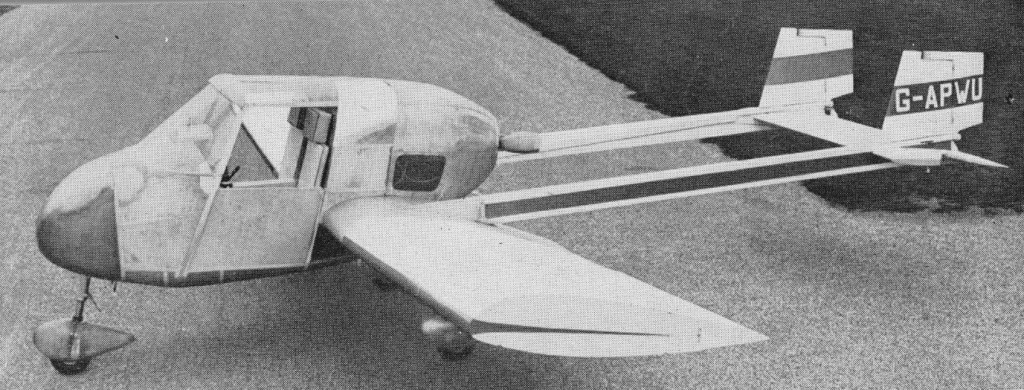
An attempt to produce a cheap new British lightplane, the Owl was designed by Tony Creedon and Eric Thurston, and built at Stapleford Tawney in Essex.

Thurston Tawney Owl G-APWU under construction at Stapleford Tawney in 1960.

It had a 75 hp Porsche engine and a metal and plastic airframe.

The first flight, on 22 April 1960, ended in a forced landing. Registered G-APWU c/n TA,1-1, it was put into store, firstly at Stapleford then Stendon and later offered for sale.

Engine: Porsche 678/4, 75 hp
Wingspan: 24.00 ft
Length: 19.06 ft
Seats: 2 side-by-side

Thurston TA-16 Trojan / Seafire

Thurston TA-16

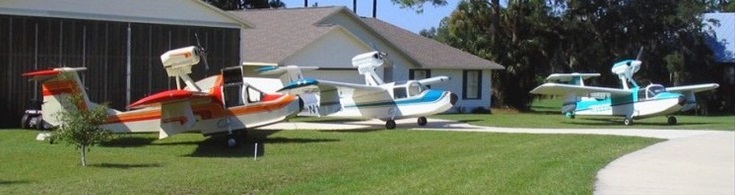
David B. Thurston, veteran amphibian aircraft designer was completing certification requirements for his four-place waterbird, the TA16 Trojan, to be called the Seafire when FAA-certified. This means that home-builders will have a proven, FAA-certi¬fied amphibian structure if they follow the plans with care. The proto-type Seafire is scheduled for flight testing in July 1981, while 45 home-builders already have Trojans under construction. Thurston, designer of the Colonial Skimmer (still produced as the Lake Amphibian) and the Teal Amphibian, estimates that the Tro¬jan/Seafire can be built in 3000 hours by anyone with previous airframe construction experience. This time can be reduced by using subassem¬blies and parts currently available from Underwood Aircraft, 18440 South Broadway, Gardena, CA 90248. The Trojan/Seafire has a radius of ac¬tion in excess of three hours and can operate from water, land, snow or ice.

The prototype N16SA first flew on 10 December 1981 and about 45 were under construction by 1982.

Construction, aluminum alloy with fiberglass bow deck skin and windshield enclosure
Power 160 – 250 hp

TA-16 Seafire
Engine: Lycoming O-540-A4D5, 250 hp
Span: 37’ 0”
Wing Area: 183 sq.ft
Length: 27’ 1.59”
Gross Weight: 3000 lb
Empty Weight: 1850 lb
Fuel: 80 U.S. gal
Vmax: 175 mph
Cruise: 155 mph
Stall: 60 mph
Range: 1000 mi
Climb: 1000 fpm
Endurance: 6-10 hours
Seats: 4

Thurston Teal TSC-1A / Schweitzer Teal / Teal Aircraft Teal

Thurston Aircraft Corp designed and manufactured the TSC-1A1 Teal two/three-seat light amphibian later acquired by Schweizer and later Teal Aircraft Corporation.

The TSC-1A Teal prototype N1968T first flew in June 1968 and, selling for $17,150, fifteen went to the USN. The improved TSC-1A1 Teal flew in 1972.

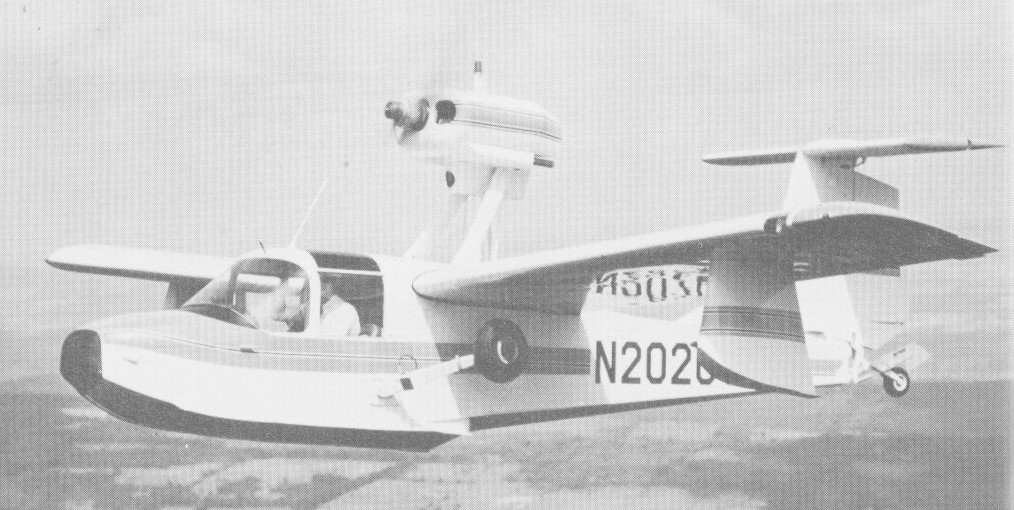
The TSC-1A2 Teal II N2020 first flew in October 1972. The TSC-1A2 Teal II was an improved version featuring slotted trailing-edge flaps, new wing leading-edge fuel tanks, optional hull fuel tank, and independent retraction of the tail wheel.

TSC-1A2 Teal II

From 1976 Teal Aircraft Corp held manufacturing and tooling rights for the Thurston Teal, which was previously owned by Schweizer Aircraft Corporation. It was being produced by Teal Aircraft in St. Augustine, Florida, at the rate of 24 a year. For about $40,000, they’ll put you into the 150 horsepower Teal II, which cruises at 102 knots and carries a 765 pound equipped useful load. For $2,000 more, they’ll sell you the same airplane with a 180 hp engine the Teal III. The TSC-1A3 Teal III first flying in September 1991.

Thurston Aeromarine Corp superseded International Aeromarine; initially to produce two-seat Teal III amphibian (delivered from 1995), then expected to be followed by Seafire four-seat amphibian.

Thurston TSC-1A N2005T

Gallery

TSC-1A Teal
Engine: Lycoming O-320-A3B, 150hp
Wingspan: 31’11”
Length: 23’7″
Useful load: 600 lb
Max speed: 125 mph
Cruise speed: 108 mph
Stall: 54 mph
Range: 400 mi
Seats: 2
No built: 15

TSC-1A1 Teal

TSC-1A2 Teal II
Engine: Lycoming O-320-A3B, 150hp
Wingspan: 31’11” / 9.73 m
Length: 23’7″ / 7.19 m
Empty weight: 1435 lb / 651 kg
MTOW: 2200 lb / 998 kg
Useful load: 565 lb
Max cruise 5000ftt/1525m: 116 mph / 101 kt / 187 kph
Stall: 52 mph
ROC: 650 fpm / 198 m/min
Service ceiling: 12,000 ft / 3660 m
Range econ cruise 96kt/110mph/177kph 45min res: 472 mi / 410 nm / 759 kph
Range econ cruise 96kt/110mph/177kph 45min res opt fuel: 748 mi / 650 nm / 1203 kph
Seats: 2
Baggage capacity: 230 lb / 104 kg
Price 1974: $22,475

TSC-1A3 Teal III
Engine: Textron Lycoming O-360-1F6D, 180hp
Wingspan: 36’0″
Length: 23’10”
Useful load: 800 lb
Max speed: 116 mph
Cruise speed: 112 mph
Stall: 55 mph
Range: 500 mi
Seats: 2

Teal Aircraft Corp TSC 1A3 Marlin
Engine: Lycoming O-360-A1F6D, 180 hp
Seats: 2/4
Wing loading: 14.7 lb/sq.ft
Pwr loading: 12.8 lb/hp
Max TO wt: 2300 lb
Empty wt: 1435 lb
Equipped useful load: 782 lb
Payload max fuel: 350 lb
Range max fuel/ 75% pwr: 561 nm/ 5.3 hr
Range max fuel/ 55% pwr: 739 nm/ 7.7 hr
Service ceiling: 14,000 ft
75% cruise: 104 kt. 55% cruise: 96 kt
Stall: 45 kt
1.3 Vso: 59 kt
ROC: 700 fpm
Min field length land / water: 1000 / 1300 ft

TSC-1A1

Thruster Aircraft Services T.600 Nova / Commandair

Commandair

A two-seat microlight developed from T.300.

Originating in Australia, by 1998 the tube and fabric design had been built in the UK for a number of years, and marketed in the UK as the Nova T600 N.

A tricycle version on the Commandair was exported from Australia to the UK as the Nova T600 T.

T600 T

Nova T600 T
Engine: Rotax 503, 52 hp
Wing span: 9.60 m
Wing area: 15 sq.m
MAUW: 360 kg
Empty weight: 150 kg
Fuel capacity: 40 lt
Max speed: 130 kph
Cruise speed: 100 kph
Minimum speed: 65 kph
Climb rate: 5 m/s
Certification: BCAR S
Seats: 2
Fuel consumption: 13 lt/hr
Price (1998): £12,350

Commandair
Engine: Rotax 503, 52 hp
Wing span: 9.60 m
Wing area: 15 sq.m
MAUW: 360 kg
Empty weight: 15- kg
Fuel capacity: 40 lt
Max speed: 130 kph
Cruise speed: 100 kph
Minimum speed: 65 kph
Climb rate: 5 m/s
Certification: BCAR S
Seats: 2
Fuel consumption: 13 lt/hr
Price (1998): £13,350

Thruster Aircraft Thruster / Cohen Thruster

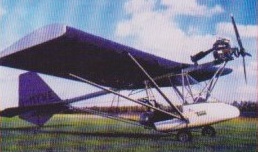
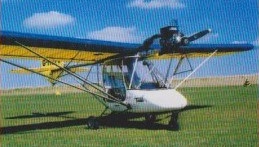
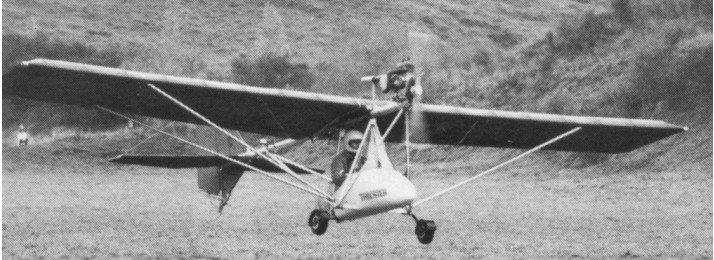
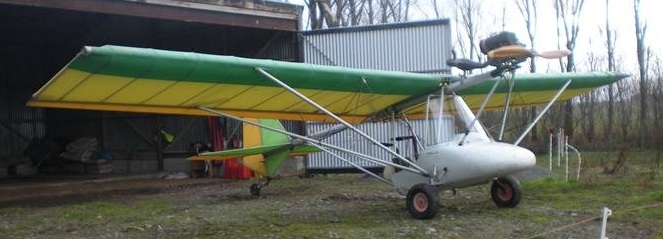
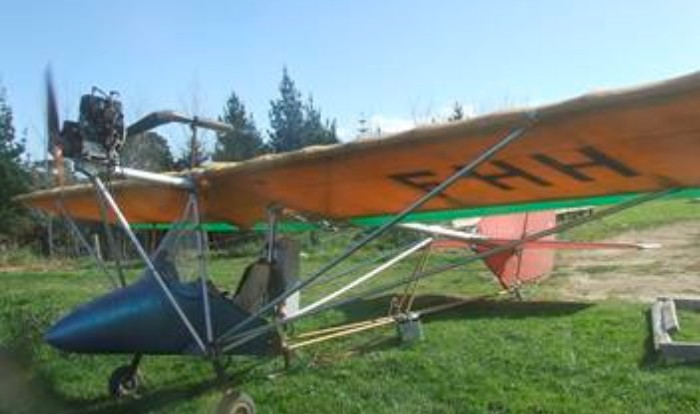
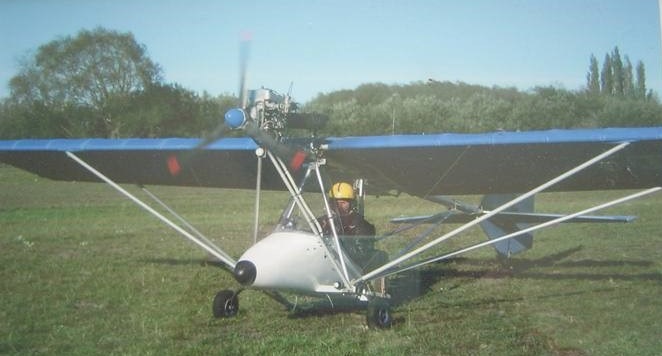
The fifth design of Steve Cohen, first appearing in 1982. A unique wing design allows each wing to rack and fold inside the double surface dacron skins for trailering. A fibreglass pod keeps the pilot warm on wintery days and the strut braced high wing tail dragger design makes it a good rough strip performer. A two-place/utility version is available which sports a new pod for passenger and pilot and power is supplied from a 60 hp Rotax 503 via a geared reduction drive.

Thruster Gemini 503TC

The Thruster 85 has a shorter wing span and the fabric of the lower wing sewn onto the ribs. Conventional 3 axis controls, single or two place.

In 1998 the two seat Thruster returned to production.

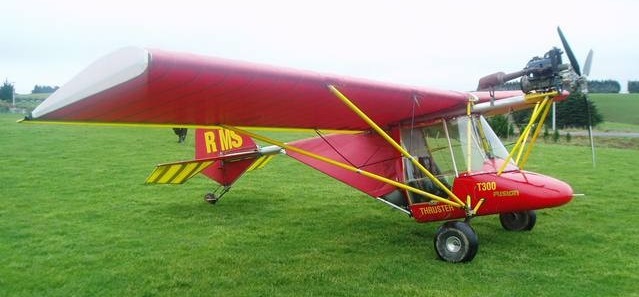
The T.300 is a side-by-side two-seat open microlight, and T.500 derivative with enclosed rear fuselage.

Thruster Single Seat
Thruster T300

Gallery

Thruster
Engine: Fuji Robin 440, 50 hp
Wing span: 29 ft 5 in / 8.97 m
Length: 18 ft 5 in / 5.61 m
Wing area: 150 sq.ft / 13.94 sq.m
Empty wt: 260 lbs / 117.9 kg
Fuel capacity: 25 ltr
Cruise speed: 50 kts@ 50% power
Stall: 27kts
ROC: 1000-1500 fpm
Range: 150 sm

Thruster 85
Engine: Rotax 377, 40 hp
Wing span: 7.8m
Length: 5.3m
Empty wt: 135 kg
MTOW: 227 kg
Range: 306 km
Seats: 1
Fuel capacity: 25 ltr
Cruise: 55kts
Stall: 33 kts

Engine: Rotax 503
Seats: 1
Wing span: 7.8m
Length: 5.3m
Fuel capacity: 25 ltr

T300
Engine: Rotax 582
Prop: Warp Drive 3 Blade Ground Adjustable
Seats: 2
Tyres: 8.00 x 6

T500
Engine: Rotax
Seats: 2

Thruster TST
Engine: Rotax 503, 58 hp @ 6300 rpm
Wing span: 31 ft 6 in / 9.6 m
Length: 18 ft / 5.5 m
Height: 6 ft 6 in / 2.0 m
Empty weight: 331 lb / 150 kg
MTOW: 788 lb / 358 kg
Cruise 90%: 63 mph / 55 kt
Cruise 70%: 52 mph / 45 kt
Stall: 40 mph / 35 kt
Vne: 92 mph / 80 kt
TO dist 50 ft: 360 ft / 110 m
Rate of climb: 500 fpm / 150 m/min
Landing roll: 327 ft / 100 m
Fuel capacity: 9 Imp Gal / 40 lt
Fuel burn: 15-22 lt/hr
Endurance w/res; 1.5 hr
Max X-wind: 15 kt