In 1913 Alfred Rosentals designed and built a monoplane in Latvia (Russian Empire)
Monoplane
Robinson, William C.
In 1913 William C. Robinson designed and built a monoplane in the USA.
Alder & Derryberry A monoplane
W C Alder & L E Derryberry of Abilene TX., in 1935, built the Alder & Derryberry A monoplane.
A three-place open cockpit monoplane powered by a 37hp Ford A engine, it was registered NX13959.
Ratmanoff 1913 monoplane
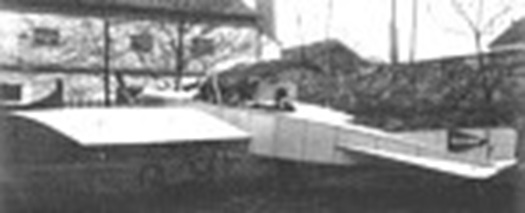
The 1913 Ratmanoff Tandem two-seater monoplane was designed and built by Ratmanoff in France
Albrecht Monoplane
The 1928 Albrecht Monoplane was a single-place, high wing monoplane, possibly kit-built, powered by a Harley-Davidson conversion.
One was built, registered NX4566 c/n 2, which suggests another might have been built.
American Eagle A-629
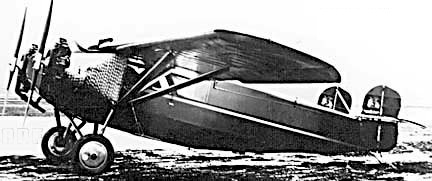
The 1929American Eagle A-629 was a six seat open/cabin monoplane. The cabin seated four, with pilot and another passenger exposed to the elements in an open cockpit forward on top.
The only multi-engine ship built by American Eagle, priced at $1,895, only one was custom-built for Walter M Cross.
My grandfather, Charlie Toth, was Dr Cross’ pilot and made several successful flights in the aircraft. The engines had a cooling problem, on which my grandfather was working, and in a test flight on 4/18/29, the left engine quit as he was turning downwind for a landing. He then crashed while attempting a landing with only the right engine, which severely affected the aerodynamics of the aircraft. (He survived the crash). All of this can be verified by articles in the Kansas City Star. (– Cristopher Toth 10/10/98)
A-629
Engines: two 125hp Siemens-Halske
Wingspan: 47’0″
Length: 27’6″
Useful load: 800 lb
Max speed: 110 mph
Cruise: 90 mph
Stall: 45 mph
Seats: 6
Aurebach Wasp Special
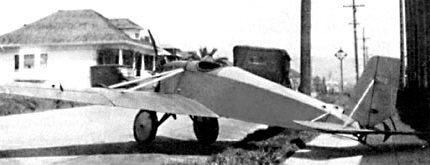
R H Aurebach built the Aurebach Wasp Special in 1927.
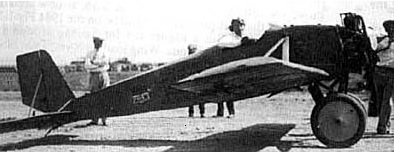
The 1927 single-place “18-foot Wasp” (as described) has a provocative, albeit grim, story in a found newspaper clipping. Student pilot Henry Axton died in the crash after its wing collapsed while landing at Alameda airport. Before the coroner could investigate the accident, builder Aurebach set fire to the ship’s remains “in order to clear the field of the wreckage, because it was harmful to his business, to aviation, and to the airport.” He denied doing it to destroy any evidence of criminal negligence. We have no follow-up on this story; however … an old knot on our pages unravels right here.
‘A small ship resembling this brief description, built in nearby Oakland in 1927, that also suffered a crash before its entry in the Dole Race. That was enough to goad us to search Les Forden’s The Glory Gamblers, where on page 56 is: “On Aug 5th, spectators watched in horror as the little plane spun in and crashed, killing Henry Axton. Alameda County DA Earl Warren [later CA governor] warned the aviation community to expect legal action regarding unlicensed [the Wasp was X-licensed] and unsafe airplanes. The resulting publicity became part of the furor that followed when so many of the press, and the public, insisted the Dole flyers were irresponsible adventurers who flew home-made crates.”
BRM AERO Bristell B23
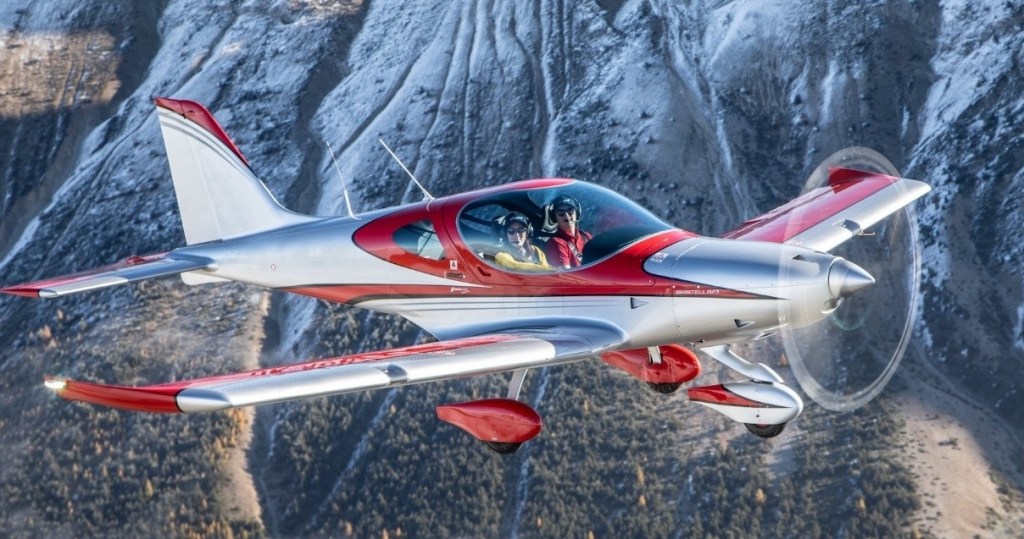
BRM AERO, the Czech-based manufacturer of Bristell Aircraft, announced September 2025 its two-seat Bristell B23 has received Type Certification from the Federal Aviation Administration under Part 23 regulations. The approval marks the company’s first FAA-certified B23 model and positions the B23 for entry into the U.S. training market. The aircraft, already certified under EASA CS-23 in Europe, has logged more than 1,100 deliveries worldwide since 2009. The company says there are nearly 100 other Bristell aircraft already operating in the U.S., used by both private owners and flight schools.
The manufacturer said it plans to grow its North American dealer network by 50 percent within 18 months, with certification efforts underway for additional B23 variations with Rotax 912iS, 915iS, 916iS, and IFR-ready versions.

Equipped with a 100 HP Rotax 912S3 engine, the now-certified B23 features a 2,000-hour TBO and fuel burn of about 4.5 gallons per hour, with approval for both 100LL and unleaded automotive fuel.
Bristell says the B23 offers a 700-nautical-mile range, 1,654-pound MTOW, 662-pound useful load, and a 51-inch-wide cockpit. It also includes a BRS parachute system.
Deliveries of the FAA-certified B23-912 were scheduled to begin in the fourth quarter of 2025 through Bristell’s North American dealer network.
Parker JP-350
The 1988 Parker JP-350 N350JP was an Unlimited racer, single-place low wing monoplane, with retractable undercarriage.
Engine: 450hp Lycoming TIO-540
Wingspan: 18’6″
Length: 23’9″
Seats: 1
Parker JP001
The 1976 designed Parker JP001 are single-place cabin, mid-wing monoplane Formula I racers Wild Turkey (1979) and American Special (1980).
The JP001 first flew on 8 August 1976.
Engine: 100hp Continental O-200
Wingspan: 20’4″
Length: 20’1″
Useful load:240 lb
Max speed: 270 mph
Stall: 70 mph
Seats: 1
 All Aero