Tonini-Bergonzi-Negri Italia-1 / Italia-2

Italia I

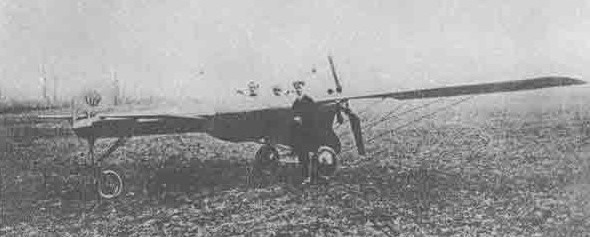
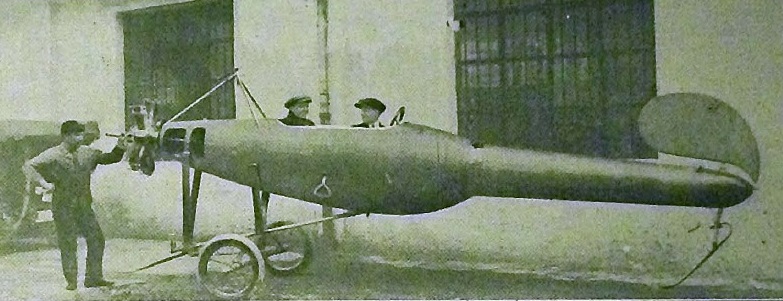
An earlier canard monoplane, the more streamlined Italia-1, was designed for the Italian 1913 trials but became badly damaged by Alessandro Tonini during a landing.
Italia I

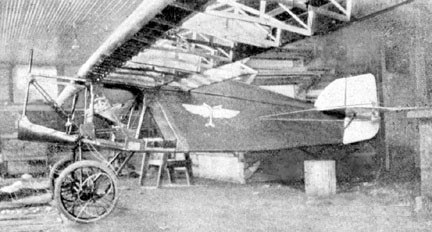
Due to a lack of funds and an underpowered airframe, Tonini shifted to a more “rough” and lighter configuration as a replacement: the Italia-2. According to Tonini’s son, the aircraft never flew.
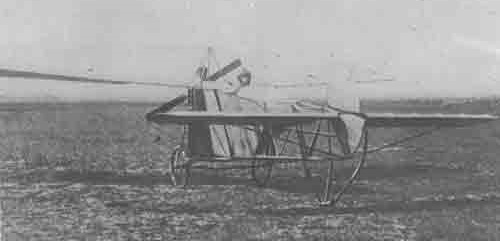
Italia-2

The Tonini-Bergonzi-Negri “Italia II” was a lighter airplane with a smaller engine, and also a canard. This did not take off – the partners experienced serious financial problems because Negri lost the money in cards, and their team broke up.

Italia II

Italia-2
Engine: 35 hp
Span: 6m
Weight: 340 kg

Tonini Monorebus

Tonini Monorebus monoplane of 1911 was designed by Alessandro Tonini, and powered by a REBUS engine. The name of the machine was a contraction of both, becoming Monorebus. Tonini had initiated the firm Officine Mechaniche REBUS in Milan, which specialized in “Aeroplani, Motori per Aeroplani, Costruzioni Aeronautiche and Construzioni Mecchaniche”. After the Monorebus was successfully flown in June 1911, Tonini started designing revolutionary canard machines and later became chief constructor with Nieuport-Macchi.

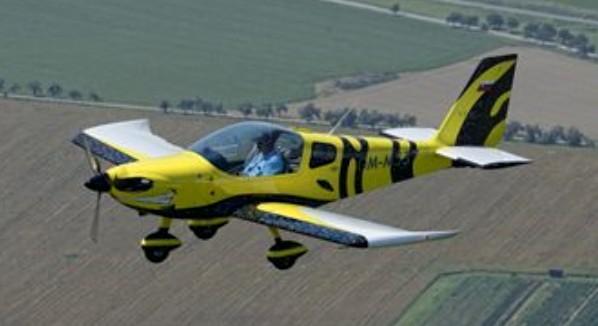
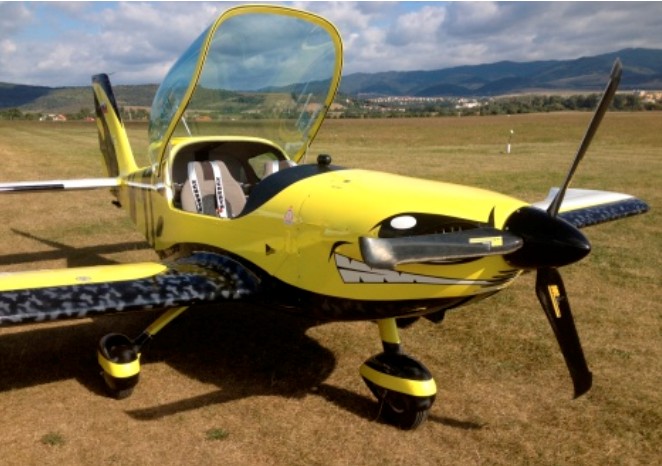
Tomak SD-4 Viper

Viper is an all-metal microlight plane designed for sport, recreational flying and glider towing. The control of the aircraft is helped by LCD flight, navigation and communication systems. Viper SD-4 was developed and is made by aviation and mechanical engineering specialists at Tomark s.r.o., based in Slovakia. Modern technologies and CAD systems are used in its manufacture. Individual parts are cut by laser or machined on CNC machines for maximum precision. 2009 Price: 66000 EURO

This aircraft has:
DUC SWIRL Propeller
Ballistic recovery system 600kg
Dynon Flightdeck D180
GPS AVmap Geopilot plus
Garmin SL-40 radio
Garmin GTX 327 Transponder

Engine 4-stroke Rotax 912 ULS, 100 HP
Wing span 8.4 m
Length 6.4 m
Height 2.2 m
Empty Weight: 285 kg / 628 lbs
Maximum take-off weight 472,5 kg
Cruising speed: 108 kt / 124 mph / 200 kmh
Never exceed speed: 130 kt / 149 mph / 240 kmh
Stall speed: 35 kt / 40 mph / 65 kmh
Climb rate: 1200 ft/min / 6 m/s
Ceiling 5,000 m
Take-off distance 150 m / 180 m
Landing distance 140 m / 160 m
Take-off distance (50ft obstacle): 820 ft / 250 m
Landing distance (50ft obstacle): 920 ft / 280 m
Fuel tank volume 70 lt
Range 750 km

Tokyo Imperial University Kokenki

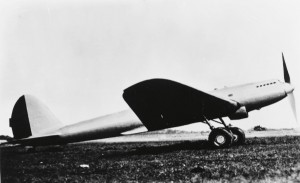
The aviation laboratory of the Tokyo Imperial University immediately became a mecca for Japanese students of aeronautics. Among its foremost achievements was the Kokenki, an experimental long-range monoplane that employed a domestically built airframe and a revamped version of a German engine. The plane flew over the Kanto Plain region, which includes Tokyo and its neighbouring prefectures, for 62 hours non-stop after taking off on May 13, 1938. The flight translated into a cruising distance of 10,651.01 km, a world record at the time and still Japan’s only aviation record certified by the International Aeronautical Federation.

Todhunter Blue Wren

Despite being registered as a microlight, it is really the prototype of what was hoped to become an amateur-built self-launching glider, built from a design that was originated by Reg Todhunter in Australia in the mid 1950s. Construction work begun in early 1980 and the aircraft first flew at Tocumwal, NSW, on 08-07-84 under a permit to fly issued by the Gliding Federation of Australia. It was then air freighted to California to take part in a homebuilt sailplane design competition instigated by the Soaring Society of America. The fly-off took place at Tehaehapi over 1-3 September 1984 and was won by the Rutan Solitaire. The aircraft was imported into New Zealand in 1996 by Neville Swan, following the death of the designer.

Although a glider, the aircraft was registered as a microlight in New Zealand (ZK-JGQ). The initial engine (a JPV PUL 425 horizontal twin 22 hp ) was replaced by a Koenig 3 cyl of 24 hp.

Todd Special

Built first as a Wittman Tailwind, Edward Todd rebuilt the aircraft in 1963 with the wings lowered and the engine raised. Registered N11Q, it was first flown in June 1963.

Engine: Lycoming O-290G, 125hp
Wingspan: 22’0″
Length: 19’6″
Useful load: 621 lb
Max speed: 170 mph
Cruise speed: 160 mph
Stall: 60 mph
Range: 805 mi
Seats: 2

Todd Light Express

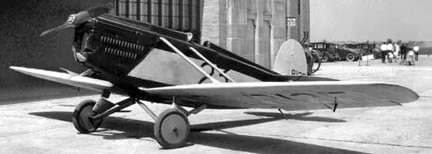
The Light Express was built by Edgar B Todd in 1927 as a three-section parasol monoplane with a Clark-Y airfoil. A single seater, the baggage compartment was convertible into a passenger seat.

Only one was built.

Engine: Curtiss OX-5, 90hp
Wingspan: 40’0″
Length: 22’4″
Useful load: 330 lb
Max speed: 120 mph
Cruise speed: 110 mph
Stall: 55 mph
Range: 700 mi
Seats: 1-2