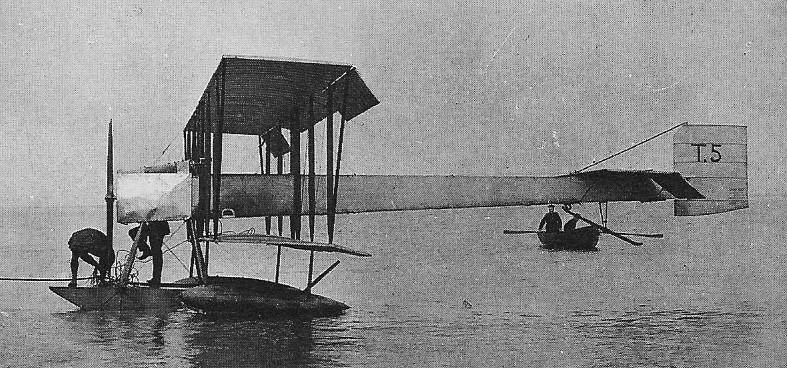
Short T.5 / S.45 / S.48 / S.49 / S.50

S.45

The Short S.45 — also known as the Short T.5 after its naval serial number — was a training biplane built for Britain’s Royal Navy by Short Brothers in 1912. It was the forerunner of another three identical aircraft (designated S.48, S.49, and S.50 by Shorts) delivered to the Royal Navy and Royal Flying Corps during 1912 and 1913. The Royal Naval Air Service was still operating the type when World War I broke out in 1914.

The design was similar to that of the Short S.36, a sporting biplane built for Frank McClean which he lent to the Navy Flying School, Eastchurch. Cdr Charles Rumney Samson and Capt Eugene Gerrard test-flew the aircraft early in 1912. The pleasing performance of the S.36 led to an order by the Admiralty for two aircraft of similar configuration, but differed in the engine fitted. in March that year. Shorts delivered these as the S.41 and the S.45.

The S.45 was an unequal-span two-bay biplane with a fuselage of square-cross section with the two seats in tandem in open cockpits . The wire-braced wings were unstaggered, and the fuselage was mounted partway between them. Ailerons were fitted only to the upper wing. The tail was cruciform in shape and the undercarriage was designed to be interchangeable to allow the S.45 to be flown as a seaplane or landplane. The machine was powered by a single rotary engine in the nose, turning a two-blade propeller. In seaplane configuration, the undercarriage consisted of a single broad pontoon mounted beneath the fuselage, with airbags on short struts under each wing. A third airbag was later fitted under the tail to keep it out of the water while the aircraft was under tow.

The S.45 flew for the first time on 24 May 1912 as a landplane with Lt Spencer Grey at the controls, and was accepted for Navy service with the serial number T.5 (“T” signifying “tractor”). Together with the S.41, the aircraft participated in the Naval Review at Portsmouth in July. It was soon joined in service by the S.48 (serial 413), which Capt Gerrard delivered to the Central Flying School at Upavon on 10 October. Although evaluated by Capt John Salmond as underpowered, it flew regularly until damaged beyond repair in a landing accident on 3 December when it stalled on approach.

Meanwhile, the S.45 underwent considerable modification, including a new engine cowling, a built-up coaming around the cockpits, revised ailerons, and upper wings of greater span. The wing extensions were braced with a kingpost and wires. Its serial was changed from “T.5” to simply “5” when army and navy aircraft serials were merged into one system in late 1912. In 1913, the S.45 was stationed at Carlingnose, near Rosyth, where it suffered a landing accident and capsized on 4 October.

At the start of 1913, the Central Flying School received two further examples of the type: Capt Gerrard delivered the S.50 (serial 424) on 17 February and the S.49 (serial 423) on 22 February. Not long after, these aircraft disappeared from the records when their serial numbers were reassigned to two Royal Aircraft Factory B.E.8s. Eventually, stripped of their engines and identities, the War Office declared the two airframes to be surplus to requirements, and transferred them to the Admiralty in August 1914. In Royal Naval Air Service hands, the aircraft were re-engined with 100-hp (75-kW) Clerget rotary engines and assigned serial numbers 1268 and 1279. The RNAS operated them at the Navy Flying School and they remained in service at the outbreak of World War I.

S.45
Powerplant: 1 × Gnome Gamma, 70 hp (52 kW)
Wingspan: 42 ft 0 in (12.80 m)
Wing area: 450 sq ft (42 m2)
Length: 35 ft 6 in (10.82 m)
Empty weight: 1,080 lb (490 kg)
Gross weight: 1,500 lb (680 kg)
Maximum speed: 60 mph (97 km/h, 52 kn)
Endurance: 5 hr
Crew: two, pilot and instructor
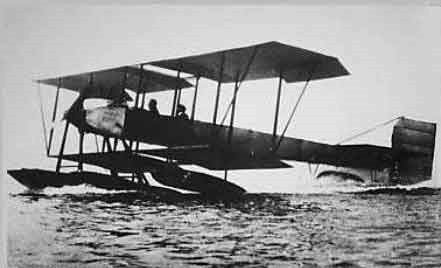
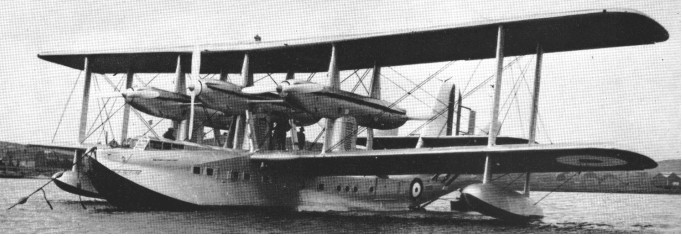
Short S.41 Hydro-Aeroplane

Prototype pilot C.R.Samson

The original version of the S.41 was converted to a landplane and flown by Cdr R. Samson – also the pilot of its maiden flight – during the Army manoeuvres of September 1912. Built at Eastchurch, Isle of Sheppey.

With its floats restored, it started flying from the temporary seaplane station at Carlingnose on October 2nd 1912. In January 1913 it underwent an overhaul during which the centre section gap was covered.

In September 1913 it was overhauled again and the aircraft emerged completely different in shape, fitted with folding wings of greater span and a new rudder. In 1914 it was refitted with a 140 hp Gnôme and assigned to the Eastchurch flying school. In 1915 the S.41 was sent to the Aegean theatre and in 1916 was spotted at Inbros.

It was not included in the March 1916 list of naval aircraft and may have been destroyed prior to that month.

Engine: 100 hp Gnome
Max speed: 60 mph
Endurance: 5 hr

Short L.17 Scylla / Syrinx

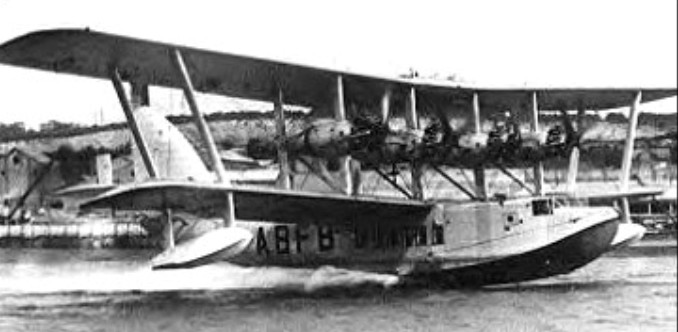
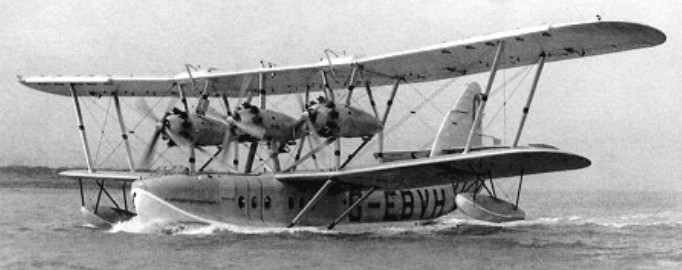
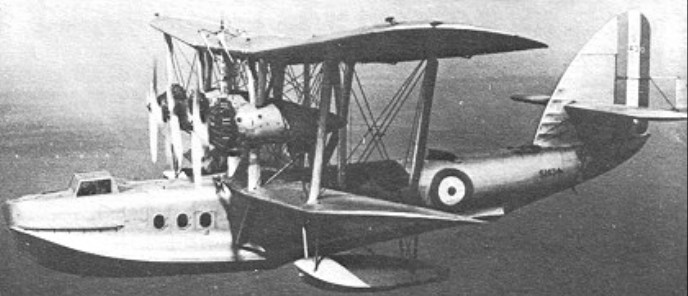
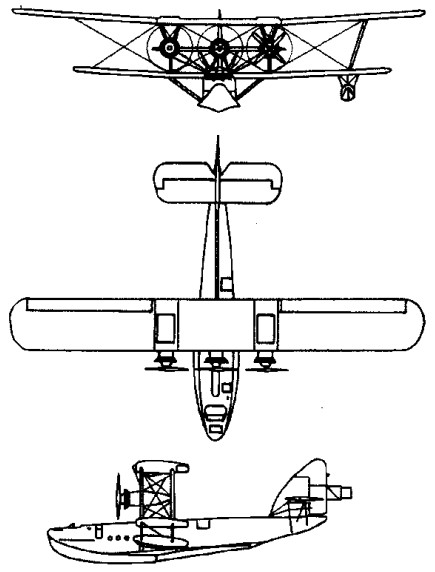
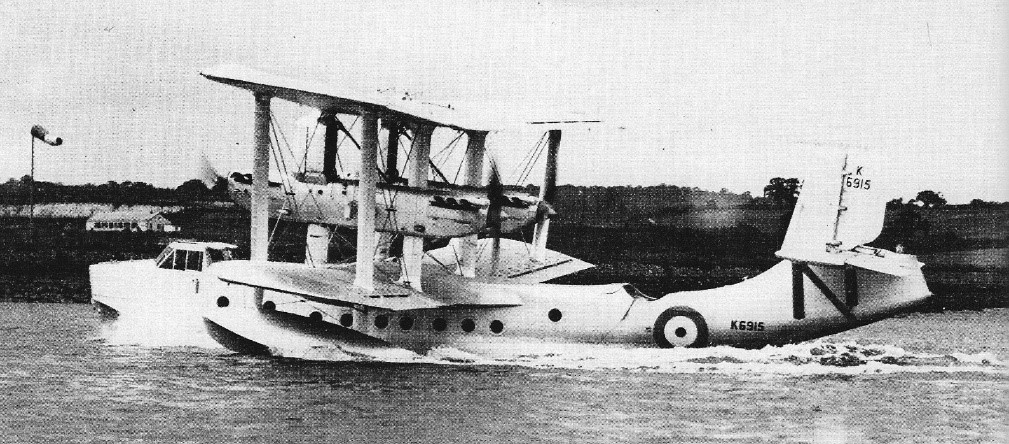
The closure of Italian and Italian colonial seaports to Imperial Airways in the Mediterranean in 1929 brought a need for a longer range flying boat, with mail carriage a priority. The Kent biplane flying boat was Short’s response, and three were built.

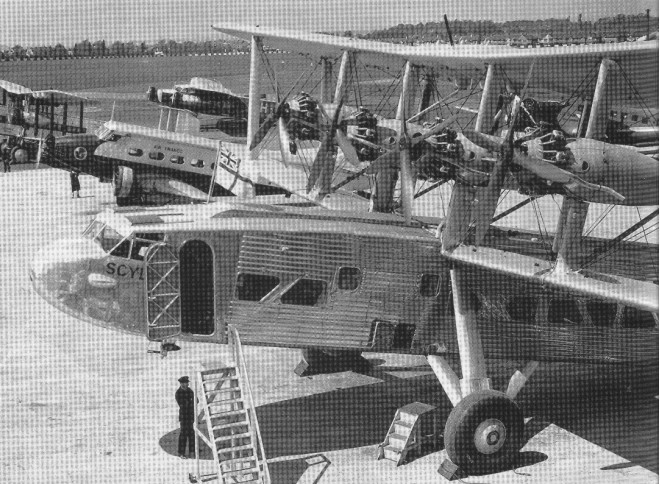
During the spring of 1933, Imperial Airways asked Short Brothers to develop a landplane version of its Kent flying boat. Differing little from the Kent, apart from the wheeled undercarriage and principally different in having a rectangular fuselage and a fixed undercarriage., Scylla and Syrinx were constructed outdoors since Shorts had no means of building and flying a landplane at its own facilities and was forced to use Rochester airport due to the urgency of the requirement.

Both of the new aircraft entered scheduled service on 7 June 1934, on the Paris route. The cabins featured three passenger compartments, two toilets and a buffet. The average cabin width was almost 11 ft / 3.35 m.

Scylla did suffer a minor accident at Paris Le Bourget on 3 August 1934.

The two Scylla examples stayed in service longer, and had very short RAF careers in 1939-40. They were the last of Short’s biplane designs and the last in service.

Gallery

Short L.12 Kent

The closure of Italian and Italian colonial seaports to Imperial Airways in the Mediterranean in 1929 brought a need for a longer range flying boat, with mail carriage a priority. The Kent biplane flying boat was Short’s response, and three were built. Imperial Airways also persuaded Short to produce a landplane version of the L.12 Kent – the Scylla.

Short Kent Satyrus

Gallery

Short L.12 Kent
Engines: 4 x 555hp Bristol Jupiter XFBM nine-cylinder radial
Max take-off weight: 14515 kg / 32000 lb
Wingspan: 34.44 m / 113 ft 0 in
Length: 23.90 m / 78 ft 5 in
Height: 8.53 m / 28 ft 0 in
Max. speed: 220 km/h / 137 mph
Ceiling: 5335 m / 17500 ft
Range: 724 km / 450 miles
Crew: 2
Passengers: 16

Short S.10 Gurnard

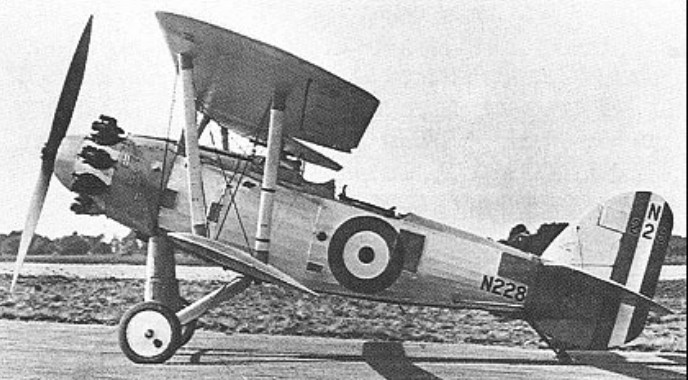
A contender to Specification 0.22/26 calling for a high-speed shipboard reconnaissance-fighter capable of being flown with either wheel or float undercarriage and suitable for catapult operation from cruisers and larger warships, the S.10 Gurnard was awarded a two-prototype contract.

One of the prototypes, the Gurnard I, was to be powered by a 525hp Bristol Jupiter X nine-cylinder air-cooled radial engine, and the other, the Gurnard II, was to have a 525hp Rolls-Royce Kestrel IIS water-cooled 12-cylinder Vee-type engine. A single-bay biplane of metal construction with fabric skinning, the Gurnard had an armament of one fixed forward-firing 7.7mm machine gun and a similar-calibre weapon on a Scarff ring for the second crew member.

The Gurnard II was the first to fly, on 16 April 1929, as a floatplane, the Gurnard I following in landplane form three weeks later, on 8 May.

Gurnard II

Both prototypes were tested at the A&AEE, but the Hawker Osprey was selected in preference and no production of the Gurnard was ordered. The Gurnard II was flown – commencing on 15 June 1931 – as an amphibian with a single main float.

Gurnard II
Wingspan: 11.27 m / 37 ft 0 in
Length: 9.60 m / 32 ft 6 in
Wing area: 39.85 sq.m / 428.94 sq ft
Max take-off weight: 2360 kg / 5203 lb
Empty weight: 1662 kg / 3664 lb
Max. speed: 213 km/h / 132 mph at 10,000 ft
Ladng speed: 54 mph / 87 kph
Endurance full pwr: 30min at SL / + 3 hr at 10,000 ft

Short S.10 Gurnard

Short Cromarty

1921

Cromarty
Crew: 4
Engines: 2 x 600hp Rolls-Royce Condor I
Max take-off weight: 8165 kg / 18001 lb
Empty weight: 5543 kg / 12220 lb
Wingspan: 34.59 m / 114 ft 6 in
Length: 17.98 m / 59 ft 0 in
Wing area: 208.38 sq.m / 2242.98 sq ft
Max. speed: 153 km/h / 95 mph
Cruise speed: 131 km/h / 81 mph
Ceiling: 4800 m / 15750 ft
Range: 1500 km / 932 miles
Armament: 1 x 37mm, 1 x 7.9mm

Short S.8 Calcutta / S.8/8 Rangoon

S.8 Calcutta

The 1928 15 passenger Calcutta biplane flying boat originated from an Imperial Airways requirement to service the Mediterranean legs of its services from and to India. The Calcutta itself was derived from the Short Singapore military flying boat. It was the first stressed skin, metal-hulled flying boat.

The Calcutta first flew on 15 February 1928 Imperial Airways operated five of the seven Calcuttas produced, and a single sale to the French government was followed by the French company Breguet licence-building four Calcuttas as the Bizerte. In 1931 Breguet secured a licence to build the Short Calcutta, and this was used as the basis for the company’s Bre.521 submission to meet a 1932 French Navy requirement for a long-range reconnaissance flying-boat.

Short S8/8 Rangoon

From the Calcutta Short developed the Rangoon as a long-range reconnaissance type for the RAF. Six were produced and went into service in 1931. These were basically similar to the Calcutta, except that the pilots were accommodated in an enclosed cockpit, in the nose was an open cockpit with Scarff gun-ring and aft of the biplane wings were staggered cockpits for two gunners. Maximum level speed of the Rangoon was 185km/h.

Gallery

Engines: 3 x Bristol Jupiter XI F, 390kW
Wingspan: 28.3 m / 93 ft 10 in
Length: 20.4 m / 67 ft 11 in
Height: 7.2 m / 24 ft 7 in
Wing area: 171.0 sq.m / 1840.63 sq ft
Max take-off weight: 10200 kg / 22487 lb
Empty weight: 6280 kg / 13845 lb
Max. speed: 190 km/h / 118 mph
Cruise speed: 156 km/h / 97 mph
Ceiling: 4000 m / 13100 ft
Range w/max.fuel: 1040 km / 646 miles
Crew: 4-5
Passengers: 12-15

Short S.8 Calcutta

Short S.5 Singapore I / S.19 Singapore III

Singapore I

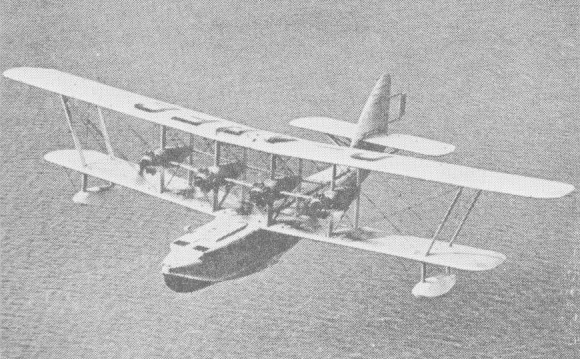
The Singapore III reconnaissance and coastal patrol flying-boat was basically the production version of the earlier Singapore II, itself developed from the twin Buzzard-engined Singapore I of 1926.

Singapore III

The huge biplaned Singapores entered service with the RAF in 1934. Built with a deep, well faired beamy hull constructed of duralium, the boat had a good seaworthy reputation and was quite maneouvrable on the water. While the book claimed a cruise of 105 knots, RNZAF crews seldom watched the wave tops go past at more than 80 knots. The endurance was some six and half hours at around a thousand feet, the low altitudes being little hindrance as the primary observation device in those early days was the Mark One eyeball.

Singapore III

Thirty-seven Singapore IIIs were delivered to the RAF, entering service in the spring of 1935. The last few aircraft were withdrawn in late 1941, when they were transferred to the Royal New Zealand Air Force. Powered by four 730 hp Roll Royce Kestrel VIII/IX glycol cooled engines mounted in two tandem pairs between the fabric covered wings.

Gallery

Short S 19 Singapore III
Engines: 4 x Rolls-Royce Kestrel VIII/IX, 418kW/ 560 hp
Wingspan: 27.43 m / 90 ft 0 in
Length: 23.16 m / 76 ft 0 in
Height: 7.19 m / 24 ft 7 in
Wing area: 170.38 sq.m / 1833.95 sq ft
Max take-off weight: 12475 kg / 27503 lb
Empty weight: 8355 kg / 18420 lb
Max. speed: 126 kt / 233 km/h / 145 mph
Cruising speed: 91 kt / 169 km/h Ceiling: 4570 m / 15000 ft
Range: 869 nm / 1610 km / 1000 miles
Crew: 6
Bomb load: 2000 lb / 907kg
Armament: 3 x .303 MG (7,7mm) Lewis mg

Short S.19 Singapore III