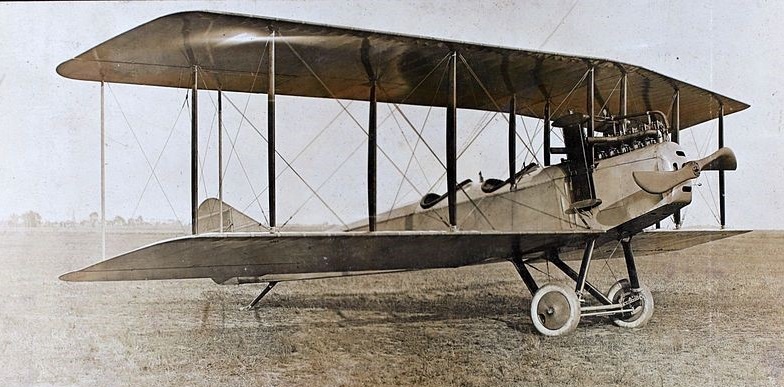
Designed by Charles H Day and originally known as the Sloane H-2, the Standard H-2 was built by the Standard Aircraft Corporation. Modified from Sloan H-2, three were built by Standard Aircraft Corp, AS82 to 84.
An early American Army reconnaissance aircraft, ordered in 1916, it was an open-cockpit three-place tractor biplane, powered by a 125 hp (90 kW) Hall-Scott A-5 engine. It had swept-back wings and originally had mid-wing ailerons. Only eight were built; AS82 to AS89.
An improved version, the H-3, with the same engine, swept-back, and equal-span wings, earned an order for eight aircraft, AS85 to 93, while the Navy ordered four with floats as the H-4H, 137 to 140.
These, like J-1 and Curtiss JN-4, were the basis of countless modifications as surplus civil aircraft after the war.
H-4H seaplane
Two Standard H-3s were sold by the US Army to Japan, where a further three were built by the Provisional Military Balloon Research Association (PMBRA) in 1917, powered by 150 hp (110 kW) Hall-Scott L-4 engines. They were used as trainers between May 1917 and March 1918, although they were considered dangerous.
H-3 Engine: 1 × Hall-Scott A-5, 135 hp (101 kW) Wingspan: 40 ft 1 in (12.22 m) Wing area: 532 sq ft (49.4 m2) Length: 27 ft 0 in (8.23 m) Empty weight: 2,500 lb (1,134 kg) Gross weight: 3,300 lb (1,497 kg) Fuel capacity: 68 US gal (57 imp gal; 260 L) Maximum speed: 84 mph (135 km/h, 73 kn) Stall speed: 46 mph (74 km/h, 40 kn) Endurance: 6 hr Time to altitude: 10 minutes to 3,400 ft (1,000 m) Crew: 2
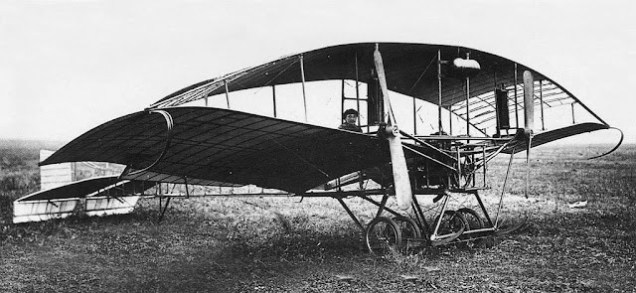
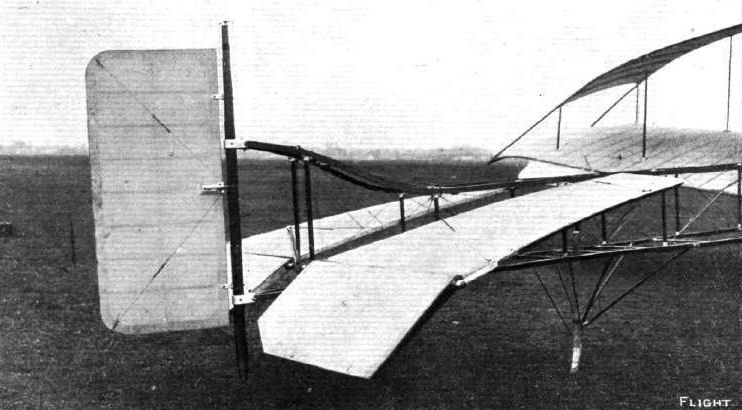
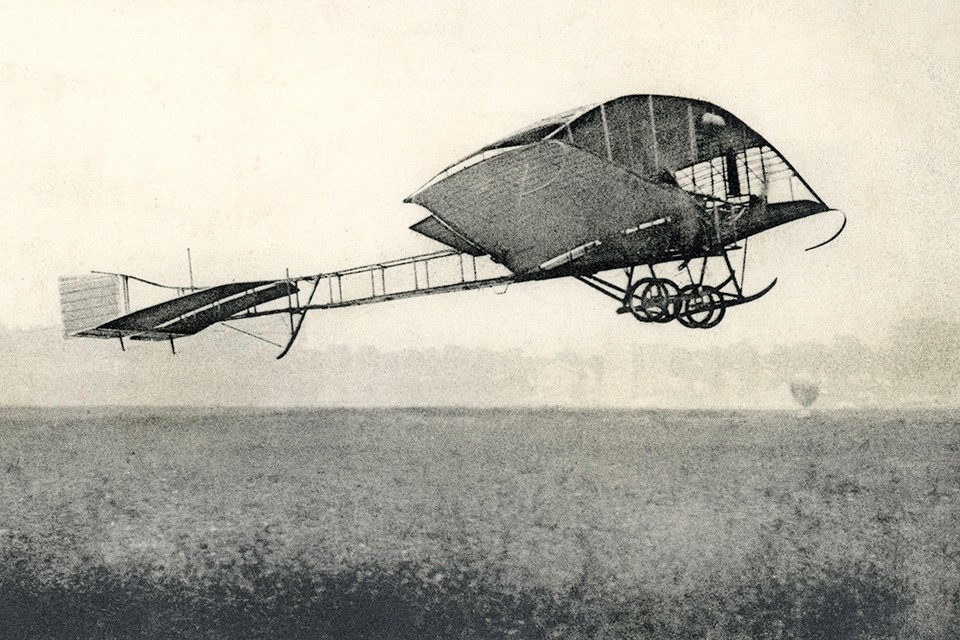
Between 1910 and 1912, American expatriate Jacques-Jules Sloan built a series of biplanes he called Bicurves in his small workshop in the Paris suburb of Charenton-le-Pont. The Bicurve’s fuselage, tail and landing gear were similar to those found on French Blériot monoplanes of that period. As initially constructed, the fuselage terminated in a movable rudder, without a fixed fin, and fixed horizontal stabilizers of flat section without any airfoil. The elevators were originally mounted ahead of the fuselage on struts, in canard fashion. Those struts were subsequently removed and the elevators relocated to a more conventional position at the tail, hinged at the trailing edge of the horizontal stabilizers.
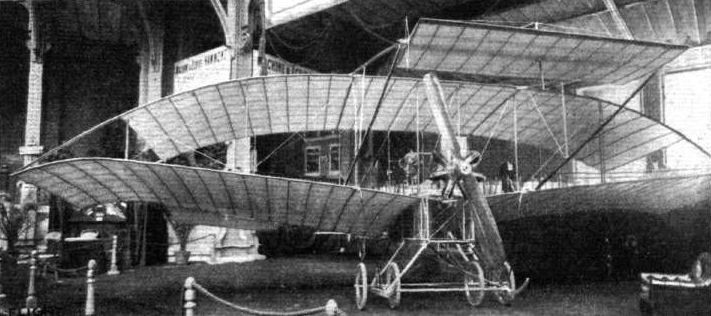
It was in its wing cellule that the Bicurve differed markedly from any of its contemporaries, or from any subsequent biplane designs. The Bicurve’s lower wing attached to the upper fuselage longerons. The lower wing, which was reminiscent of that found on contemporary Antoinette monoplanes, was designed with marked dihedral, transforming to anhedral near the tips, and was fitted with conventional trailing-edge ailerons. The upper wing, on the other hand, was deeply arched, both in section and in span, so much so that the tips curved sharply downward and were attached by struts to the lower wingtips.
The initial version of his Bicurve was fitted with two propellers driven by a single engine via chains and gears. An examination of photographs of the airplane provides a clue as to why he added the additional weight and complexity of such a drive system. The two propellers were clearly arranged to turn in opposite directions, suggesting that Sloan was trying to further improve the airplane’s handling characteristics by canceling out the torque effect imparted by a single propeller.
Lateral control was achieved not by wing-warping but by means of fins installed on the trailing edge of the lower wings, just before the wingtips drooped. Due to the airplane’s inherent natural stability, their surface area was quite small. Vertical control could be achieved any of two ways, depending on the pilot’s preference. One method involved using two elevators, one at the front coupled with another at the rear, acting simultaneously by opposite bearings. This control system was very effective, but some pilots preferred to use only the rear elevator.
The main undercarriage consisted of two forward-facing skids carrying two pairs of wheels, which were equipped with dampers and mounted on a universal joint that could absorb shocks from rough field landings. The undercarriage was secured, as with the fuselage itself, by means of special aluminum fittings. The main gear was complemented by either a rear skid or wheel.
The original Bicurve had a wingspan of 35 feet 11 inches, a length of 37 feet 1 inch and wing area of 161 square feet. Maximum speed was recorded as 46 mph.
Sloan seems to have built and flown at least three different versions of the Bicurve between 1910 and 1912, and it is also reported to have been powered at various times by at least two different engines: a 35-hp Labor-Aviation and, later, a 50-hp Gnome. As was the case with numerous early airplanes, however, there is little documentation as to whether the various Sloan Bicurves were new builds or simply improved versions of the same airframe. For example, while the original airplane had twin propellers driven by a single engine and elevators mounted in front, other versions featured a single propeller and conventional tail-mounted elevators.
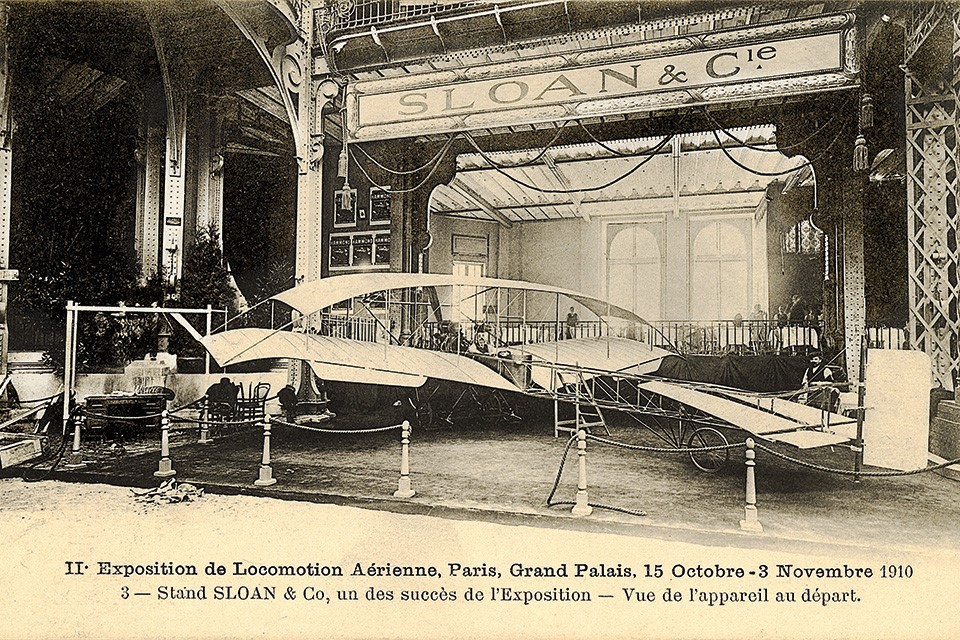
A photograph exists of the Bicurve exhibited by Sloan & Company at the Exposition de Locomotion Aérienne in Paris between October 15 and November 3, 1910. In spite of that publicity, the airplane was not a financial success and the design proved to be a dead end. Nevertheless, unlike many strange-looking early airplanes, the Sloan Bicurve actually flew, and apparently flew well. Motion picture footage still exists showing the machine taking off and landing, and it appears to do so quite smoothly.
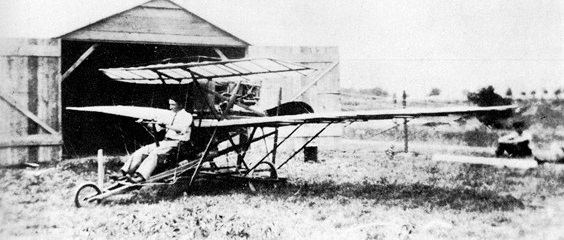
A pusher built by James B. Slinn in 1911, looking almost like a biplane as the large elevator was mounted above the wing. Slinn was an inventor who developed aeronautical devices between 1899 and 1910. His first design dates from 1899 when he designed a flying machine with wings and horizontal propellers. This ‘autogiro’ type avant la lettre failed to fly. After he moved from New Orleans to Chillicothe, Illinois he designed in 1910 this monoplane, named the Falcon, for Eugene Brown, a Peoria real estate dealer and president of the local aero club. It completed one flight that ended in a big crash and total destruction.
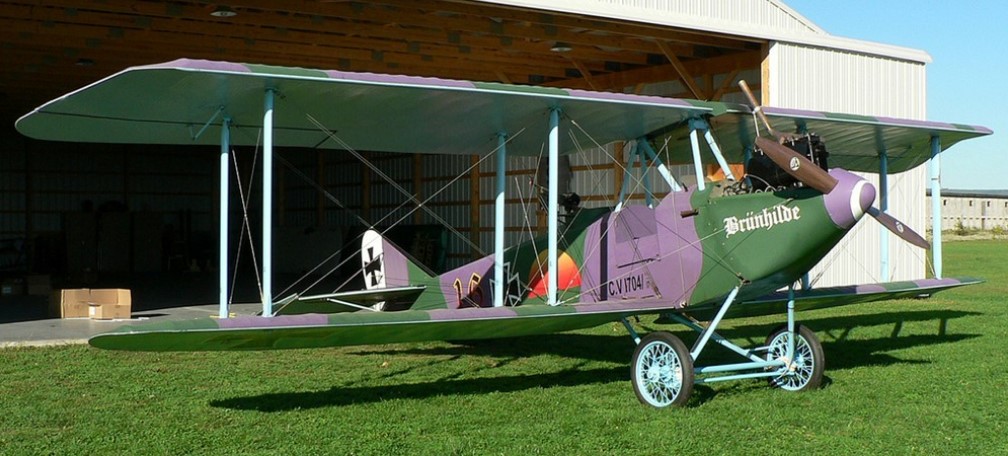
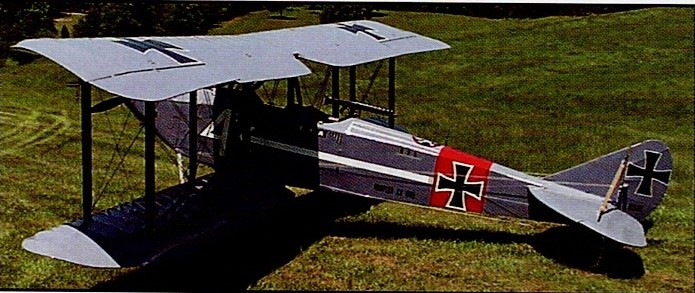
Universal Pictures contracted Slingsby Sailplanes to build rwo flying and several static replicas of the 1917 Rumpler C.IV scout aircraft. They were built at Kirkbymoorside 1968/69 using Tiger Moth airframes and Gipsy Major 10 Mk. 1-3 engines.
The Gipsy Major 10 Mk. 1-3 engine, converted to run upright by Hants & Sussex.
The Tiger basis made them 0.86 scale replicas.
First flown in March 1969 they were shipped to Tunisia for filming before being sold in Virginia.
c/n 1704 G-AXAL First flew 24 March 1969 at Rufforth Sold in USA as N1915E It was donated to the Golden Age Air Museum in Pennsylvania
c/n 1705 G-AXAM First flew 25 March 1969 at Rufforth Sold in USA as N1916E with Ron Bloomquist in Tennessee, USA, in July 2007
Engine: Gipsy Major 10 Mk. 1-3 Wingspan: 39.04 ft Length: 23.11 ft
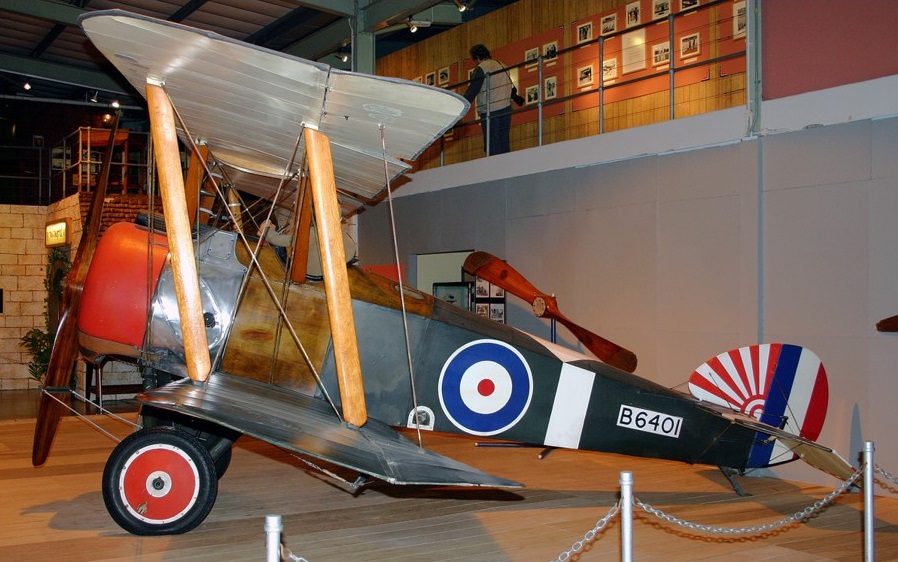
In 1969 Slingsby built a flyable Type T.57 Sopwith Camel Replica powered by a 145hp Warner Scarab engine for use in a Biggles film that was not made. It first flew on 4 March 1969, at White Waltham.
It became N1917H in 1971 (Flying Circus, Bealeton, VA). In 1973 it was sold to Pocono Eagle Industries, but damaged in a ground loop.
In 1975 repairs were started and it was brought back to the UK by AF Carlisle and became G-AWYY. Rebuild completed by Shuttleworth Collection at Old Warden with 29 hours on the log, flown again in October 1976.
Registered G-AWYY c/n 1701, it has a Warner Scarab engine installed and is painted as B6401.
In March 1977 it went to Leisure Sport at Chertsey but in 1982 it was put up for sale and stored at Lands End, Cornwall.
In February 1984 it went to the FAAM at Yeovilton and stored in the Cobham Hall reserve collection. The Certificate of Airworthiness expired on 1 September 1985.
This aircraft is now on display at the Fleet Air Arm Museum, Yeovilton painted as B6401.
Engine: 145hp Warner Scarab Span: 28.00 ft Length: 19.04 ft
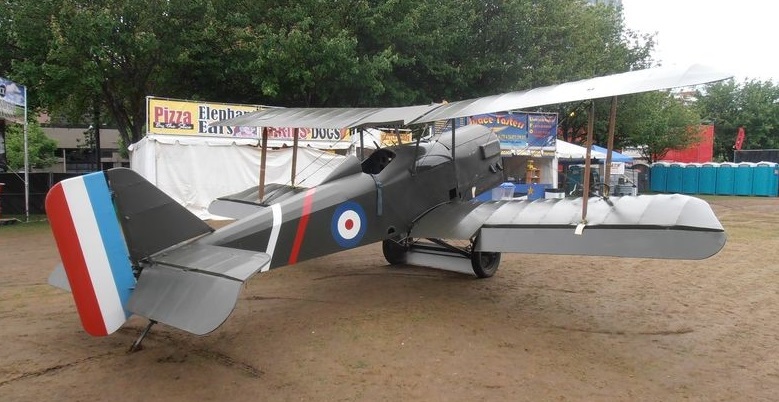
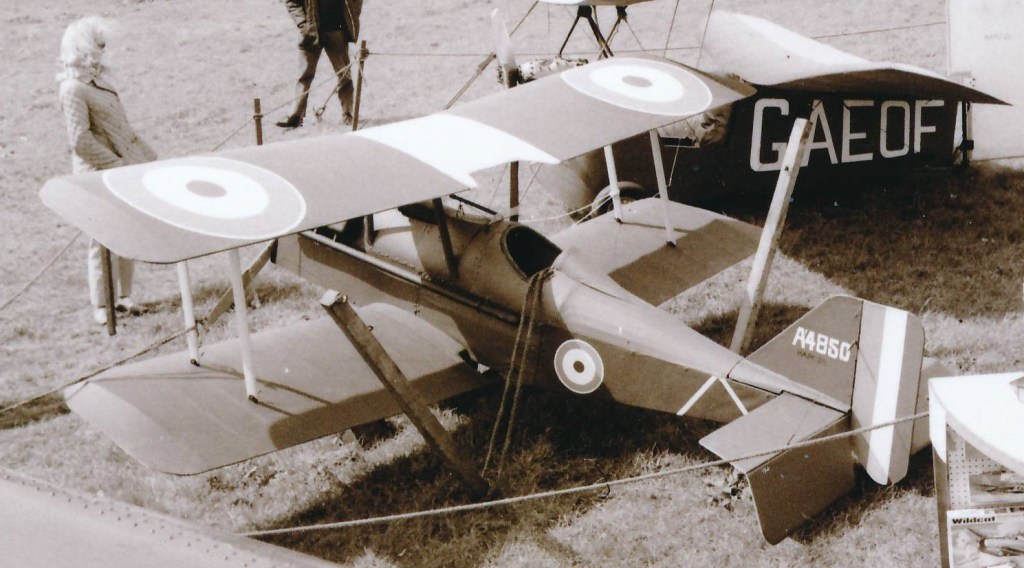
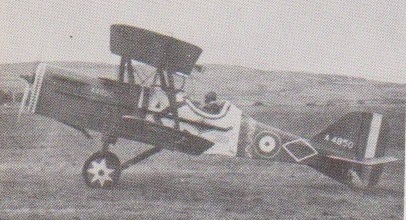
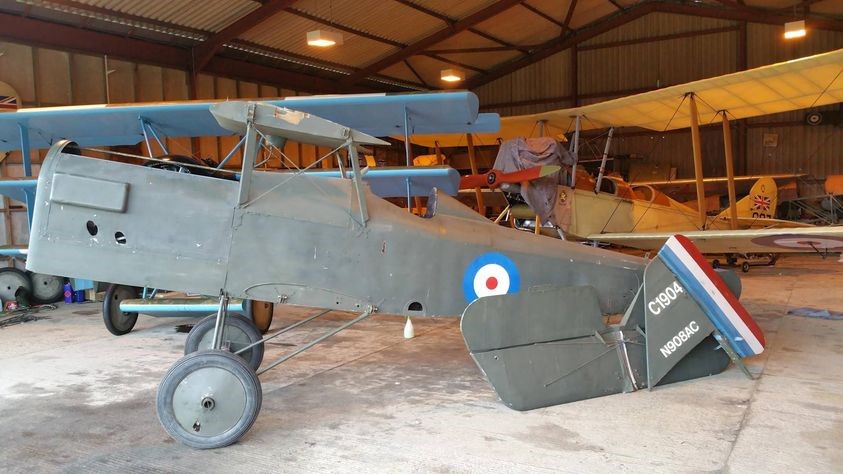
In 1967 Slingsby Sailplanes Limited built six Currie Wot based aircraft to represent the Royal Aircraft Factory S.E.5A for film work. They were powered by 115 hp Lycoming O-235 engines with dummy exhausts and other modifications as 0.83 scale replicas.
They were not modified Currie Wots but were built by Slingsby as a new type based in the Wot drawings, they differ considerably from the Wot. Gliding guru Derek Piggot oversaw the construction of the Slingsby versions, but due to a slight scaling error in design, the nose section was big and boxy. It had almost twice the frontal area, so a large part of the propellor arc was blanked and performance suffered.
They were delivered to Ireland and fitted with dummy guns for the film Darling Lili. These Slingbsy T.56 were referred to as Minis due to their not being full size reproductions. Many static mock ups were built by Slingsby at the same time for the Film Darling Lili.
Four additional SE-5s (N908AC, N909AC, N910AC & N912AC) built after The Blue Max for Darling Lili and used in You Can’t Win Them All, Von Richthofen and Brown and Zeppelin were technically Slingsby T56s, 7/8-scale replicas built on converted Currie Wot biplane kits. The latter two movies saw fatal crashes and the aircraft were soon after dispersed to private collections. They were all sold to The Fighting Air Command in Denton, Texas, in the early 1980s, by which time none of them were airworthy.
The 1930 Skyways Inc Amphibienne was a two-place amphibious open-cockpit biplane. Built at Granville Brothers’ repair shop in Boston, N835H crashed to destruction in May 1930 when the test pilot tried a half-roll followed by a half-loop, a maneuver for which the fragile amphibian wasn’t quite suited.

 All Aero