S.I.A.7 and 9 series of two-seat reconnaissance- bomber biplanes, dating from 1917, were designed by Umberto Savoia and Rodolfo Verduzio. Structural weakness attributed to both, and Type 9 was rejected by Italian Army on this account, though accepted by Navy.
Biplane
Snyder-Macready Baby Bomber
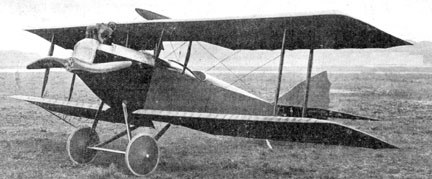
The 1921 Snyder-Macready Baby Bomber designed by O H Snyder was a single-place, open cockpit biplane, powered by a chain-driven 18hp Indian engine The Indian motor which had previously been in the builder’s motorcycle. The propeller was driven through a chain and sprocket reduction gear.
The landing speed was 20 mph and the plane usually stopped within 40 feet after touching the ground.
Of all-wood construction, it was popular with home-builders of the time, with plans published in magazines.
Engine: 18hp Indian
Wingspan: 21’7″
Length: 16’6″
Useful load: 186 lb
Max speed: 62 mph
Cruise: 50 mph
Stall: 35 mph
Seats: 1
Smith, G. 1933 Biplane
In 1933 Glen A Smith built a single-place open cockpit, V-strutted biplane. Power was a 40hp Ford engine.
Smith, F. 1912 Biplane
The two-place open cockpit biplane built by Floyd Smith in 1912 was claimed to be the first tractor biplane built in the US.
Powered by a 60hp Hall-Scott engine, with his wife, Smith flew from Santa Ana to Griffith Aviation Park (Glendale) on 19 July 1912. The 45-mile journey took 01h:07min.
Smith Der Cricket
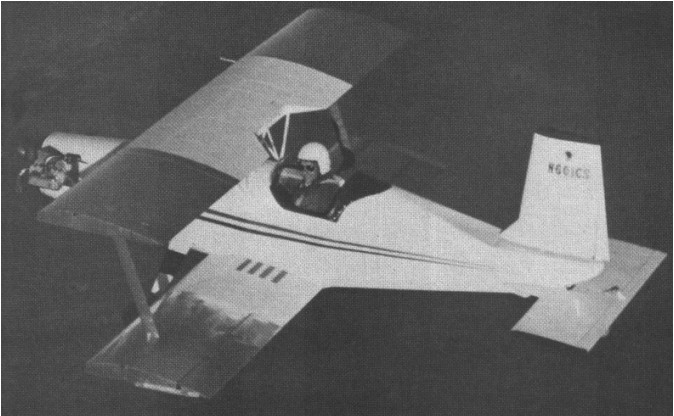
Der Kricket, an original bipe design by Cyril Smith, was built in 857 man hours, and finds that it flies fine from mile-high airports. The philosophy of design simplicity for Der Kricket began with selection of basic materials, and the construction concept developed requires only two sizes of 2024-13 aluminum angle. The spar for the horizontal stabilator is 2-inch square 6063 tubing, requiring a minimum of work. A 2-inch diameter 6063-15 tube spar for the rudder becomes self-hinging with two nylon, teflon or phenolic bushings. All ribs are constructed with a unique self-jigging tab to insure ac¬curate alignment dpring attachment to the various spars. Fuselage is semi-monocoque construction, built upside down on a flat surface, and tricks bor¬rowed from model-airplane building days are employed in assembling the fuselage. A 2 x 11-foot “pin board” on sawhorse supports is used for the fuselage layout. Longerons are tacked to the layout, then four bulkheads added to assure simple, accurate alignment. The “poor man’s deco,” (1/8th-inch soft aluminum pop rivets) are used when necessary for positioning, then are drilled out and replaced with monel or stainless steel pop rivets during final assembly. Full-flying tail surfaces, both vertical and horizontal, are easily constructed and attached, and provide effective control at low airspeeds, with ample rudder movement for takeoff and land¬ing rolls. A good-sized antiservo tab was chosen to provide ample control feel and reasonable sensitivity at cruise speeds. Smith elected to utilize as many pre¬fabricated items as possible in building Der Kricket – landing gear legs from the VP-1 Volksplane; aircraft-style Go Kart wheels and brakes; low-pressure aircraft tires for the mains; and a modified 5-inch caster for a tailwheel. The wing is a NACA 4412.
First flying on 19 September 1978, the prototype N501CS, flew for 25 years before Smith donated it to the Mid-America Air Museum.
Gross weight 750 lbs
Empty weight 500 lbs
Fuel capacity 8-10 Usgal
Wing¬span (biplane) 16’
Length 15’
Engine 1500cc-1835cc VW
Prop: 54 x 30
Vmax 138 mph
Cruise speed 90 mph
Climb rate 500 fpm
Range 200 nm
Wing loading: 7.3 lb/sq.ft
Pwr loading: 14 lb/hp
Smith 1915 Biplane
Three aircraft are said to have been constructed for Arthur L Smith’s exhibition performances at the 1915 Panama-Pacific Exposition by Al Mensaco. The use of “Smith-Curtiss Pusher” in a contemporary journal leads to an assumption of their being Curtiss machines assembled by Smith, or copies using Curtiss motors. Smith was pictured in several different types of aircraft during this period, most of them looking much like the tried-and-true Curtiss designs—or at least faithful replicas.
Smith 1910 Biplane
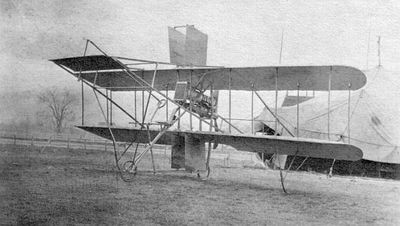
Arthur L Smith believed he could build a plane that would fly better than the Wright airplane, and as he worked on his design, he was careful to avoid infringing on their patents. This was the end result of two prototypes that crashed, mainly because Smith was teaching himself to fly as he went along.
It took him and a friend six months to build the single-place, open cockpit, biplane, which they moved through the streets of Fort Wayne at night to a field in what is now Memorial Park.
Built by Arthur L. Smith, a Curtiss-type biplane flown and crashed at Fort Wayne, Indiana, on January 18, 1910. The aeroplane reached almost fifty miles per hour before leaving the ground when suddenly it rose alarmingly, dipped, rose again, and crashed into the field in what is now Memorial Park. Art was thrown onto the frozen ground and badly injured. The machine was ruined except for the 40 hp Elbridge engine and never rebuilt.
A replica of this ship, built by Billy Parker and Bob McComb, is now hung on display at Ft Wayne Intl Airport terminal.
Smith DSA-1 Miniplane / Sky Classic Aircraft Miniplane
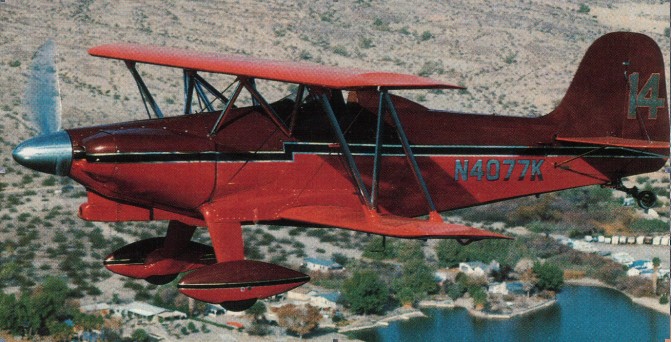
The primary appeal of the Smith Miniplane is its small-size construction simplicity and open-cockpit. The fuselage framework is a conventional truss structure of welded steel tubing, faired to shape with wood stringers. As on most similar designs, the vertical stabilizer is welded up as part of the rear fuselage structure. The wings are made from spruce spars and ribs. Several engines can provide the power, the Continental from 65 to 85 hp or the Lycoming from 100 to 125 hp.
The 1956 DSA-1 Miniplane model designation was for “Damn Small Aeroplane”. The prototype first flew on 29 October 1956.

There have been hundreds of the original Smith Miniplane Biplanes built and flying today. In 1996 plans cost US$140.
Sky Classic Aircraft introduced the 2000 version of the Smith Miniplane Biplane. Many of the parts and pieces on the aircraft were simplified to make it easier to build.
Changes include:
1) New wing fittings to simplify building.
2) Stretched the length of the fuselage by 5 inches to accommodate a larger person.
3) Stretched the width of the fuselage by 2 inches to accommodate a larger person.
4) Added a trim tab to the elevator.
5) Reshaped the rudder assembly to look more racy.
6) Added struts to the horizontal stabilizer to stop any cracking like the Pitts did.
7) Changed the wing foil to a NASA 23013. Good for aerobatics yet very stable with less drag.
8) Changed the wing angles of attack to fix an old problem on the old aircraft.
9) Reduced the rudder control speed to make it just a little easier to fly.
10) Aircraft plans on computer CAD so that they are easy to read.
11) Adding springs to the original type landing gear.

Engine: 65- 85-hp Continental, 100-125-hp Lycoming.
Gross Wt: 1000 lb
Empty Wt: 616 lb.
Fuel capacity: 17 USG
Wingspan: 17’.
Length: 15’3”
Wing area: 100 sq.ft.
Top speed: 130 mph
Cruise: 122 mph.
Stall: 56 mph
Climb rate: 1600 fpm.
Ceil¬ing: 13,000 ft
Takeoff run: 450 ft
Landing roll: 500 ft
Range: 275 sm
Seats: 1
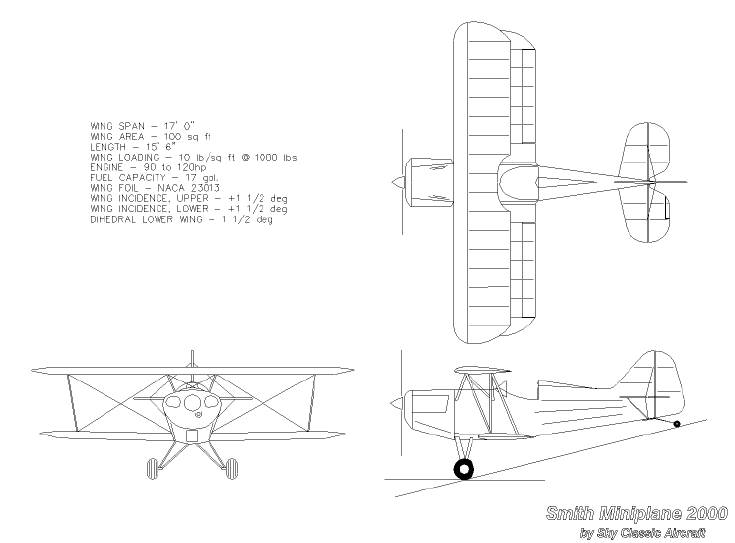
Sky Classic Aircraft Smith Miniplane 2000
Engine: Lycoming O-235, 100 hp
HP range: 90-120
Length: 15.5 ft
Wing span: 17 ft
Wing area: 100 sq.ft
Empty weight: 650 lb
Gross weight: 1000 lb
Fuel capacity: 15 USG
Cruise: 125 mph
Stall: 60 mph
Range: 90 sm
Rate of climb: 1000 fpm
Takeoff dist: 400 ft
Landing dist: 400 ft
Seats: 1
Cockpit width: 23 in
Landing gear: tailwheel
Sky Classic Aircraft Smith Sport Miniplane
Engine: Continental O-200, 100 hp
HP range: 90-120
Height: 5.5 ft
Length: 15.5 ft
Wing span: 100 ft
Wing area: 100 sq.ft
Empty weight: 650 lb
Gross weight: 1000 lb
Fuel capacity: 17 USG
Top speed: 135 mph
Cruise: 125 mph
Takeoff dist: 400 ft
Landing dist: 400 ft
Seats: 1
Landing gear: tailwheel
SMAN Petrel
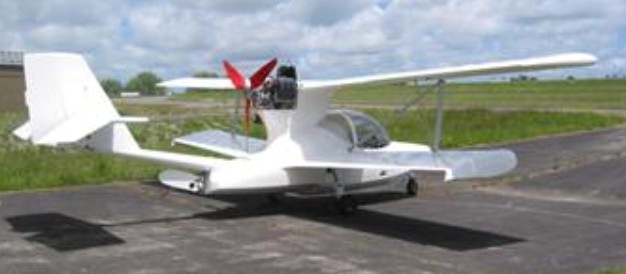
A side by side two seat amphibious pusher biplane. A full detachable canopy that can be converted into an open cockpit with its own separate windshield.
The wings, boom and tail section detach for reduced storage and easy transportation.
Production of the Petrel was taken over by SMAN, who returned it to the market circa 1998.
Engine Rotax 618
Propeller Airplast 166DAS6275/3
Undercarriage retractable
Engine: Rotax 912, 80 hp
Wing span: 8.50 m
Wing area: 17 sq.m
MAUW: 450 kg
Fuel capacity: 53 lt
Max speed: 150 kph
Cruise speed: 130 kph
Minimum speed: 65 kph
Climb rate: 3.5 m/s
Seats: 2
Fuel consumption: 13 lt/hr
Price (1998): 245 000 F
Kit price (1998): 121 000 F sm
Sloane 1912 Biplane
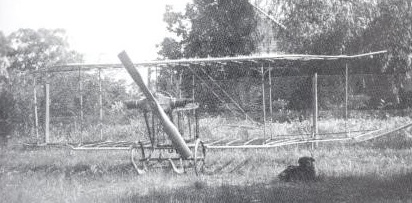
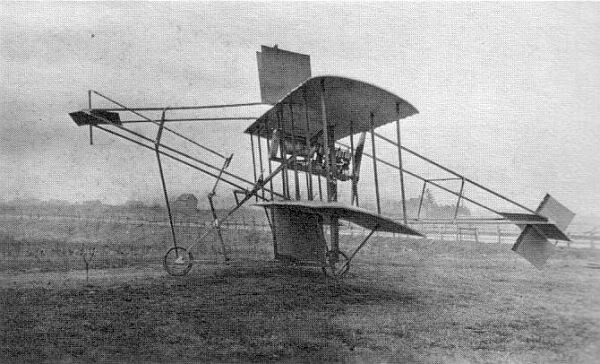
Australian tractor biplane designed and constructed by Douglas Sloane. The engine was also of his own design and one of the things that held him up in his attempt to fly. Despite the stage of progress seen in this photo, the plane was eventually covered. It was towed behind a car to give it extra power but the engine just didn’t have the muscle. However the plane did manage a short hop at “Dick’s Plain” swamp in late April 1912.
 All Aero