Squadron Aviation Fokker D.VII / Loehle Fokker D-VII

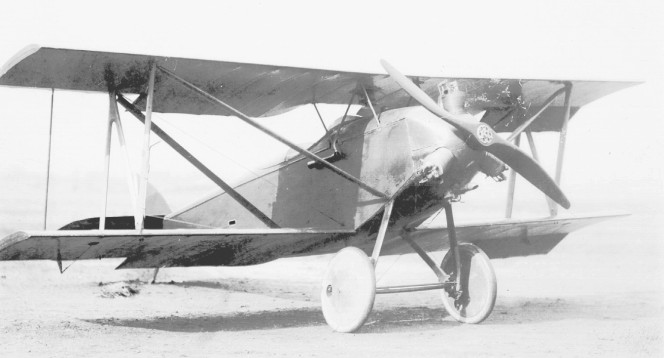
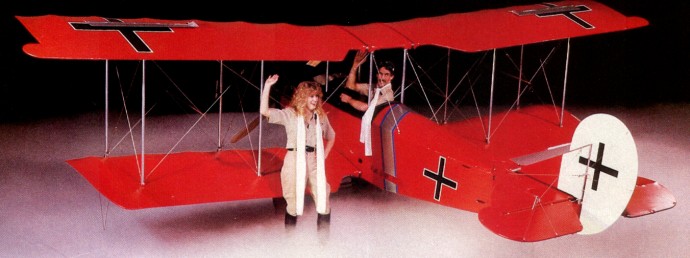
Squadron Aviation produce a variety of replicas and most of the specs are very similar. All three of the aircraft, designed by Lew Parsley, are produced at the company’s Columbus, Ohio plant and are structurally the same. Wing panels are pre-assembled at the factory from stamped aluminium ribs and aluminium tubing, as is the precisely jigged aluminium tubing fuselage and tail feathers. The kit-builder is faced with assembly (all critical holes are drilled), rigging (accomplished with a simple jig concept detailed by the factory) and traditional dope and fabric covering. The external styling to create each replica is obtained with the use of a plastic pre-moulded and coloured cowling for the three individual ultralights. Flight performances are very good with a take-off roll of 22 metres the standard. A very comprehensive kit was available which includes everything, right down to the dope finish of the squadron of your choice.

The Fokker was part of the Squadron Aviation purchase by Loehle Aviation and kits have been marketed by them since.

Max gross wt: 505 lbs
Max pilot wt: 225 lbs
Empty weight: 250 lbs
Fuel capacity: 3.6 lbs
Climb rate: 1000+ fpm
Power off stall: 22 kts
Wing loading (225 lbs pilot): 3.0 lbs/sq.ft
Power loading (170 lbs pilot): 12.8 lbs/hp
Take-off distance: 75 ft
Landing distance: 100 ft
Glide ratio: 5.5:1
Vne: 60 kts
Cruise speed: 50 kts
G loading: +4 / -2
Engine: Cuyuna UL II-02
Wing spans average: 24.5 ft
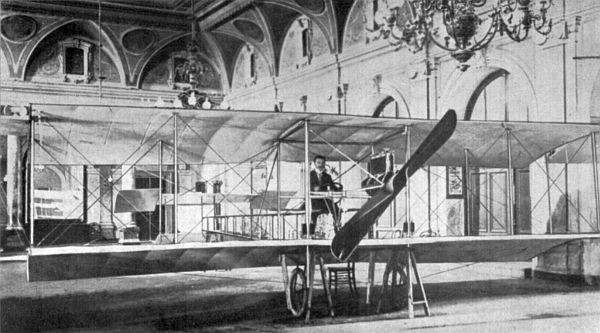
Spiller 1910 biplane

The first design of brothers Franz and Josef Spiller in Graz, Austria. It was exhibited in Graz in June 1910 before tests on the Graz flying field Thalerhof. The engine was a 50 hp Austro-Daimler automobile motor similar with that which Etrich also had no joy in Spring 1910 (before Ferdinand Porsche designed an aero engine of it). The Spillers later that year changed to a Puch aero engine, also built in Graz. Details of their achievements are almost undocumented, but they were experimenting at Thalerhof at least until 1912, with more or less success.

Sperry 1910 Biplane

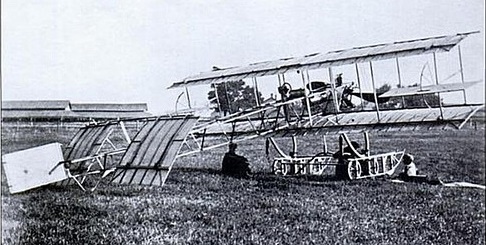
Lawrence Sperry first became interested in aviation after seeing Henri Farman make a short flight in Brooklyn in 1908. In the summer of 1910, at age 17, he built an aircraft from an original design on the second floor of his parents’ house in Flatbush.

First flown as a glider, a 60 hp Anzani engine was then procured and the aircraft was successfully flown at the Sheepshead Bay racetrack. Certainly one of the first tractor biplanes constructed in the United States, it was equipped with an unusual multi-wheeled lattice skid undercarriage meant to help the aircraft operate from rough terrain.

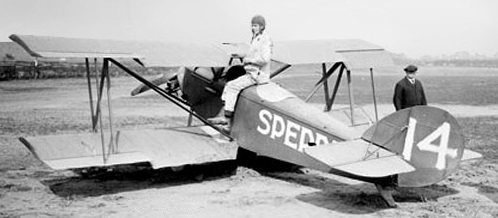
Sperry Messenger M-1 / Verville-Sperry

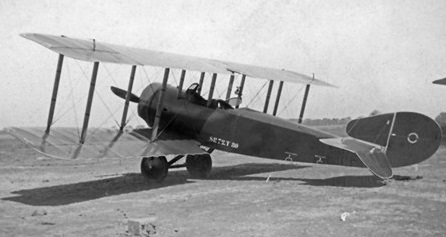
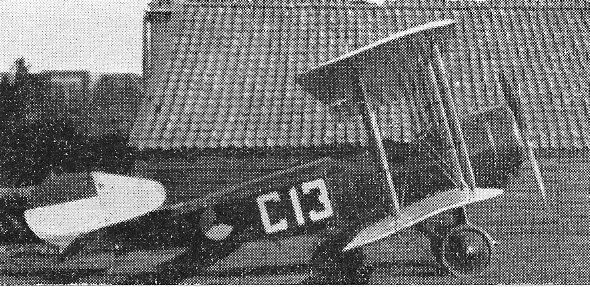
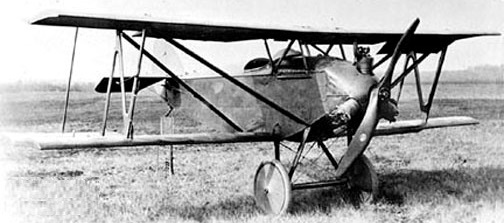
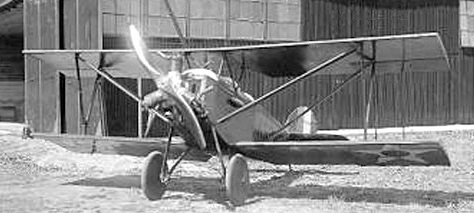
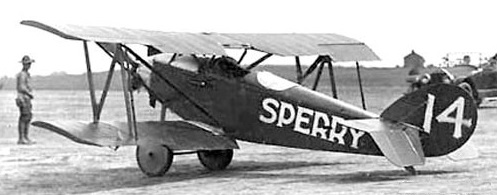
Designed at McCook Field by Alfred Verville of the Engineering Division, U.S. Air Service, and called also Verville-Sperry, the Sperry Messenger M-1

Sperry M-1

The Messenger M-1 open cockpit biplane was powered by a 60hp Lawrance L-4S and, later, L-3 (as Wright Gale) engine and had ailerons on all wings.

Sperry M-1

First flown on 1 November 1920 (piloted by John A Macready) from 1921 tiny Messenger single-seat biplane was in production as an Army liaison and utility aircraft. Alfred V. Verville is best known for his later Verville-Packard and Verville-Sperry racing aircraft of the early 1920s.

Twenty-two were built as military M-1, and twenty as M-1A (AS64223-64227, AS68472-68477, and AS68528-68533), plus 1 civil sport version that failed to spark any public interest, and the idea was never pursued.

Sperry M-1A

Of the first twelve, eight were modified as remote-control flying bombs with the designation MAT (“Messenger Aerial Torpedo”).

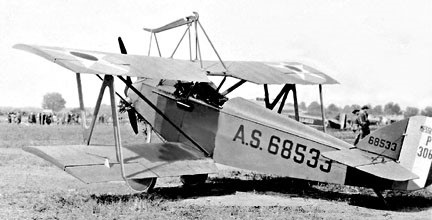
With a hook mounted above the upper wing, Messenger AS68533 piloted by Lt Rex K Stoner “landed” on a trapeze suspended from the D-3 Army Air Service airship in the first successful contact between an airplane and an airship while in flight, on 18 September 1923, over Langley Field VA.

Sperry M-1A AS-68533 with hookup trapeze

Sperry lost his life on 13 December 1923, crashing in the English Channel while demonstrating this plane, which was later rebuilt and modified by Clarence Chamberlin in 1928 for use in demonstrations to publicize lightplane aviation.

Sperry M-1A

Aeromarine modified a Sperry Messenger with an experimental variable-camber in 1924.

Several ex-military aircraft appeared later in civil roles, as well.

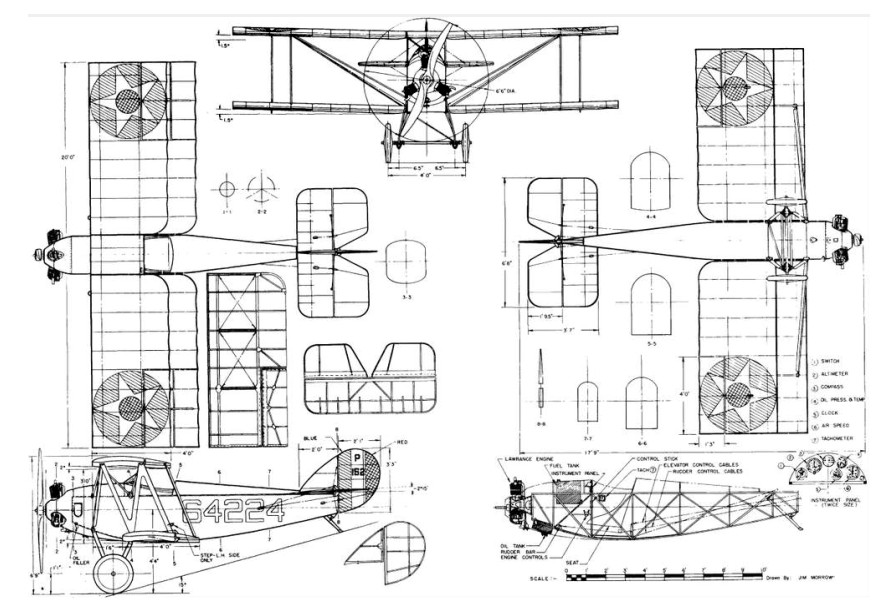
M-1 Messenger, M-1A, MAT
Engine: 60hp Lawrance L-4S, later, L-3 (as Wright Gale)
Wingspan: 20’0″
Length: 17’9″
Max speed: 97 mph
Cruise: 80 mph
Stall: 37 mph
Ceiling: 13,400 ft
Seats: 2

Spencer Curtiss-type

Percival Hopkins “Spence” Spencer convinced his father to invest in the wreckage of a Curtiss F. At age 17 he rebuilt and modified it as flying boat.

On 12 April 1911 he not only took his creation on its first flight but on his own solo flight. Unskilled in turning the plane, he flew for five miles, landed on a river, and pushed it around for the return flight.

Spencer was still actively flying in 1987 at age 90.