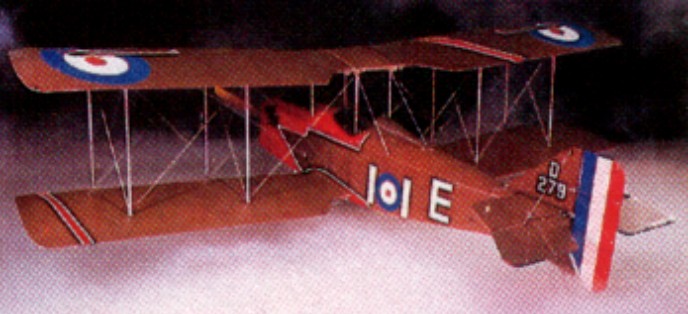
Staib Carpenter Special / Little Dea-Dea

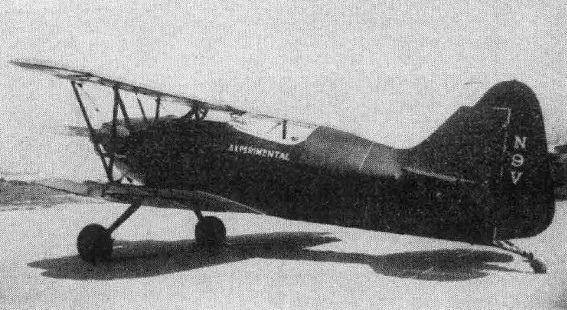
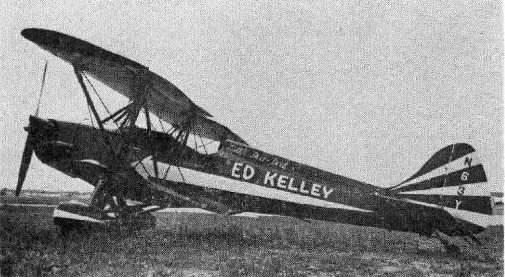
Carpenter Special Serial number 3 N63Y Little Dea-Dea

Carpenter Special Serial number 3 N63Y was built in 1933. The third aircraft built by Walter Staib. Each side of the aircraft has four flying wires and three landing wires, plus N struts. The upper wing is mounted on six cabanes, forming two pylons. It was powered by a Continental C-85 in 1955.

Originally installed was a Continental A-50 engine. Registration N63Y(X), the black and white biplane, called “Little Dea-Dea”, has a fuselage construction of steel tubing and wood stringers, wooden wings and the whole aircraft is fabric covered. Fuel is in a 12 USG wing tank and a 12 USG header tank.

Carpenter Special Serial number 3 N63Y Little Dea-Dea

In 1949 Charles E. Rawson bought the Special for $1800, recovered it, and installed a 125 hp Warner Scarab. He later scrapped the Warner as tired out and installed an 85 hp Continental. Rawson also installed Cessna 140 wheels and brakes, and Stinson 108 wheel pants.

Carpenter MLC-3
Engine: Continental C-85-12, 85 hp
Wingspan upper: 21 ft 0 in
Wingspan lower: 19 ft 9 in
Length: 19 ft 6 in
Height: 7 ft 10 in
Wheel tread: 5 ft 8 in
Max speed: 110 mph
Cruise: 100 mph
Landing speed: 65 mph
Fuel capacity: 24 USG
Cruise range: 325 mi

Staib LB-3 / LB-5

LB-5
LB-3

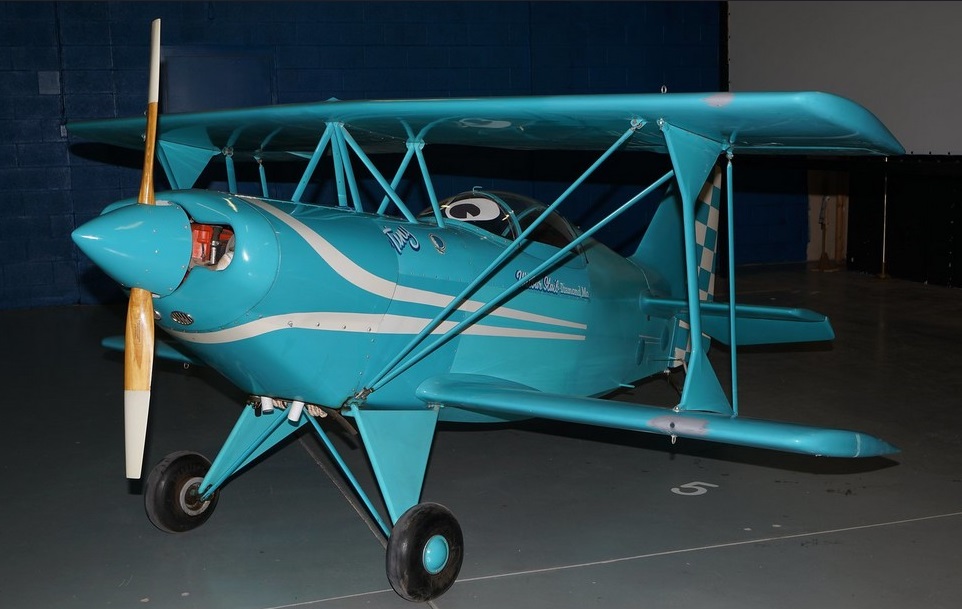
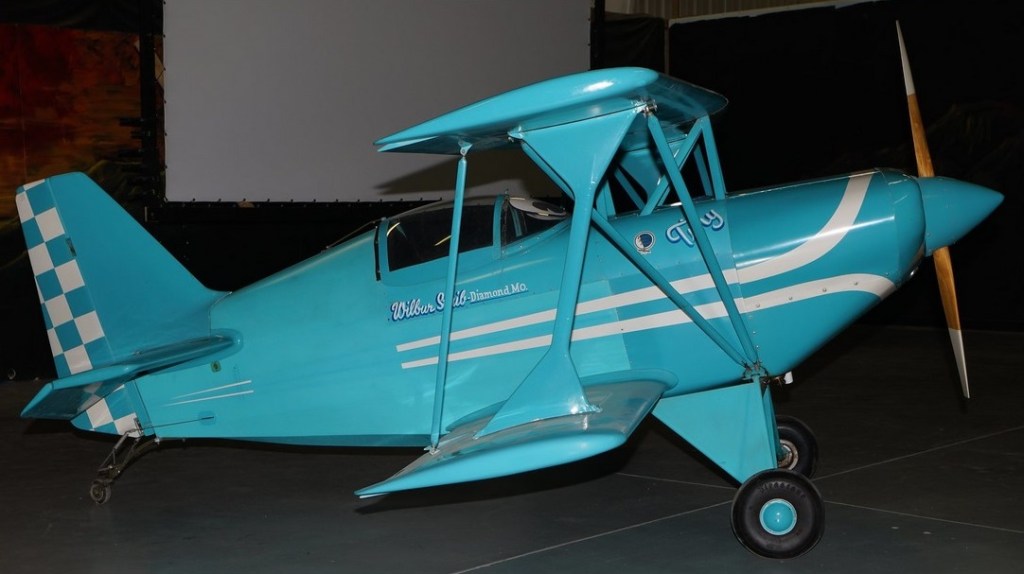
The LB-2 was flown at near top speed, with stalls untested. The roll rate was good, but turns were difficult. Landing speed was 120 mph (193 km/h). The fuselage was disassembled in 1953 to build the Staib LB-3 biplane. The LB-3 used new 14 ft (4.3 m) span wings made in the same fashion as Staib’s LB-1 with brazed steel bedspring, which was obtained from a local manufacturer, wing ribs with Taylorcraft airfoil sections. This airplane sat higher off the ground than others. The spring steel gear was of local manufacture, and was made of one piece.

LB-3

The aircraft cruised at 125 mph (201 km/h), landed at around 55 to 60 mph, and operated on the airshow circuit for two years. Cliff Baker operated the aircraft one more season, suffering a broken back after a high-speed incident.

LB-5

The Staib LB-5 “Little Bit” was a Volkswagen powered variant. One is on display at the Mid-America Air Museum.

LB-5

Staib LB-1 Special

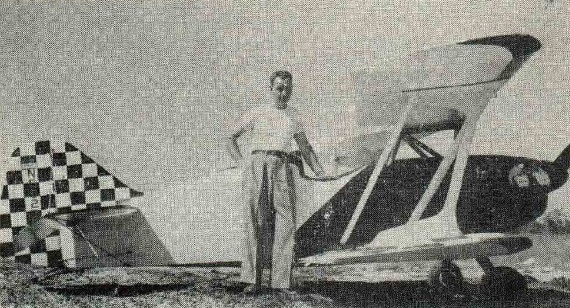
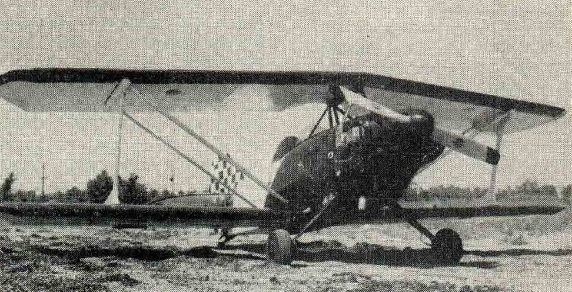
Designed and built by Wilbur Staib, the LB-1 N5927V (X) was a single engine, open cockpit biplane with conventional landing gear. The low-cost construction included using brazed steel bedspring wire for wing-ribs, and bed-sheet muslin covering. Metal ribs are spaced on a wooden spar and normal construction methods are used throughout. The airfoil was patterned on a Taylorcraft BC-12D. Fuel is in two 6 USG tanks in the fuselage. The aircraft used three fuel tanks: one in the headrest, one in the baggage compartment and one against the firewall. The red and white checkerboard-painted aircraft was outfitted with a smoke system for air show work.

The top wings are swept back, and lower wings are straight. Both sets span 17 ft. Note that the centre pylon slopes inward from the fuselage top. Arrangement of the other struts is a pair of parallel struts and I-struts connecting the wings at the outer brace point. Ailerons are only provided on the lower wings.

Staib used the LB-1 to perform on the pro-akro circuit, performing stunts such as inverted ribbon cuts. His LB-1 was comparable to the Pitts Special flown by Betty Skelton at the same shows. The aircraft performed from 1949 to 1952.

By 1955 it had flown approximately 1000 hours. The prototype was registered as late as 1990.

Staib LB-1
Powerplant: 1 × Continental C-85
Propeller: 2-bladed Metal
Wingspan: 17 ft (5.2 m)
Wing area: 95 sq ft (8.8 m2)
Length: 15 ft (4.6 m)
Height: 4 ft 9 in
Empty weight: 600 lb (272 kg)
Fuel capacity: 17 U.S. gallons (64 L; 14 imp gal)
Maximum speed: 96 kn (110 mph, 180 km/h)
Cruise speed: 87 kn (100 mph, 160 km/h)
Cruise at 2450 rpm: 110 mph
Stall speed: 48 kn (55 mph, 89 km/h)
Endurance: 2.5hr
Crew: 1

SR-1 Enterprises Stinger

Biplane, struts and cable bracing, cruciform tail. Taildragger, steerable tailwheel. The Stinger is derived from the Hornet, being of similar configuration and construction, and differs principally by having a smaller wing span and area.

The power pack is a Kawasaki TA440, as on the Hornet, and the price was $6450 ready to fly in 1983.

Engine: Kawasaki TA440, 35 hp at 6000 rpm
Propeller diameter 50 inch, 1.27 m
V belt reduction, ratio 2.0/1
Max static thrust 235 lb, 107 kg
Power per unit area 0.19 hp/sq.ft, 2.0 hp/sq.m
Fuel capacity 5.0 US gal, 4.2 Imp gal, 18.9 litre
Length overall 18.0 ft, 5.49 m
Height overall 6.3 ft, 1.91 m
Wing span 26.3 ft, 8.02 m
Total wing area 185 sq.ft, 17.2 sq.m
Empty weight 245 lb, 111kg
Max take off weight 600 lb, 272kg
Payload 355 lb, 161kg
Max wing loading 3.24 lb/sq.ft, 15.8 kg/sq.m
Max power loading 17.1 lb/hp, 7.8 kg/hp
Load factors; +12.0, 12.0 ultimate
Max level speed 62mph, 100kph
Never exceed speed 100mph, 161kph
Cruising speed 55mph, 88 kph
Stalling speed 24 mph, 39 kph
Max climb rate at sea level 700 ft/min, 3.6 m/s
Best glide ratio with power off 8/1

SR-1 Enterprises Hornet

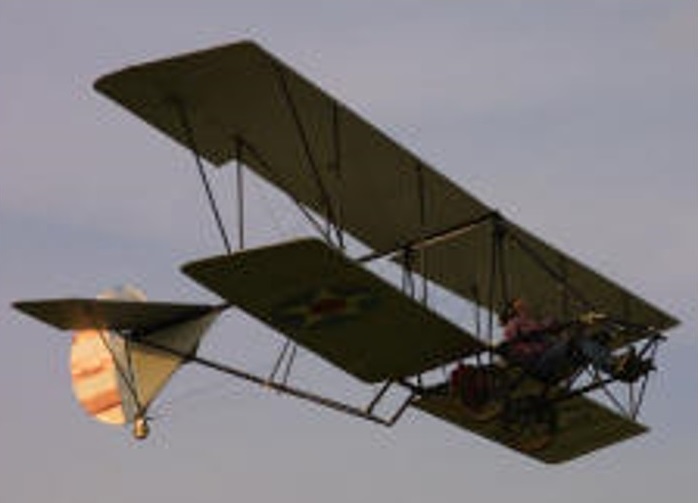
The Hornet was originally powered by a Mac 101 go cart engine, was foot launched, and had three axis controls using elevator and ailerons through a side stick arrangement. With it’s large wing area and light weight it made an excellent glider. Later models had landing gear added to them and engine power increased to the Rotax 503.

SR-1 Enterprises Hornet Article

Single seat single engined biplane with conventional three axis control. Wing has unswept leading and trailing edges, and constant chord; cruciform tail. Pitch control by elevator on tail; yaw control by fully flying rudder; roll control by half span ailerons on upper wing; control inputs through stick for pitch/ roll and pedals for yaw. Wings braced by struts and transverse X cables; wing profile; double surface. Undercarriage has three wheels in tail dragger formation; suspension on tailwheel and bungee suspension on main wheels. No ground steering. No brakes. Aluminium tube/steel tube framework, without pod. Engine mounted between wings driving pusher propeller.

Introduced in 1982, the Hornet is a biplane which is built very much according to the customer’s wishes and it is thus rather difficult to describe a ‘standard’ machine. However, all Hornets use a combination of steel and aluminium tubing for their construction, with a ladder frame for the wings and drag and anti drag diagonal cables inside the double surface wing. Two steel tubes in the shape of an inverted V run between the trailing edges of the upper and lower wings and provide a mounting for the engine, usually a 30 hp Cuyuna 430R.

Engine: Cuyuna 430R, 30 hp at 5500 rpm
Propeller diameter and pitch 45 x 33 inch, 1.14 x 0.84 m
V belt reduction, ratio 2.0/1
Power per unit area 0.13 hp/sq.ft, 1.5hp/sq.m
Fuel capacity 3.0 US gal, 2.5 Imp gal, 11.4 litre
Length overall 18.3 ft, 5.56 m
Height overall 6.7ft, 2.03m
Wing span 34.0ft, 10.36m
Sweepback 0 deg
Total wing area 218 sq.ft, 20.3 sq.m
Main wheels diameter overall 20 inch, 50 cm
Empty weight 200 lb, 91 kg
Max take off weight 575 lb, 261 kg
Payload 375 lb, 170 kg
Max wing loading 2.64 lb/sq.ft, 12.9 kg/sq.m
Max power loading 19.2 lb/hp, 8.6 kg/hp
Load factors; +5.5, 4.5 ultimate
Max level speed 60 mph, 97 kph
Never exceed speed 65 mph, 105kph
Economic cruising speed 48mph, 77kph
Stalling speed 21mph, 34kph
Max climb rate at sea level 800 ft/min, 4.1 m/s
Min sink rate 250ft/min at 33mph, 1.3m/s at 53 kph
Best glide ratio with power off 9.3/1 at 33 mph, 53 kph
Take off distance 75 ft, 23 m
Landing distance 160 ft, 49 m
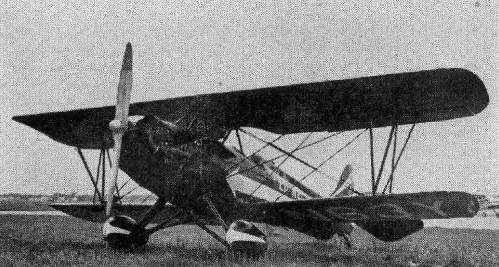
Squadron Aviation SPAD XIII Model 12

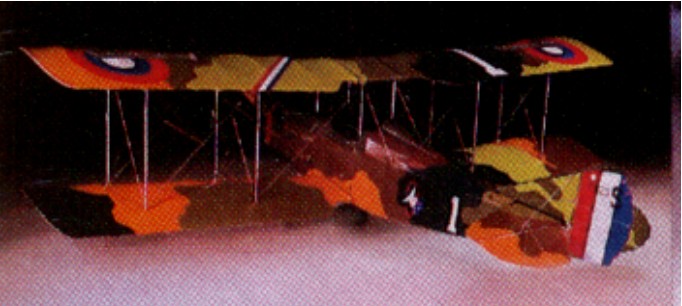
Squadron Aviation produce a variety of replicas and most of the specs are very similar. All three of the aircraft, designed by Lew Parsley, are produced at the company’s Columbus, Ohio plant and are structurally the same. Wing panels are pre-assembled at the factory from stamped aluminium ribs and aluminium tubing, as is the precisely jigged aluminium tubing fuselage and tail feathers. The kit-builder is faced with assembly (all critical holes are drilled), rigging (accomplished with a simple jig concept detailed by the factory) and traditional dope and fabric covering. The external styling to create each replica is obtained with the use of a plastic pre-moulded and coloured cowling for the three individual ultralights. Flight perform¬ances are very good with a take-off roll of 22 metres the standard. A very comprehensive kit was available which includes everything, right down to the dope finish of the squadron of your choice.

Max gross wt: 505 lbs
Max pilot wt: 225 lbs
Empty weight: 250 lbs
Fuel capacity: 3.6 lbs
Climb rate: 1000+ fpm
Power off stall: 22 kts
Wing loading (225 lbs pilot): 3.0 lbs/sq.ft
Power loading (170 lbs pilot): 12.8 lbs/hp
Take-off distance: 75 ft
Landing distance: 100 ft
Glide ratio: 5.5:1
Vne: 60 kts
Cruise speed: 50 kts
G loading: +4 / -2
Engine: Cuyuna UL II-02
Wing spans average: 24.5 ft.

Squadron Aviation SE5a Model 13 / Loehle SE-5A

Squadron Aviation produce a variety of replicas and most of the specs are very similar. All three of the aircraft, designed by Lew Parsley, are produced at the company’s Columbus, Ohio plant and are structurally the same. Wing panels are pre-assembled at the factory from stamped aluminium ribs and aluminium tubing, as is the precisely jigged aluminium tubing fuselage and tail feathers. The kit-builder is faced with assembly (all critical holes are drilled), rigging (accomplished with a simple jig concept detailed by the factory) and traditional dope and fabric covering. The external styling to create each replica is obtained with the use of a plastic pre-moulded and coloured cowling for the three individual ultralights. Flight perform¬ances are very good with a take-off roll of 22 metres the standard. A very comprehensive kit was available which includes everything, right down to the dope finish of the squadron of your choice. Centre mounted joy stick, rudder pedals, tailwheel or skid.

Built by Squadron Aviation before manufacture and marketing were acquired by Loehle. Loehle shipped kits pre-built to covering stage. LSA approved.

Empty wt: 253 lbs
Wing span: 24 ft
Wing area: 168 sq.ft
Height: 6’4”
Length: 16 ft
Fuel cap; 5 USG
Construction: Aluminium, Dacron
Engine: Cuyuna ULII-02 (429 cc) 35 hp
Prop: 183cm
Static thrust: 300+ lbs
Max wt: 504 lbs
Max pilot wt: 225 lbs
Stall: 22 mph
Econ cruise speed: 45 kts
Max speed: 63 mph
Vne: 75 mph
Climb rate: 1000 fpm @ 45 mph
Design limit: +4, -2g
Glide ratio: 5.5-1
Wing loading: 3lbs/sq.ft
Power loading: 14.4 lbs/hp
Take-off distance: 75 ft
Landing distance: 100 ft