The 1916 Standard Aircraft Corp model J was the first production model. A two-place, open cockpit biplane, they were powered by a 90hp Hall-Scott A-7 engine, and featured a pronounced overhang in the top wing.
An army contract model, many were sold surplus after WW1.
The Standard GD-24 (Gates-Day) of 1928 (ATC 2-38) was designed by Charles H Day and first flew on 24 August 1928, piloted by Clyde Pangborn.
A 3-4 seat (in three cockpits) biplane, three were built; NC193E c/n 102, NC442 c/n 103, and NX7286 c/n 101, and possibly also included NC2220. The first two become New Standard D-24.
The 1917 Standard JR-1 and -1B were two-place Army advanced trainer, but boldly referred to by the company as “Pursuit”. They were revised J-1/SR-1 with a 175hp Hall-Scott A-5 engine in the JR-1, and 150hp Wright-Hisso A in the JR-1B.
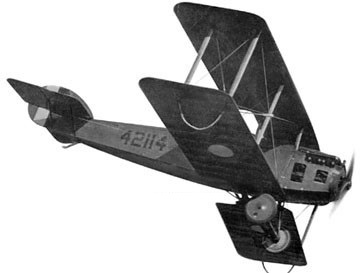
Six JR-1 were built; AS25804, and 34225 to 34229, and six went to the US Mail Service in 1918 as JR-1B with 150hp Wright-Hisso A engine (AS42111 to 42116).
Standard JR-1B AS42114
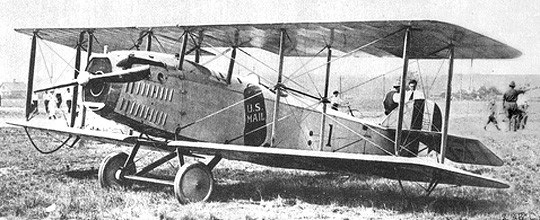
The 1918 Standard E-4 were redesignated JR-1B as a post-war single-place mail plane with a 150hp Wright-Hispano A and a longer top wing.
Standard Aircraft Corp made to own designs SJ trainers; E-1 single-seat fighters, used for advanced training; H-3 landplane reconnaissance biplanes and H-4-H floatplanes.
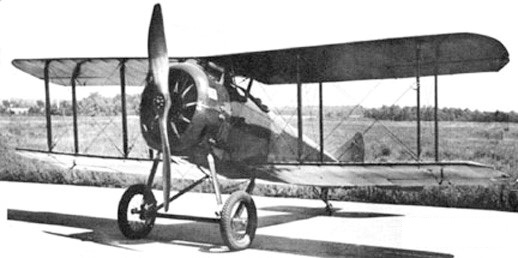
One hundred and twenty-eight Standard E-1 Pursuit Trainer were built, up to 30 with Gnôme Rhône engines (AS33769 to 33770, AS44542 to 44574, and AS47515), the 80hp LeRhône powering most (AS49133 to 49207).
Three LeRhône powered were retitled M-Defense (44575 to 44577).
AS49156 to 49212 are also seen in some records as M-Defense, but those conflict with E-1 s/ns. Underpowered, none saw combat service. Three were converted in 1919 with lengthened fuselages as MAT experimental radio-controlled aerial torpedoes and reregistered (64228 to 64230).
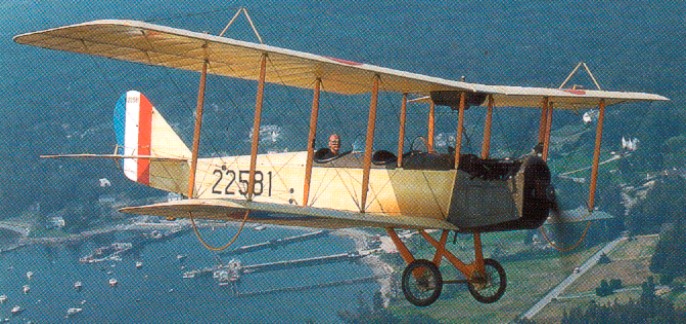
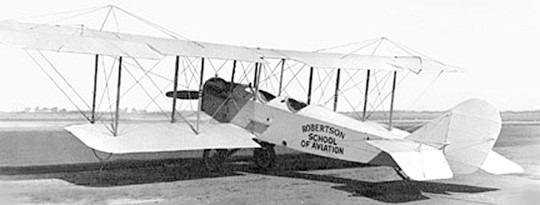
The Standard Aircraft Corp J-1 and SJ-1 of 1917 were Army trainers developed from the Sloane H-3. They are two-place, open cockpit biplanes designed by Charles H Day
The second production model cost government about $8,000.
About 800 were built.
1,601 were built as SJ-1 including those also built by Dayton-Wright (400), Fisher Body Works (400), and Wright-Martin (51) – AS193 to 208, 957 to 1056, 1660 to 2403, 4477 to 4994, 22403 to 22803, and 41208 to 41357.
Many were surplused into civil use after WW1. Walter T Varney Aeroplanes converted many J-1 to 3-4 seats in 1921, from war-surplus Standard J-1.
Engine: Hall-Scott A-7A, 100 hp Wingspan: 43’10” Length: 26’2″ Useful load: 513 lb Max speed: 72 mph Cruise: 64 mph Stall: 40 mph Range: 350 mi Ceiling: 15,000′ Seats: 2
RSV26-180 O-BADE (c/n 138) was built in 1926 for the Stampe Flying School, the O-BADE was modified as an amphibian version in 1927 and even did some flight trials. Presented later on to the “Administration de l’Aéronautique”, this project never went further and the plane was written off in 1933.
In 1929, after having previously acquired eleven R.S.V. 26/180 trainers, the Aéronautique Militaire Belge placed an order for 14 more aircraft of this type. The machines of this order were specialised night-flying trainers and equipped with a blind-flying hood over the forward pilot seat. Although ancestry to the initial RSV 26/180 is clearly evident, the additional aircraft had been extensively improved by Chief Engineer George W. Ivanov. Readily noticeable is the Morane Saulnier style wide main undercarriage, a Hispano 180hp motor with its new radiator behind the engine, and new central “N” struts. The extend of modifications to the 19 aircraft of this additional order justified the specific designation R.S.V. 26/180 Mark III, while they were given registrations V-12 to V-30 – including 5 more aircraft ordered in 1930(2) and 1931(3).
These additional aircraft were destined to receive the then new AéM standard power plant the 215 hp radial Armstrong Siddeley Lynx in order to compete for an AéM requirement for a new basic trainer. However Stampe and Vertongen’s hopes for a large additional order of the basic trainer version of the RSV 26/180 quickly faded away, when the AéM selected the Avro 504N as its elementary trainer in 1932. Only one example of the Lynx powered R.S.V. 26 was flown, being designated S.V. 26/215 or S.V. 26 Lynx. Some of the 14 initial production R.S.V. 26/180 Mark III’s were reworked aircraft of the initial 11 R.S.V. 26/180 series.
The MK.III’s soldiered on until early 1936 when they were replaced by the S.V. 5 (ordered in 1935). Ten R.S.V. 26/180 Mk.III were sold to civil operators and continued flying until World War II. In the late thirties at least two MK.III’s were noted with a scrap dealer at the Chausée de Dinant, 81A at Anhée.
In the late 1920s. Belgian company Stampe et Vertongen decided to compete with the British manufacturers that then dominated Europe. In 1928, the talented Belgian engineer Alfred Renard was given a technical task to develop a light training aircraft.
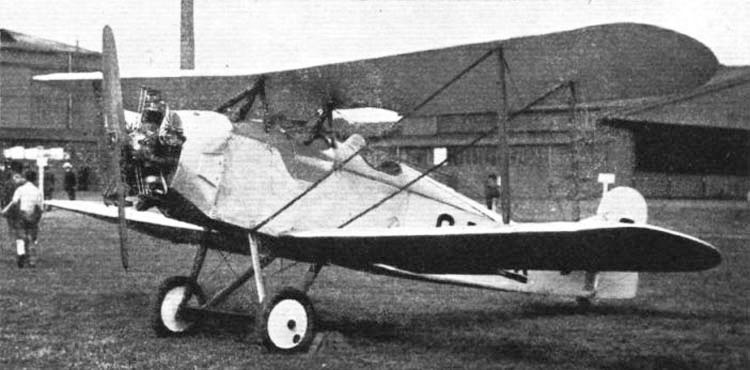
Structurally, it was a conventional, single-bay biplane with staggered wings of equal span. The pilot and passenger sat in tandem open cockpits and power was provided by a radial engine in the nose. The fixed undercarriage consisted of main units braced to one another, and a skid to support the tail. The military showed interest in the new aircraft, and they were quite ready to support the domestic manufacturer. The only question was whether Renard could provide the required indicators. Fortunately, the terms of reference turned out to be quite reasonable, and the RSV.26/140 became the first aircraft for the Belgian own Air Force.
At the time, Stampe et Vertongen designated their aircraft with two numbers: the wing area (measured in square metres) and the engine power (measured in horsepower). Renard’s new design had a wing area of 26 m² and was to be powered by a 75 kW (100 hp) Renard Type 100 and was therefore designated RSV.26/100. Two years previously, the firm had introduced a training biplane for the Belgian Air Force that also had a wing area of 26 m² (280 sq ft); powered by a 75 kW (100 hp) engine, it had been designated the RSV.26/140. The similar designations caused confusion in the aviation press, but Renard insisted that the RSV.26/140 and RSV.26/100 were two distinct aircraft.
Thus, the first prototype of the aircraft, intended for the Belgian Air Force and equipped with a 140-horsepower engine, was designated RSV.26/140. Some time passed and in 1928 the RSV.26 / 100 aircraft equipped with a 100-horsepower Renard engine came out for testing. Although the wing area of both aircraft was the same structurally, they had a number of fundamental differences.
The first prototype was completed on December 12, 1928. By April 15, 1929, this aircraft was registered in Brussels as OO-AJU. Prototype tests were completed successfully, after which Stampe et Vertongen concluded that mass production was possible. However, the construction of the RSV.26 / 100 was limited to 5 copies, some of which entered the service of the Belgian Air Force. These aircraft were used for their intended purpose until May 1940, when Belgium was occupied by German troops. The surviving RSV.26/100s were then scrapped. Traces of the first prototype were lost at the very beginning of the war, but only in February 1947 it was removed from registration.
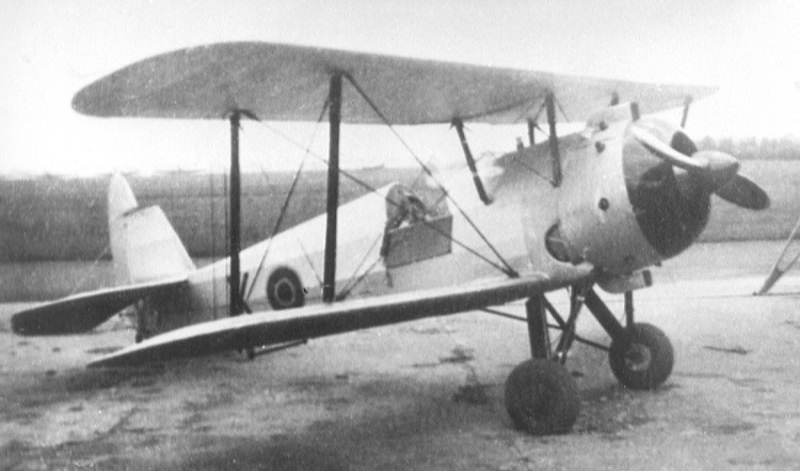
RSV.26/100
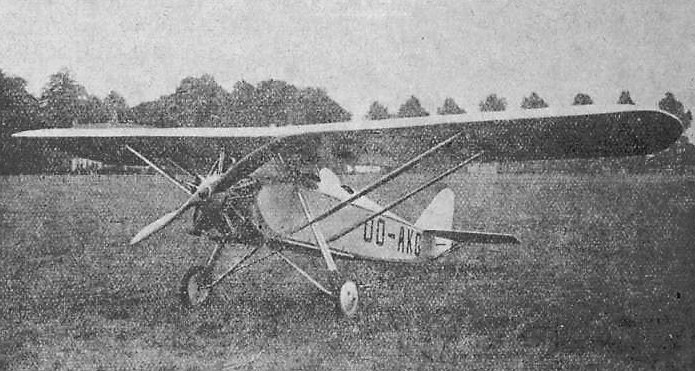
With monoplanes becoming more popular, Stampe et Vertongen considered the possibility of marketing a version of the RSV.26/100 in this configuration. Renard was able to realise this design by removing the lower pair of wings and bracing the upper pair of wings to the fuselage with two struts on each side. The resulting aircraft, having lost 8 m² of wing area, was now designated the RSV.18/100. The monoplane version was a little faster than the biplane, but climbed a little more slowly. With the differences between the two configurations so minimal that one could be converted to the other within one hour, Stampe et Vertongen decided to market the type as a convertible, the RSV.26/18.
Stampe et Vertongen RSV 18-100 Annuaire de L’Aéronautique 1931
The onset of the Great Depression also halted Stampe et Vertongen’s production of the type. After George Ivanow joined the firm, he made one final attempt to market the design, modifying the RSV.18/100 (OO-AKG) to use a de Havilland Gipsy III engine[ and rebuilding the fuselage and empennage along similar lines to the SV.4. Marketed first as the SV.18M (Modification) tourer, then further modified and marketed as the SV.18MA (Modification Armée) fighter-trainer, no further production ensued.
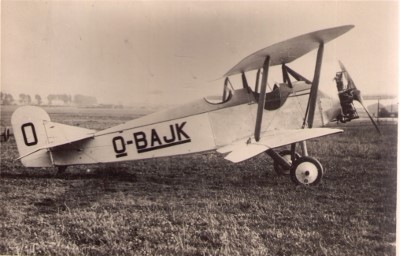
Despite such modest successes, the RSV-26/100 was noticed by foreign buyers. American businessman and apologist for light aviation Ivan R. Gates, owner of Wright Tuttle Motors, in 1929 began negotiations on the possibility of licensed production of the Belgian aircraft in the United States. Previously, a “reference” sample O-BAJK was purchased from the manufacturer. At the same time, for the RSV-26/100, a project was developed to replace the wooden fuselage with a steel pipe structure – engineer Nathan F. Vanderlip was engaged in this refinement. However, it was not possible to achieve the expected commercial success again – until October 29, 1929, only two aircraft were assembled, after which the country plunged into economic stagnation for almost 10 years. Wright Tuttle Motors immediately went bankrupt, and its owner committed suicide. The fate of almost finished aircraft was unenviable. Three or four fuselages survived, one of which was used as a chicken coop as recently as 1975.
Variants RSV.26/100 biplane version with Renard Type 100 engine (5 built) RSV.18/100 monoplane version with Renard Type 100 engine (1 built) RSV.18/105 monoplane version with Cirrus Hermes engine (1 built) SV.18M monoplane with de Havilland Gipsy III engine (1 converted from RSV.18/100) SV.18MA militarised SV.18M (1 converted) RSV.26/18 convertible version with Renard Type 100 engine (2 built) Gates Convertiplane American variant of RSV.26/18 with Renard Type 100 engine and fuselage of steel tube construction (2 built)
RSV.26/100 Powerplant: 1 × Renard Type 100, 75 kW (100 hp) Wingspan: 9.36 m (30 ft 8 in) Wing area: 26 m2 (280 sq ft) Height: 2.73 m (8 ft 11 in) Length: 7.10 m (23 ft 3 in) Empty weight: 484 kg (1,060 lb) Gross weight: 747 kg (1,640 lb) Maximum speed: 168 km/h (104 mph, 90 kn) Cruise: 135 km/h Range: 640 km (400 mi, 350 nmi) Service ceiling: 4,600 m (15,000 ft) Rate of climb: 6.0 m/s (1,000 ft/min) Crew: 1 pilot Capacity: 1 passenger
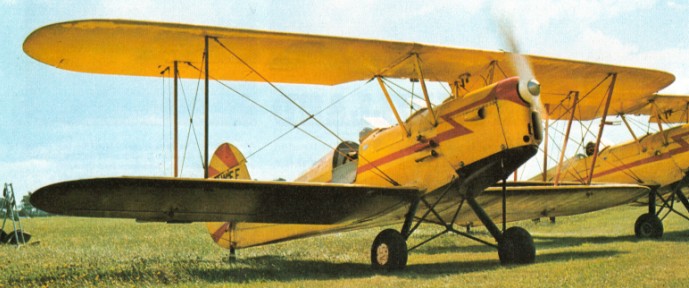
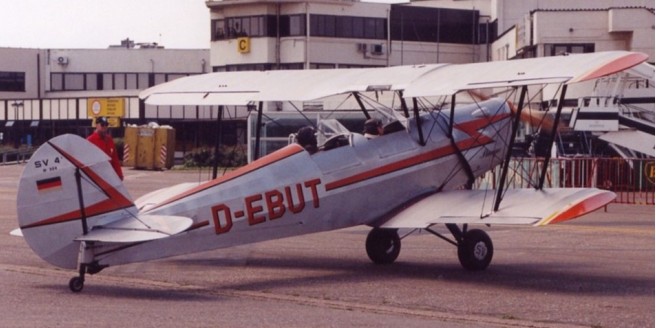
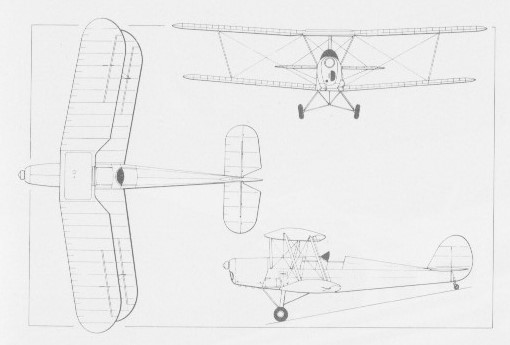
Georges Ivanow was asked in 1932 to study a new aircraft, which resulted in the SV4, an open-cockpit 2-seat training biplane of wood and fabric construction. The prototype flew first on May 13, 1933 and the aircraft entered production. May 10, 1940 the factory was bombed by the Luftwaffe and destroyed.
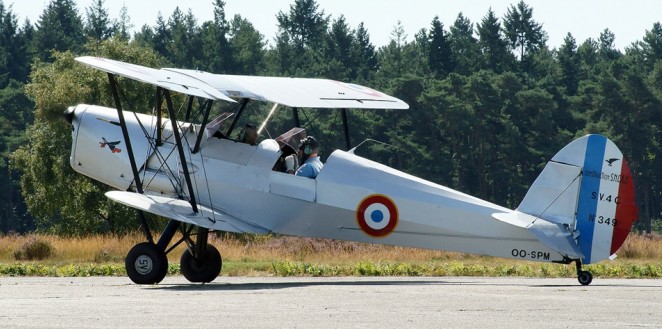
The SV-4 was redesigned and produced in France from 1945 till 1950, under licence by SNCAN – Société Nationale de Constructions Aéronatiques du Nord.
The SV 4C is a French license built version of the Belgian primary trainer also manufactured in Algeria. More than 900 were built, with a 140¬hp Renault engine.
Rollason started importing former military Stampe SV-4Cs (Renault-powered), restoring and converting them to SV-4B status by replacing the Renault with the Gipsy Major of the Tiger.
Stampe et Vertongen SV.4 Engine: de Havilland Gipsy III, 120 hp
SV.4B Engine: de Havilland Gipsy Major I, 130 hp
SNCA du Nord SV.4C Engine: Renault 4 Pei, 140 hp Wingspan: 27 ft 6 in / 8.38 m Length: 22 ft 10 in / 6.96 m Empty weight: 1106 lb / 502 kg MTOW: 1720 lb / 780 kg Max cruise SL: 95 kt / 109 mph / 175 kph ROC SL: 1080 fpm / 330 m/min Service ceiling: 16,400 ft / 5000 m Seats: 2 Baggage capacity: 110 lb / 50 kg No built: 700
Stampe et Renard SV-4D Engine: Rolls-Royce Continental IO-346-A, 165 hp No built: 1 First flight: 1967
The unique SR-6 by Stampe-Renard owed much to the Stampe SV-4. Specially developed for aerobatic training in 1949, the Stampe Renard SR-6 was a single seat biplane powered by a 185 hp Mathis G.7R engine.
The aircraft first flew as OO-SRX in 1949 and was also briefly tested in Belgian AF colours while the letter “X” of its civilian registration remained on the fuselage.
The registration was cancelled in April 1954 and the aircraft was scrapped.



 All Aero