Stedman 1929 Biplane

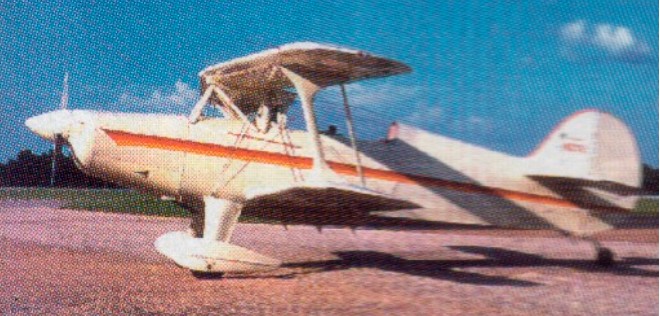
In 1929 a two-place cabin biplane was the concept of Capt Charles R Bowers. Design work was done by Harold L Scholl, formerly of McCook Field, and J W Van Cleve. Money was put up by insurance broker Stedman plus Howard and Hugh Woolverton. They bought out (Clyde W) Shockley Flying Service and incorporated as Rainbow Flying Service and Rainbow Aircraft Corp.

Built at South Bend IN., USA, the biplane was registered NX294V c/n 1 and powered by a 75hp Rover engine.

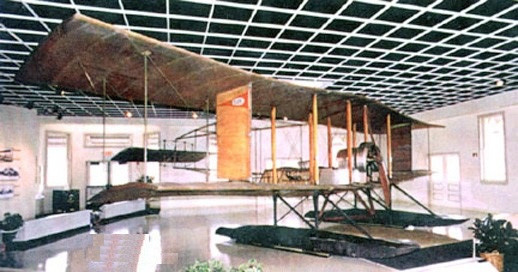
Steco Aerohydroplane

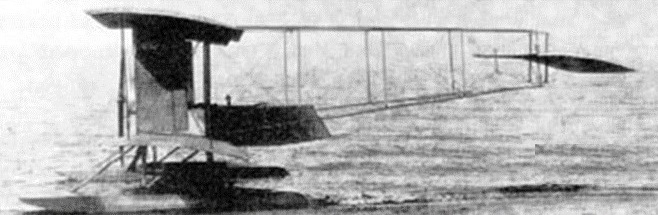
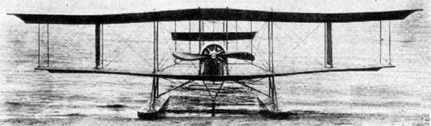
The (James S & Ralph C) Stephens Engineering Co Aerohydroplane of 1911 was designed by James Stephens as an open biplane on wheel or floats. Interplane stabilizer panels were non-controllable—for a right turn, the right panel stayed in place and the left panel swung free, and vice-versa. This prevented the aircraft (wings) from sideslipping or stalling. Turning was accomplished by the empennage flight control steering system (not wing-warp) which gimbaled 360 degrees. These was no elevator, rudder, or ailerons. 1915 US aircraft patent #1,127,105.

Tricycle gear or all known pictures show two 16′ Burgess pontoons.

Stored in 1914, it was recovered in 1990 to the American Wings Air Museum at Blaine MN, where reassembly began in Feb 2002. It was to be fitted with the tricycle landing gear, which incorporates pneumatic shock absorbers, independent main gear brakes, and has nosewheel steering.

Engine: 50hp Gnôme Omega
Span: (upper) 41’8″
Span: (lower) 36’0″
Length: 31’0″
Speed: 50 mph
Seats: 1
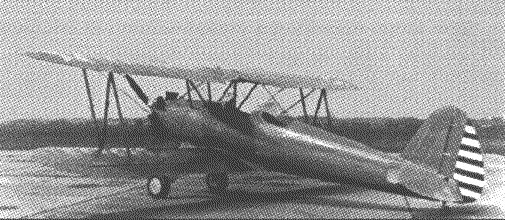
St. Louis Aircraft PT-15 / PT-1W

St. Louis XPT-15 Army trainer prototype

St. Louis Aircraft brought out a biplane primary trainer in 1935, hoping to win an Army production contract. Initially unsuccessful, St. Louis Aircraft continued to develop the airplane and demonstrate it (including a crash at Wright Field in 1936) for the Army, which eventually acquired a trial batch of 14 trainers in 1939. The Army identified these trainers as PT-15. All but one of them ended up being assigned to Parks College (at Cahokia, Illinois) for use in Parks’ Army aviation cadet training program. The hoped-for big production orders were not forthcoming, being won instead by the Boeing/Stearman PT-13/PT-17/N2S Army/Navy primary trainer.

PT-15 / PT-1W
Engine: Wright R-760, 225hp
Wingspan: 33’10”
Length: 25’0″
Useful load: 708 lb
Max speed: 124 mph
Cruise: 105 mph
Stall: 53 mph
Range: 355 mi
Ceiling: 14,500′
Seats: 2

XPT-15
1940
No built: 1 / 39-702

YPT-15
1941
No built: 13 / 40-001-013

St.Croix Aerial

Chad and Charles Wille constructed in 1947 of a Pietenpol Aircamper which Charles redesigned it in 1977 as a biplane called Aerial.

Engine: Continental O-300, 145 hp
HP range: 85-200
Height: 7 ft
Length: 19.5 ft
Wing span: 29.5 ft
Wing area: 250 sq.ft
Empty weight: 900 lb
Gross weight: 1400 lb
Fuel capacity: 15 USG
Top speed: 105 mph
Cruise: 85 mph
Stall: 36 mph
Range: 150 sm
Rate of climb: 1000 fpm
Takeoff dist: 250 ft
Landing dist: 200 ft
Seats: 2
Landing gear: tailwheel

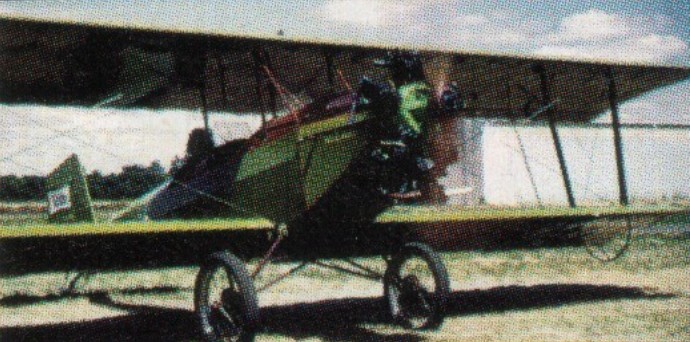
St.Cyrien Pup

In 1958 Mr K.C.Desmond St.Cyrien started construction of a Sopwith Pup replica at his home in Horley. He secured the registration G-APUP for it. Much later it was allocated the PFA number 1582.

After having started this replica St.Cyrien ‘acquired’ bit by bit, Pup serial N5182 from a store of a French aviation collection. Parts of the replica were disposed of to G.Neale of Canada and others went to the USA.

The original Pup was then put under an intensive period of restoration at Luton and then at Horley. It was completed at Fairoaks with an original Le Rhone engine. It first flew on 11 August 1973, from Fairoaks, as N5182 ‘Shiels’, for ultimate donation to the RAF Museum.

Starr Bumble Bee II

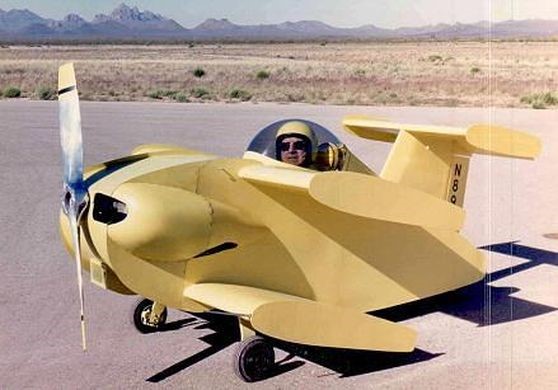
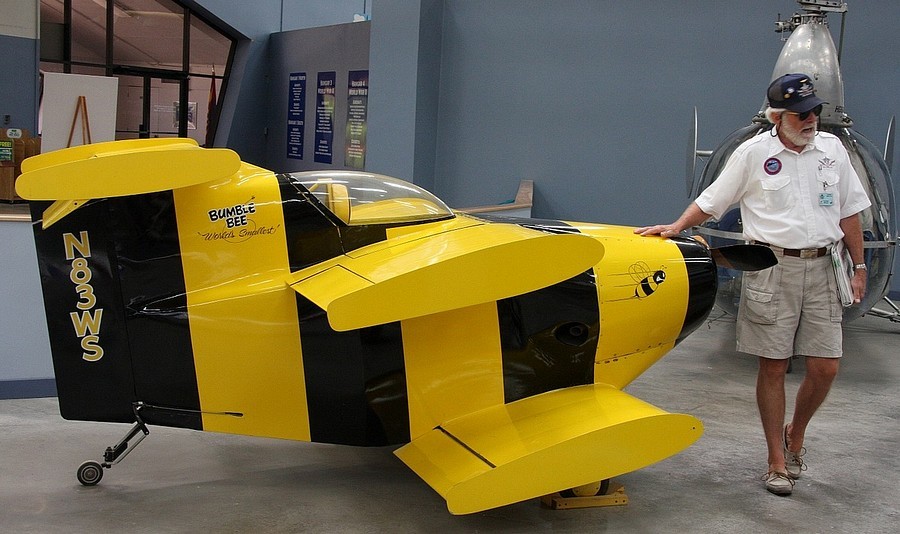
This 1988 plane had a wingspan of just 1.9-meters. and was powered by an 85hp engine. Unfortunately, the plane crashed on its maiden flight but the pilot Starr made a full recovery. The plane weighed 260kg with the pilot and could fly at a maximum speed of 190mph. This record has not yet been beaten.

Engine: 1 × Continental C85, 85 hp / 63 kW
Wingspan: 5 ft 6 in / 1.68 m
Length: 8 ft 10 in / 2.7 m
Empty weight: 396 lb / 180 kg
Max takeoff weight: 574 lb / 260 kg
Fuel capacity: 3 US gallons / 11.35 litres
Maximum speed: 165 knots / 190 mph / 305 km/h
Cruise speed: 130 knots / 150 mph/ 241 km/h
Stall speed: 75 knots / 86 mph / 139 km/h
Service ceiling: 14,000 ft / 4,270 m)
Rate of climb: 4,500 ft/min / 23 m/s
Crew: One

Starr Bumble Bee

The Bumble Bee II was the world’s smallest piloted airplane. It was built by Robert H. Starr. Its first flight was on 8 May 1988. The Bumble Bee II crashed on the same day due to an engine failure. Robert Starr was seriously injured in the crash, but he fully recovered from his injuries.

Engine: 85hp Continental C-85
Wingspan: 6’6″
Length: 9’4″
Fuel capacity: 3-gal
Max speed: 180 mph
Cruise: 150 mph
Stall: 80 mph
Range: 30 mi
Ceiling: 5,000 ft
Seats: 1

Starfire Firebolt

The Starfire Firebolt, sometimes called the Starfire Firebolt Convertible, due to its removable canopy, is an American homebuilt aerobatic biplane that was designed by G. H. “Mac” McKenzie and produced by Starfire Aviation of Tempe, Arizona. When it was available the aircraft was supplied in the form of plans for amateur construction, with some pre-fabricated parts available.

Developed from the Steen Skybolt and first flying on 15 May 1987, at least nine were built. Plans were sold for US$275.00 in 1998.

Engine: Lycoming IO-540-K1A5, 340 hp
Speed max: 214 mph
Cruise: 202 mph
Range: 600 sm
Stall: 61 mph
ROC: 4000 fpm
Take-off dist: 400 ft
Landing dist: 850 ft
Service ceiling: 18,500 ft
Fuel cap: 39 USG
Weight empty: 1354 lbs
Gross: 2000 lbs
Height: 7.6 ft
Length: 21 ft
Wing span: 24 ft
Wing area: 150 sq.ft
Seats: 2
Landing gear: tail wheel