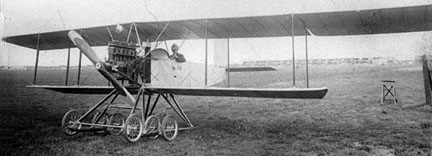
The Stupar 1914 Biplane 1 was Stupar’s first construction while employed by the Aero Works, this one for Hillery Beachy.
The single-place biplane was powered by a Hall-Scott engine, and also a Kirkham 4. A six-wheel undercarriage was fitted.
The Stupar 1914 Biplane 1 was Stupar’s first construction while employed by the Aero Works, this one for Hillery Beachy.
The single-place biplane was powered by a Hall-Scott engine, and also a Kirkham 4. A six-wheel undercarriage was fitted.
Built by Robert C Stroop at Rome GA circa 1927, Stroop SP-4 was a convertible biplane-to-triplane arrangement.
A single-place powered by a 90hp Curtiss OX-5 it was registered N4197.
It is likely not completed or did not exist long enough to be recorded.
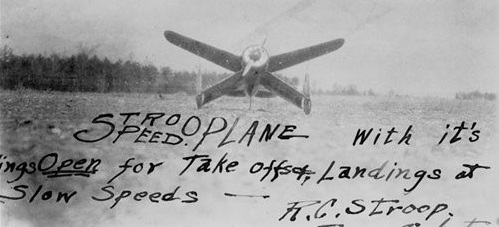
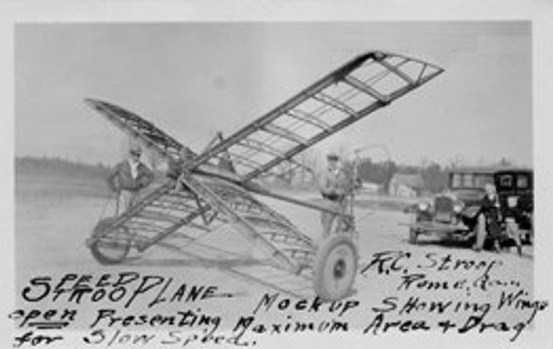
The Robert C. Stroop SP-7, created in 1940, was to combine the biplane’s landing characteristics and the monoplane’s speed characteristics.
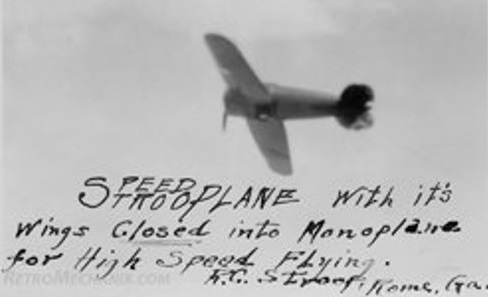
On the runway the wing is in the X-wing position, and when in the air the wings are retracted to the monoplane position, the wheels automatically retracted.

An AT-6 biplane conversion built in Selma, Alabama, by Robert C. Stroop, for use as a sprayer.
This aircraft, N6435D, c/n 88-17079, was an AT-6D originally ordered by the Army as 42-85295, but later assigned to the Navy as SNJ-5, B/N 84995. It was retired from the Navy, stored at NAF Litchfield Park, and then sold as surplus in the late fifties.
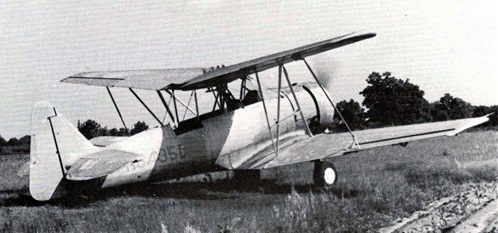
Requiring a low and slow sprayer in Alabama, Robert C. Stroop purchased the AT-6D and two more wings from AT-6, plus some additional fittings, and probably about 1964 converted the basic AT-6D into a biplane sprayer.
The airplane retained the basic configuration of the AT-6D, with only the cockpit and addition of the upper wing changing its appearance. The additional wing consisted of two outer wing panels from another airplane, and enough struts to stabilize the structure. The wing produced a negative stagger, probably to move the CG back so that the spray tank could be made larger, and a heavier load could be carried. Cabane struts braced the center section, and large “N” struts were installed outboard. Ailerons were interconnected by a smaller strut, and some bracing wires were installed between the cabane struts. There were no landing gear doors, and the cockpit was completely open except for the standard windshield. Only the front seat remained. The entire airplane was silver or unpainted.
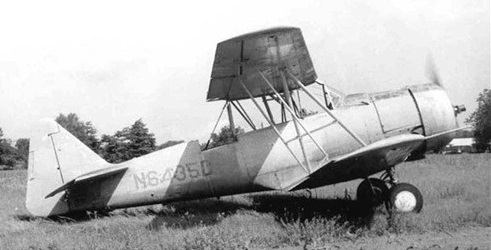
With quite satisfactory takeoff and landing characteristics and a low stalling speed, it received a restricted certificate “only agricultural work”.
The aircraft was operated from 1965 to 1970 (the last known owner – farmer J.F. Carter, of Monroeville, AL,), after which his fate is unknown.
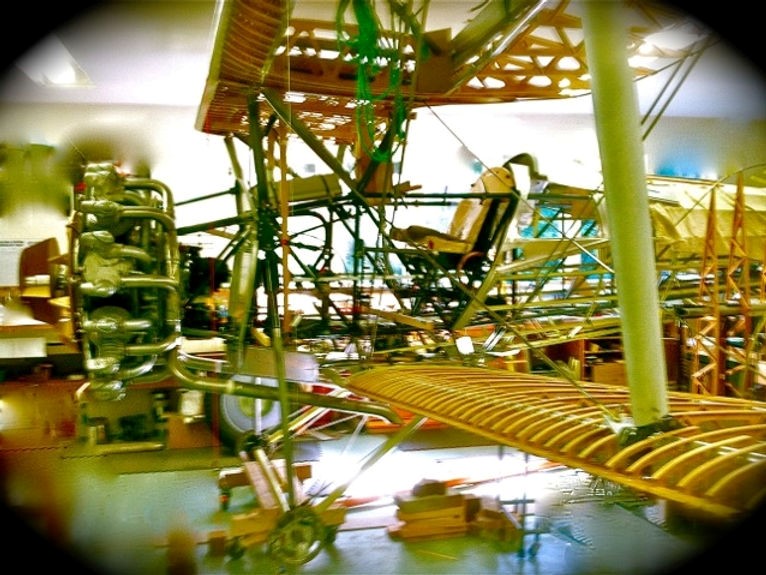
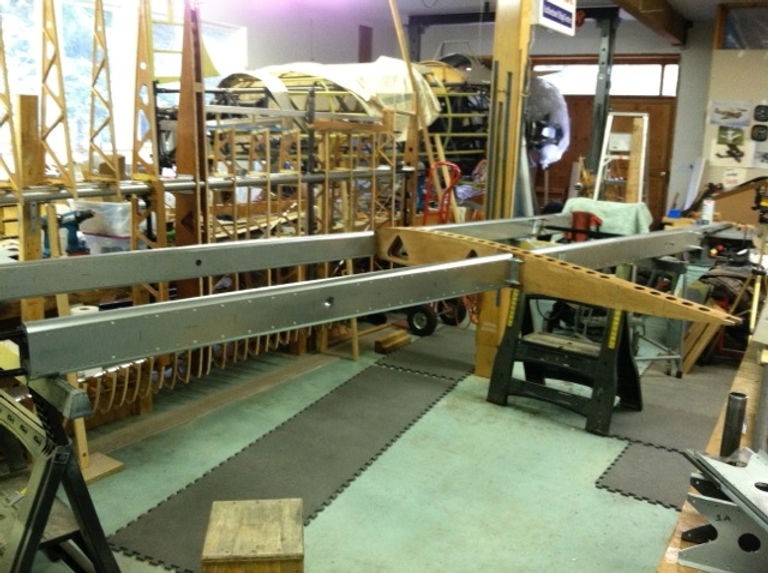
Ed Storo of Netarts Oregon, a member of EAA 292, was building what will be the only flying Bristol Bulldog in the world. He began in 2000, was expecting it to take ten years and he is nearing completion after seventeen years.
There are no plans for the Bulldog. Ed has had to create each part from photos and partial descriptions.
The original was powered by a Jupiter engine, but there are none of these in running condition. So Ed is using a P&W Wasp of the same vintage. It is a 9 cylinder 450-500 hp engine.

In early 2017 the surfaces were being covered.
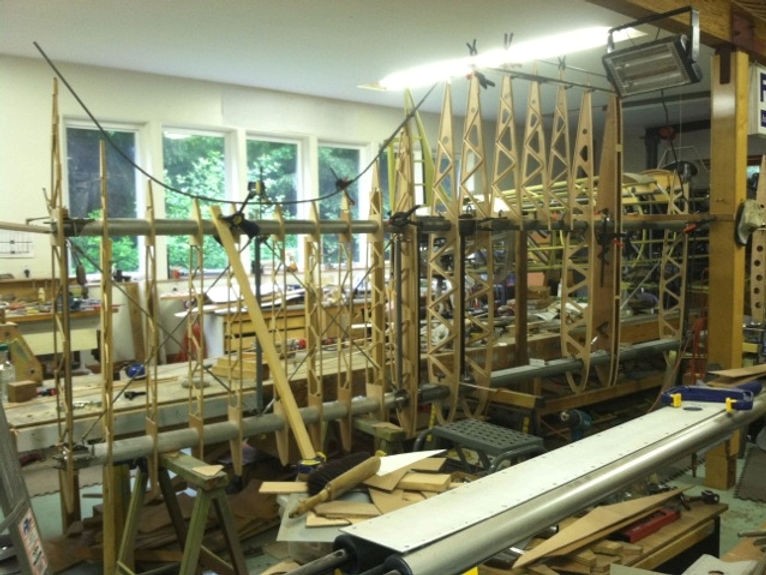

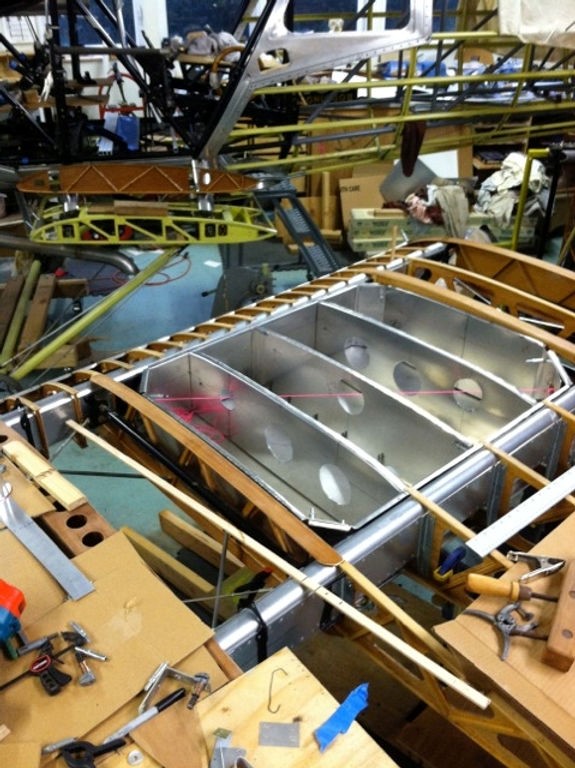

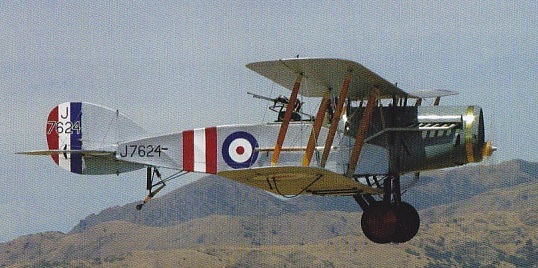
Ed and Pete Storo built a replica 1917 Bristol F.2B Fighter. The aircraft took seven years to build and was first registered in 1992 as N624.
The fuselage features chrome-molybdinium tubing and is based on an Australian replica. The wings, tail, undercarriage and other assemblies were all built from Bristol drawing and could be fitted to an original. The only accommodations to modern practicalities are the inclusion of brakes and a small tailwheel.
The replica is powered by a 200hp Ranger 440-5 engine which is installed in an upright position – which suits the propeller and cowl configuration of the F.2B.
The replica was first flown in 1993.
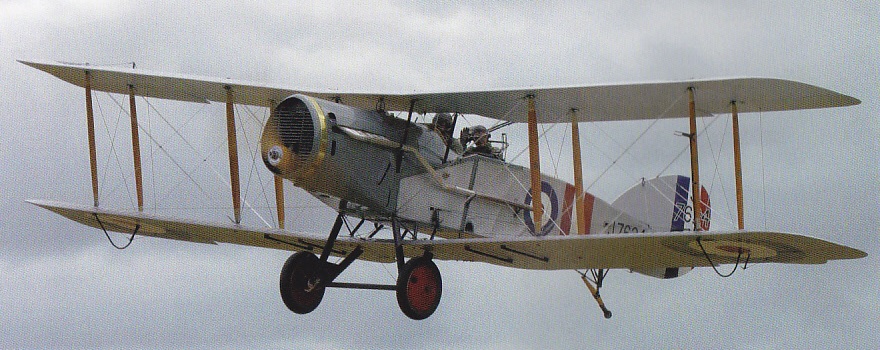
It was subsequently sold to TVAL in NZ in late 2001 for the Classics Fighters airshow and changed colour scheme.

After TVAL brought it to the Australian International Airshow at Avalon in February 2015, it remained in Australia and is now operated as part of the Australian Vintage Aviation Society (TAVAS) collection.
Registered ZK-PRK and carrying a ‘2’ behind the roundel it was operated by TVAL from 2001 to 2015, then to NZ Warbirds.

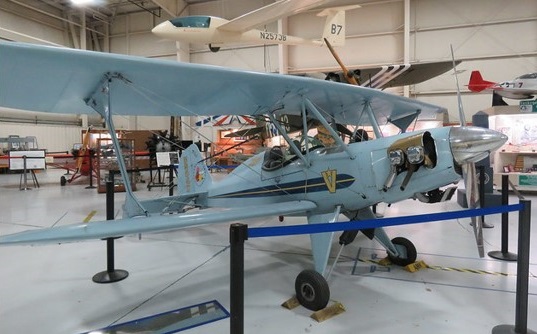
Designed by Lou Stolp as a low-cost, low-horsepower, fun machine, it is inexpensive, easy to build, and very easy to fly. Basically a biplane version of the parasol-winged Starlet. First flown in 1981, the light wing loading insures a slow landing speed and short takeoff. Stability is excellent and ample control surfaces give rapid response to light control pressures.
The structure is stressed to withstand both plus and minus 9 G’s, and horsepower may vary from 60 to 125. With the 65 HP Continental, the rate of climb is about 600 fpm, cruise speed is 75 mph, stall speed is 35 mph. This aircraft also flies well with a Rotax, Subaru, Suzuki, or Lycoming engine.
The fuselage is constructed of welded steel tubing, and the wings have spruce spars and plywood ribs with 1/4″ cap strips. Raw material kits as well as kits with the tubing cut to length and scribed for fitting are available. Wing Kits may be bought with finished spars, spar plates, ribs cut out, and fittings cut to size.
Engine 100-hp Con¬tinental.
Gross Wt. 1000 lb
Empty Wt. 650 lb
Fuel capacity 20 USG
Wingspan 23’
Length 17’2”
Wing area: 141 sq.ft
Top speed 150 mph
Cruise 90 mph
Stall 35 mph
Climb rate 1800 fpm
Takeoff run (50’) 300 ft
Landing run (50’) 500 ft
Range 350 miles
Seats: 1
Engine: 65 hp
Speed max: 90 mph
Cruise: 75 mph
Range: 275 sm
Stall: 40 mph
ROC: 600 fpm
Take-off dist: 400 ft
Landing dist: 600 ft
HP range: 65-150
Fuel cap: 15 USG
Weight empty: 700 lbs
Gross: 1000 lbs
Height: 7.4 ft
Length: 17.1 ft
Wing span: 23 ft
Wing area: 141 sq.ft
Seats: 1
Landing gear: tail wheel
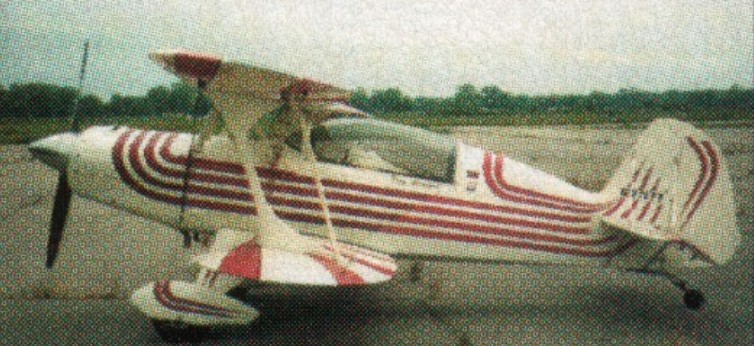
Designed by Jim Osborne & Morgan Schrack the Acroduster Too, originally called the Schrack-Stolp Super Star-duster Too, is a scaled-down 9/10 scale version of the Starduster Too and first flown in 1984. The Acroduster Too SA750 is a fully aerobatic, two-place machine stressed to plus & minus 9 G’s. It has modified symmetrical wings and is meant for minimum of 180 and up to 360 horsepower. It possible to remove the front windscreen, cover the front cockpit with a hatch cover, and add a sliding bubble canopy over the rear hole. The fuselage was also metalized back to the rear of the cockpit.
The optimum engine is the fuel-injected 200 HP Lycoming, with constant speed propeller. The prototype cruises about 160 mph, climbs 2300 fpm, and stalls at 55 mph. Although it has a comparatively sharp stall and sensitive control response, wings can be maintained in the level attitude with rudder alone or with aileron. This with stick full back by reducing power to idle and zero climb until stall is obtained.

Construction follows traditional biplane practices with steel tube structure and spruce wing spars. Ribs are plywood with cap strips.
All materials were available from Stolp Starduster Corporation, either in kit form or as raw materials.

Engine: 200 hp
HP range: 180-300
Height: 6.8 ft
Length: 18.5 ft
Wing span: 21.4 ft
Wing area: 130 sq.ft
Weight empty: 1050 lb
Gross: 1950 lb
Fuel cap: 35 USG
Speed max: 185 mph
Cruise: 155 mph
Stall: 55 mph
ROC: 2300 fpm
Landing dist: 1200 ft
Service ceiling: 16,000 ft
Seats: 2
Landing gear: tail wheel
Engine: 200 hp
HP range: 180-300
Height: 6.8 ft
Length: 18.5 ft
Wing span: 21.4 ft
Wing area: 130 sq.ft
Weight empty: 1050 lb
Gross: 1950 lb
Fuel cap: 35 USG
Speed max: 185 mph
Cruise: 155 mph
Stall: 55 mph
ROC: 2300 fpm
Landing dist: 1200 ft
Service ceiling: 16,000 ft
Seats: 2
Landing gear: tail wheel
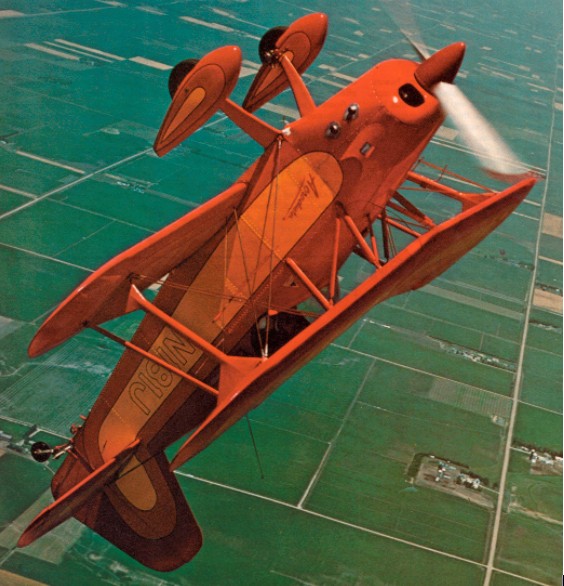
First introduced in 1973, the SA-700 Acroduster is a single-seat, fully aerobatic biplane suitable for engines in the 125-200 hp range. Its fuselage is an all-metal structure constructed from light alloy, and its wings are conventional two-spar structures with spruce spars, plywood ribs and fabric covering. A unique feature of the Acroduster 1 is that when the stick is pulled back, all four ailerons are raised slightly to help maintain aileron control when the airplane is stalled in a normal attitude. The opposite happens when the stick is pushed forward to aid control when the airplane is in an inverted stall.

The Acroduster uses com¬pletely separate wing panels pinned in the center with a pivot type joint and tied to the fuselage with an open stance ca¬bane that has four mounting points on the wings.
They are always building from a kit because Osborne won’t sell a set of plans without the com¬plete materials kit to keep them compa¬ny. The kit is literally a complete, but disassembled, airplane that needs only the engine and propeller. Even the motor mount and gas tank are completely fin¬ished and ready to nail in place.
Engine: Lycoming, 200 hp
Height: 6.25 ft
Length: 15.75 ft
Wing span: 19 ft
Wing area: 105 sq.ft
Weight empty: 740 lb
Gross: 1190 lb
Aerobatic Weight 1050 lb
Fuel cap: 25 USG
Wing Loading 10 lb/sq ft
Power Loading 5.25 lb/hp
Speed max: 180 mph
Cruise: 165 mph
Stall: 70 mph
ROC: 3000 fpm
Service ceiling: 12,000 ft
Seats: 1
Landing gear: tail wheel
Aerovant Aircraft Corp Acroduster I
Engine: Lycoming, 200 hp
Height: 6.3 ft
Length: 15.8 ft
Wing span: 19 ft
Wing area: 105 sq.ft
Fuel capacity: 25 USG
Empty weight: 740 lb
Gross weight: 1190 lb
Top speed: 180 mph
Cruise: 165 mph
Rate of climb: 3000 fpm
Service ceiling: 12,000 ft
Seats: 1
Landing gear: tailwheel
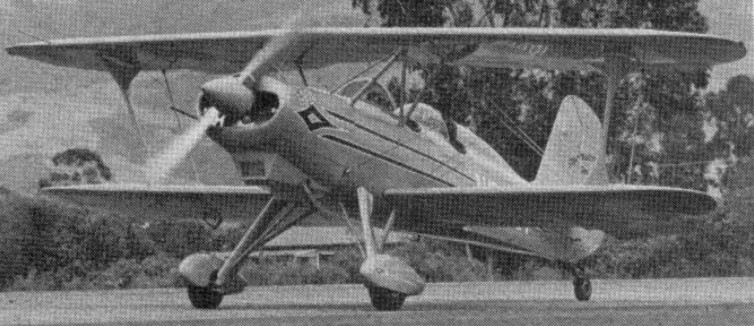
Designed by Lou Stolp and first flown in 1971, the Starduster Too was built to fill a need for a reasonably sized, two-place, open sport biplane. It was built to fly just for fun and is not intended to be an aerobatic airplane. It is quite strong, however, and many owners use the aircraft for aerobatic flight, but this is beyond the original concept of the machine. The aircraft is rated +/- 6G. Stability is good and the light wing loading makes slow landing speed and short-field operation outstanding.
Stolp SA-300 Starduster 2 Article
The main structure of the airplane is built of 4130 steel tubing, wood faired and fabric covered, and sheet stock and has no machined fittings or other complicated bends, which is an advantage for the average homebuilder with limited machine equipment to use. The wings have spruce spars and the ribs are made of 1/4″ plywood using a modified M-6 airfoil and fabric cover. All four wings carry ailerons. Construction of the plane has been kept as simple as possible.

The prints are quite complete with ribs and most fittings full size, which saves considerable time on construction of these parts.
The O-360 Lycoming is the best optimum size engine either in the 180 HP or the 200 HP version. Quite a few Starduster Too aircraft have been constructed with the Lycoming IO-540, with as much as 375 HP. There are Ranger powered, Ford V-8 and V-6 powered, Continental powered, Jacobs, and even some R-985 powered examples. The airframe is a proven unit and allows for many different types and kinds of engines. On the low end of the power curve there are some 125 HP aircraft in service. Stolp recommends the 180-hp Lycoming with a constant-speed prop as the Optimum powerplant. There are several aircraft with over 2,500 flying hours, and one with more than 5,000 hours.

All raw materials as well as certain prefabricated parts (such as fiberglass turtlebacks, nose cowls, wheel pants, cockpit cowlings, welded aluminum fuel tanks, plexiglass windshields, canopies, and so forth) are available at reasonable prices.
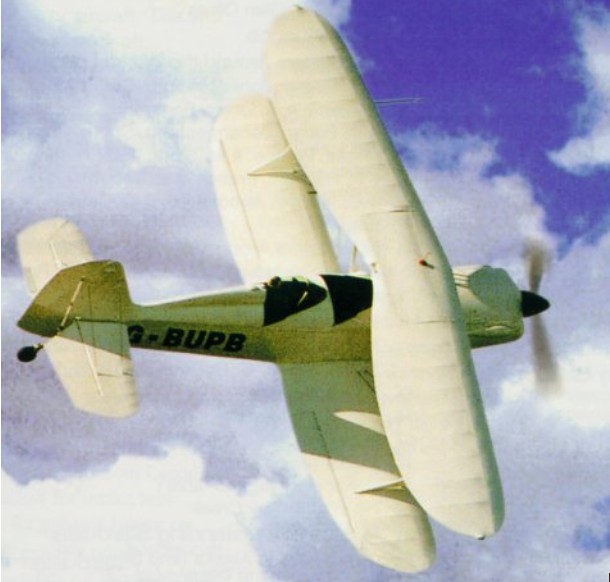
Variation:
Neubert Nostalgia
Engine: Lycoming, 180 hp
HP range: 159-300
Height: 7.5 ft
Wing span: 24 ft
Fuel cap: 44 USG
Weight empty: 1000 lb
Gross: 1985 lb
Speed max: 148 mph
Cruise: 130 mph
Range: 600 sm
Stall: 50 mph
ROC: 1800 fpm
Take-off dist: 700 ft
Landing dist: 1000 ft
Service ceiling: 16,000 ft
Seats: 2
Landing gear: tail wheel
Engine: 180hp Lycoming O-360 (125-260hp)
Wingspan: (upper) 24’0″ (lower) 20’5″
Length: 21’9″
Useful load: 800 lb
Max speed: 200 mph
Cruise: 153 mph
Stall: 60 mph
Seats: 2
 All Aero