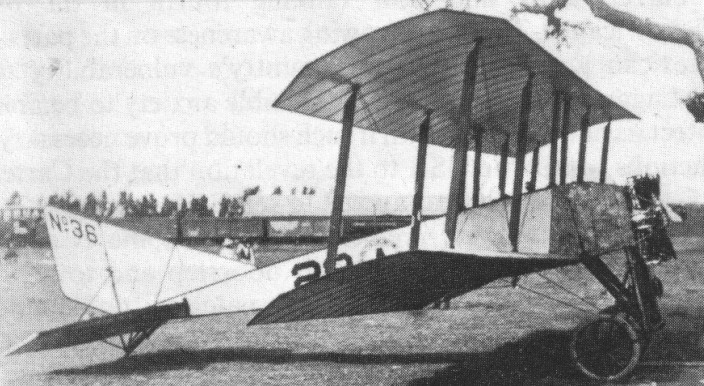
The first Mexican designed aircraft, the Serie A, built in some numbers by the Talleres Nacionales de Construcciones Aeronauticas for the Army. A conventional two seat two bay biplane powered by a Mexican -designed engine, the 60 hp Aztatl (Stork) six cylinder radial the only foreign items of equipment utilised by the Serie A were, in fact, the French magnetos as even the propeller was of Mexican design.
On 6 July 1917, the Serie A No 9, piloted by Army Lt Horacio Ruiz, flew the first Mexican airmail service, from Pachuca to Mexico City, and six months later, on 3 January 1918, Cadet Samuel C Rojas became the first officer to graduate from the Military Aviation School after completing his training in a Serie A aircraft. Lt Rojas was also the first pilot to perform aerobatics in Mexico, on 26 June 1918, but within nine weeks, on 5 November, the Mexican Army’s fledgeling aviation component suffered its first fatality. For some time Lt Amado Paniagua had led a small demonstration team known as the Escuadrilla Amado Paniagua to promote aviation among the Mexican populace, but on that day, his Serie A aircraft failed to recover from an “Immelmann” turn over the beach at Veracruz and spun in.
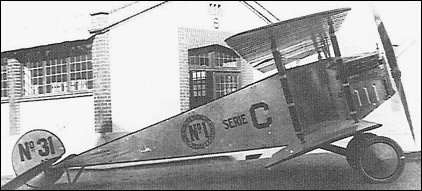
In February 1918, the Talleres Nacionales de Construcciones Aeronauticas (TNCA), or National Aircraft Manufacturing Workshops, at Balbuena Airfield, Mexico City, completed the prototype of a single-seat fighting scout to the designs of Francisco Santarini and Capt Guillermo Villasana. First own product of the National Aircraft Manufacturing Workshops.
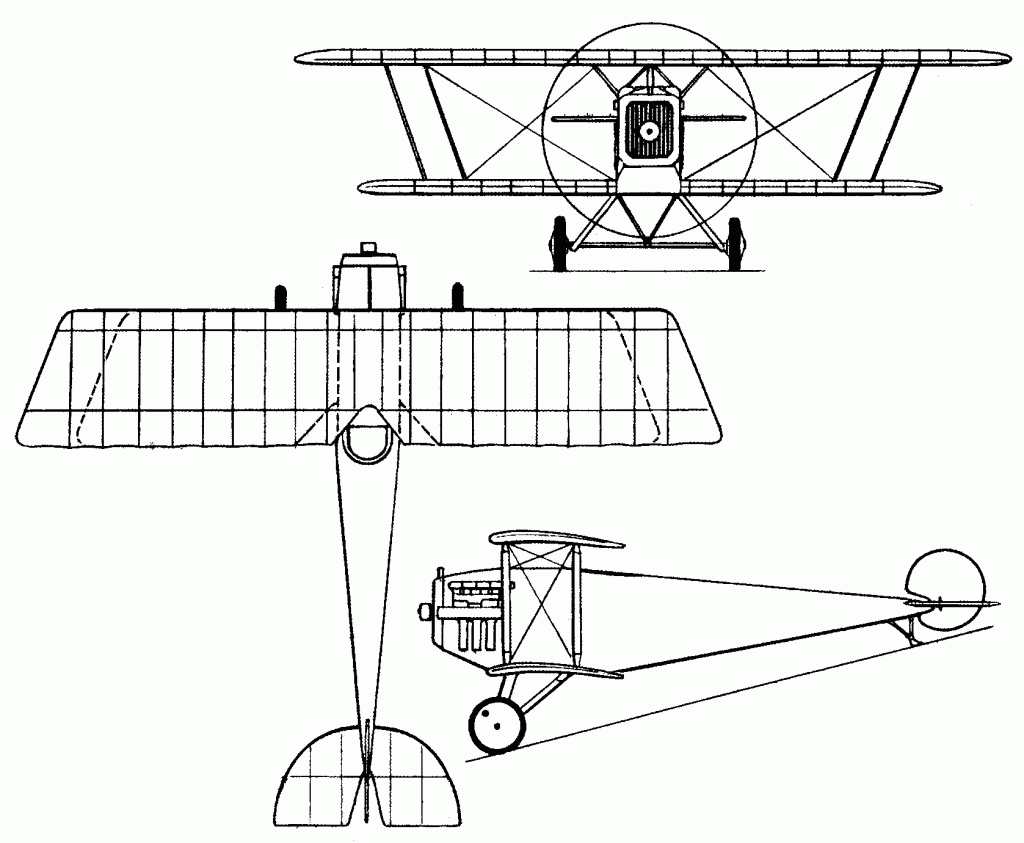
A single-bay unstaggered biplane known as the Microplano, the aircraft was powered by a 180hp Hispano-Suiza eight-cylinder Vee-type water-cooled engine driving a Mexican Anahuac propeller, and was of metal construction. The intended armament was either one or two synchronised machine guns.
Although flight trials of the Microplano were allegedly satisfactory, no series production was undertaken owing to the overthrow of the Carranza regime and the ensuing civil war.
Engine: 180hp Hispano-Suiza Wingspan: 8.00 m / 26 ft 3 in Wing area: 18.00 m2 / 193.75 sq ft Length: 6.60 m / 22 ft 8 in Height: 2.55 m / 8 ft 4 in Empty weight: 460 kg / 1014 lb Max take-off weight: 650 kg / 1433 lb Max speed: 220 km/h / 137 mph
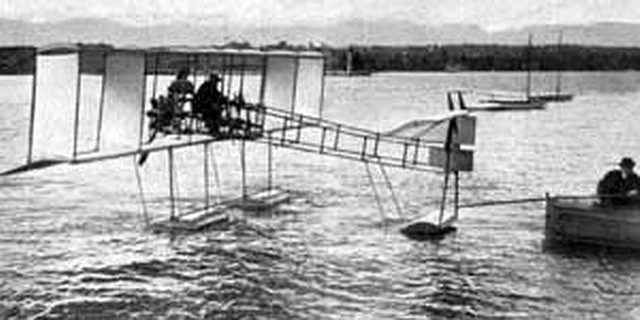
La Mouette seaplane of Emile Taddéoli on Lake Geneva in March 1912
Émile Taddéoli’s Gnôme-engined, Voisin-inspired canard float biplane “Mouette” was designed by his mechanic Prampolini and built at the Perrot & Cie workshop. It flew 80 meters during the first test flight on Lac Léman in March 1912, but sunk when landing, as the main floats got submerged instead of skimming the surface. After that, the project was abandoned.
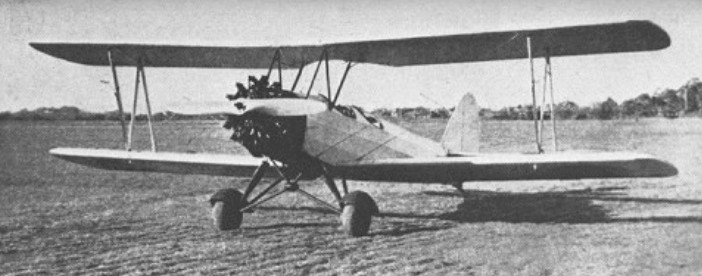
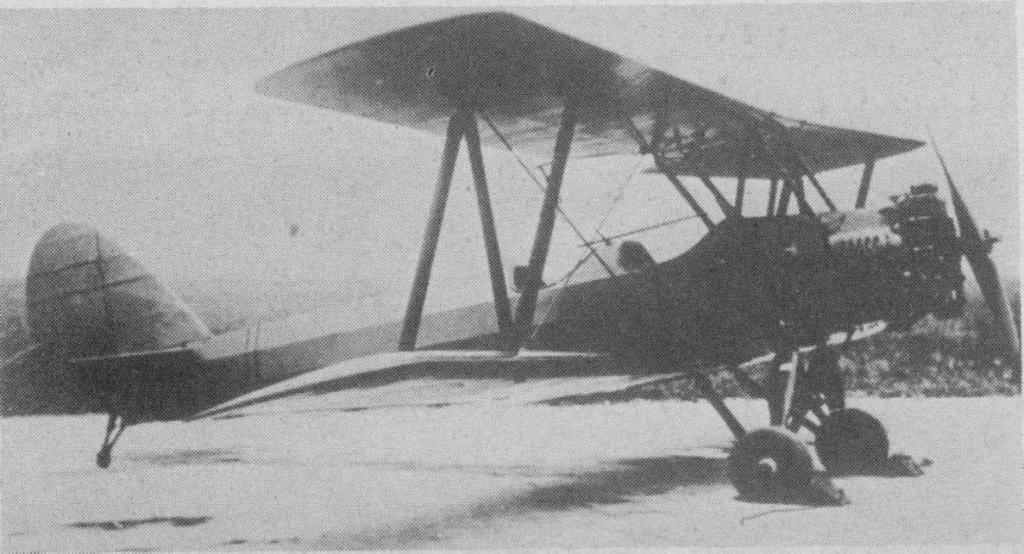
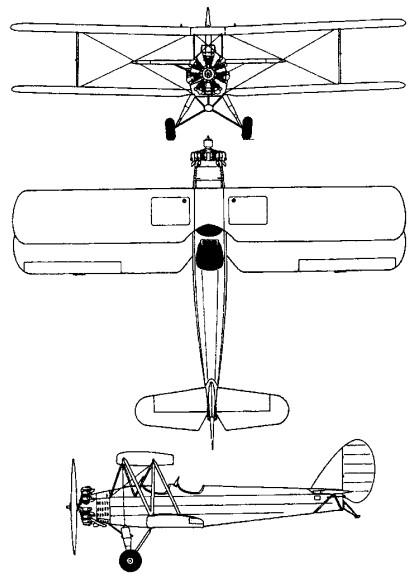
The third prototype of the Ki 9, intended as a primary trainer, was flown in early 1935 but exhibited poor handling qualities because of its smaller, lighter engine and the consequent displacement of the centre of gravity. The Ki 9 was therefore abandoned as a primary trainer, and the army air force asked Tachikawa to produce, later that year, two prototypes of a new primary trainer biplane, the Ki 17.
The Tachikawa Ki-17 biplane had a slimmer fuselage, more square-cut equal-span wings and a redesigned tailplane, engine uncowled and a simplified landing gear.
The first of two prototypes was flown in July 1935 powered by a 150 hp Hitachi Ha 12 seven¬ cylinder radial engine driving a two blade propeller. Trials were successful and the only major change made to subsequent production aircraft was the deletion of the upperwing ailerons to eliminate oversensitive control inputs.
Between 1936 and 1943 Tachikawa completed 658 series Ki-17s and the type was used at four major flying schools and the Army Air Academy. The Ki-17 bore the official designation Army Type 95 III Primary Trainer, Allied codename ‘Cedar’. Some Ki 17s were later transferred to liaison or communications duties.
Ki-17 Engine: 1 x Hitachi Ha-12, 112kW Max take-off weight: 914 kg / 2015 lb Loaded weight: 639 kg / 1409 lb Wingspan: 9.82 m / 32 ft 3 in Length: 7.85 m / 26 ft 9 in Height: 2.95 m / 10 ft 8 in Wing area: 26.2 sq.m / 282.01 sq ft Max. speed: 170 km/h / 106 mph Ceiling: 5300 m / 17400 ft Crew: 2
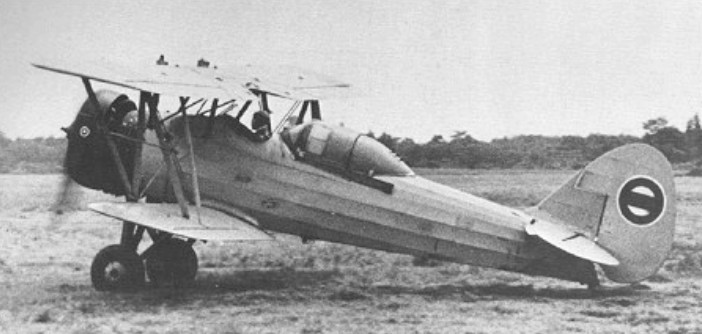
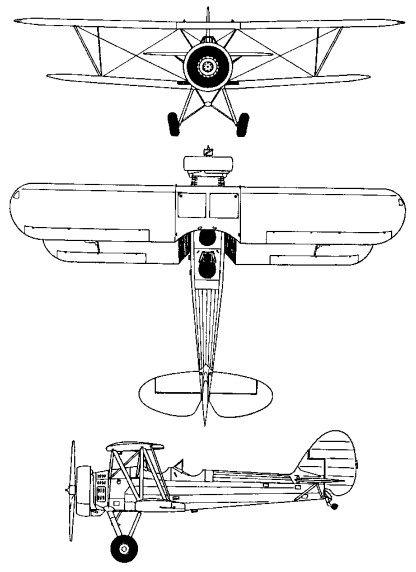
The Ki 9 had been designed in 1934 by Ryokichi Endo to satisfy a Japanese army air force requirement for a primary and intermediate trainer, capable in the latter case of 220 km/h (137 mph) and an endurance of 3½ hours.
First flown on January 7, 1935, the first and second prototypes were each powered by a 350 hp / 261kW Hitachi Ha 13a nine cylinder radial engine; the third aircraft, prototype for the primary trainer version, had a lower powered Nakajima NZ seven cylinder radial engine of 150 hp / 112kW.
Tests indicated centre of gravity problems for the proposed primary trainer and the Ki-9 was developed in the higher-powered intermediate training role only. As Tachikawa had suggested, the army air force found that one aircraft could not successfully carry out both duties, and accordingly the Ki 9 was ordered into production in 1935 only as the Type 95 1 Medium Grade (intermediate) Trainer.
Production deliveries began in 1935. Designated the Army Type 95-1 Medium Grade Trainer Model A and later given the Allied codename ‘Spruce’, the Tachikawa biplane had complex split-axle landing gear with fairings over the top of the wheels. In 1939 this was modified and simplified, the fuselage slightly shortened and all-up weight reduced. The resulting Army Type 95-1 Model B or Ki-9 Kai had improved manoeuvrability and flight characteristics. Both versions were used widely for blind-flying training with a folding hood over the rear cockpit, and at least one was modified with a glazed canopy over the rear cockpit for use as a staff officer transport.
Production by Tachikawa ended in 1942 after completing 2395 (in addition to the three prototypes), but in 1944 45 a further 220 were manufactured by the Tokyo Koku K.K.
It served with the army air force throughout the remainder of the 1930s and until the end of the Second World War. Some Ki 9s were used for reconnaissance or communications duties, and the type also served with the air forces of Cochin China, Manchuria and Thailand during the Pacific war. After the war, captured examples were employed for a time by the insurrectionist Indonesian forces.
The Ki-9 received the allied code name ‘Spruce’.
Ki-9 Model A Engine: 1 x Hitachi Ha-13a, 261kW Max take-off weight: 1580 kg / 3483 lb Loaded weight: 1120 kg / 2469 lb Wingspan: 10.32 m / 33 ft 10 in Length: 7.52 m / 24 ft 8 in Height: 3.1 m / 10 ft 2 in Max. speed: 240 km/h / 149 mph Ceiling: 5800 m / 19050 ft Crew: 2
 All Aero