One replica Curtiss, N3378 c/n 99, was built by Timm at his home in Eagle Rock, California, in 1927 for Al Wilson, who was killed in this ship at the 1932 Nationals when he lost control in the downwash of an autogyro.
A second, similar pusher was built in 1935 for Paul Mantz for use in the film, “West Point of the Air.”
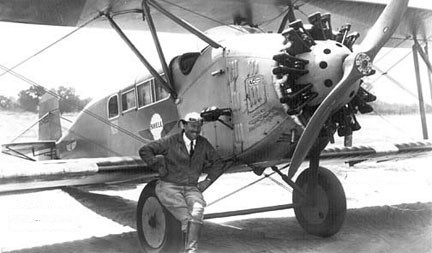
Built in 1928, the sole Timm Coach NX5499 Golden Shell built was purchased by Roscoe Turner and refitted with 715-gallon fuel tanks for an altitude record attempt, but the flight was never made. The design was based on the Argonaut.
Engine: 250hp Menasco-Salmson B-2 Wingspan: 45’0″ Length: 31’9″ Useful load (in test flight): 2530 lb Max speed: 112 mph Cruise: 100 mph Stall: 35 mph Seats: 7
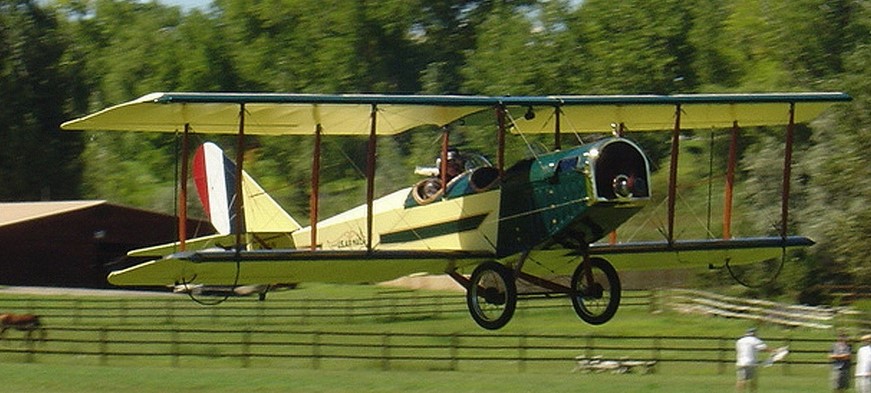
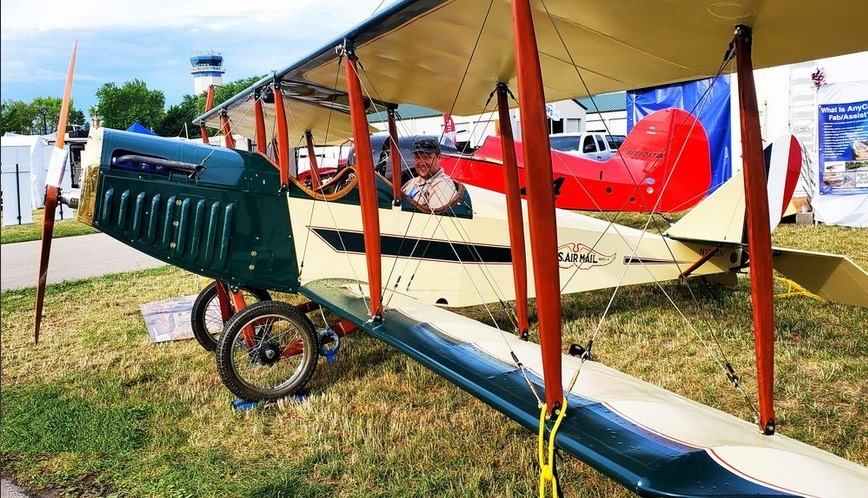
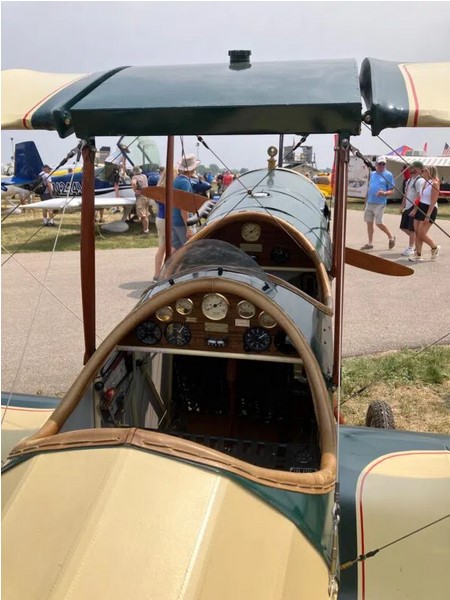
Timber Tiger Aircraft has made the Curtiss Jenny available to homebuilders. They have purchased the rights to sell Dennis Wiley’s Early Bird Jenny design as a kit, but with a twist. While Wiley’s Early Bird Jenny was a 67% scale replica, the kitted Jenny from Timber Tiger will be 75% scale.
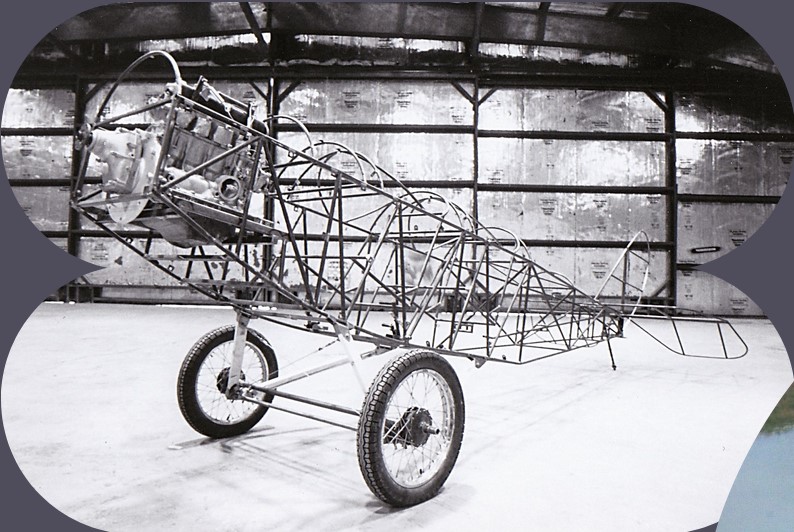
Nick Pfannenstiel, Timber Tiger Aircraft President, said the basic kit is a welded steel fuselage with blueprints for the remainder of the airframe. Recognizing that a growing number of builders wish to do less work, additional kits will be offered to reduce build time and each builder can effectively build their kit à la carte, selecting the add-on kits they want without being forced to purchase items they don’t. “We’re trying to bring back a community of Early Bird Jenny builders. In addition to having a slightly larger fuselage, our kits will have CNC-machined components and improved hardware. To differentiate between the original plans-built version and our kit we are calling ours Gen 2.
Engineering and a structural analysis for the increased gross weight are complete and, while no factory prototype will be built before kits will ship, Pfannenestiel said there are no significant changes necessary to the existing, proven design.
Timber Tiger’s gross weight increase over the Gen 1 means you can now take larger passengers (just make sure you have at least 70 hp), and have dual controls.
The Gen2 has revised lines, with the contours pulled directly from original Curtiss drawings.
Simple aluminum tube spars, pre-stamped ribs, pre-routed wood struts, and more are all available, whether you prefer a more plans-built route (Basic Kit) or a more Deluxe Kit route (just add the options as you see fit).
The fuselage comes pre-welded in even the Basic Kit, meaning you have a massive jump start on your project. If you aren’t much of a welder, Timber Tiger Aircraft can finish all other welding for you, too.
Timber Tiger Aircraft will not support any airplanes built without a serial number from Early Bird Aircraft (Gen 1) or Timber Tiger Aircraft (Gen 2).
Gen2 Engine: 70-100 hp Wingspan: 30 ft Length: 20 ft 6 in Empty weight: 600-700 lb MAUW: 1200 lb Cruise: 70 mph Stall: 35 mph ROC: up to 1000 fpm
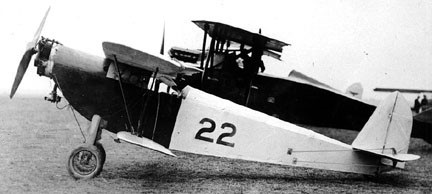
The 1924 Tiffany Sport, due to very short wingspan and low power, it had some difficulties taking off. It was entered in the 1925 Dayton Lightplane Air Race without much success.
In 1928 Thunderbird Aircraft Inc was contracted by a Lt C A Burrows of the California National Guard for use in “scouting new passenger and air mail routes,” but it is unclear whether this was a state or personal order. A seven place cabin monoplane, there is no record of the plane being constructed.
Engine: P&W Wasp Max speed: 145 mph Cruise: 120 mph
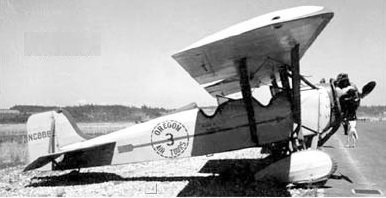
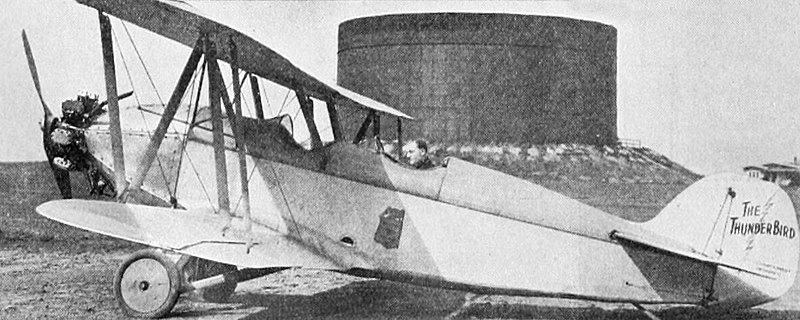
Thunderbird Aircraft was established to build and develop the Thunderbird biplane, designed by Theodore A. Woolsey, and first flown in June 1926. The production W-14 was a three-seat open-cockpit biplane powered by a Curtiss OX-5 engine.
Design of the Thunderbird W-14 family was begun in 1926 by the W-F-W Aircraft Corporation (formed by Theodore Woolsey, Jack Frye and Paul Whittier).
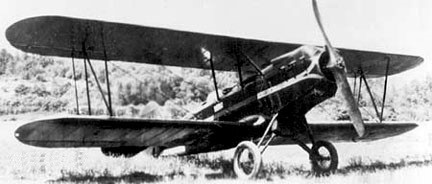
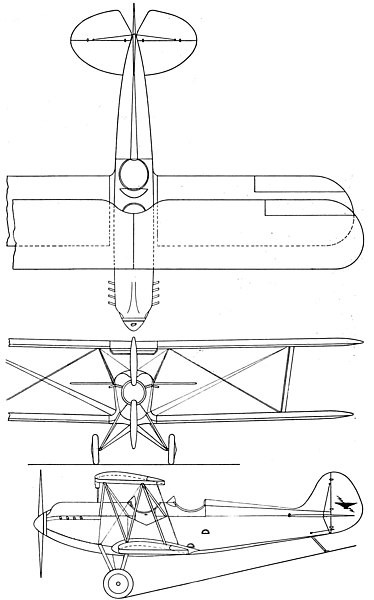
The Thunderbird W-14 was an unequal span single bay biplane with wings of rectangular plan out to rounded tips, built around twin wooden spars and fabric-covered. Both upper and lower wings were set with 3° of dihedral and had externally interconnected ailerons. Outward-leaning N-form interplane struts joined the wings, set with 20 in (510 mm) of stagger, and the upper wing was mounted over the fuselage on outward-leaning cabane struts with an inverted V from the forward spar and a single strut from the rear spar on each side.
The prototype’s OX-5 water-cooled engine was cleanly cowled, with its 43 US gal (36 imp gal; 160 L) fuel tank immediately behind it and its radiator centrally positioned on the upper wing underside. There were two open cockpits in tandem. The forward one seated either two passengers side-by-side or a trainee pilot, positioned largely under the upper wing. The pilot sat, sightly raised, in the rear cockpit. The stagger and a gentle cut-out enhanced the field of view from both cockpits. Behind the engine the fuselage was a trapezoidal section girder structure of welded steel tubes, tapering rearwards and with a rounded decking behind the cockpits.
The Thunderbird had a conventional tail with a semi-circular plan tailplane mounted on top of the fuselage, wire-braced to the fin. It carried rounded elevators separated by a gap for rudder movement. The fin was also rounded, with a large unbalanced rudder of semi-elliptical profile.
Its original fixed, conventional landing gear was a standard single axle design with pairs of legs and trailing drag struts. There were no brakes and the early tailskid could not be steered.
The Thunderbird made its first flight 11 July 1926. By the autumn of 1927 numerous modifications had been made in preparation for production. These included laminated, rather than solid, wing spars, Warren girder ribs and a steel, rather than wire, cross-braced fuselage. A new, split axle undercarriage was introduced, with axles hinged from the central fuselage underside and equipped with rubber-chord shock absorbers. The tailskid was now steerable.
Designed by Ted Woolsey, the open cockpit biplane series was first flown on 11 July 1926 (piloted by Jack Frye).
As production started W_F_W was re-organised as the Aero Corporation of California with investment from Walter Hamilton (Frye & Woolsey, Monte Edwards, Walter Hamilton, Paul Richter). With the break-up of the partnership Woolsey arranged new investment to take over the business, which became Thunderbird Aircraft Inc. of 900 N Allen St, Glendale, CA.
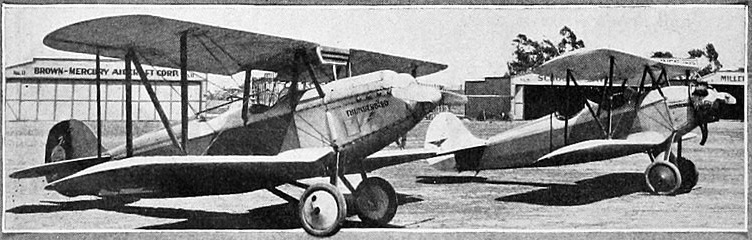
OX-5 powered Thunderbird alongside a Bailey C-7-R powered aircraft
Production Thunderbirds offered several other engines, all more powerful than the Curtiss (for $3,350). The least powerful was the 95 hp (71 kW) Dayton Bear which originally powered an iceboat.
Bailey C-7-R powered Thunderbird W-14
The Bailey CR-7 Bull’s Eye was a 120 hp (89 kW) 7-ctlinder radial engine as was the 150 hp (110 kW) Axelson (Floco) B as W-14-F. The elderly, heavy 140 hp (100 kW) Hispano E water-cooled V-8 engine (for $3,750) increased speeds of the W-14-H by 15 mph (24 km/h; 13 kn) and the climb rate by 12% but needed a 60 US gal (50 imp gal; 230 l) fuel tank to maintain the W-O-14’s range. All but the first were certified to power the W-14.
One was registered N7201as a W-14 (no suffix) with a 130hp Hallett engine,
Between 40 and 50 production Thunderbirds (ATC 2-141) were built between 1927 and 1929. There were several agencies across the south-western states and it was popular with small flying clubs in the Los Angeles area. Some were used in the Philippines until the Japanese invasion. Others were exported to Canada. In 1929, however, the onset of the depression and a management dispute ended the company even though they had an outstanding order for 50 from a single buyer.
Known registrations: N5243, N5404, N5457, N5588, N5770, N5830, N5969, N6502, N6573, N6589, et al.
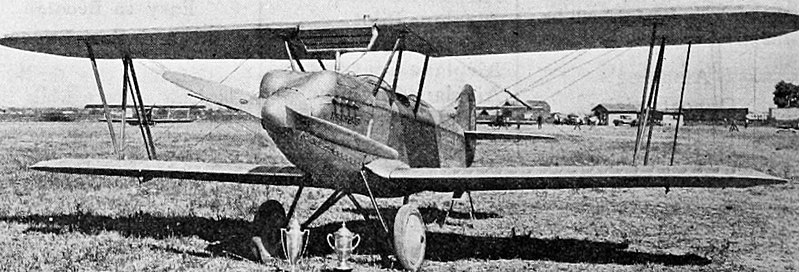
Because the early advertisements for the Thunderbird said only that its maximum speed was over 100 mph, some journals suggested that the 95 mph cruising speed was in fact the maximum. To refute this, a standard Thunderbird with a three-year-old OX-5 engine, previously used by an aero club, was entered for the November 1927 Santa Anna air meet for aircraft with under 100 hp engines, where it won a trophy by completing a triangular course at an average speed of 114 mph (183 km/h; 99 kn). A few days later on 21 November 1927, at the National Guard field in Los Angeles Clint Burrows, the company test pilot, flew four flights each in opposite directions at an average speed of 119.4 mph (192.2 km/h; 103.8 kn). The aircraft was then sold to an air-taxi company for use between Los Angeles and Tucson.
One standard W-14, NX9830, was bought by Roscoe Turner and modified by the addition of a 50 ft (15 m) diameter parachute held in the wing centre-section to be deployed to save the aircraft and those aboard in an emergency.
Only one Thunderbird remains airworthy, a W-O-14. It was restored by Denny Trone and flew from Brodhead, Wisconsin. After his death in a 2008 flying accident it was donated to the Eagles Mere Air Museum along with other old aircraft he had restored. Ogden lists it as a General Aircraft Company Thunderbird W-14.

 All Aero