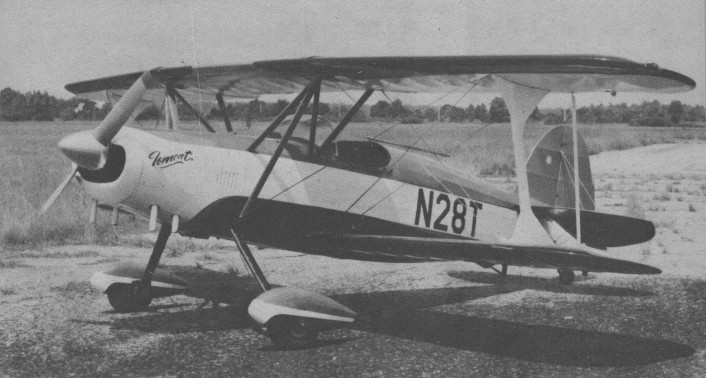
Tomalesky TF-1 Tomcat

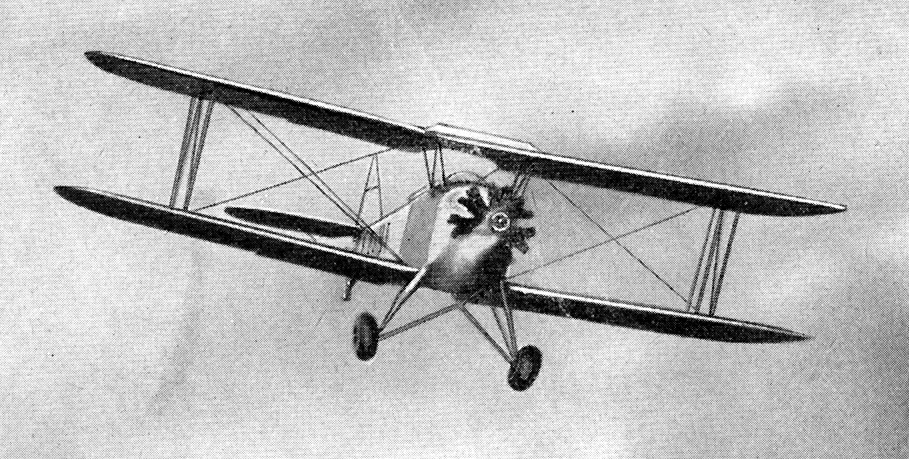
Pete Tomalesky in early 1970 began the project to design and build a two-place, side-by-side biplane he called the Tomcat. He later removed the tubular spring gear and fitted a one-piece flat aluminum gear in its place. First flying in November 1973, he flew the Tomcat N28T in several I.A.C. amateur acrobatic contests.

“The Tomcat was intended to be an aerobatic/sport plane, and it uses a fuel-injected 160-hp Lycoming. The airframe will accept an engine with as much as 300 hp, and with a sliding canopy fitted, the Tomcat would be a highly competitive acrobatic machine

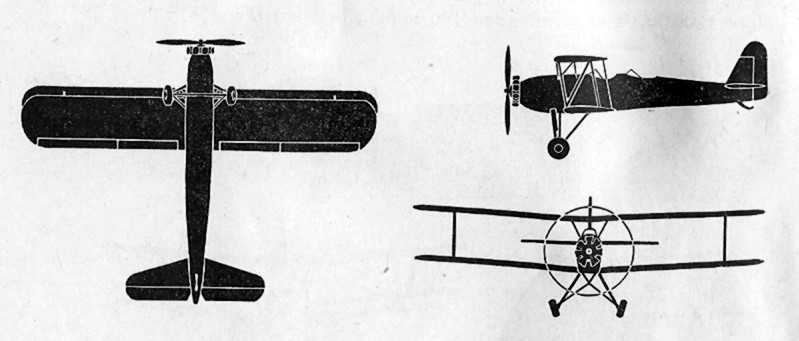
Mike Tomalesky describes the Tomcat’s construction as being of typical steel and wood, with a wingspan of 24 feet (top wing) and 181/2-foot length. All airfoils are fully symmetrical, and four interconnected ailerons are featured.
“I’ve dive-tested the Tomcat to 200 mph,” says Mike, and with the 160-hp engine it cruises at 110 mph and climbs at 1200 fpm. I’ve tried some 70 different aerobatic maneuvers and variations, including outside loops, point rolls and several inverted flat spins,”

The Tomcat was sold to the Suncoast Pilot’s Club at Clearwater Airport, and numerous pilots have since checked out in-it. Mike says he’s joining the club so he can put more time in on the Tomcat, which he hasn’t flown for some time. He describes the craft as highly responsive in pitch and roll, and says, “it does not get heavy prior to the stall, which is only brought on by a lot of work on the pilot’s part. Rudder control is excellent.

In aerobatic flying, entry speed of 140 mph IAS is used for loops, hammerhead turns, taiislides, point rolls and slow rolls. A 30-second slow roll has been recorded, with a minimum loss of altitude. “Four-and eight-point rolls are crisp, and 16-point rolls, at which 1 was very good, are possible,” mike enthuses. Square loops are entered at 160 mph, usually out of a hammerhead turn. Most rolls are done at cruise power, and Mike reports that snaps are fantastic. He says, “A real, fast snap can be done at 85 mph with ailerons and power added. Snaps out of knife edge are entered at from 110 to 120 mph.

Mike enters spins in the Tomcat at the usual stall speed, with no aileron required for a fast, tight spin, and recovery is virtually instantaneous, using conventional opposite rudder and forward stick. Spins do tighten up after six to eight turns, he says. Inverted spins are entered at stall speed and are simple to perform.

Outside loops from top around are entered at 80 mph, with speed at the bottom from 160 to 180 mph, depending on how many negative C’s are pushed. “At no time in the 100 hours of constant, rugged aerobatic flying I did,” says Mike, “was any part of the Tomcat damaged or deformed, and no abnormal flight characteristics were noted in any configuration.

Mike’s dad Pete began building the Tomcat in 1971 when he was operating a company called Tru-Flight near Clearwater Executive Airport, which was involved in building complete and partial aircraft. Construction time on the Tomcat ran to 14 months, or some 2000 hours, with the first flight taking place at Clearwater Airport in early September 1972. Virtually no modifications or adjustments were required, except to tighten the flying and landing wires and repair a cracked cowling.

TomcaCs fuselage is built up from 4130 steel tubing, gas welded, with spruce stringers attached to birch formers. The firewall is stainless steel; the nose bowl and wheel pants are f iberglass landing gear was an original steel rod design, later modified to one piece flat stock aluminum, with Cleveland brakes and 600 x 6 wheels and tires. A 36-USgallon aluminum fuel tank is mounted forward of the cockpit. The entire fuselage is fabric covered and doped.

Wing ribs are routed from five-ply birch plywood, and the spars are spruce, with laminated spruce wingtip, bows, leading and trailing edges are of aluminum, and the four identical ailerons are interconneded, actuated by push-puli tubes in the bottom wings.

The tail surfaces are outlined with 4130 steel tubing, ribs are bent sheet steel, the entire structure gas welded. An aluminum trim tab is on the left elevator only, operated, by a vernier control at the pilot’s left. Two sets of streamlined flying wires form the leading and trailing edges ‘of the stabilizer, with the entire structure fabric covered. The elevator is push pull tube operated, the rudder actuated by braided stainless steel cables.

Inside the cockpit, the pilot is provided, with a central control stick, interconnected with a shorter, removable stick for the passenger. Toe brakes are on the pilot’s side, with smaller, brakeless pedals on the passenger’s side.

The throttle and mixture control, originally at center, have been moved to the pilot’s left side, but a central throttle can be connected for student/passenger use. A radio navcom is located between and forward of the pilot’s legs in the center console, which also has a map storage area below the radio.

On the panel in front of the passenger’s seat are switches and circuit breakers, including master switch, turn and bank, electric fuel pump, nav lights and radio switch. Tomalesky placed the pilot seat six inches forward of the passenger’s seat to facilitate elbow clearance. Both seats are of fiberglass, bucket-type, with aerobatic seat belts and shoulder harnesses.

The baggage compartment is placed immediately behind the seats at shoulder height, with entry through a full-width aluminum door with a key lock. Baggage capacity is 50 pounds.

The 36-gallon fuel tank includes a 21 gallon header tank located at lower right ahead of the passenger’s rudder pedals, designed to house the flop-tube fuel pickup; it serves as the inverted fuel system. The fuel tank is double vented, on the bottom of the fuselage and on the top wing. Fueling is accomplished through a centrally located cap forward of the windshield.

A full oil inverted system with check valves and collecter tank are mounted on the firewall, and provisions have been made for mountings for tracks on the fuselge sides and atop the forward turtle deck to accommodate a full sliding canopy.

One of the few modifications made was a change from the original exhaust system, routed out through the bottom center or the engine cowl to four straight stacks protruding from the lower cowl. This change was made after one of the longer stacks fatigued and was lost in flight.

So far, says Mike Tomalesky, some 500 hours have been logged by a number of pilots flying the Tomcat, many carrying passengers in aerobatic demos.

Engine: Lycoming IO-320-B1A, 160 hp
Propeller: Fixed pitch
Wingspan Top: 24 ft 0 in
Wingspan Bottom: 22 ft0 in
Airfoil section Top: 63015
Airfoil section Bottom: 2300 Series-symmetrical
Length: 18 ft 6 in
Height: 7 ft 0 in
Wing area: 133 sq.ft
Gross weight: 1725 lb
Empty weight: 1154
Useful load: 571 lb
Baggage capacity: 50 (max)
Fuel capacity: 36 USgal
Seats: 2 side by side
Top speed normal: 160 mph
Cruise speed: 110 mph
Stall speed: 55 mph
Rate of climb: 1100 fpm
Tomalesky

Pete Tomalesky, Tomalesky Aviation, Urnatilla Municipal Airport, Umatilla, Florida 32684, USA.

At Urnatilla Municipal Airport, Pete Tomalesky has several other “Cats” in work – one project under construction is an enclosed cabin biplane, the Polecat, with tandem seating, and another is a strut braced mono designed for airshow flying.

The third, scheduled to fly first, is called the Topcat, a two-place, open cockpit bipe with tandem seating; it will carry a 200-hp IO-360 with a constant speed, or maybe a 260-hp Lycoming if Mike can find one at the right price. This particular project,” says Mike, “is being developed for amateur builders, and plans and possibly kits will be offered if public interest warrants it.”

Tokugawa Kaishiki No. 1

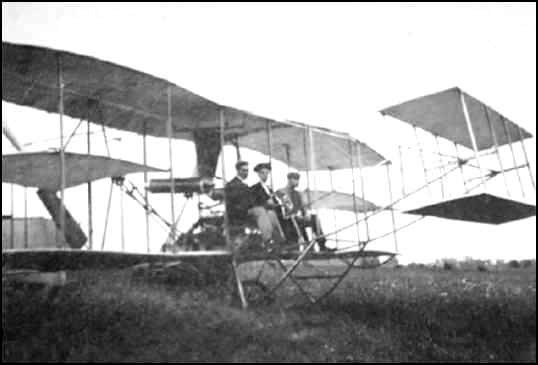
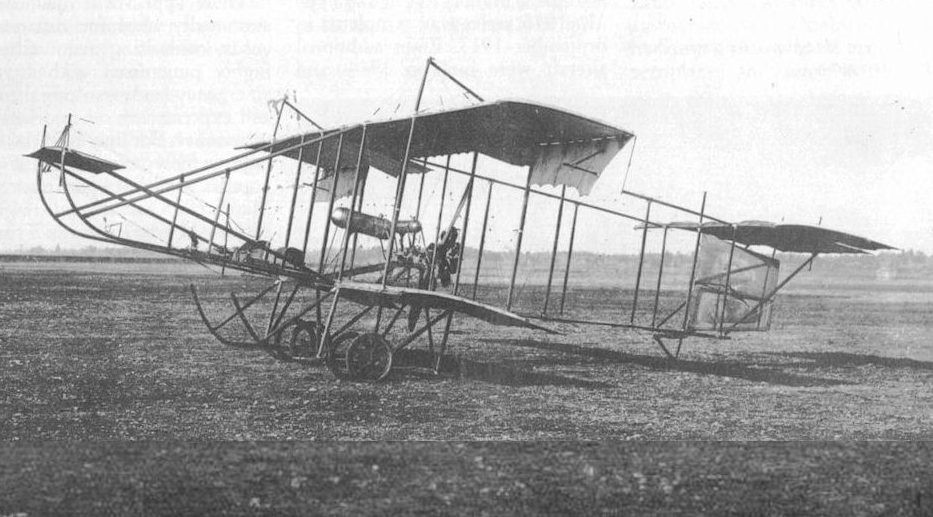
Japan’s very first Japanese-designed and manufactured aeroplane was the Kaishiki No. 1 (kaishiichigouki, 会式一号機), pusher aeroplane (propeller is behind the pilot, pushing the craft, as opposed to the puller type we commonly have nowadays that leads the aircraft) which was designed and flown by Captain Tokugawa Yoshitoshi (surname first), on October 13, 1911 at Tokorozawa in Saitama-ken (Saitama Prefecture).

The motor and propeller came from France, but everything else came from or was built in Japan. The aircraft’s frame was mostly made from hinoki (Japanese cypress), and was covered by two layers of silk glued together with sounds like liquid rubber.

All attachment fittings, bracing wires and turn buckles were purchased from iron works companies or bought from local hardware shops.

Differences from the Farman III design included a reduced wing area, which gave it more speed. The aerofoil had a larger front curve which was thought to provide better lift. Other differences between the Kaishiki No. 1 and the Farman III include the fact that ailerons were on the upper wing only, and the tail was simplified by having a single horizontal tail surface.

As well, the engine and propeller were mounted higher than in the original design, and therefore the undercarriage could be shortened. A windshield was added for the pilot.

When the aeroplane was constructed, it was called the Tokugawa Type, but was later officially identified as Kaishiki No.1 Aeroplane.

The aeroplane was moved to the Army facility and flying field at Tokorozawa where it made its first flight on October 13, 1911, piloted by Captain Tokugawa.

Captain Tokugawa Yoshitoshi

A later test flight on October 25, 1911 achieved an altitude of 50 meters (164 feet), reaching a top speed of 72 kilometers per hour (45 miles per hour).

Further testing had it reach 85 meters (278 feet) in altitude and flying a grand distance of 1,600 meters (1 mile).
Continued testing convinced the flight crew that the propeller ground clearance wasn’t high enough, as the blades would hit the grass below, slowing it down, causing the Kaishiki No. 1 to lose power.

Yamada dirigible and Kaishiki No.1

Actually, it was only after the providing greater clearance that the aircraft was given the Kaishiki No.1 moniker.
More changes ensued, including changeable landing skids in case one broke; twin rudders replaced by a single and larger rudder which was part of the advantage of the gained from the propeller slipstream meaning improved directional control.

Longer interplane struts on the aircraft were added to provide more spacing between the two wings.
One other alteration from the Kaishiki‘s original design was the removal of the pilot windshield, while it did provide protection from bug’s flying in the pilot’s mouth while screaming for joy as he flies through the air, the team felt that pilot needed to feel the air so as to get a better sense of the aeroplane’s speed.

Kaishiki No.1
Engine: 1 × Gnome Omega 7-cylinder, 50 horsepower
Propeller: 2-bladed wooden Chauvière
Length: 11.5 m (37 ft 9 in)
Upper wingspan: 10.5 m (34 ft 5 in)
Lower wingspan: 8.0 m (26 ft 3 in)
Height: 3.90 m (12 ft 10 in)
Wing area: 41.0 sq.m (441 sq.ft)
Empty weight: 450 kg (992 lb)
Gross weight: 550 kg (1,213 lb)
Maximum speed: 72 kph (45 mph)
Endurance: 3 hr
Crew: 2

Tokyo Aiba-Tsubame 8 / Aiba-Tsubame 9

Aiba-Tsubame 8

The Aiba-Tsubame 8 was an Advanced Trainer. Only the one was built.

The Tokyo Aviation Company modified the Aiba-Tsubame Model 8 trainer aircraft into Aiba-Tsubame Model 9.

Aiba-Tsubame 8
Engine: Tokyo Jimpu Radial, 150 hp or Gasuden Kamikaze 3-type, 160hp
Span: 29′ 6″ / 8.9m
Length: 22′ 10″ / 7m
Height: 6′ 6″ / 2.65m
Wing area: 22 sq.m
MTOW: 900kg
Max speed: 98 mph / 160km/h
Service ceiling: 4,400m
Range: 580km
Endurance: 4 hr

Aiba-Tsubame 8

Todd 1909 Biplane

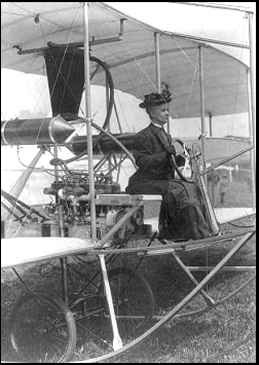
Miss [E.L.] Todd in her aeroplane, Sept 23, 1909

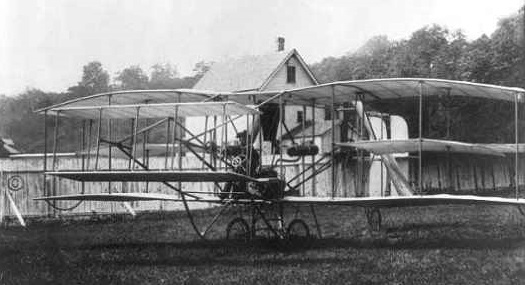
After years of effort, Miss E. Lillian Todd, of No. 131 West Twenty-third street, realized her ambition on Nov 7, 1910, when she had the pleasure of seeing a biplane, the work of her hands and brain, fly across the Garden City aviation field.

Designed and built by E. Lillian Todd and first flown by Didier Masson over the Garden City aviation field in Long Island during November of 1910.

Miss Todd was well known at the time, and her 1910 Biplane, powered by an eight cylinder 60 hp Rinek engine, was the first successful aeroplane built by an American woman. She then tried to get an engine, but met with repeated defeat, as the engines which she tried were not suitable. Finally a modified Rinek motor was declared satisfactory. Todd is told to have designed and built three full-size aircraft; her first – an engineless machine – in 1906.

A good sized crowd was on hand to witness the first attempt to fly the biplane. Mr. Didier Masson was the aviator. He ran the machine across the ground, then went to the air for twenty feet and made a turn at the far end, returning to the starting place, where he was enthusiastically received by Miss Todd and the crowd.

Todd in her plane with Didier Masson

Miss Elizabeth L. Todd has entered the lists as a competitor in several long-distance flights and she has her mechanicians at work in her aerodrome at Hempstead Plains on three machines she designed. She has made several flights and has learned to manipulate her planes and her engines in masterly style.

E. L. Todd at the Controls
Probably Sept., 1909

Toczołowski-Wulf TW-12

Henryk Toczołowski and Józef Wulf designed the TW-12 in 1929-30 but had to build the structure slowly in their spare time. They were both members of the P.W.S. Aero Club and eventually got permission to use the P.W.S. workshops but the TW-12 was not ready for flight until the second half of 1933. There is uncertainty about the date of the first flight, which one source gives as 29 September 1933 and another as 29 November 1933.

The TW-12 was an all-wood aircraft, with a cantilever, one piece low wing which was trapezoidal in plan. It was built around twin spars and covered in a mixture of plywood and fabric.

It was powered by a 60–66 kW (80–88 hp) five cylinder Armstrong-Siddeley Genet radial engine. The fuselage, with rectangular section structure and rounded decking, was plywood covered. The TW-12 had two open, tandem cockpits fitted with dual control. Its landing gear was fixed and conventional.

Early flight testing revealed some handling problems, particularly at low speeds in the landing approach. After some modifications the TW-12 went to the I.B.T.L. at Warsaw for official airworthiness tests , which led again to concerns about the low speed handling and also about the low fuel capacity (8.8 imp gal (40 l; 10.6 US gal)). In the summer of 1935 the TW-12 was allowed to fly as a single-seater, with the forward cockpit covered over and with a rudder of increased area.

On its release from the I.B.T.L., the WT-12 was scheduled to take part in the P.W.S. Club rally on 28 July 1935 at their home base at Biała Podlaska. According to one account, Antoni Uszacki decided to take advantage of a strong tail wind to fly it from Warsaw to Lviv, some 370 km (230 mi) away. Despite the limited fuel capacity (40 l (8.8 imp gal; 11 US gal), he arrived safely though with a dry tank .The club began to use the TW-12 as a trainer but its career was soon cut short by a landing crash with Tadeusz Arcinowski at the controls.

Another account states that Uszacki flew it at the rally but only achieved last (6th) place, and that Arcinowski flew it soon afterwards from Warsaw to Lviv but crashed on landing.

two seat version
Engine: 1 × Armstrong-Siddeley Genet, 60–66 kW (80–88 hp)
Wingspan: 10.5 m (34 ft 5 in)
Wing area: 14.5 sq.m (156 sq ft)
Length: 6.5 m (21 ft 4 in)
Height: 2.2 m (7 ft 3 in)
Empty weight: 285 kg (628 lb)
Max takeoff weight: 500 kg (1,102 lb)
Fuel capacity: 8.8 imp gal (40 l; 10.6 US gal)
Maximum speed: 170 km/h (106 mph; 92 kn) at sea level
Cruise speed: 155–150 km/h (96–93 mph; 84–81 kn)
Service ceiling: 2,900 m (9,500 ft)
Rate of climb: 2.8–2.2 m/s (550–430 ft/min)
Landing speed: 70 km/h (43 mph)
Crew: One pilot
Capacity: One pupil

Tips 1908 Biplane

Tips Biplane (second version)

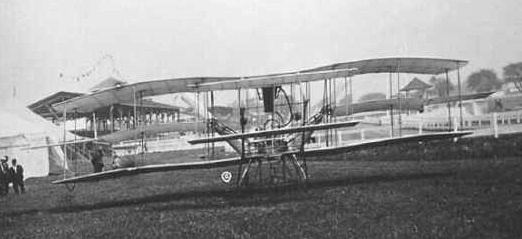
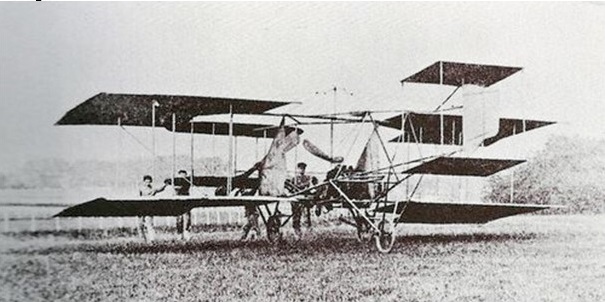
Belgian brothers Maurice and Ernest Tips designed in 1908 a machine that would rise and land vertically while transitioning to and from horizontal flight. Their solution to this challenge opted for a canard type biplane, driven by three-bladed propellers which could be rotated, thus given the need for space, the middle section of the wing was almost completely open. The engine to power this complex design was Belgian-made by the firm Pipe, and construction was done in Etterbeeke (now part of Brussels). The machine was not successful however, and the brothers persevered onward and re-designed their machine – using as many parts as already available – whereas they dropped the idea of starting and landing vertically. The second version of the Tips machine was a biplane which resembled the original quite closely, but fitted with two “fixed” two-bladed propellers. Almost everything else was the same, save the engine of Pipe which was at a later time changed to a 50 hp Gnôme rotary. The machine flew during 1909 and 1910 earning the distinction (with the Pipe engine that is) of being the first Belgian plane of construction (inclusive the engine) to do so.