Under the military designation R-7, a single ANT-10 was built as a possible alternative to Polikarpov’s R-5, which first flew in 1928 and went on to have a production run of 4,995 in the 1930s.
Tupolev’s project was an all-metal sesquiplane. The shortage of metal was one of the factors which worked in favour of the simple wooden airframe chosen by Polikarpov. For both aircraft the BMW-VI engine was specified, due to its planned Soviet production as the Mikulin M-17.
TsAGI began design work on the R-7 in 1928, when the R-5 was already flying. Its first flight was made on 30 January 1930, flown by Mikhail Gromov. As it was not appreciably better than the R-5, the programme was discontinued six months later.
Engine: 1 x BMW VI, 500hp Max take-off weight: 2920 kg / 6438 lb Empty weight: 1720 kg / 3792 lb Wingspan: 15.2 m / 50 ft 10 in Length: 10.9 m / 36 ft 9 in Height: 3.6 m / 12 ft 10 in Wing area: 49 sq.m / 527.43 sq ft Max. speed: 235 km/h / 146 mph Ceiling: 5500 m / 18050 ft
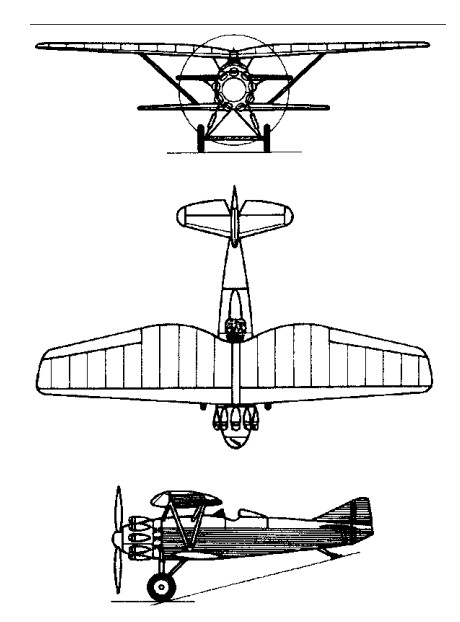
Designed by Pavel O Sukhoi when a brigade leader of Andrei N Tupolev’s AGOS (Aviatsiya, Gidroaviatsiya i Opytnoye Stroityelstvo – Aviation, Hydro-aviation and Experimental Construction) collective within the TsAGI (Tsentralnyi Aero-gidrodinamicheskii Institut -Central Aero and Hydro-dynamic Institute), the ANT-5 was the first Soviet all-metal fighter. A single-seat sesquiplane powered by a nine-cylinder Gnome-Rhone Jupiter radial of 420hp, the first prototype performed factory testing between 10 August and 25 September 1927. A second prototype, or dubler, with a 480hp Gnome-Rhone Jupiter 9ASB, was flown in July 1928, and underwent state testing between 1 December 1928 and 4 April 1929, series production of the type having meanwhile been initiated as the I-4. The first series I-4 underwent state testing between 15 October and 26 November 1929, subsequent aircraft having the 480hp M-22 engine, a licence-built version of the G-R Jupiter 9ASB, and an armament of twin 7.62mm guns. Second series aircraft had the 4.00sq.m lower wing removed, controllable slats occupying 44.5% of the remaining wing’s leading edge, and a Townend ring-type engine cowling incorporating cylinder helmets. Designated I-4bis in this form, the prototype was tested by the NIl VVS, the Air Force’s Scientific Research Institute, between 11 and 23 September 1931. No further development of the I-4bis was undertaken.
Three I-4s were fitted with very much smaller lower wings for aerial launch and retrieval trials from 31 December 1931 by Vladimir S Vakhmistrov utilising a TB-1 bomber as an Aviamatka, or “mother aircraft”. Devised by V S Vakh¬mistrov to extend the radius of action of fighter aircraft, two I 4 (ANT 5) single seat fighters were to be carried into action on the wings of a TB 1 mother plane. The Zveno 1, as it was known, was successfully tested.
In December 1931, one I-4 was tested with a 76mm Kurchevski recoilless cannon mounted beneath each upper wing half. A total of 369 I-4s was built to January 1934, these equipping 18 eskadrii at their service peak; the type remaining in first-line service through 1933 and for tuitional tasks until 1937.
I-4 Max take-off weight: 1430 kg / 3153 lb Empty weight: 978 kg / 2156 lb Wingspan: 11.40 m / 37 ft 5 in Length: 7.28 m / 24 ft 11 in Wing area: 23.80 sq.m / 256.18 sq ft Max. speed: 231 km/h / 144 mph Ceiling: 7500 m / 24600 ft Range: 840 km / 522 miles
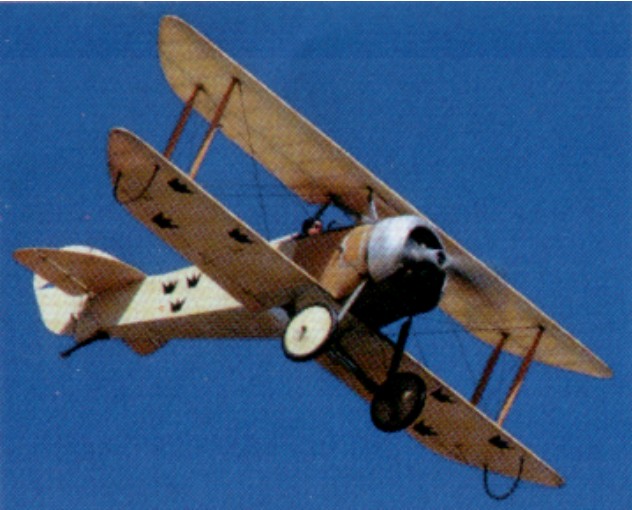
Designed and built by the Swedish Army Aircraft Factory, as a trainer for the Swedish airforce and first flown in June 1919. Only 28 were built before the type was retired in the 1920s.
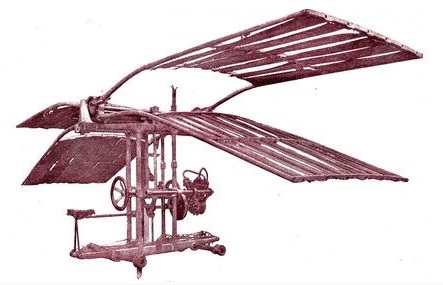
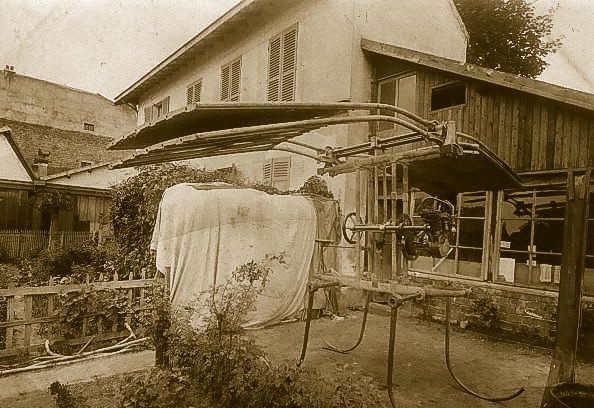
The 1908 Orthoptère of Spiridon Tsapenko [Спиридон Цапенко] and Joseph Michel Ambroise Farcot. The two photos taken by Branger on July 21, 1908 show a small scale version built as a pre-study for a full-size higher powered machine. This trial version had a 12 hp Farcot engine of 20 kg in weight, bringing the total weight of the machine to 150 kg.
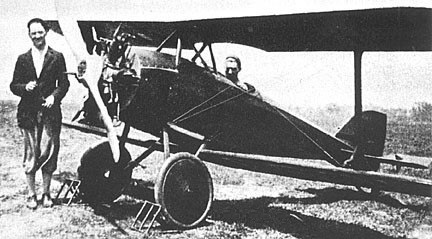
The Trump Model 1 of 1927 appears to be a Lincoln Sport kitplane renamed by its builder, Frederick L Trump, an engineering student at Univ of Minnesota. Ewgistered N6635, test flying was reportedly by Charles “Speed” Holman.
The Troy Air Service A was a 1938 two place open cockpit biplane, designed by Nelson M Jones. A dual control trainer registered NX/NC2619 c/n 102, power was from a LeBlond, then 125hp Warner Scarab on 1 March 1939, then a Menasco C-4 on15 August 1939. The registration was cancelled in 1948.
Other references to is is as the Cape NMJ-1A Trainer appearing on 1940 records included a 130hp Aeromarine 2-A, span: 28’5″, length: 22’8″, max speed of 130 mph, cruise of 118 mph, and a stall of 45 mph. The final modification had canopied cockpits.
The design, with 130hp Franklin, was advanced by Cluett Co, but not completed because of outbreak of WW2.
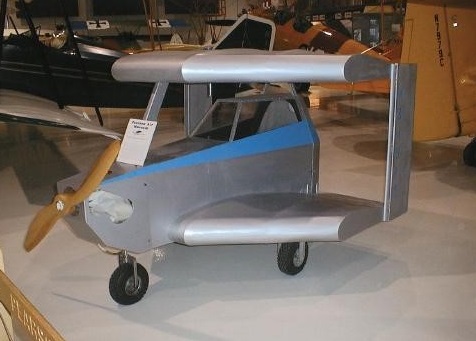
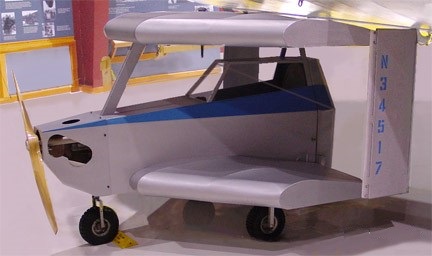
In 1987 Larry G. Trotter built the WSA-1, claimed of being the “World’s Smallest Airplane”.
With FAA registration N3417 c/n 001, on the first flight attempt, at about rotation speed the propeller threw a blade, which resulted in some extremely violent vibration that did some damage to the front cowling and motor mount and was bad enough to shake the hands off the altimeter.
After repair and the metal prop replaced with a wooden one, Trotter never got around to trying again.
It was later donated to the Pearson Air Museum (WA, USA).
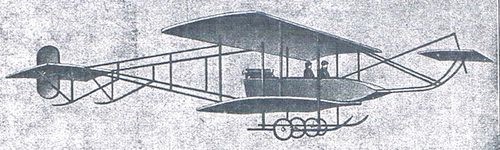
A Farman-copy built by Otto Trinks & Co Luftfahrt-material (Gitschinerstrasse 91, Berlin) during 1910/11 and fitted with a 44 hp eight-cylinder engine.


 All Aero