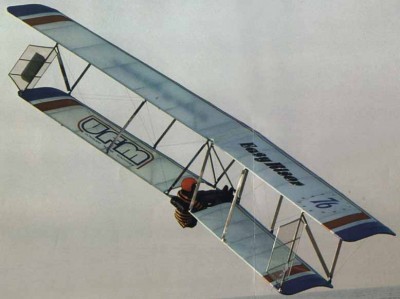
The Easy Riser biplane was designed by Larry Mauro and which under the name Icarus II was one of the earliest hang gliders to be motorised, back in 1975 by John Moody. A rigid wing tailless biplane flown by supplemental weight-shift. A variety of engines could be fitted, including the 125cc McCulloch 101 go cart engine, UFM selling the machine as a hang-glider. Control method: Standard tip rudder and weight-shift pitch axis, optional 2 or 3 axis control. First year built 1976. Units delivered by June 1981 2,500. Many options in power and landing gear were available. It is strut and cable braced.
The Easy Riser is a progression from the Icarus II but the wing is a modified monowing with a double surfaced rigid airfoil. Wingtip rudders are mounted on ball bearings and drag brakes are fitted. Wing tips are fully contoured. Wing covering is 1.3oz dacron sealed with aircraft dope.
The spars are made from 6061-T6 aluminium tubing with foam core spruce ribs. Wing bracing is both aluminium struts and cable. All rigging is aircraft grade. All hardware is aircraft grade, fastened with pop rivets and bolts.
The pilot has a tube cockpit support with an optional swing seat.
The Easy Riser won the 1976 World Open Hang Gliding Championships.
The Easy Riser is offered as a hang glider, and engine and landing gear packages to use with this aircraft are offered separately by other companies. Power and landing gear optional. Standard tip rudder and weight-shift pitch axis, optional 2 or 3 axis control.
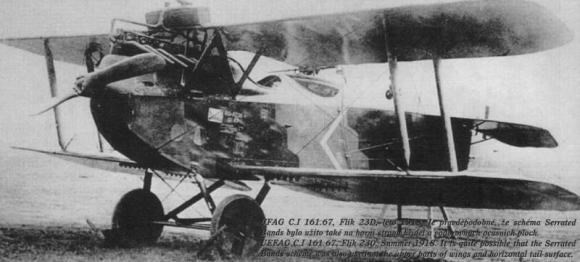
The UFAG C.I was a military reconnaissance aircraft produced in the Austro-Hungarian Empire during World War I, by the Ungarische Flugzeugfabrik Abteil Gesellschaft (UFAG). It was introduced in April 1918, and was widely used on the Italian Front in the final months of World War I.
The UFAG C.I incorporated the best features of the Brandenburg C.II(U) with single-bay wings and ‘I’ strut inter-plane bracing, which was replaced wing conventional steel-tube interplane struts in production aircraft. More manoeuvrable than the Phönix C.I, the C.I had good performance, but suffered from a few odd handling characteristics.
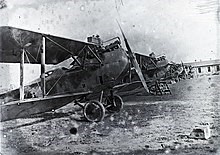
Ufag C.Is in service
Production of the C.I continued after the Armistice by MARE and was also built by the Neuschloss-Lichtig factory as the NL Sportplane.
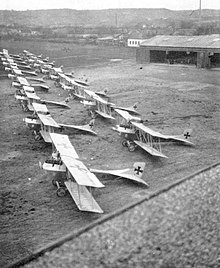
UFAG Brandenburg C.I aircraft in Albertfalva (Budapest) in 1916
The C.I was widely used by the KuKLFT on the Italian front by at least 30 Fliks. The C.I was also used post WWI by the Hungarian Red Airborne Corps as well as the clandestine Hungarian Legügyi Hivatal. Ex-military C.Is were also converted for civil use and as mailplanes.
Twenty UFAG C.I were captured from the Hungarian Soviet Republic in 1919 and used by the Romanian Air Corps.
Variants:
Ufag 161.01 First prototype 8.92 m (29.3 ft) span, 200 hp (150 kW) Hiero 6, ‘I’ type inter-plane struts.
Ufag 161.02 Second prototype, 230 hp (170 kW) Hiero 6, ‘I’ type inter-plane struts.
Ufag C.I (series 161.03 to 161.22) Production by Ufag, 9.12 m (29.9 ft) span, 230 hp (170 kW) Hiero 6, twin inter-plane struts.
Ufag C.I (series 161.31 to 161.250) Production by Ufag, 9.5 m (31 ft) span, 230 hp (170 kW) Hiero 6, twin inter-plane struts.
Ufag C.I(Ph) (series 123.01 to 123.40) Production by Phönix, 9.12 m (29.9 ft) span, 230 hp (170 kW) Hiero 6, twin inter-plane struts.
UFAG 60.01 an improved C.I which would evolve into the UFAG 60.03 / C.II.
Specifications:
C.I second series 161.23 – 161.250 Powerplant: 1 × Hiero 6, 170 kW (230 hp) Propeller: 2-bladed wooden fixed-pitch Upper wingspan: 9.5 m (31 ft 2 in) Lower wingspan: 9.4 m (30 ft 10 in) Wing area: 26.3 m2 (283 sq ft) Length: 7.41 m (24 ft 4 in) Height: 2.7 m (8 ft 10 in) Empty weight: 750 kg (1,653 lb) Gross weight: 1,150 kg (2,535 lb) Maximum speed: 190 km/h (120 mph, 100 kn) Range: 350 km (220 mi, 190 nmi) Endurance: 3 hours Service ceiling: 4,900 m (16,100 ft) Guns: 1 x 8 mm (0.315 in) Schwarzlose machine-gun forward-firing fixed machine guns; 1 x 8 mm (0.315 in) Schwarzlose machine-gun in trainable rear cockpit mounting Bombs: 12 x 12 kg (26 lb) bombs (161.131 onwards) Crew: 2
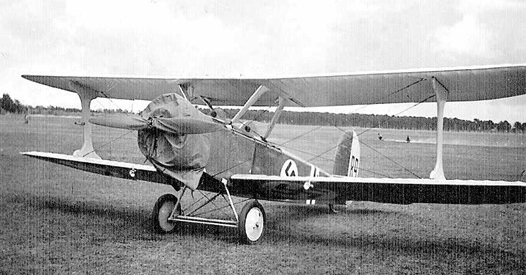
Udet left the company in 1925, after agreeing to production of a light training biplane, the Udet U-12 Flamingo, designed by Hans Herrmann, destined to become the company’s best-known aircraft.
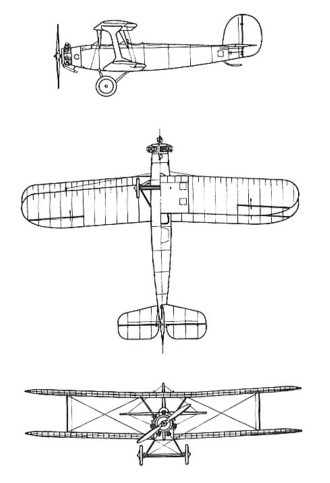
A two-seat open-cockpit biplane of wooden construction the U 12 was a conventional, single-bay biplane of wooden construction with the wings braced by large I-struts. The pilot and instructor or passenger sat in tandem.
U.12
First flown on April 7, 1925, it was demonstrated throughout the world by Udet. The U 12 proved extremely popular and sold well, due in no small part to Ernst Udet’s spectacular aerobatics routines while flying the aircraft. One particularly acclaimed part of his act included swooping down towards the airfield and picking up a handkerchief with the tip of one wing.
U-12 prototype
The popularity of this aircraft was insufficient to rescue Udet Flugzeugbau from its dire financial position and the company went out of business in 1925, but when the company’s assets were taken over by the state of Bavaria to form BFW in 1926, production of the U 12 soon resumed in earnest, as well as in Austria, Hungary and Latvia. BFW-built U 12s were exported to Austria, Hungary and Latvia, and later built under licence in these countries as well.
Austrian U-12o
It served in many roles, notably as a trainer with the German civil flying clubs and at clandestine Luftwaffe pilot training centres. Other operators were the Austrian Air Force (1927–1938), Hungarian Air Force, and Latvian Air Force.
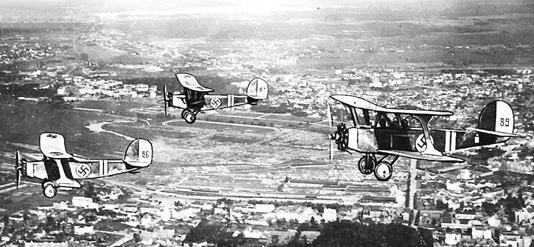
In the summer of 1928 two German pilots from the Bayerische Flugzeugwerke demonstrated the U-12 Flamingo in Latvia. Originally the Latvian military was considering building Avro trainers, but the license fees being demanded were excessive and this idea was dropped. Building a locally designed trainer at A.S.Christine Backman seemed to be the next best solution, until the Udet Flamingo was seen on the demonstration flights, when it immediately became the trainer of choice, equipped with dual controls with the instructor sitting in the front and the student behind.
One aircraft was purchased by Latvia and then in the summer of 1929, A.S.Christine Backman obtains a contract to build 10 U-12bs and a complete set of plans is provided by BFW. While Latvian manufacturers had no difficulty with the wooden parts (Latvian pine and birch plywood were quite suitable) they initially had to buy some of the Duralumin parts from BFW. However, the aircraft completed by the Aviation Regiment Workshops had the parts produced locally. The Hugo Heine propellers, instruments and wheels were ordered directly from their German manufacturers. In the autumn of 1929 A.S.Christine Backman begins construction of the U-12 Flamingos at their new facility in Bisumuiza, a suburb of Riga.
By the summer of 1930 the Flamingo aircraft are completed and delivered to the Military Aviation School. The Flamingo aircraft were flown for the first time by the Military on July 25, 1930. The pilots were the recent graduates of flight school – Jenkevics, Ozolins, Grave, Sapratnieks, Sleiters and Krastins. Some of the Latvian Flamingos were clear varnished, carrying a black number on their silver rudder, while others were dark green overall with a white outlined black number on the rudder.
Latvian U-12b
In 1936 two of the Flamingos are modified to accept a full blind-flying panel and fitted with a hood over the rear cockpit to make them suitable for instrument flight training and, in an effort to standardize aircraft types by code, the Flamingos as designated as type A-1.
As the plane was used for the training of young pilots in the training squadron (LR Air Force training aircraft had a special sign – two white stripes around the fuselage), there were many accidents. only one accident, 4 November 1935, led to death, when U-12b #95 collided with AA Bristol Buldog and broke apart killing Alexander Hvastkov, Lieutenant Janis Janis and Sergeant Putniņš Ravinsh.
In the late 30’s three were passed to flying clubs with Latvian designations YL-SBX, ABV, ABY. The last of the Flamingos were still flying in the spring of 1940, where they were being utilized as Aeroclub trainers and were training the 5th graduating class at Kalnciems (they had been gifts from the Aviation Division). After the Soviet occupation, all (or most) of the Flamingos were destroyed when the building in which they were stored caught fire and burned to the ground.
Gallery
Latvian built U-12 accidents –
76
August 4, 1930 – crashed (pilot: vltn. Lakstigala) April 30, 1931 – crashed (pilot: Goldbergs) June 16, 1931 – crashed (pilot: ltn. Peculis)
77
Experimentally fitted with the Czech Walter Mars 145-hp radial engine, but it was later replaced with the standard SH12. August 12, 1930 – crashed (flight instructor vltn.Trejs with student, Salmins)
86
Sept. 15, 1930 – crashed (pilot: Nikolajs Balodis)
87
June 2, 1931 – crashed (pilot: Greizis) August 31, 1931 – crashed (pilot: Bungss)
89
May 31, 1931 – flown by J.Indans in the Aviation Festival at Riga/Spilve. Dec. 29, 1931 – crashed (pilot: plkv. J.Indans, passenger vltn. Greizis)
95
1935 – the Aviation Division workshops builds an additional Flamingo, assigned the number 95. July 1, 1935 – #95 is test flown and approved by capt. A.Dzenitis. November 4, 1935 – midair collision with Bristol Bulldog #81. Three fatalities. This was the only fatality associated with the Flamingo.
Replica
No original aircraft are known to exist. An airworthy replica was kept at the Deutsches Museum, Munich, Germany, but crashed at the 2013 Tannkosh event. This example has a Sh 14 engine, a later, more powerful version of the Siemens-Halske engines fitted to original U 12s.
Germany U 12a: main production version with Siemens-Halske Sh 11 engine U 12W: float-equipped U 12a (Wasser—”water”) with Sh 12 engine U 12b: version strengthened for aerobatics and with improved wing profile U 12c: advanced trainer with reduced wing area U 12d: U 12b with Siemens-Halske Sh 12 engine U 12e: U 12c with Siemens-Halske Sh 12 engine
Austria 20 aircraft produced by Fliegerwerft Thalerhof U 12H: standard U 12a (Holz—”wood”) U 12S: U 12a with redesigned fuselage of fabric-covered steel tube construction (Stahl—”steel”). U 12Ö: alternative designation for U 12S (Österreich—”Austria”)
Hungary Forty aircraft produced by KRG and another 40 by Manfred Weiss Works. Some examples armed and used for fighter or bomber training Hungária I: similar to U 12a with N-type interplane struts Hungária II: similar to U 12a with N-type interplane struts Hungária III: similar to U 12a with N-type interplane struts, propeller spinner and Townend ring Hungária IV: similar to U 12a. Only Hungarian-built version with I-type interplane struts Hungária V: similar to U 12a with N-type interplane struts
Specifications:
Udet U-12 Flamingo Engine: Siemens Halske Sh 11 Propeller: 2.36 m Wingspan: 9.96 m Wingarea: 23.97 sq.m Length: 7.47 m Height: 2.80 Ailerons area: 2.48 sq.m Tailplane area: 1.80 sq.m Elevator area: 1.50 sq.m Fin area: 0.70 sq.m Rudder area: 1.00 sq.m Main track: 1.60 m Mainplane dihedral: 3° Mainplane sweepback: 3º Empty weight: 525 kg Flying weight: 800 kg Fuel capacity: 96 lt Wingload: 33.5 kg/sq.m Max speed: 140 km/h Cruising speed: 115 km/h Landing speed: 75 km/h Climb rate: 102 m/min Climb to 1000 m: 7 min. 15 sec Climb to 3000 m: 9 min Service ceiling: 3350 m
Udet U-12 Flamingo Engine: Siemens Halske Sh 5 Wingspan: 9.96 m Wingarea: 23.97 sq.m Length: 7.47 m Height: 2.80 Ailerons area: 2.48 sq.m Tailplane area: 1.80 sq.m Elevator area: 1.50 sq.m Fin area: 0.70 sq.m Rudder area: 1.00 sq.m Main track: 1.60 m Mainplane dihedral: 3° Mainplane sweepback: 3º Empty weight: 500 kg Flying weight: 775 kg Fuel capacity: 96 lt Max speed: 134 km/h Cruising speed: 110 km/h Landing speed: 75 km/h Service ceiling: 3000 m Range: 450 km
Udet U-12 Flamingo Engine: Siemens Halske Sh 12 Wingspan: 9.96 m Wingarea: 23.97 sq.m Length: 7.47 m Height: 2.80 Ailerons area: 2.48 sq.m Tailplane area: 1.80 sq.m Elevator area: 1.50 sq.m Fin area: 0.70 sq.m Rudder area: 1.00 sq.m Main track: 1.60 m Mainplane dihedral: 3° Mainplane sweepback: 3º Empty weight: 550 kg Flying weight: 800 kg Fuel capacity: 96 lt Max speed: 145 km/h Cruising speed: 115 km/h Landing speed: 75 km/h Time to 1000 m: 5 min. 57 sec Service ceiling: 3800 m Range: 450 km
Udet U 12 a Flamingo Engine: Siemens Halske Sh 11, 80 hp 60 kW Length: 24 ft 6 in / 7.4 m Height: 9 ft 2 in / 2.8 m Wingspan: 32 ft 8 in / 10.0 m Wing area: 258.3 sq.ft / 24.0 sq.m Max take-off weight: 1764.0 lb / 800.0 kg Weight empty: 1157 lb / 525.0 kg Max. payload: 176.4 lb / 80.0 kg Max. speed: 76 kts / 140 km/h / 87 mph Landing speed: 40 kts / 75 km/h Cruising speed: 62 kts / 115 km/h Initial climb rate: 450 ft/min / 2.3 m/s Service ceiling: 12,100 ft / 3700 m Wing load: 6.77 lb/sq.ft / 33.0 kg/sq.m Range: 243 nm / 450 km / 280 mi Fuel capacity: 12 gal / 45 lt Crew: 2
Hungária I Engine: WM built Sh 12 Span: 10.0 m Length: 7.4 m Wing area: 25.0 sq.m Wing loading: 33.7 kg/sq.m Empty weight: 590 kg Loaded weight: 840 kg Max. speed: 150 km/h Wing strut formation: N Armament: 2 x 8 mm Type 26/31 M Gebauer GKM machine guns or 10 – 20 kg bombs
Hungária II Engine: WM built Sh 12 Span: 10.3 m Length: 6.9 m Wing area: 26.0 sq.m Wing loading: 30.0 kg/sq.m Empty weight: 547 kg Loaded weight: 797 kg Max. speed: 140 km/h Wing strut formation: N Armament: 2 x 8 mm Type 26/31 M Gebauer GKM machine guns or 10 – 20 kg bombs
Hungária III Engine: WM built Sh 12 Span: 10.5 m Length: 7.7 m Wing area: 25.0 sq.m Wing loading: 35.0 kg/sq.m Empty weight: 595 kg Loaded weight: 845 kg Max. speed: 165 km/h Wing strut formation: N Armament: 2 x 8 mm Type 26/31 M Gebauer GKM machine guns or 10 – 20 kg bombs Equipment: prop.spinner, Townend-ring and modified landing-gear
Hungária IV Engine: WM built Sh 12 Span: 10.3 m Length: 6.9 m Wing area: 26.0 sq.m Wing loading: 32.0 kg/sq.m Empty weight: 582 kg Loaded weight: 817 kg Max. speed: 150 km/h Wing strut formation: I Armament: 2 x 8 mm Type 26/31 M Gebauer GKM machine guns or 10 – 20 kg bombs
Hungária V Engine: WM built Sh 12 Span: 10.3 m Length: 6.9 m Wing area: 26.0 sq.m Wing loading: 38.0 kg/sq.m Empty weight: 587 kg Loaded weight: 897 kg Max. speed: 140 km/h Wing strut formation: N Armament: 2 x 8 mm Type 26/31 M Gebauer GKM machine guns or 10 – 20 kg bombs
Kristina Bakmane / Arsenals Air Force workshops U-12 Engine: Siemens Sh12, 110 hp Wing Span: 10 m Length: 7.4 m Height: 2.8 m Max Speed: 145 km/hr Range: 450 km Maximum Ceiling: 3800 m Known Serial Numbers: 76, 77, 86, 87, 89, 95, 96.
#77) experimentally re-engined with 145hp Walter Mars
YL-ABX, YL-ABW and YL-ABY flown by Latvian Aeroclub flight school.
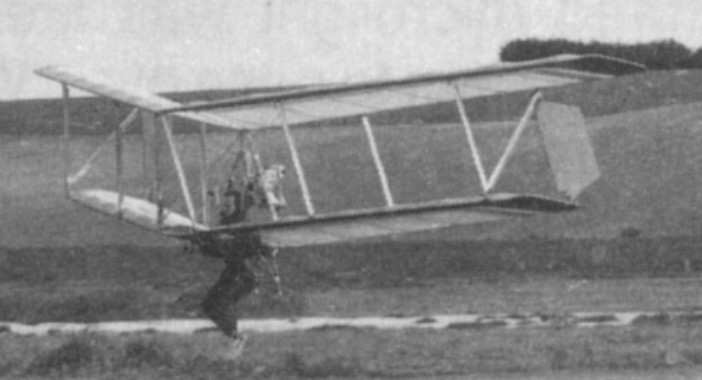
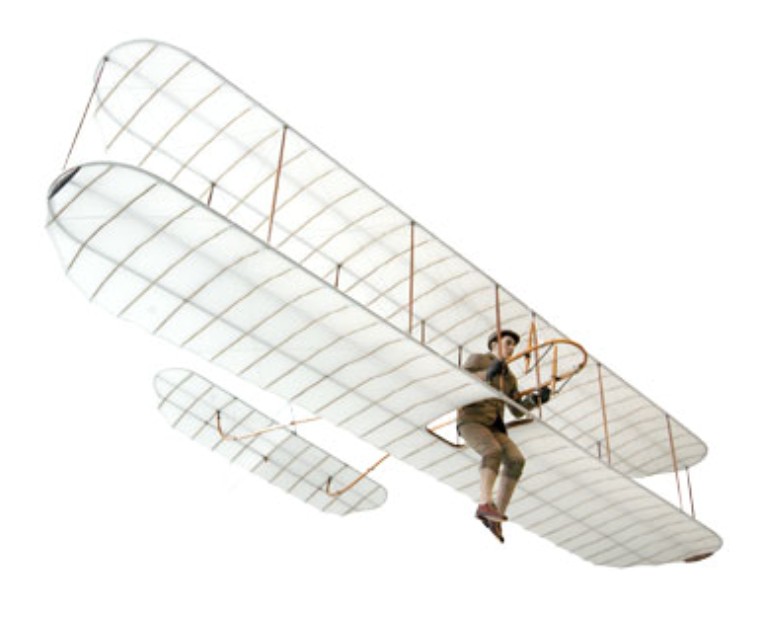
In 1910 TWK Clarke and Co., a Kingston-on-Thames manufacturer of aircraft, accessories and flying models, produced a range of four biplane gliders. This machine, based on a configuration evolved by the American pioneer Octave Chanute, was the third largest of the range and resembled the Wright brothers’ aircraft in general construction. It could be bought as a kit for 10 guineas (£10.50) or completely assembled and covered for £34. The machine was flown as a hang-glider with the pilot resting his armpits on the padded cushions, while the two control levers, connected in unison, operated the rudder when moved from side to side and the one-piece elevator when moved backwards or forwards. Banking in turns was achieved by the pilot swinging his body and legs towards the inside of the anticipated turn.
Gliding and hang-gliding are now popular leisure pastimes, but at the time T.W.K. Clarke built this glider, powered and controlled flight had yet take place. Gliders were used by many pioneers to perfect their skill at flying and also the machines they were building.
The 1925 Tuxhorn Air Liner was an open cockpit and cabin biplane powered by a 400hp Liberty 12 engine. The Air Liner featured an oversized, steerable tailwheel, and the pilot and one passenger in an open cockpit behind cabin.
The one built was used as a carrier between Omaha NB and Little Rock AR.
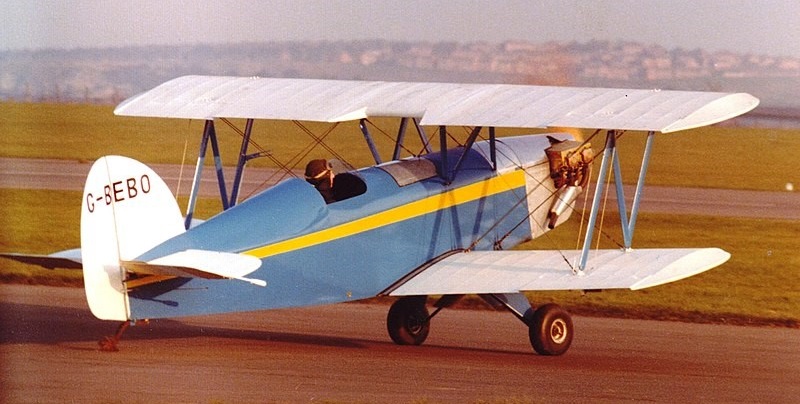
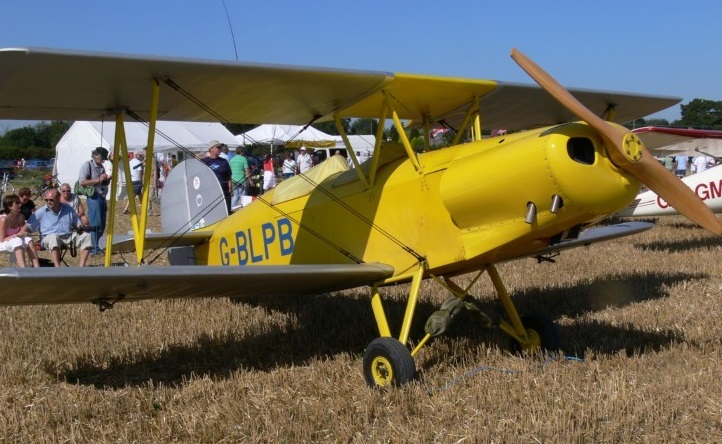
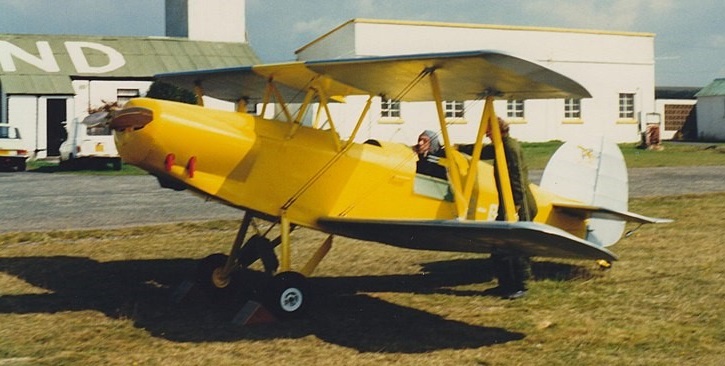
The Turner Two Seat Wot (TSW-2) is a biplane aircraft designed for amateur construction by Chris Turner in 1976. The aircraft was originally conceived as a two-seat version of the Currie Wot, however few component parts of the original Wot were retained by the time the design had been finalised. The Turner TSW-2 has a reduced wingspan, four ailerons and uses a different aerofoil section for the staggered wings. The aileron bellcrank fittings are made to the Currie Wot drawings.
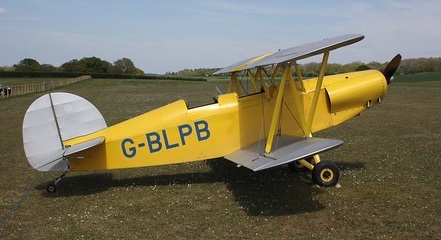
The Turner Two Seat Wot’s structure is primarily of wood with metal interplane struts, cabane struts, undercarriage and engine mount. Two examples were constructed G-BEBO and G-BLPB. The prototype G-BEBO was fitted with a 125 hp (93 kW) Lycoming O-290-3 engine and G-BLPB a 150 hp (112 kW) Lycoming 0-320-A1A engine.
Chris Turner was awarded the Best New Design Award at the 1987 Popular Flying Association Rally at Cranfield, Bedfordshire.
The prototype Turner TSW-2, G-BEBO, was built by its designer Chris Turner. It was registered with the Civil Aviation Authority on 30 June 1976 and first flown from Sunderland Airport in 1978. The aircraft was destroyed in a hangar fire at Hunday Farm and de-registered in January 2003.
This second example, G-BLPB, was built by James Woolford and Kingsley Thomas in Mullion Cornwall between 1980 and 1986. It first flew from Land’s End Airport on 31 August 1986. This aircraft is still airworthy and in 2017 was based on a farm strip in Wiltshire.
The Turner TSW-2 was the subject of a test flight report in Popular Flying by John Harper, who stated that the aircraft was capable of executing the Aerobatics Association’s Beginners Sequence of aerobatic manoeuvrers.
The origins of aircraft construction in Turkey can be traced back to the first maintenance unit of the Turkish Air Force officially established on 1 June 1911, set up at the airport in Yesilköy / Istanbul. During the First World War maintenance facilities were established in Baghdad, Damascus, Izmir and Konya. They were under the umbrella of the 9th Department of Aviation Affairs (9 Hava Isleri Subesi), which was established on 15 Febuary 1915. The main task of this maintenance facilities was the maintenance of the aircraft of the German Air Force but due to the war situation could not always be guaranteed the supply of spare parts. The technicians at the front often no choice but to produce the items urgently needed themselves. In 1917 the Baghdad facility built a “new airplane”, the Baghdad first, which was built from parts of Albatros C III and from captured aircraft parts “redesigned”.
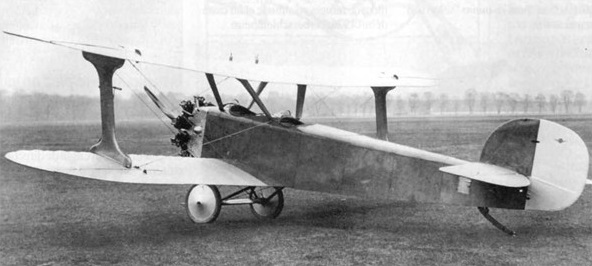
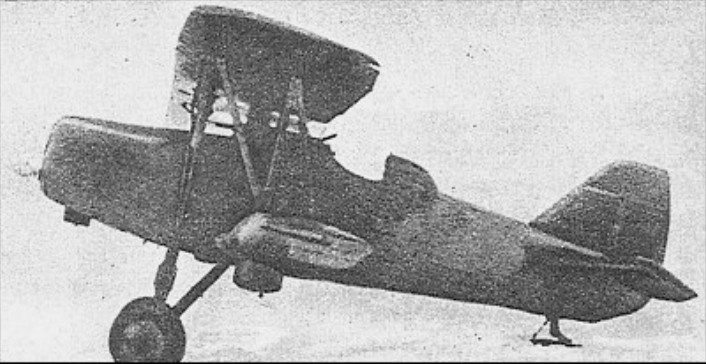
Conceived to make use of new high-strength steels obtainable from Germany in the late 1920s, the ANT-13 was a small unequal-span staggered biplane single-seat fighter. Utilising steel for the wing spars and the welded truss fuselage – the remainder of the structure being dural – the ANT-13 was fabric covered and powered by a 600hp Curtiss V-1570 Conqueror 12-cylinder water-cooled engine. Armament consisted of twin 7.62mm synchronised guns.
Construction of the prototype, designated I-8, was threatened with cancellation in 1929 through the pressures of higher priority projects at the AGOS, but each worker donated 70 hours to completing the I-8, which was flown on 28 October 1930. Dubbed unofficially the Zhokei (Jockey), the fighter was the first aircraft to exceed 300km/h in the Soviet Union, but the decision not to licence manufacture the Conqueror engine worked against series production of the ANT-13.
Engine: 600hp Curtiss V-1570 Conqueror 12-cylinder water-cooled Max take-off weight: 1424 kg / 3139 lb Empty weight: 960 kg / 2116 lb Wingspan: 9.00 m / 30 ft 6 in Max. speed: 313 km/h / 194 mph Range: 440 km / 273 miles Armament: 2 x 7.62mm synchronised machine guns







 All Aero