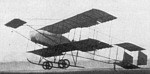
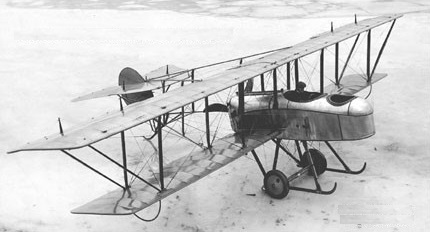
The 1913 Vickers No. 26 “Pumpkin” biplane was designed and built by Vickers Aircraft.
The 1913 Vickers No. 26 “Pumpkin” biplane was designed and built by Vickers Aircraft.
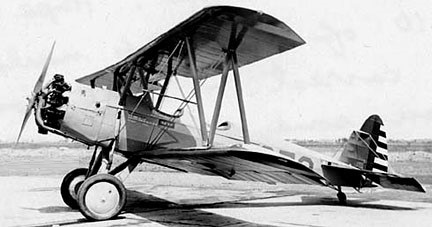
The 1931 PT-10 was an AT model foe Army Air Corp evaluation as YPT-10. Four were built as YPT-10 (31-519-522), first one was as “Training Plane” in prototypical stage (N479Y). The Training Plane first flew in February 1931.

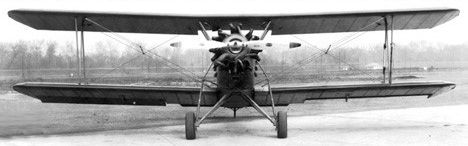

There was one conversion, 31-521, to a PT-10C. converted in 1931, it was powered by a Lycoming R-680.
One conversion to YPT-10D was completed in 1931, powered by a Kinner C-5.

PT-10
Engine: 200hp Lycoming R-680
Wingspan: 33’0″
Length: 25’0
Useful load: 642 lb
Max speed: 108 mph
Cruise: 80 mph
Stall: 52 mph
Seats: 2
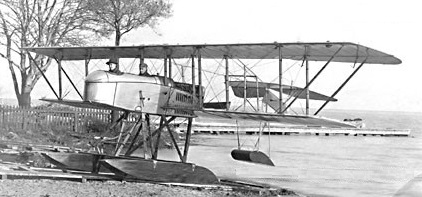
Verville’s first design, from 1915, was a two-place biplane, powered by an 80hp LeRhône pusher, possibly replaced by a Hall-Scott engine later.
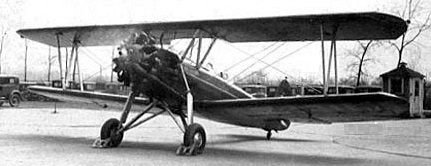
The 1930 AT Sportsman (ATC 323) was priced at $5,250. Eleven were built; NC450M-459M c/ns 1-5, 7-10; NC456M c/n 27 wasn’t licensed until 10 June 1931; NC476Y c/n 14; c/n 7 became c/n 27, c/n11 became c/n 20, c/ns 12 and 15/18 were not used, c/n 19 went to the LT.
Basic color scheme for ATs was green/orange for c/ns 1/3, black/orange for c/ns 4 and 27, blue/orange for c/ns 5/6, 8/10, and 19; c/n 13 as described below, others unrecorded. [NC476Y] was customized for Col Robert R McCormick with enlarged cockpits (McCormick weighed 225# stripped), and the ability of plane to be started and flown from both cockpits; special paint scheme: jet black wing and chassis struts; army yellow wings and tail surface; berry red (artillery red) fuselage; silver louvers.
The AT Sportsman design and production rights were sold to White Aircraft Co in 1939.
The sole AT-4 Sportsman of 1930 was for NACA testing. Registered NS478Y c/n 13, it had a modified wide landing gear with added fittings with structural bearing for EDO pontoons, which may or may not have been used, and steel interplane struts. Colors: Blue fuselage, silver wings, yellow stripe.
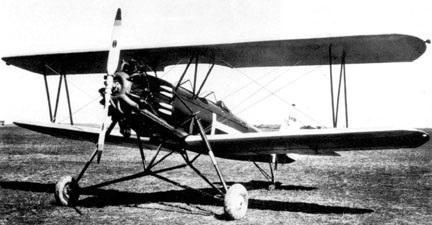
The single LT Sportsman of 1931 was an AT fitted with a 210hp Lycoming R-680 for Lycoming Mfg Co, Williamsport PA. It was registered NX10898 c/n 19.
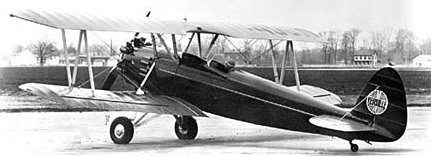
AT Sportsman
Engine: 165hp Continental A-70
Wingspan: 31’0″
Length: 24’3″
Useful load: 678 lb
Max speed: 120 mph
Cruise speed: 100 mph
Stall: 50 mph
Range: 370 mi
Seats: 2
LT Sportsman
Engine: 210hp Lycoming R-680
Wingspan: 31’0″
Length: 24’3″
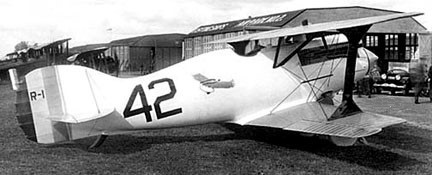
Alfred V. Verville is best known for his later Verville-Packard and Verville-Sperry racing aircraft of the early 1920s.
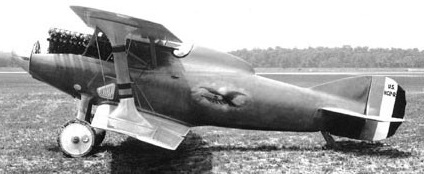
The Verville-Packard was modified from Engineering Division VCP-1 AS40126 by Alfred Verville in 1920 and was the 1921 Pulitzer race winner, redesignated R-1.
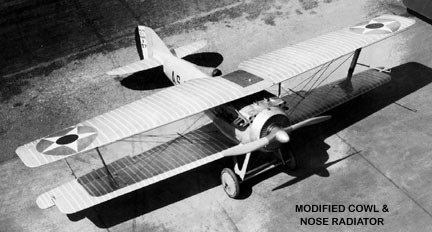
Engine: Packard V-12, 638hp
Seats: 1
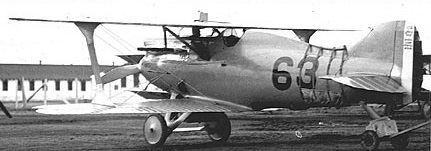
Built in 1931 the biplane three place open cockpit B-1 N783Y c/n 1 was likely a modified Curtiss JN-4 used for barnstorming rides locally. Power was a 90hp Curtiss OX-5.

This Spanish “Multiplano”, with seven wings and four horizontal control surfaces, was designed by Francisco Verdaguer and built in 1909 at the “A.L.A.” (Association de Locomocion Aeria) of Barcelona.
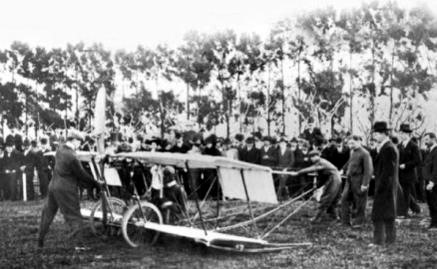
The machine was designed and built by the four (!) brothers Escofet and Enrique Martinez Velazco together with the Frenchman Henri de Rosiers. It was built as a glider then fitted with an Anzani engine but flight could not be achieved. Parts of the Escofet I were used in the second model. The Escofet II was momentous as it was the first machine in Uruguay to have actually flown on August 26, 1910. This first flight was also the last for the machine as on landing after about 200 meter it crashed severely, wounding the pilot.
Parts of the Escofet I were used in the second model.
Victor Vejraska built the Arrow in 1936. A two place open cockpit biplane, powered by a 65hp Velie M-5.
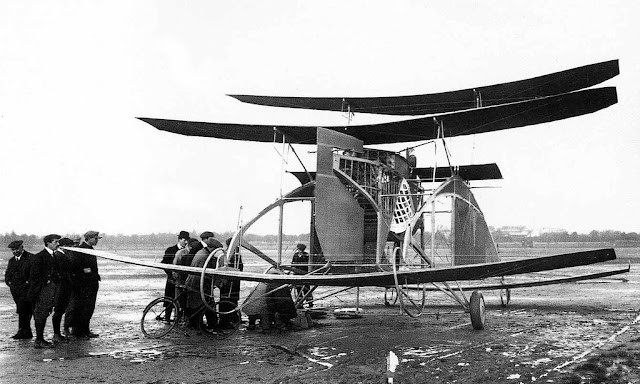
A monstrous multiplane, created by Edouard Vedovelli. Debuted at Issy-les-Moulineux, Paris, in 1910. Continuously tested and modified until it was abandoned in 1912. Press referred to it as “L’Appareil Fantôme d’Issy-les-Moulineaux” or “The Phantom Machine of Issy-les-Moulineux”.

 All Aero