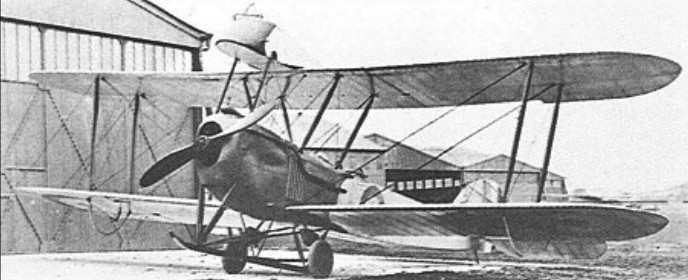
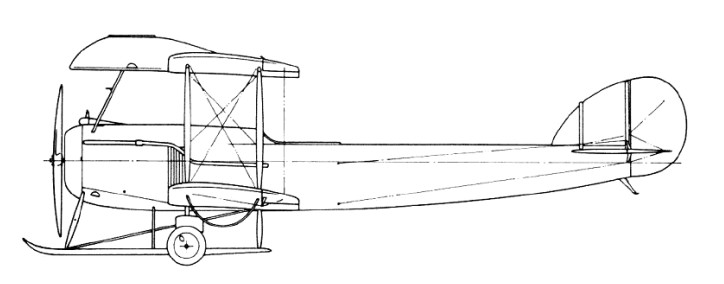
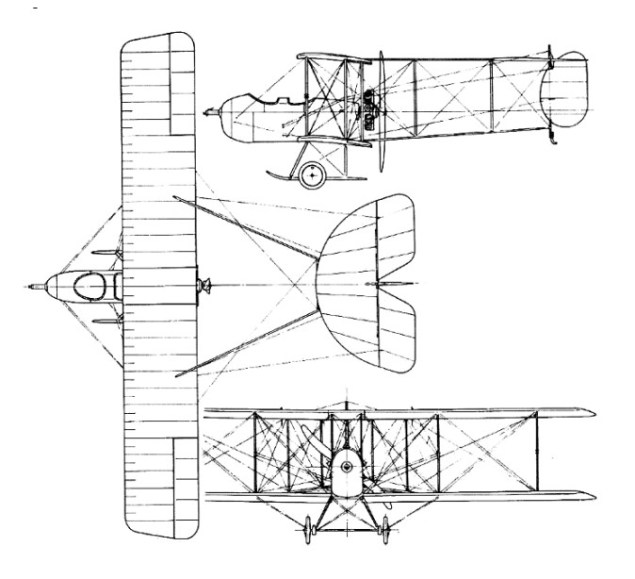
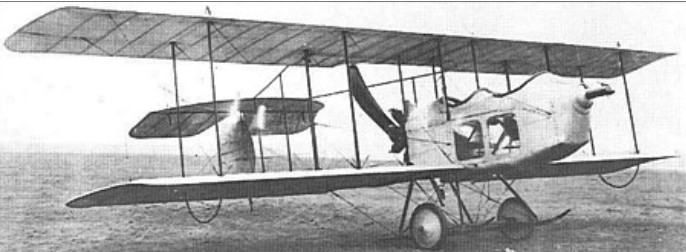
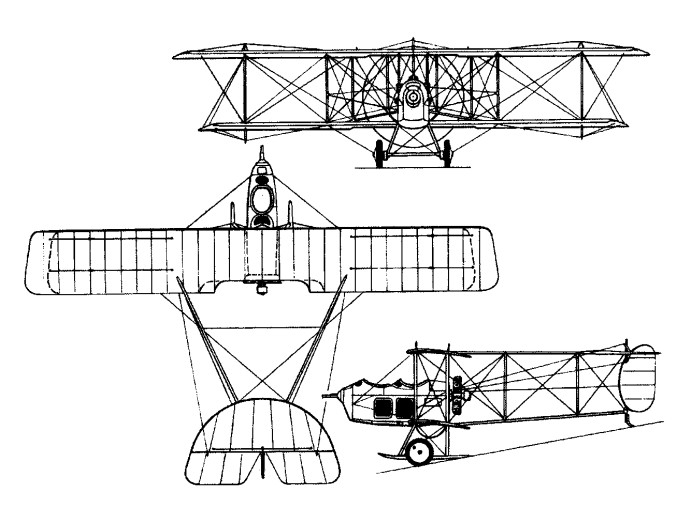
Designed by Howard Flanders as an airship destroyer, for which purpose it had an elevated gunner’s station, or “fighting top”, mounted on the centre section of the upper wing, the F.B.11 flew in late November 1916. Carrying a crew of three, including two gunners each provided with a 7.7mm Lewis gun, the F.B.11 was powered by a 250hp Rolls-Royce Mk III 12-cylinder water-cooled engine – later to be named Eagle. The F.B.11 proved to be deficient in lateral control and the first prototype eventually crashed and was written off, a second example never being completed as, in the meantime, it had been realised that the entire concept of the large airship destroyer was fundamentally unsound.
Max take-off weight: 2238 kg / 4934 lb Empty weight: 1515 kg / 3340 lb Wingspan: 15.54 m / 51 ft 0 in Length: 13.10 m / 43 ft 0 in Height: 4.16 m / 14 ft 8 in Wing area: 78.50 sq.m / 844.97 sq ft Max. speed: 154 km/h / 96 mph Ceiling: 3355 m / 11000 ft
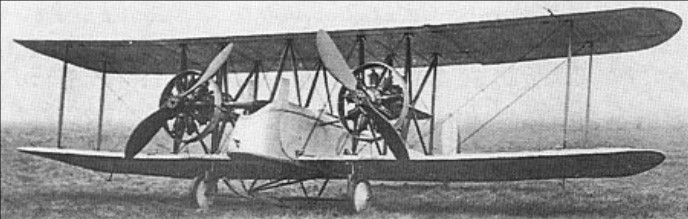
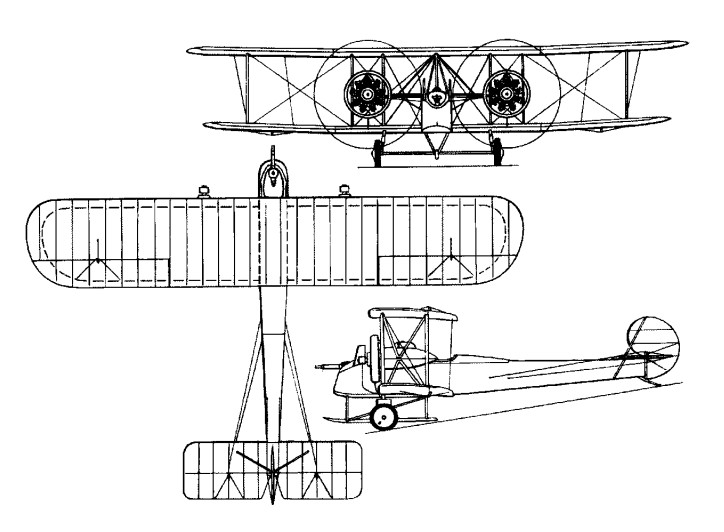
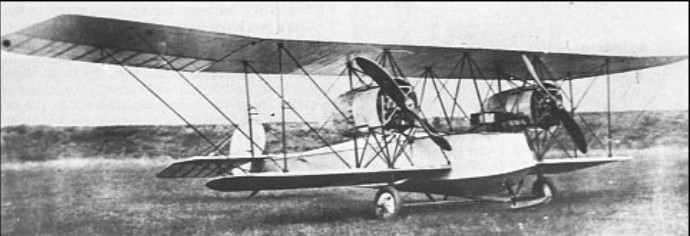
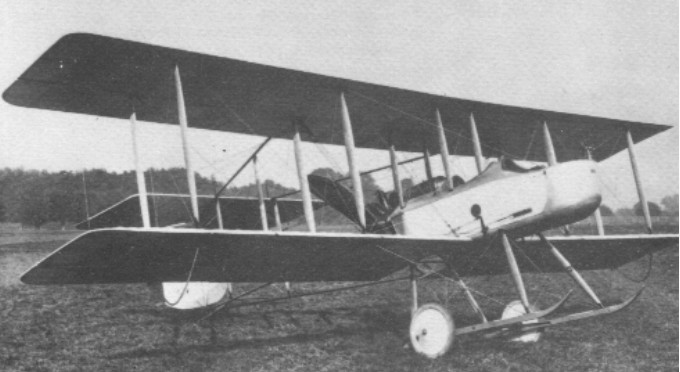
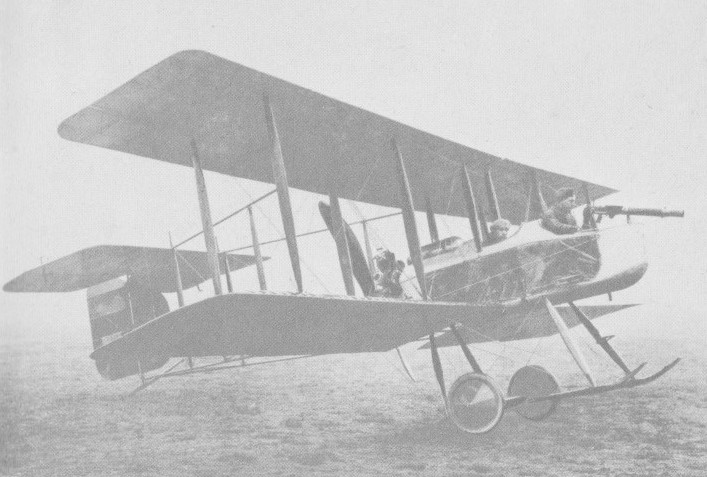
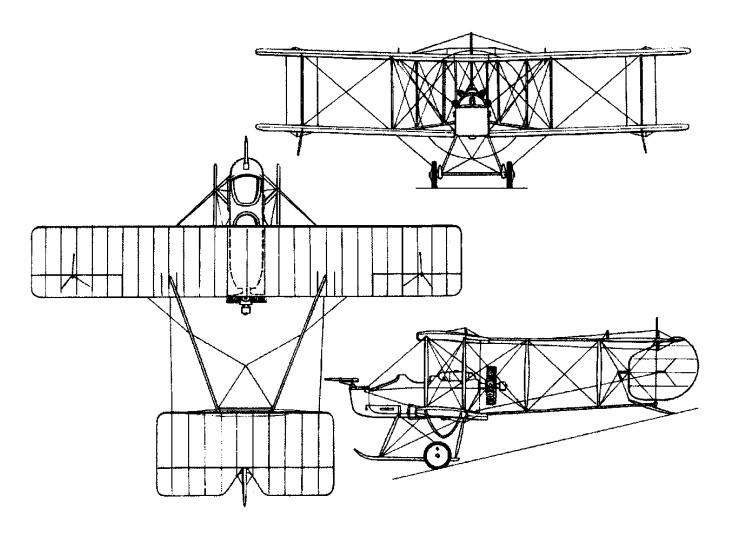
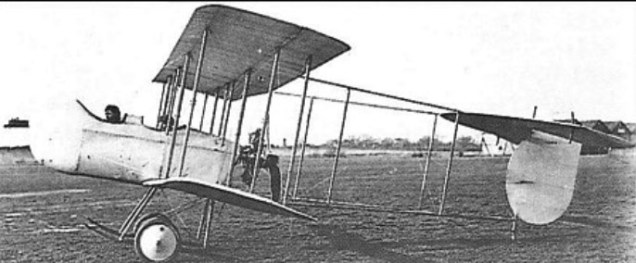
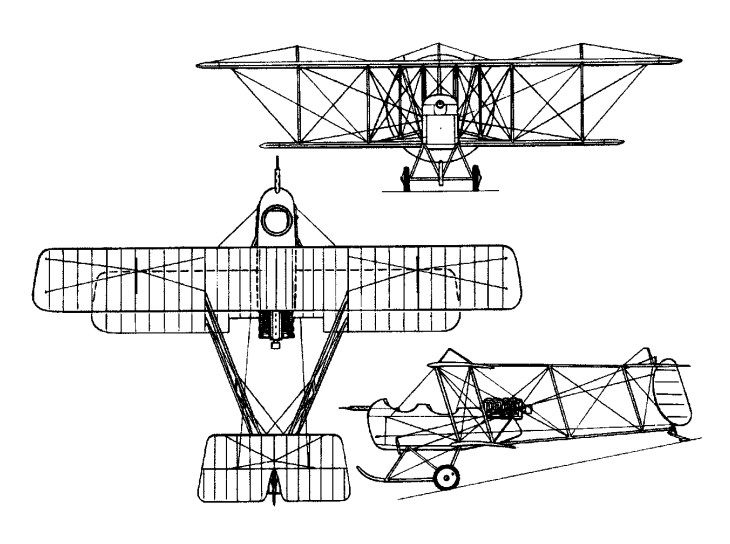
Although possessing a superficial resemblance to the F.B.7, the F.B.8, designed in the autumn of 1915 by Rex K Pierson, was a very much smaller, lightly-armed two-seat fighter carrying only a single 7.7mm Lewis gun as armament. Powered by two 100hp Gnome Monosoupape rotaries, the F.B.8 began flight testing in November 1915, and performance proved to be good. The gunner was accommodated in the extreme nose and the pilot was seated beneath the trailing edge of the upper wing. From the outset, it was obvious that the armament carried by the F.B.8 could equally well be accommodated by a smaller, single-engined aircraft, but it had been hoped that an appreciably higher performance could be obtained by doubling the power available. Insufficient attention had been paid to the drag of such an aircraft, however, and performance proved lower than had been anticipated. Furthermore, the aircraft was insufficiently manoeuvrable for fighting duties and was discontinued.
Max take-off weight: 1225 kg / 2701 lb Empty weight: 835 kg / 1841 lb Wingspan: 11.68 m / 38 ft 4 in Length: 8.58 m / 28 ft 2 in Height: 3.00 m / 10 ft 10 in Wing area: 43.48 sq.m / 468.01 sq ft Max. speed: 158 km/h / 98 mph Ceiling: 4270 m / 14000 ft
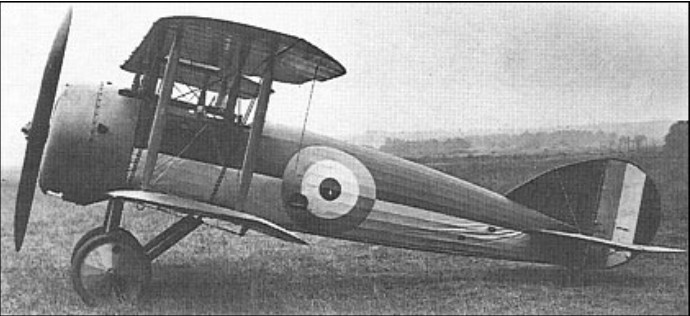
Early in 1915, Rex K Pierson was tasked with the redesign of the so-called Barnwell Bullet, an unarmed single-seat biplane designed as a private venture by Vickers’ then chief test pilot, Harold Barnwell. Assigned the designation E.S. (Experimental Scout) 1 and completed in August 1915, the redesigned aircraft was powered by a 100hp Gnome Monosoupape rotary and carried no armament. An equi-span single-bay unstaggered biplane, the E.S.1 was aerodynamically clean and possessed an excellent performance, but view for the pilot was extremely poor. An improved version was then developed, powered by the 110hp Clerget nine-cylinder rotary engine. This was assigned the official designation E.S.1 Mk II, although it was known to Vickers as the E.S.2. Two E.S.1 Mk IIs were built, one of these being fitted with a 7.7mm Vickers machine gun with Vickers-Challenger synchronising gear and sent to France in the summer of 1916 for operational trials with No 11 Sqn, RFC. The other E.S.1 Mk II was eventually similarly armed and tested with a 110hp Le Rhone rotary, while the original E.S.1, too, was fitted with the gun and synchronization gear, and was at one time included on the strength of an RFC Home Defence squadron (No 50). The official evaluation of the E.S.1 in both versions pronounced the aircraft tiring to fly and difficult to land, and no production was ordered. The E.S.1 did, however, serve as a basis for the design of the later F.B.19.
E.S.1 Mk II Max take-off weight: 681 kg / 1501 lb Empty weight: 445 kg / 981 lb Wingspan: 7.43 m / 24 ft 5 in Length: 6.17 m / 20 ft 3 in Height: 2.34 m / 8 ft 8 in Wing area: 19.97 sq.m / 214.96 sq ft Max. speed: 180 km/h / 112 mph
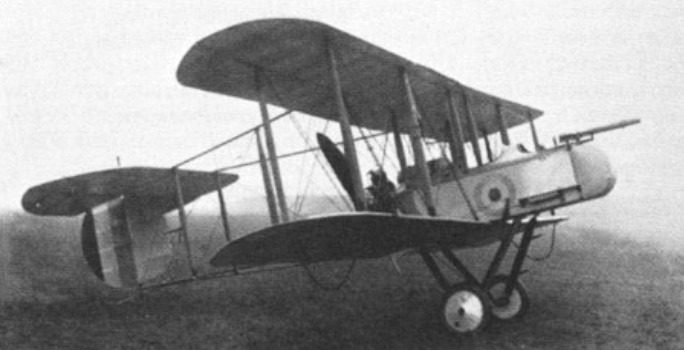
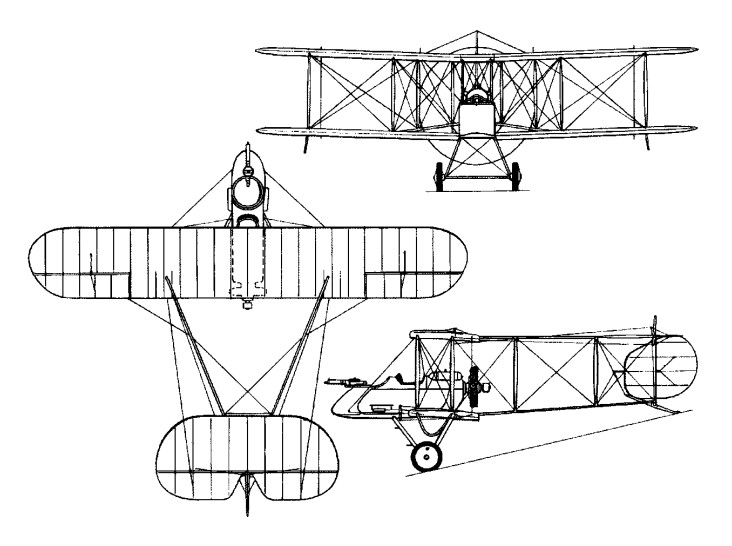
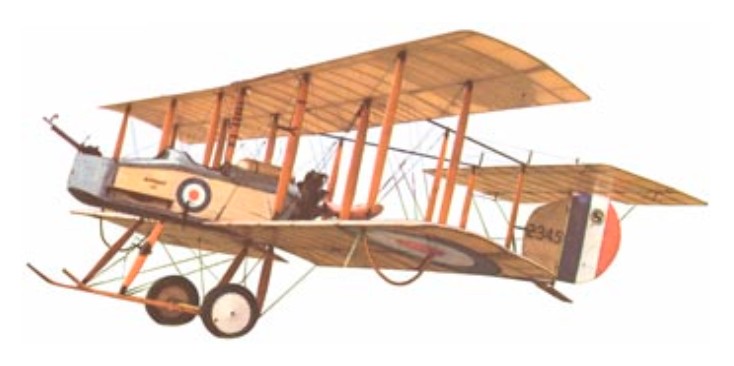
Dubbed unofficially the Streamline Gunbus, the F.B.9, which emerged towards the end of 1915, introduced numerous refinements over its predecessor, the F.B.5. The fuselage nacelle was of improved aerodynamic form; the wings and tailplane sported rounded tips; streamlined Rafwires replaced stranded steel cables and turnbuckles for interplane bracing, and a plain, Vee-type undercarriage supplanted the twin skids previously used.
The standard power plant remained the 100hp Gnome Monosoupape rotary. Vickers (Wells Aviation) built a total of 95 F.B.9s (5271 to 5290 and A1411 to A1460) plus the prototype (7665), and a further 24(7812 to 7835) were built by Darracq in France, some of which were issued to the RFC (No 11 Sqn) and were used during the Battle of the Somme which began on 1 July 1916. The manufacture of the F.B.9 in Italy by Vickers-Terni fell through owing to political reasons. The only FB.9s known to have seen operational service were seven examples (Serials 7812, 7813, 7820, 7826, 7827 and 7828), all of which were flown on war patrols by 11 Squadron RFC in France in June July 1916. On July 1, 7828 gained a confirmed aerial combat victory. All other FB.9s were relegated to RFC and RNAS training units, where they gave faithful service until late 1918. As trainers, several FB.9s were modified to have dual controls, and many had a Scarff ring fitted in the front cockpit for gunnery practice. At least one FB.9 was armoured and fitted with an oleo undercarriage. None remained on charge at the time of the Armistice.
Engine: 100 hp Gnome Monosoupape rotary, or 110 hp Le Rhone rotary Span: 10.3 m (33 ft 9 in) Length: 8.7 m (28 ft 5.5 in) Height: 3.5 m (11 ft 6 in) Wing area: 31.59 sq.m / 340.03 sq ft Max take-off weight: 858 kg / 1892 lb Empty weight: 467 kg / 1030 lb Maximum speed: 132.9 km/h (82.6 mph) at ground level Climb to 3048 m (10000 ft): 51 min Service ceiling: 3353 m (11000 ft)
FB.9 Engine: Gnome Monosoupape, 100 hp Wingspan: 33 ft 10 in Wing area: Length: 27 ft 10 in Height: 7 ft 0 in Empty weight: 1029 lb Loaded weight: 1892 lb Wing loading: Max speed: 79 mph at 6500 ft Service ceiling: 11,000 ft Endurance: 5 hr Rate of climb: 19 min to 6500 ft Armament: 1 x Lewis gun Crew: 2
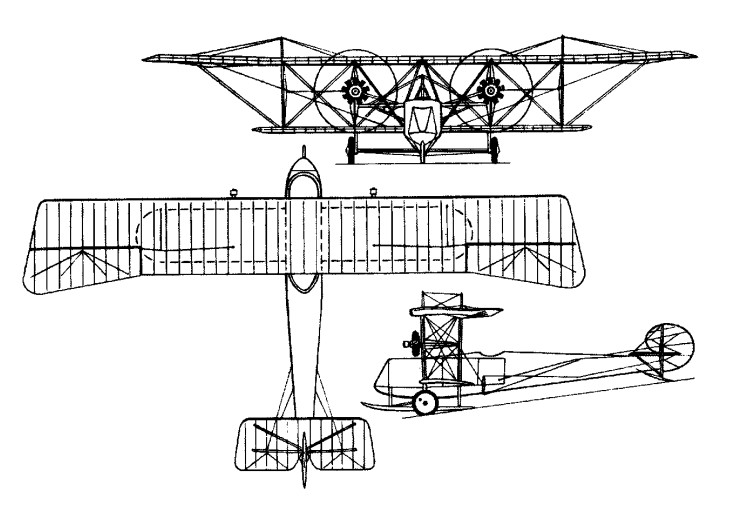
On the outbreak of World War I, Vickers engaged R L Howard-Flanders to design a twin-engined fighting aeroplane capable of carrying a Vickers one-pounder quick-firing gun with armour protection for the gunner. Powered by two 100hp Gnome Monosoupape nine-cylinder rotaries mounted overhung between the main-planes and suspended on simple steel-tube open framework, the prototype was designated E.F.B.7 and was flown for the first time in August 1915. An ungainly unequal-span biplane with two bays of struts, the E.F.B.7 accommodated the pilot aft of the mainplanes, several feet from the gunner in the extreme nose. The substantial gun mount was bolted to the centre of the forward cockpit floor, the gunner’s seat being attached to the mount with which it traversed – sufficient room was provided in the cockpit to permit gun and gunner to turn through a full 360 degrees.
The E.F.B.7 was one of the first twin-engined military aircraft to fly successfully, and an order for 12 production F.B.7s was placed on 20 August 1915, immediately after the initial flight tests of the E.F.B.7, but, in the event, the series model was to differ in a number of major respects. The distance separating the two-man crew was found unacceptable and the pilot was brought forward of the wings in sensible proximity to the gunner, the structure of the upper wing was completely redesigned and the fuselage was revised in cross section, becoming rectangular throughout rather than having an inverted triangular cross section aft. Owing to a shortage of Gnome rotaries, the first production aircraft was fitted with 80hp Renault eight-cylinder air-cooled engines as the F.B.7A, the engine change resulting in a major loss of performance. As the F.B.7A possessed no operational usefulness, Vickers persuaded the War Office to cancel the contract for the remaining aircraft (which were being built by A Darracq & Company at Fulham under subcontract).
Max take-off weight: 1450 kg / 3197 lb Empty weight: 969 kg / 2136 lb Wingspan: 18.17 m / 60 ft 7 in Length: 10.97 m / 36 ft 0 in Wing area: 59.46 sq.m / 640.02 sq ft Max. speed: 121 km/h / 75 mph Ceiling: 2745 m / 9000 ft
Progressive changes introduced by successive E.F.B.3s led to the E.F.B.5 – the E.F.B.4 being a project with a more streamlined nacelle centred between the wings and only two tailbooms – which was flown from Joyce Green to Brooklands on 17 July 1914. In parallel, Vickers developed the E.F.B.6, which, basically similar to the E.F.B.5, had longer-span upper wings. It lacked top decking between the two crew seats and had ailerons in the upper wings only. At Brooklands on 14 July 1914, the E.F.B.6 was taken on strength by the Royal Flying Corps when World War I began, but was not developed.
Progressive changes introduced by successive E.F.B.3s led to the E.F.B.5 – the E.F.B.4 being a project with a more streamlined nacelle centred between the wings and only two tailbooms – which was flown from Joyce Green to Brooklands on 17 July 1914. In parallel, Vickers developed the E.F.B.6, which, basically similar to the E.F.B.5, had longer-span upper wings. It lacked top decking between the two crew seats and had ailerons in the upper wings only. At Brooklands on 14 July 1914, the E.F.B.6 was taken on strength by the Royal Flying Corps when World War I began, but was not developed.
No orders were received but Vickers felt certain that war was imminent and began building 50 F,B.5s. These were eventually taken over by the RFC, which put a total of 241 in service. The E.F.B.5 was ordered into production for both the RFC and the RNAS on 14 August 1914, the first series aircraft being completed in the following October. At this time, the aircraft became simply F.B. (Fighting Biplane) 5 and was dubbed Gunbus. The E.F.B.5 had retained the semi-circular tail-plane of the E.F.B.2 and early E.F.B.3, but the series F.B.5 had an enlarged tailplane of rectangular planform and a larger rudder. A Lewis gun on a more practical mount supplanted the similar-calibre Vickers in the nose and the standard power plant was the 100hp Gnome Monosoupape nine-cylinder rotary.
The true fighter squadron was born on the 14 February 1915 when No.11 Squadron was formed at Netheravon. Completely equipped with Vickers FB5 aircraft this was the first unit established purely with the intention of destroying other aircraft.
The first F.B.5 reached the Western Front early February 1915, and, on the following 25 July, the first squadron of any air service formed specifically for fighting duties and equipped throughout with a single aircraft type arrived in France, this being the RFC’s No 11 Sqn with F.B.5s.
The RNAS made little use of the F.B.5, and, after the delivery of four to that service, the large majority of subsequent deliveries went to the RFC, although the RNAS did receive two further F.B.5s which, ordered in May 1915, were fitted with the 150hp Smith Static radial engine, its large diameter propeller necessitating the raising of the fuselage nacelle several inches above the lower wing. Two hundred and forty-one F.B.5s were delivered to the RFC, of which 109 were sent to the British Expeditionary Force in France (60 in 1915 and 49 in 1916). Licence production of the F.B.5 was undertaken in France by the Societe Anonym Darracq (which built a total of 99 of these and the later F.B.9) between May 1915 and June 1916. Twelve were also built under licence in Denmark in 1917-18 by the Tojhusvasrksted. At least four F.B.5As were built with armour-plated fuselage nacelles and these were powered by 110hp Clerget 9Z nine-cylinder rotary engines and had oleo undercarriages. Suffering an unreliable engine and a marginal performance throughout its operational career, the F.B.5 was finally withdrawn from the Western Front in the autumn of 1916, being subsequently confined to RFC instructional units.
Built by members of the Vintage Aircraft Flying Association for eventual display at the RAF Museum, a Gunbus reproduction was powered by a Gnome 100 hp Mono rotary with original prop.
Vintage Aircraft Flying Association Gunbus reproduction
The Vintage Aircraft & Flying Assoc. FB.5 Gunbus was built in 1966 at Weybridge. Registered G-ATVP c/n VAFA.01, it first flew at Wisley on 14 June 1966. It was stored for a short while at Henlow but then went on display in the RAF Museum at Hendon.
Vintage Aircraft & Flying Assoc. FB.5 Gunbus at RAF Museum
Engine One 100 hp Gnome Monosoupape Length 27 ft 2 in (8.25m) Wing span 36 ft 6 in (11.1m) Height: 3.38 m / 11 ft 1 in Wing area: 35.49 sq.m / 382.01 sq ft Weight empty 1,220 lb (553 kg) Max take-off weight: 930 kg / 2050 lb Max speed: 70 mph (113 kph) at 5000 ft Range: 402 km / 250 miles Service ceiling: 9,000 ft (2,700 m) fully loaded Endurance 4.5 hours Seats: 2 Armament: One Lewis machine gun, plus small bombs
FB.5 Engine: Gnome Monosoupape, 100 hp Wingspan: 36 ft 6 in Wing area: 362 sq.ft Length: 27 ft 2 in Height: 11 ft 0 in Empty weight: 1220 lb Loaded weight: 2050 lb Wing loading: 5.4 lb/sq.ft Max speed: 60 mph at 5000 ft Service ceiling: 9000 ft Endurance: 4 hr Rate of climb: 19 min to 6500 ft Armament: 1 x Vickers mg Crew: 2
In December 1913, a third Vickers Experimental Fighting Biplane, the E.F.B.3, made its debut. The slight overhang of the top wing was eliminated to result in an equi-span biplane, the fuselage nacelle underwent further redesign, the celluloid windows being eliminated, and, most important, ailerons on both upper and lower wings supplanted the wing-warping control of its predecessors. The 100hp Gnome Monosoupape rotary was retained as was also the 7.7mm Vickers gun. Displayed at the Aero Show held at Olympia in 1914, the E.F.B.3. was the subject of an order from the Admiralty for six aircraft placed in December 1913. This contract was subsequently taken over by the War Office, the six aircraft embodying a number of modifications – at least one was fitted with an eight-cylinder Vee-type 80hp Wolseley engine – and being referred to as the Vickers No (or Type) 30. These were to lead in turn to the E.F.B.5 and F.B.5 Gunbus.
Engine: 100hp Gnome Monosoupape Max take-off weight: 762 kg / 1680 lb Empty weight: 476 kg / 1049 lb Wingspan: 11.38 m / 37 ft 4 in Length: 8.38 m / 28 ft 6 in Height: 2.97 m / 10 ft 9 in Wing area: 35.77 sq.m / 385.02 sq ft Max. speed: 97 km/h / 60 mph Range: 483 km / 300 miles
Following the loss of the E.F.B.1, Vickers undertook major redesign of its gun carrier while retaining the basic configuration to result in the E.F.B.2, again against an Admiralty contract. The E.F.B.2 eliminated the wing stagger of the previous aircraft and increased the span of the lower wing while retaining warping for lateral control. The fuselage nacelle was redesigned and large celluloid windows were inserted in its sides; the angular horizontal tail surfaces gave place to surfaces of elliptical form and a 100hp Gnome Monosoupape nine-cylinder rotary engine was fitted. The 7.7mm machine gun on a ball-and-socket mounting in the forward cockpit was retained, and the E.F.B.2 entered flight test at Bognor in the autumn of 1913, but crashed there during the course of October.
Max take-off weight: 798 kg / 1759 lb Empty weight: 476 kg / 1049 lb Wingspan: 11.76 m / 39 ft 7 in Length: 8.89 m / 29 ft 2 in Height: 2.92 m / 10 ft 7 in Wing area: 35.30 sq.m / 379.97 sq ft Max. speed: 97 km/h / 60 mph Range: 241 km / 150 miles
On 19 November 1912, Vickers received a contract from the Admiralty for an experimental fighting biplane armed with a machine gun. Various configurations were investigated before the desirability of placing the gunner in the extreme nose of the aircraft, in order to achieve a clear field of fire, led to choice of a fuselage nacelle carrying at its rear an engine driving a pusher propeller. This nacelle was mated with an unequal-span heavily-staggered biplane configuration, the tail surfaces being carried by paired and vertically disposed booms attaching to the upper and lower rear wing spars on each side of the engine.
Designated E.F.B. (Experimental Fighting Biplane) 1 and dubbed “Destroyer”, the Vickers aircraft was armed with a single 7.7mm Maxim machine gun on a mount affording 60 degrees elevation and traverse. The airframe of the E.F.B.1 was primarily of metal construction, the nacelle accommodating the pilot and gunner, and carrying an 80hp Wolseley eight-cylinder Vee-type engine, being of steel tube with duralumin skinning. Wing warping was employed for lateral control.
Prior to its first flight, the E.F.B.1 was displayed at the Aero Show held at Olympia, London, in February 1913.
The gun was fitted for the first flight test, made at Joyce Green, but this rendered the aircraft so nose-heavy that it briefly left the ground, then nosed down, struck the ground and turned over.
Max take-off weight: 1207 kg / 2661 lb Empty weight: 798 kg / 1759 lb Wingspan: 12.19 m / 40 ft 0 in Length: 8.38 m / 28 ft 6 in Height: 3.63 m / 12 ft 11 in Wing area: 35.77 sq.m / 385.02 sq ft Max. speed: 113 km/h / 70 mph



 All Aero